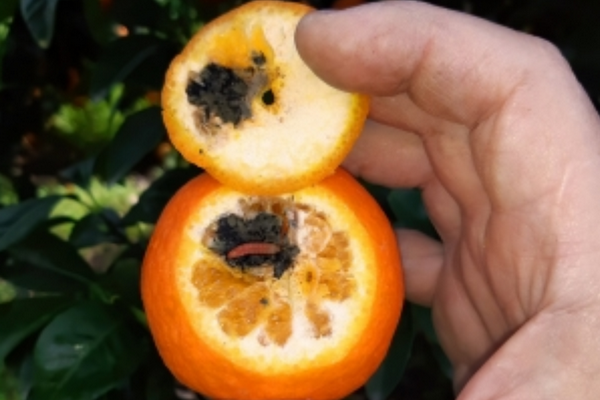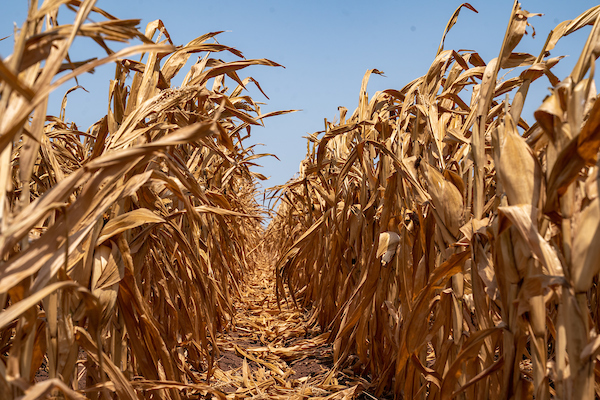
Kansas corn faces major yield losses as extreme heat, drought and hot winds damage dryland fields, accelerate harvest and pressure farm margins.
Kansas corn growers entered 2026 with optimism, but by September extreme heat, drought and hot winds had damaged dryland fields, accelerated harvest and cut yield expectations. The deterioration matters beyond the state because Kansas production conditions could influence U.S. corn supplies, commodity prices, crop insurance claims and farm margins heading into 2027.
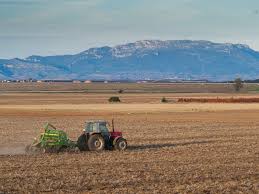
After strong 2025 dryland yields and encouraging late-year rainfall, southwestern Kansas farmer Paige Clawson expected another promising growing season. Instead, moisture disappeared after June and prolonged heat settled across the Southern Plains. Clawson, who serves on the Kansas Corn Commission Board and grows corn, sorghum, wheat and triticale, said crops effectively "roasted" through the summer. Temperatures of 98°F or 99°F became relatively welcome days, illustrating how severe the heat had become as limited rainfall and high evaporation depleted available soil moisture.
The deterioration was not confined to individual farms. According to information cited from the U.S. Drought Monitor, temperatures in Kansas were mostly 10°F to 15°F above normal during the week covered by its Sept. 10 update. Moderate, severe and extreme drought expanded significantly across south-central and southeast Kansas, while abnormal dryness spread through much of northeastern Kansas. The combination of high temperatures and scarce precipitation increased evaporation and crop stress, creating difficult conditions during critical development stages and raising concerns over final yields.
Dryland Corn Faces the Biggest Yield Risk as Kansas Harvest Accelerates
For corn producers, the consequences became visible through pollination problems, heat blasting and tipback, all factors capable of reducing kernel development and final production. Conditions varied dramatically even across short distances. Northwest Kansas farmer Brent Rogers said timely, highly localized rainfall often determined whether fields maintained viable crops. In some areas, moving only five miles meant going from relatively healthy fields to acres with almost nothing. Hail added another layer of losses during the season, destroying some crops and forcing affected growers to replant fields to sorghum.
The season also highlighted the value of conservation-oriented management under severe moisture pressure. Rogers uses a corn-wheat-fallow rotation, eliminates tillage where possible and retains crop residue to capture and preserve additional moisture. One-third of his acres are idled each year under the rotation. He has also introduced see-and-spray technology to improve herbicide efficiency and lower costs during the fallow period. Rogers estimated that under difficult drought conditions, these practices could represent the difference between 40-bushel and 80-bushel corn, a major gap for farm profitability.
Heat alone was not the only threat. Persistent wind magnified crop stress across western Kansas, where hot air moving at roughly 30 miles per hour was compared by Rogers to a "blowtorch" capable of scorching corn, including irrigated fields. That combination underscores a broader challenge for precision agriculture and sustainable agriculture strategies: irrigation cannot always offset extreme atmospheric demand. Moisture conservation, residue management, reduced tillage and more targeted input applications are becoming increasingly important tools for producers attempting to protect yields while controlling input costs.
Harvest results are now beginning to reveal the scale of the damage. Clawson started harvesting earlier than usual and expected below-average yields. One field was harvested one month and one day earlier than the previous year, while she warned that some dryland fields might not justify putting a combine through them. Rogers similarly expected a very poor crop across dryland acres in western portions of his county, although his own fields appeared positioned to perform comparatively better because of moisture-conserving practices and fortunate timing of rainfall.
USDA crop ratings reinforce those concerns. For the week ending Sept. 6, 37% of Kansas corn was rated poor or very poor, compared with 41% rated good or excellent and 22% fair. Kansas soybeans were also under pressure, with 29% rated poor or very poor, 34% fair and 37% good or excellent. Those numbers will keep Kansas weather and harvest data on the radar of farmers, grain elevators, co-ops and commodity markets. Final production will also matter for crop insurance exposure, livestock feed costs and the wider U.S. supply chain as producers begin making acreage and input decisions for 2027.
Source - https://www.agrolatam.com