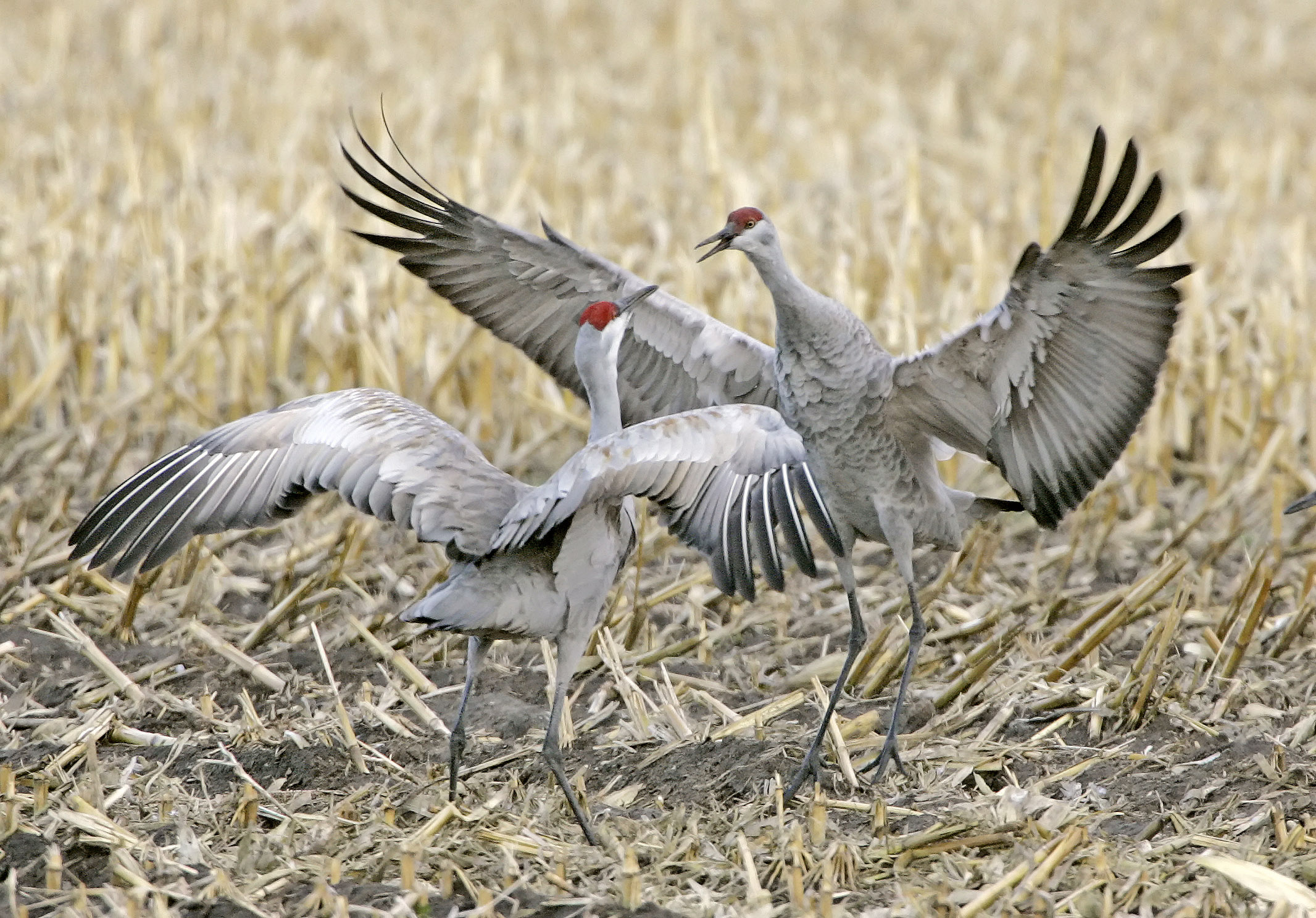
Wisconsin lawmakers will weigh whether to allow hunting of sandhill cranes and provide aid to corn growers experiencing damage from the birds under a bill introduced this month.
The proposal marks the third such attempt in Wisconsin since 2012 to hunt the birds sometimes dubbed the “ribeye of the sky” by hunters. The Joint Legislative Council introduced the bill after a committee studied ways to manage sandhill cranes and related crop damage last year.
Under the bill, the Wisconsin Department of Natural Resources would hold a sandhill crane hunt with increased fees pending federal approval of a hunt. The measure would also create a new program to reimburse corn growers for up to 50 percent of the cost of seed treatment used to repel birds that feed on corn seeds, capping payments at $6,250 for each eligible farm.
Rep. Paul Tittl, R-Manitowoc, introduced a bill to hunt cranes in 2021 that failed to advance. Tittl, who chaired the study committee, said he thinks it’s the DNR’s responsibility to manage the population of wild game in Wisconsin.
“They’re a beautiful bird, and some people have told me they don’t want to hunt them because it is a beautiful bird,” Tittl said, adding he thinks ducks and deer are just as beautiful or majestic.
“But we don’t … hunt or not hunt something based upon the beauty of it,” he said.
Nearly hunted to extinction in the late 1800s, the eastern population of sandhill cranes, which includes Wisconsin, rebounded to more than 110,000 birds in 2023. Hunting migratory birds is generally restricted under federal law, but the U.S. Fish and Wildlife Service can issue regulations to authorize a hunt. But the process would likely take years.
Under state law, Tittl noted farmers are currently unable to receive payments for crop damage through the state’s wildlife damage abatement program unless the DNR authorizes a hunt. In 2023, the birds caused crop losses mostly for Wisconsin corn and potato growers that totaled almost $2 million.
Bruce Ross, executive director of the Wisconsin Waterfowl Association, argued those costs will continue to rise.
“The crane population is growing,” Ross said. “Even as they bring joy to bird watchers and bird viewers throughout the state, they’re doing damage that farmers are paying the bill for. So it’s not going to go away.”
Conservation groups say management plan is outdated
A 2010 management plan developed by the Mississippi and Atlantic Flyway Councils calls for a potential crane hunt once their numbers exceed a range between 30,000 to 60,000 birds. Fall surveys from 2018-2022 show Wisconsin has around 51,000 sandhill cranes.
Conservation groups that served on the study committee, including the International Crane Foundation and Wisconsin’s Green Fire, urged updating that management plan prior to promoting a bill to allow a hunt.
“We set these thresholds based on information we have at the time, and science and data is always changing as we start bringing in new information. That’s just the nature of things. So is the 30,000 to 60,000 the right range? I don’t know if we think that is true right now,” said Meleesa Johnson, executive director of Wisconsin’s Green Fire.
Johnson likened the situation to debate over the state’s wolf management plan, which received its first major update in 2023 in more than two decades.
She added that a former migratory bird ecologist told the committee that a hunt would not drive the population down to help with crop damage during spring planting. The reason is that sandhill crane seasons are structured to be sustainable and restricted to the fall to avoid killing birds while they’re nesting in the spring.
The International Crane Foundation said in a statement that it’s disappointed with the Legislature and supports separating aid for farmers from a proposal to hunt sandhill cranes, saying a hunt is widely unpopular. Only 17 percent of almost 2,800 people surveyed in 2023 support a hunting season on sandhill cranes, according to a study funded by the International Crane Foundation.
“Though there is no evidence that a hunt will provide relief to farmers experiencing crop damage by cranes, there are other, more effective ways we can support farmers experiencing these issues,” the group wrote.
Evers’ budget proposes funding to reimburse farmers with crop damage
Gov. Tony Evers is proposing more than $3.7 million in the next two-year state budget to reimburse corn farmers for the cost of purchasing seed treatment to deter sandhill cranes from eating their seeds. The bill proposes to appropriate roughly that amount of funding to reimburse farmers over the 2025-2027 biennium.
The bill would limit hunters to one permit per season at a cost of $20 for state residents and $100 for nonresidents. It would also increase wildlife damage fees on individual hunting licenses to $3 for residents and $4 for nonresidents. Around $1.3 million in new revenues would go to the state’s wildlife damage abatement program.
Around 1,100 to 1,200 sandhill cranes are removed through depredation permits each year. If a hunt were held in Wisconsin, the number of tags issued would likely yield a maximum harvest of 500 cranes.
Hunters killed 868 cranes in the three states that currently hunt the bird’s eastern population, which include Alabama, Kentucky and Tennessee.
Source - https://www.wpr.org