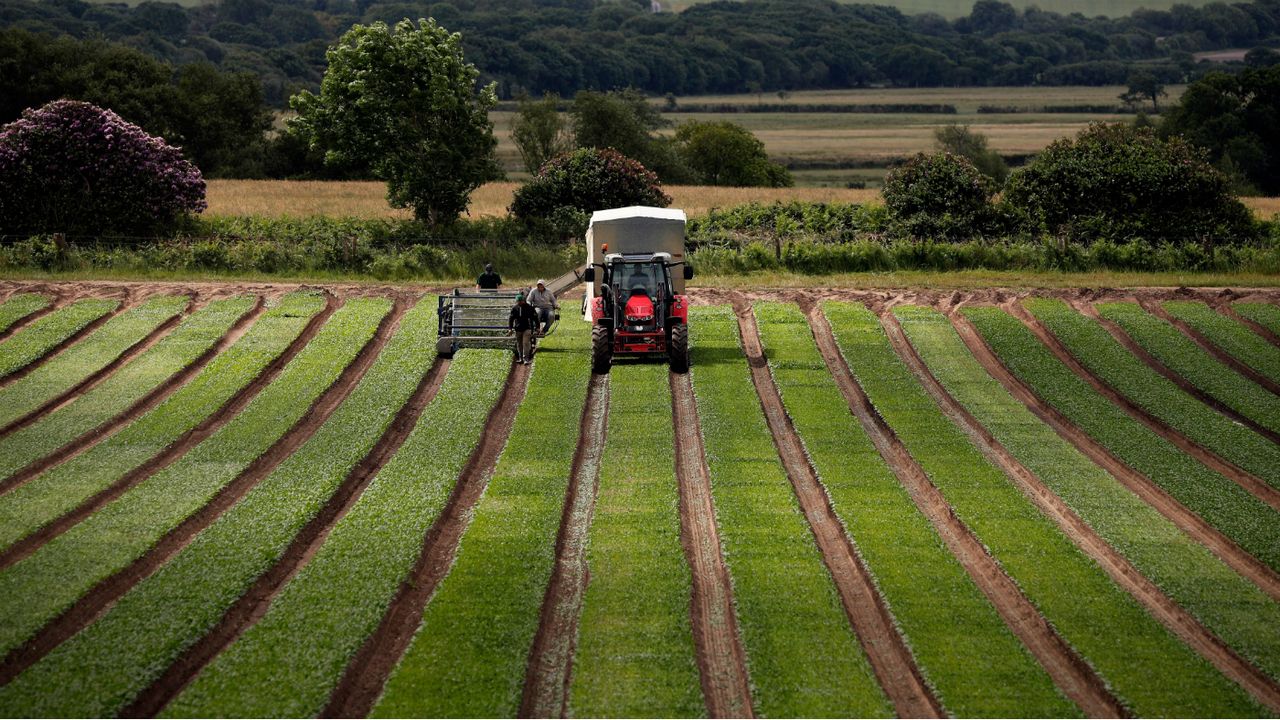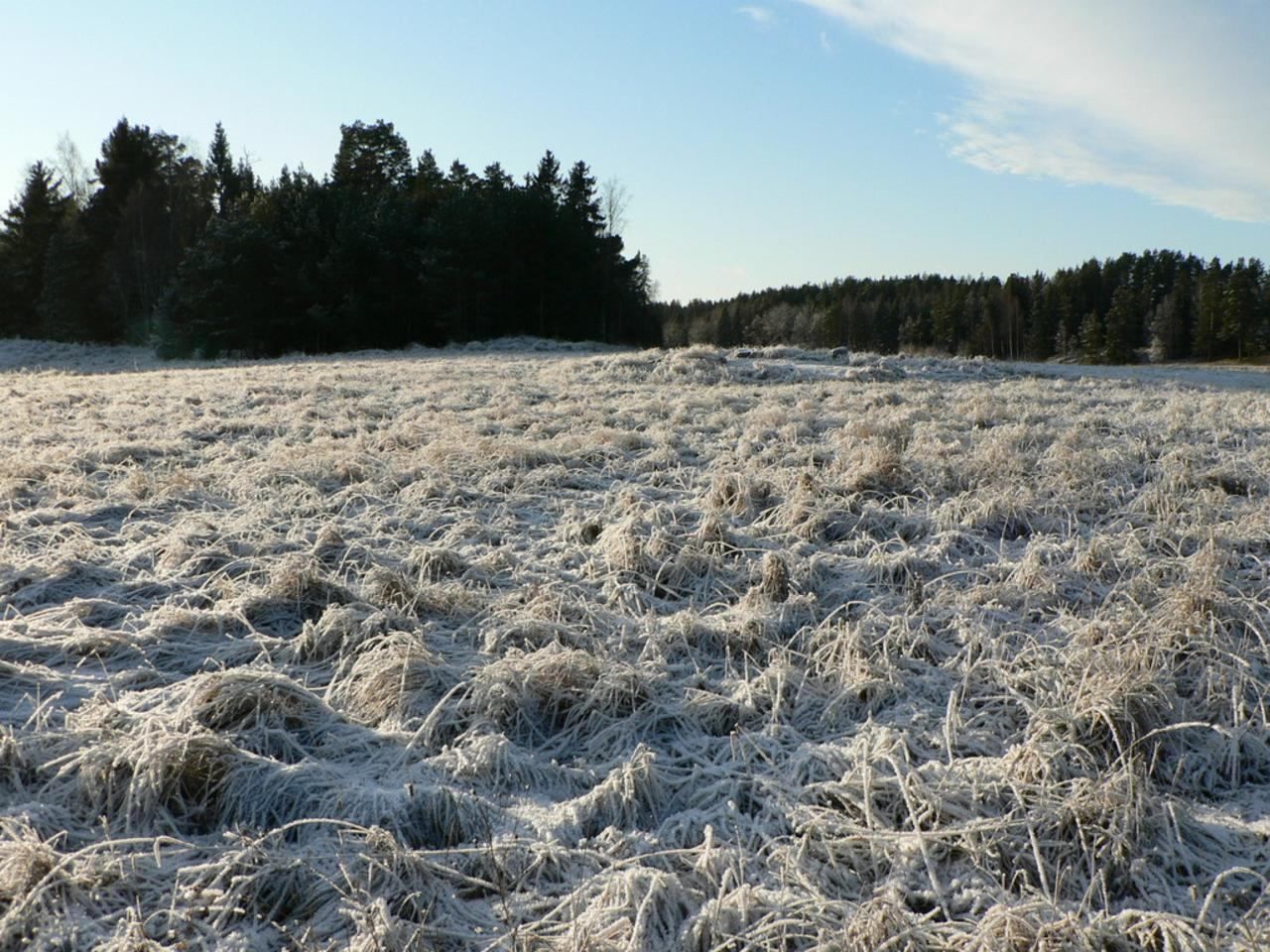
Victoria County farmer Kenneth Hanslik replanted winter crops after a hard freeze in late December damaged various vegetables.
Last month Hanslik lost his red beets, broccoli, cabbage and cauliflower. He estimated 80% of two onion varieties on his property were killed by the freezing conditions.
Some things did survive.
"My carrots are going to fully recover," Hanslik said. "Garlic had minimal damage. I didn't lose any garlic plants."
After the freeze did its damage, Hanslik plowed the soil where his vegetables had died, making way for new crops.
"There's a risk with replanting the cool season crops," Hanslik said. "The weather warms up in March and April, and crops don't do well in heat. We're at the mercy of Mother Nature."
Over in a mobile home community on John Stockbauer Drive in Victoria, backyard farmer Mike Martignoni also lost his broccoli, cabbage and cauliflower crops. Kale, Brussels sprouts and collard greens died, as well.
"Normally we'd be harvesting this time of year, but now there's no produce to sell," Martignoni, who runs Papa's Nursery from his home, said.
Martignoni said he is currently waiting for the right time to plant his spring crops, which include tomatoes, peppers, squash, eggplants and okra. He wants to be sure there will not be another hard freeze later this winter.
On Wednesdays and Saturdays, Papa's Nursery sells its products at the Victoria Farmers' Market. Market Manager Meredith Byrd said numerous vendors suffered crop losses during the late December cold spell.
"Pretty much anything that was outside, covered or uncovered, was hit hard by the freeze," Byrd said. "Greenhouse vegetables fared much better."
Martignoni stores peppers inside his greenhouse, but most of his produce was exposed to the elements when the freezing weather rolled through Victoria.
Before the freeze occurred last month, Hanslik picked off Satsuma oranges from a tree, knowing the tree itself would be touched by the cold conditions.
"The tree is damaged, but we won't know the extent of the damage until it grows back," Hanslik said. "By April, I should be able to tell what is dead and what is growing."
Hanslik said it typically takes four to five years for a Satsuma tree to bear fruit. A single Satsuma tree in Hanslik's grove can hold up to 200 pounds of oranges.
"You shouldn't even be able to see through this tree because of the density of the leaves," Hanslik said.
Last November, Hanslik thinned out onions that had been planted too thick and then he spaced each plant 6 to 8 inches part to ensure proper growth. Some of the onions he trimmed were killed by the freeze.
"I hate the fact that I have to do that twice," Hanslik said. "I would estimate that there was 30-40 hours spent (working on the onion crop) before the freeze hit, and now I have to do it again. I'm six to eight hours in to doing it again."
Source - https://www.victoriaadvocate.com