Residents around the region could breathe a sigh of relief Tuesday afternoon as Monterey County officials lifted, or at the least downgraded, any lasting evacuation orders for local communities that have been in place since last week.
Now, recovery can begin. But local officials are looking at a long road ahead, even with dry days – finally – in the forecast.
Between weeks of relentless heavy weather and swollen rivers splicing the region, Monterey County is facing storm damages in the millions, initial estimates show.
After a preliminary assessment of losses incurred since the statewide onslaught of repeated wind and rain began in late December, county officials reckon at least $30 million in public infrastructure damages due to winter storms. That estimate includes any harm or impact to roads and bridges, water control facilities, public buildings and equipment, public utilities and parks and recreation, as well as county storm management from debris removal to emergency protective services.
Maia Carroll, county spokesperson, said the most glaring winter storm impacts were seen in low-lying areas near the Arroyo Seco River, upper Carmel Valley and homes that run along the Salinas River. Still, Carroll added that damage assessments are ongoing, a process that will likely take weeks to complete, she said. Until then, devastation will be difficult to capture in full.
“Each area is facing something different,” Carroll explained. “This was a pretty significant event, especially for our smaller communities.”
For residents of San Ardo, a small South County community located south of King City, access to drinking water has been restricted for days. According to a letter sent to San Ardo residents from the Monterey County Health Department, the community’s water system was impacted by floods, resulting in contamination. Residents were advised to not only avoid drinking water, but also avoid using water for food prep or brushing teeth.
Carroll said meals and bottled water have been shipped down to the more than 600 residents of San Ardo while the San Ardo Water District ensures water is safe to drink again.
As for other repairs and recovery, Carroll said “nobody is putting a timeline yet on how long it will take to recover” because “there’s still quite a bit more work to do.”
“There’s so much widespread damage to prioritize, we have to figure out what repairs are needed now and what can go second,” she said.
An infrastructural casualty to the storm already well-publicized is the Gonzales River Bridge, which is now closed after a part of it fell into the Salinas River Sunday afternoon. According to county social media, the bridge is “too dangerous for anyone to use.” Carroll said it will be two to three weeks before public works can even begin to assess damage and determine what repairs are needed, let alone decide a timeline for reopening.
Agricultural losses
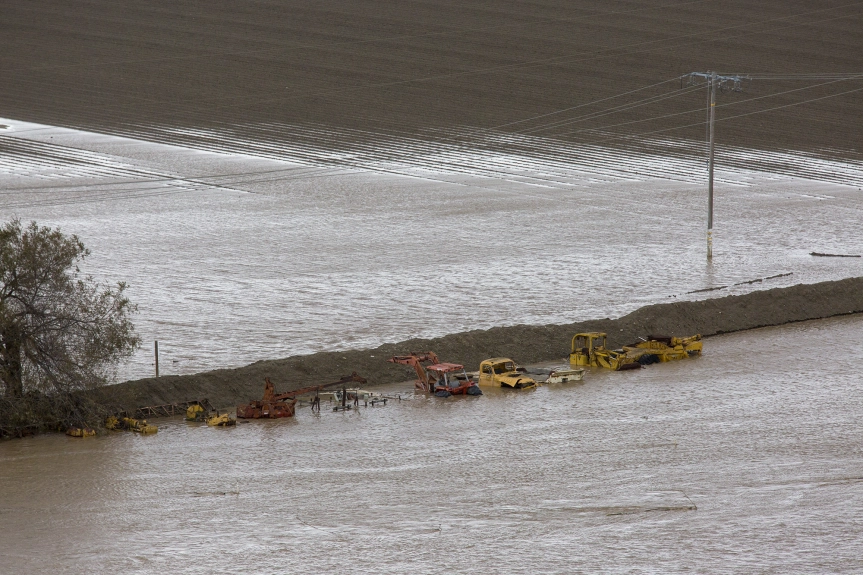
Apart from damages to public infrastructure, the region’s agricultural industry is also feeling the weight of frequent unforgiving weather. Initial estimates suggest the industry suffered losses to the tune of no less than $40 to $50 million after a swollen Salinas River spilled onto thousands of acres of nearby ag fields last week.
Though most of the Salinas Valley farmland is not currently in production, with the local growing season not set to begin until February, widespread flooding left farmers with a different – and costly – challenge: battered infrastructure in need of repair.
Norm Groot, executive director of the Monterey County Farm Bureau, said early estimates of losses cover anything from wellheads that have come under water and breached levees to damaged farming equipment and impaired irrigation lines. Like the lasting brunt to roads and homes around the region, however, the magnitude of loss for the county’s agricultural industry will not be known until flood waters recede and ag leaders can look beyond an immediate concern of just saving farms, Groot said.
As of Tuesday morning, Groot estimated around 20,000 acres of farmland flooded as the Salinas River swelled past banks. But that’s only a rough number, Groot explained. The degree of flooding and farmers’ inventory of damages may shift or grow with abating floodwater.
“We’re expecting a high flow in the Salinas River over the next couple of days,” Groot said. “We can’t get a full picture of everything until water recedes. … Right now, it’s hard to predict.”
As of Tuesday at noon, the Salinas River near Spreckels was observed at 21.85 feet, according to the National Weather Service. The river, which has for the most part stayed within its monitor flood stage since surging to 24.6 feet on Friday, was forecasted to slowly rise again through Wednesday morning before receding later this week.
Groot said other anticipated consequences of flooding include delays to the incoming growing season. Even if not housing an active crop, any field that was flooded will have to go through a protocol of testing for pathogens in both water and soil to ensure it is cleared for planting, Groot said. Depending on how long testing takes, a typically 30-to-60-day endeavor, farmers may have a late start to their growing season. Though, the burden of flooded farmland is ongoing.
“There’s the scheduling issues, but also operational costs. …Farm employees aren’t earning an income because they don’t have work. That’s been affecting farm workers, as well as employees in processing facilities for the last week,” Groot said.
Asked about larger impacts to the industry and the next crop cycle, Groot said it’s too early to say exactly what this means for supply totals produced this year. But for now, Groot thinks recovery will, at the minimum, entail tough choices for farmers faced with flooded fields and damaged infrastructure.
“Farmers are going to have to prioritize which fields and which infrastructure they want to invest in so they can get some of their fields operational and plant crops,” Groot said.
Source - https://www.mercurynews.com