Researchers at four universities — three in the U.S. and one in China — say that increasingly warmer weather patterns in the Corn Belt could increase the growth of a toxin that would swell farmers’ losses and threaten an important food source over the next two decades.
Their study looks at the growing incidence of aflatoxin in corn grown in Indiana, Illinois, Iowa, Missouri, eastern Nebraska and eastern Kansas — a region traditionally known as the U.S. Corn Belt — as it relates to changing weather patterns in those areas.
Jesse Tack, an agricultural economist at Kansas State University and co-author of the study, notes that “the estimates correspond to a worst-case climate-change scenario and thus are likely to be smaller than estimated if credible mitigation and adaptation strategies are leveraged.”
Possible losses
The researchers’ study — which was recently published in the journal Environmental Research Letters— suggests that 89.5% of corn-growing counties in 15 states will experience increased aflatoxin contamination from 2031 to 2040 compared to 2011-20.
“Assuming fixed corn prices and dollar values in 2021, overall losses [due to changing weather patterns] are expected to increase from $20 million to $63 million,” said study co-author Jina Yu, who is a lecturer in the Division of Business and Management at Beijing Normal University-Hong Kong Baptist University United International College.
Yu said that Kansas is among the states expected to experience “significant changes, with expected losses increasing from $3 million to $23 million. The reasons for this change are higher temperatures, drought during the early stages of corn growth and increased precipitation before the corn reaches maturity.”
Aflatoxin threat
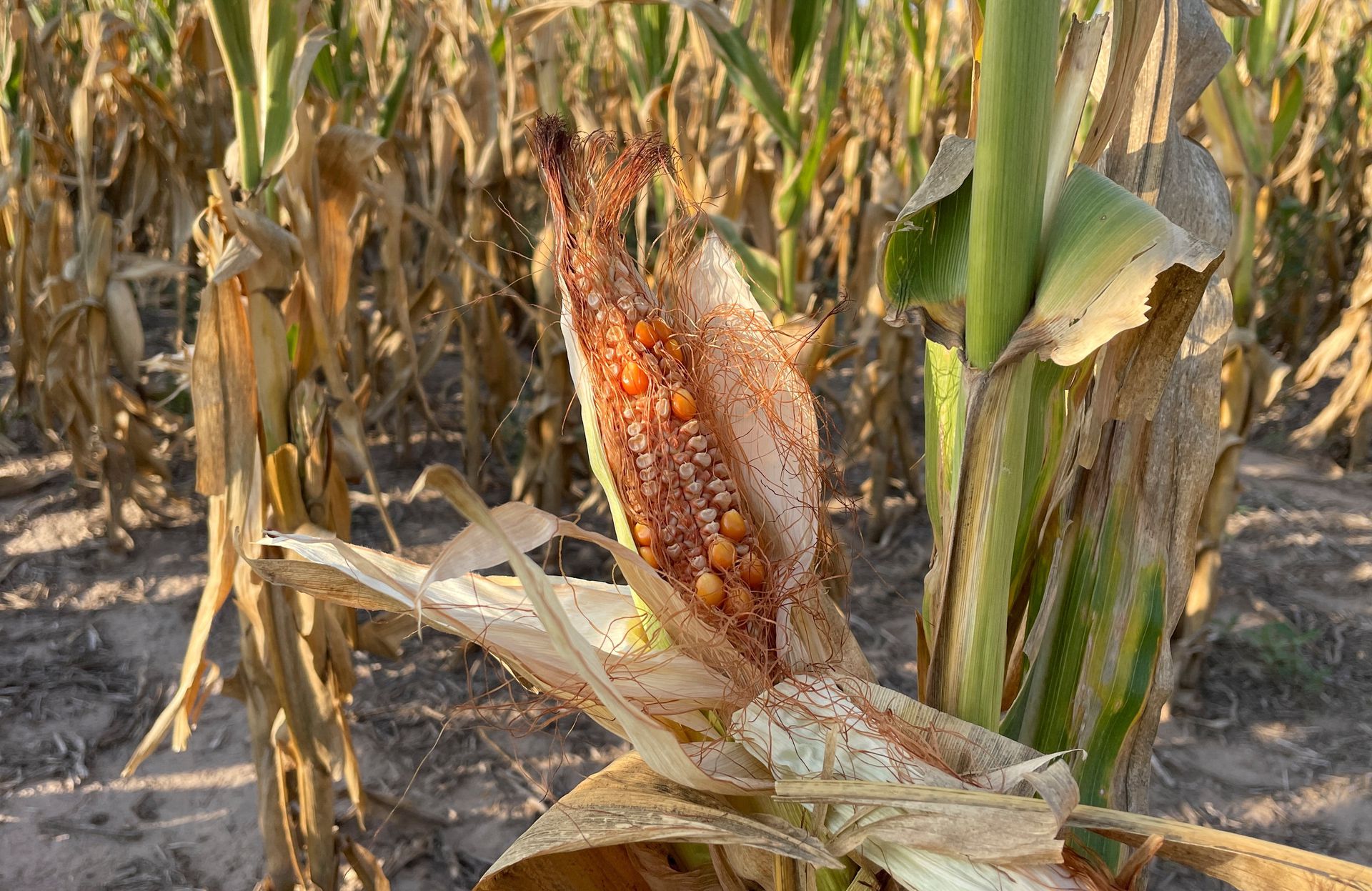
Aflatoxin is the name given to a family of toxins produced by fungi that can grow in the soil where corn and other farm crops (among them peanuts, cottonseed and tree nuts) are grown. Aflatoxins are carcinogenic and poisonous to humans and pets, and thus are highly regulated by the U.S. Food and Drug Administration against inclusion into the food supply.
“Aflatoxin has rarely been a problem in the Midwest in the past, because the cooler climate did not allow for fungi that produce aflatoxin to thrive there,” said study co-author Felicia Wu, a professor of food safety, toxicology and risk assessment at Michigan State University.
Wu noted that aflatoxin has been a perennial contaminant in corn grown in the southern U.S. due to hot, dry summer conditions in that region.
But, she adds, “the most general finding of our work is that aflatoxin risk will spread northward in the United States as a result of near-term climate change. This is extremely problematic from an economic perspective because most of the corn we produce in the U.S. is in the Corn Belt.”
Mitigation today
Currently, what Midwest farmers can do to offset the potential impacts to their corn crop “is the million-dollar question,” Tack said.
“It’s important to note that our research does not take future adaptation into account beyond the re-optimization of the growing season, which might mean changing planting and harvest dates,” he said. “Right now, we are simulating what would happen in the future under a business-as-usual scenario, aside from growing season changes.”
Tack adds: “We know that there will be adaptation; there always is in agriculture, and the evolution of plant genetics and on-farm management are powerful tools that can be leveraged. However, it is still not clear what the full menu of adaptation possibilities are, which of them will be most effective, and how costly they will be.”
Tack said the researchers hope their study – titled, ‘Climate change will increase aflatoxin presence in U.S. corn’ -- can help to inform future discussion on adaptations. “Unfortunately, we haven’t solved a puzzle,” he said, “but rather added an additional piece to an existing one.”
The current study did not look at the occurrence of aflatoxin in grain storage systems; Tack said other researchers are taking on that question. Damaged corn usually does not make it out of the field and into storage, he notes, “and thus it wouldn’t typically be measured when assessing the overall damage that aflatoxin causes in the food system as a whole.”
“Agricultural biotechnology may offer solutions to the problem of increased aflatoxin risk in the face of a changing climate,” Wu said. “Our larger project found that controlling for climatic factors and grower practices, transgenic Btcorn offered protection against aflatoxin contamination because of its insect pest protection. We could also use biotechnological methods to improve corn's resistance to heat and drought, which could in turn reduce damages from aflatoxin.”
Source - https://www.farmprogress.com