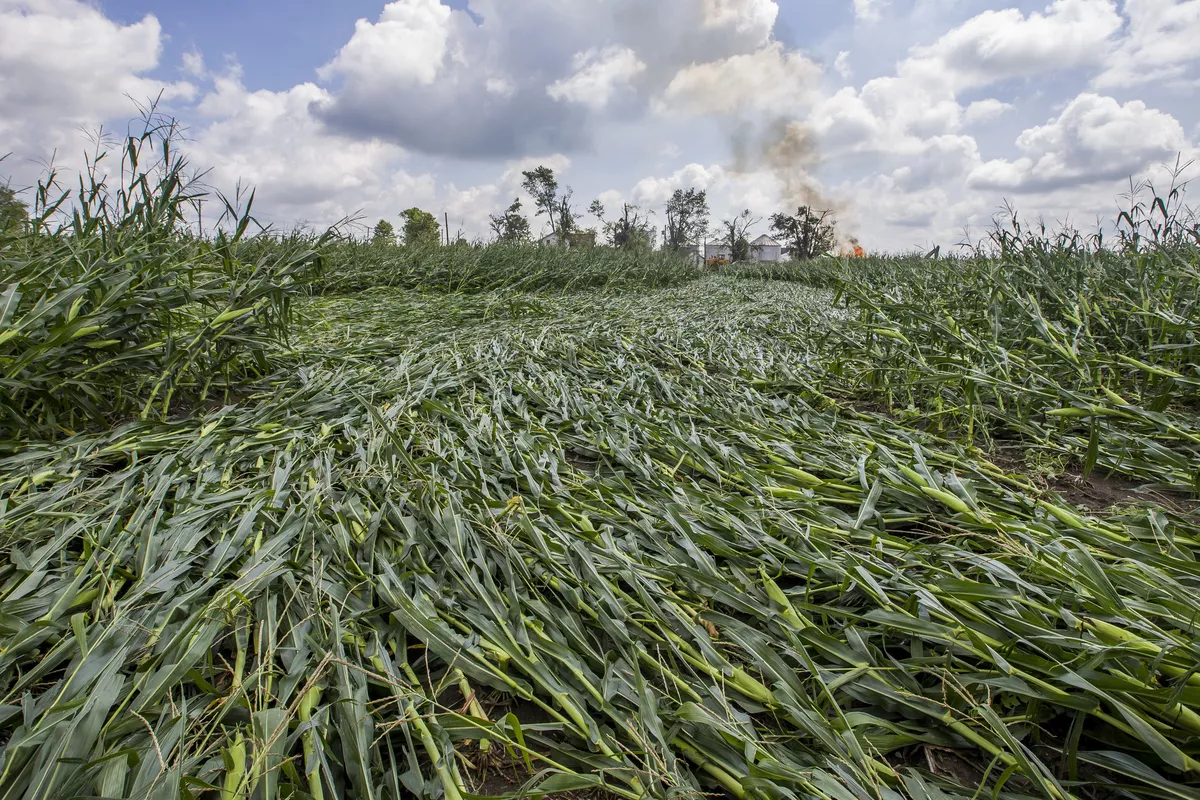
Winter cover crops could cut nitrogen pollution in Illinois’ agricultural drainage water up to 30%, according to recent research from the University of Illinois Urbana-Champaign. But how will future climate change affect nitrogen loss, and will cover crops still be up to the job? A new study investigating near- and far-term climate change in Illinois suggests cover crops will still be beneficial, but not to the same degree. The report also forecasts corn and soybean yield across the state, finding corn will suffer much more than soybean, especially in southern regions.
In their earlier study, the research team adapted a crop simulation model known as Decision Support System for Agrotechnology Transfer (DSSAT) to estimate how efficiently cereal rye could remove nitrate from tile drainage water if planted widely across Illinois. In their new study, the team used DSSAT again to forecast growth of cereal rye, as well as corn and soybean, in the near-term (2021-2040) and far-term (2041-2060) under two climate scenarios for Illinois: a best-case-scenario and a business-as-usual case.
The team took a piecemeal approach, modeling each component of the system separately before combining them into a holistic prediction for the impact of cover crops under climate change.
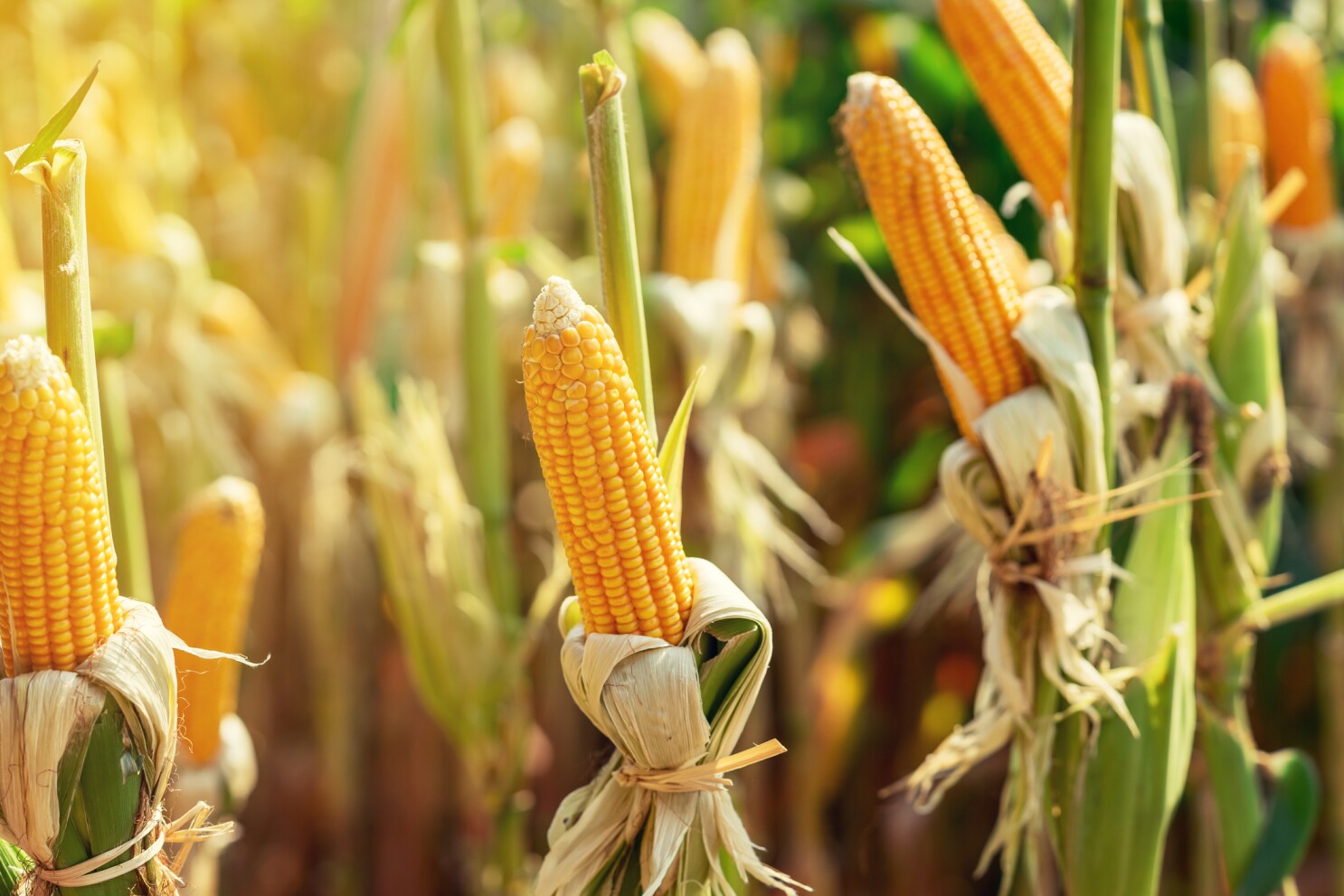
To start, they modeled climate impacts on cash crop yield and cover crop biomass. Corn yield decreased in most Illinois regions, future timeframes and climate scenarios, with average yield coming in 11.5% below to 3.8% above present averages. Soybean yield, however, mostly increased across regions and scenarios, with yields forecasted up to 27.5% higher than present averages. Finally, the model predicted cover crop biomass would boom as a result of climate change, with increases between 25% and 103% beyond current figures.
“Corn and soybean are two completely different kinds of crop, which is reflected in our results. The change in yield is due to multiple factors. Apart from the projected increase in temperature, the yield response is affected differently for each crop by changes in rainfall patterns and elevated CO2 levels in the future. We also found cover crops strongly benefit from warmer winter weather,” said study co-author Rabin Bhattarai, associate professor in the Department of Agricultural and Biological Engineering, a shared unit of the College of Agricultural, Consumer and Environmental Sciences (ACES) and The Grainger College of Engineering at Illinois.
Looking at nitrogen loss under climate change, the team predicted 24% greater loss in the near-term future, rising to about 42% by 2060.
“Warmer soil means microbes will be more active in converting nitrogen in organic matter to ammonium and then to nitrate in the soil. And if you have more nitrate in the soil, the potential for loss is higher,” Bhattarai said. “We already see high nutrient losses during warm, wet springs, even before crops are planted or fertilizer is applied. That nitrogen is escaping from the soil itself.”
With these baselines established, the researchers began making connections. First, they looked at the impact of cover crops on cash crop yield. In their previous DSSAT study, the researchers found growing cereal rye before corn and soybean had a slightly positive effect on yield. According to Bhattarai, cover crops slowly scavenge soil nitrogen throughout the winter and return the nutrient to the crop, providing a growth boost, when terminated and incorporated into the soil.
Under climate change, hungry swards of cover crops could deplete both soil water and nitrogen, even accounting for greater nitrogen availability predicted during warmer winters. Then, at termination, the sheer amount of cover crop biomass could overwhelm the mineralization apparatus of the soil, keeping some nitrogen locked up and unavailable for cash crops. However, although the yield benefit disappeared under future climate scenarios, the analysis did not reveal a yield penalty for growing cover crops.
“Whether you use cover crops or not, you're going to see a decline in corn yield in the future. The same applies to soybean. You may gain soybean yield whether or not cover crops are present,” Bhattarai said. “If you see any impact on the cash crop yield, it's not due to the cover crop, it's due to the changing climate.”
Finally, the team looked at cover crop impact on nitrogen loss under climate change. Relative to current conditions in which cover crops reduce tile drainage nitrogen by about 30%, cover crops are likely to become less effective under future scenarios, with as low as 11% reduction under far-term worst-case-scenario predictions.
“You don't get the same benefit that you get now. You will see better growth of cover crops with the warmer temperatures, but mineralization will overtake their ability to take up nitrogen; more supply than demand,” Bhattarai said. “Cover crops will help; they will still be effective at reducing loss. But the efficiency will drop.”
He added that farmers will have to augment cover crops with additional best management practices to meet nutrient loss reduction goals in the face of a changing climate.
Source - https://www.effinghamdailynews.com