After months of gathering and analyzing data, University of Florida economists have refined the estimate of agricultural losses due to Hurricane Ian: $1.03 billion.
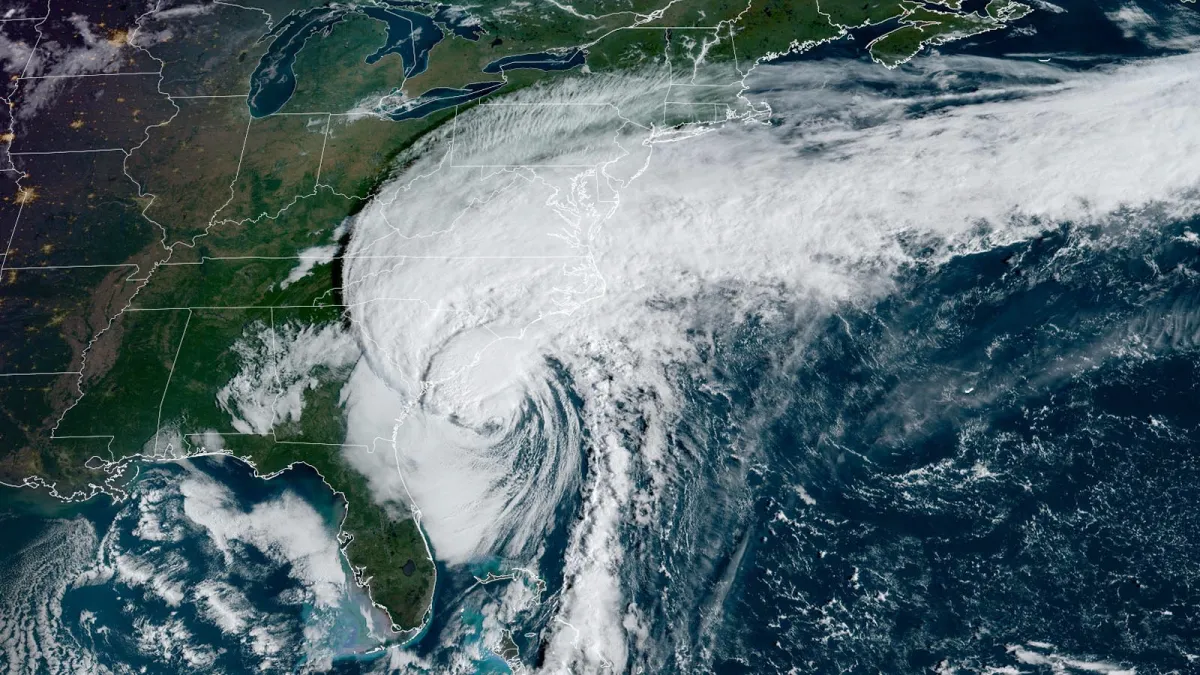
This number is an estimate of the total value of seasonal crops, livestock, nursery and aquaculture products that will not be harvested or marketed as a result the category 4 storm. Hurricane Ian made landfall on an island 20 miles west of Fort Myers on Sept. 28, 2022, and brought damaging winds and flooding to millions of acres of agricultural lands as it swept across the Florida peninsula.
The UF/IFAS Economic Impact Analysis Program (EIAP) published its detailed report, “Estimated Agricultural Losses Resulting from Hurricane Ian,” on Thursday. This report follows up on a preliminary assessment released Oct. 18, 2022, that estimated between $787 million and $1.56 billion in losses.
A portion of the $1.03 billion loss estimate might be offset by insurance or other risk management tools available to producers, said Christa Court, director of the EIAP and an assistant professor in the UF/IFAS food and resources economics department.
“For example, if a grower was expecting to harvest $10 million in crops this year and the storm destroyed $6 million worth, we report a $6 million loss. That farmer might recoup some of that through insurance, but we don’t have a good way of accounting for that in our estimates,” Court explained.
The latest report breaks down the $1.03 billion in final estimated losses by commodity group:
- Citrus: $247.1 million
- Vegetables and melons: $204.6 million
- Greenhouse and nursery: $195.4 million
- Non-citrus fruit: $137.7 million
- Field and row crops: $130.2 million
- Livestock and animal products: $119.8 million
The five counties with the greatest agricultural losses include:
- Manatee: $126.4 million
- Hillsborough: $104.4 million
- Palm Beach: $88.8 million
- Hardee: $72.5 million
- Hendry: $72.0 million
Court explained that while this report presents a clearer picture of Hurricane Ian’s impacts to Florida agriculture, it does not include costs associated with asset damages or production losses that might occur in future seasons.
“For example, we are not able to measure things such as the cost of repairing or replacing damaged structures or equipment, replanting perennial crops or replacing livestock,” Court said.
Court pointed out that Hurricane Ian’s impacts to Florida agriculture have been further compounded by Hurricane Nicole and hard freezes that occurred in January 2022 and December 2022.
“The same areas affected by Ian were hit, in some cases, by multiple weather events that each would have affected the agricultural yield on their own in an ordinary year,” Court said. “Our survey only covered damages and losses from Hurricane Ian, so this report is not a view of the total impact to agricultural production of all 2022 events that have impacted the sector.”
Court and her colleagues began collecting baseline data to measure agricultural losses and damages resulting from tropical cyclone events in 2017. Since then, the program has continued to improve its baseline and impact databases for these types of analyses.
“With our current methods, we can better analyze the overall impacts of wind, rainfall and flooding on agricultural lands,” said Xiaohui Qiao, research assistant professor in the UF/IFAS food and resource economics department and data analyst for EIAP.
“Traditionally, data on strong winds from hurricanes were the most accessible in the immediate aftermath of a storm, meaning that analyses focused on areas impacted by strong winds, but we know that factors like heavy rainfall and flooding can also contribute to significant crop and livestock production damage and losses. The same storm can also cause different experiences from one farm to the next,” Qiao said.
To arrive at agricultural loss estimates, the UF/IFAS Economic Impact Analysis Program uses multiple layers of data gathered from multiple sources. The complex process includes overlaying the storm’s path, windspeeds, rainfall and flooding with the acreage, value and seasonality of the agricultural commodities grown or raised in the counties affected by the storm. This overlay is combined with information about how the event affected those commodities. Finally, the economists refine their estimates using survey responses submitted by agricultural producers and Florida Cooperative Extension faculty.
“We would like to thank those who provided and helped gather survey responses. Our work to report impacts from storms would not be possible without their support,” Court said.
Source - https://www.morningagclips.com