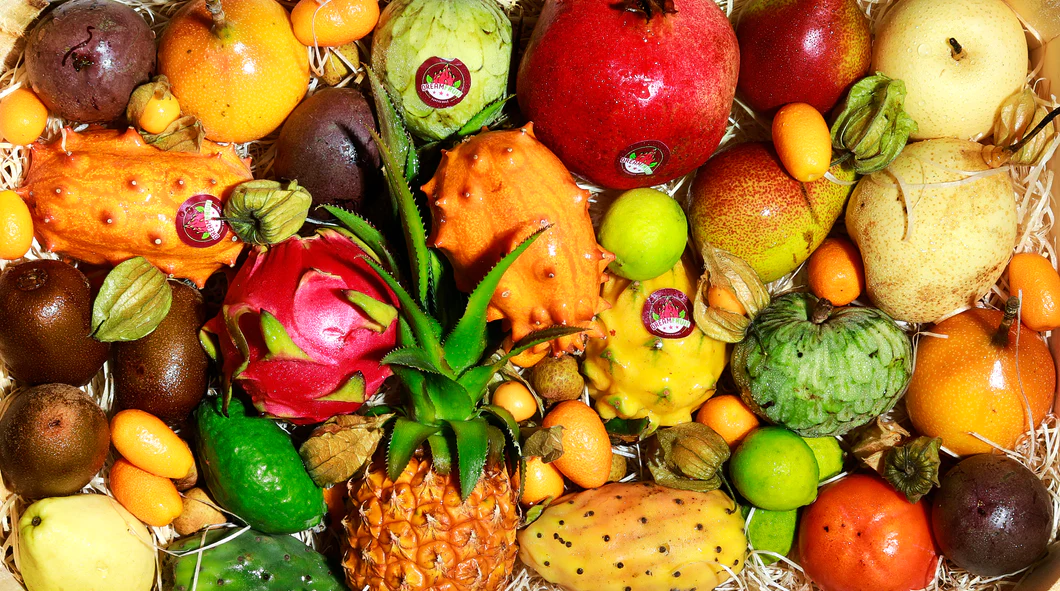
The by-products and waste from papayas, pineapples, coconuts, ʻulu, macadamia nuts and Albezia trees may one day be converted to fuel and energy to help lower greenhouse gas emissions.
The University of Hawaiʻi at Hilo is collaborating with the National Corn-to-Ethanol Research Center at Southern Illinois University in Edwardsville to conduct research in bioeconomy, which uses renewable biological resources, such as crops, trees and micro-organisms, to produce food, health, materials, products, textiles and energy.
UH-Hilo currently is adapting a low-cost, low-energy method developed by the National Corn-to-Ethanol Research Center to convert various tropical crops into ethanol and other products.
Through funding from the nonprofit BioMADE, UH-Hilo and the research center are also collaborating to create a local fermentation program and a tropical sustainability center on the Big Island that is ecologically and economically beneficial for local communities.
“The world has been investing billions in bioeconomy and biocarbon that replace fossil fuels to better maintain life,” said Peter Matlock, bioeconomy research and commercialization specialist at UH-Hilo. “There is a great opportunity that exists here once we adapt the technologies that exist.”
The method developed by the Illinois research center converts agricultural waste or by-products into ethanol mainly utilizes corn and corn cobs that are widely prevalent in the Midwest. UH-Hilo is investigating how the process works on tropical food waste, such as coconut husks, sugarcane or old ʻulu.
The process uses feedstock, which is the raw, plant material, and converts it into monomer sugars, which make up carbohydrates. These sugars are then fermented by yeast, or other micro-organisms, to create biofuel, plastics, textiles, food, feed and other biology-based products.
Matlock and other UH-Hilo researchers are reviving an idle fermentation suite at the U.S. Pacific Basin Agricultural Research Center in Hilo — which was used by scientists with the U.S. Department of Agriculture for similar research — to screen different kinds of feedstock to evaluate the conversion.
With a variety of feedstock available year round, Hawaiʻi is an ideal location to adapt and demonstrate this novel technology. The Big Island also provides rural locations for training, an active population of local farmers and students interested in engaging with new sciences and technology.
“We donʻt just do beautiful science,” said Yanhong Zhang, the interim executive director with the National Corn-to-Ethanol Research Center. “Whether … making feedstock biofuel, food or any other product, we aim to create inspiring but practical solutions.”
In 2022, UH-Hilo opened the Applied Life-Science Academy: Knowledge Advancing Industry (ALAKAʻI), which is a curriculum created in partnership with the National Corn-to-Ethanol Research Center and BioMADE. The multidisciplinary bioeconomy education is tailored to train professionals, including operators, scientists, managers, policymakers, and advocates.
Courses were developed through extensive interaction with a number of bioeconomy companies and research organizations to ensure relevance and impact. They also include Native Hawaiian and indigenous perspectives and knowledge, which give context to what it means to be sustainable on Hawaiʻi Island.
“Right now, we are screening different agricultural waste and by-products to see what we can convert from different feedstocks,” said Matlock from UH-Hilo. “One thing they all have in common, though, is the step of fermentation. Offering courses on fermentation will give people here more opportunities, like the ability to launch a new business or feed into existing businesses.”
According to reports by the McKinsey Global Institute and Schmidt Futures, it is estimated that the bioeconomy can grow to as high as $4 trillion in the next 10 to 20 years, and UH-Hilo and its partners intend for ALAKA‘I to help advance this tremendous growth.
Penny Norquist, program director of technology with BioMADE, said the nonprofit is interested in building infrastructure on Hawaiʻi Island, which would allow for more opportunities and pathways to all types of projects.
But Norquist said the nonprofit will engage with cultural groups first. She plans to visit Hawaiʻi Island for the first time in May to speak with researchers from UH-Hilo, cultural practitioners and other community leaders.
“While we have specific outcomes we expect like screening feedstock materials from Hawaiʻi to gain a better understanding, our goal is not just looking at the technical advancements,” Norquist said. “We want to incorporate a very clear example of workforce training and create a pathway of infrastructure that makes the world more green and sustainable while also providing more jobs.”
This summer, UH-Hilo will be offering a course to train students in fermenter operations, strain propagation, simple downstream separation and waste disposal.
“I think something like this fits with Hawaiʻi and itʻs communities and local agriculture,” Matlock said. “I get excited because more activity in the agricultural sector will enable food farmers and agriculture in general to be more successful.”
Source - https://bigislandnow.com