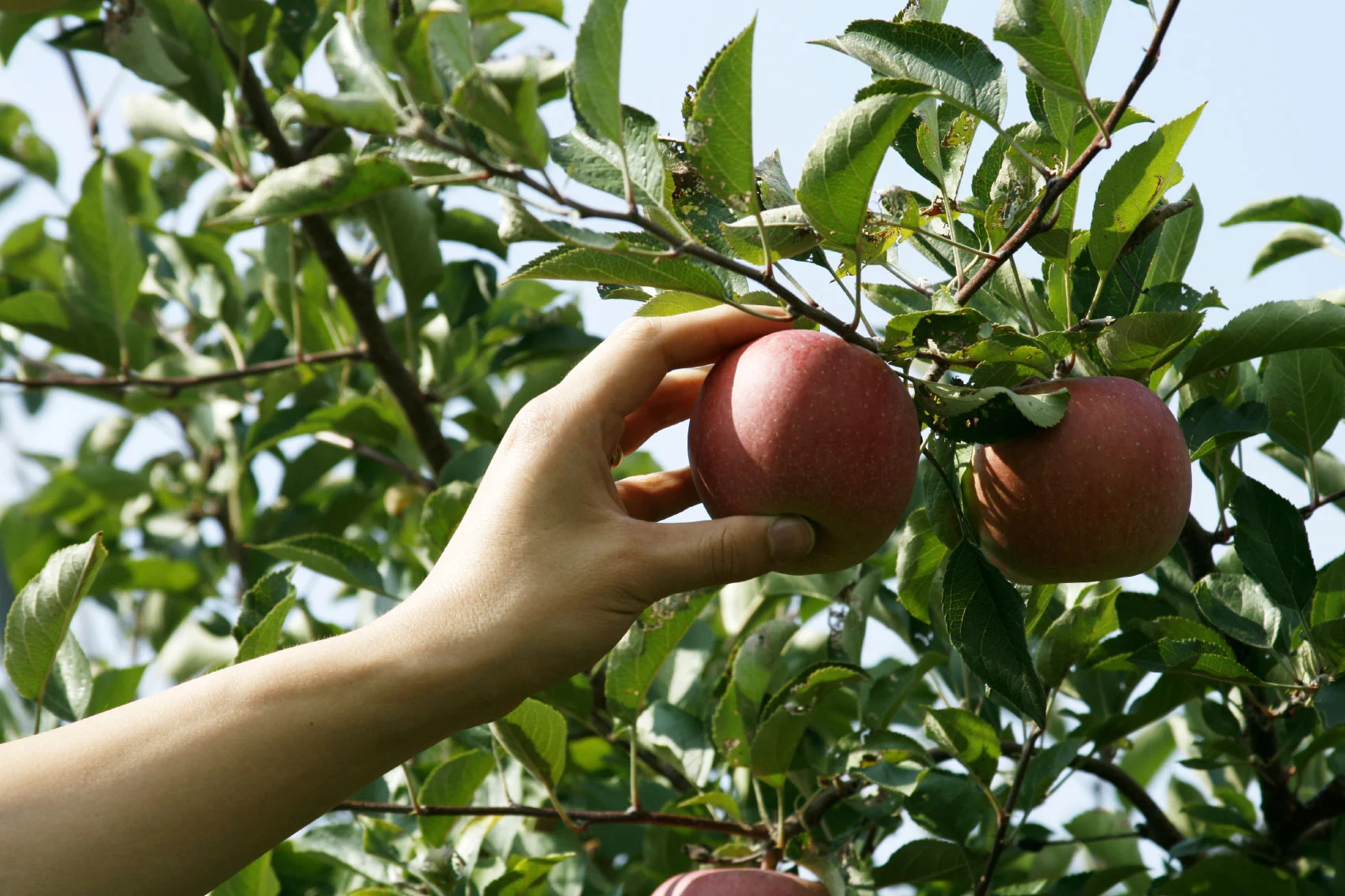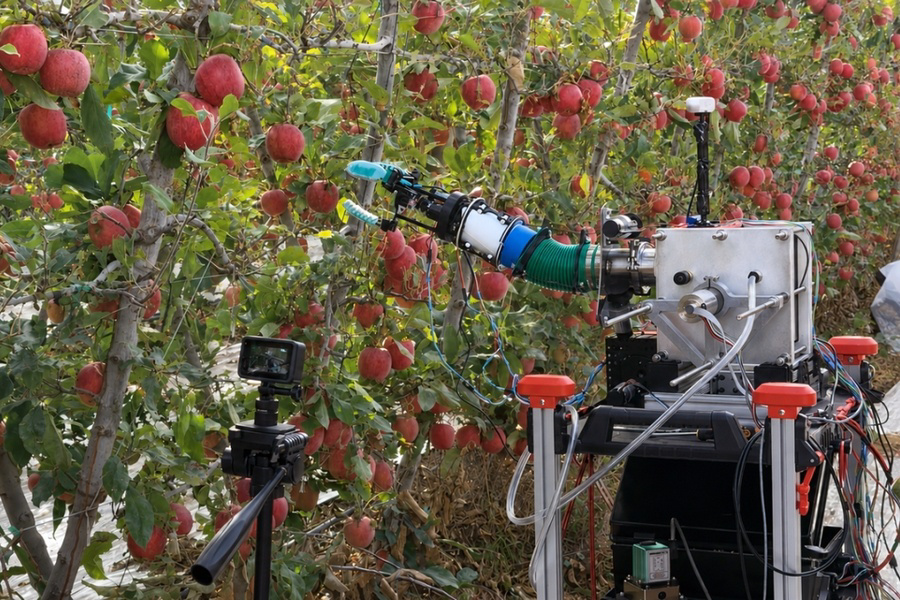
A Cornell-led research project is developing autonomous orchard robots for pollination, fruit thinning, apple harvesting, and inter-row weeding. The four-year project is supported by a US$7.5 million grant from the U.S. Department of Agriculture's Specialty Crop Research Initiative and will establish a Center of Excellence for Orchard Robotics at Cornell University.
Nine organizations are collaborating on the project. One participant, Washington Fruit and Produce Co., grows apples and cherries across approximately 4,047 hectares in Washington. According to technology director Gilbert Plath, labor accounted for around 45 per cent of the company's total costs 15 years ago, compared with more than 60 per cent today.
The research is led by Manoj Karkee of Cornell University alongside Matthew Whiting of Washington State University. The project aims to automate orchard operations that require manual labor and can involve ladder falls, machinery accidents, and repetitive motion.
Researchers are working on autonomous and self-driving systems alongside robotic handling technology designed to manipulate fruit without bruising. AI and machine learning are being used to enable robots to identify leaves, stems, fruit, branches, trellises, and wires and determine how to carry out orchard operations.
The project will also develop digital twins of orchards for horticultural analysis and train AI systems to interpret fruit tree canopies, including determining which fruitlets should be thinned early in the season.
Researchers from Cornell, Washington State University, Oregon State University, Pennsylvania State University, Michigan State University, Carnegie Mellon University, and Stanford University are involved, alongside Israel-based Fresh Fruit Robotics.
Fresh Fruit Robotics founder and CEO Avi Kahani said grower feedback indicates that machines designed solely for harvesting can be difficult to justify economically. A system capable of pruning during winter, pollinating and thinning during spring, and harvesting during autumn could provide greater utilization throughout the year.
The project will therefore also assess the economic and other factors influencing grower adoption of orchard automation.
Source - https://www.freshplaza.com