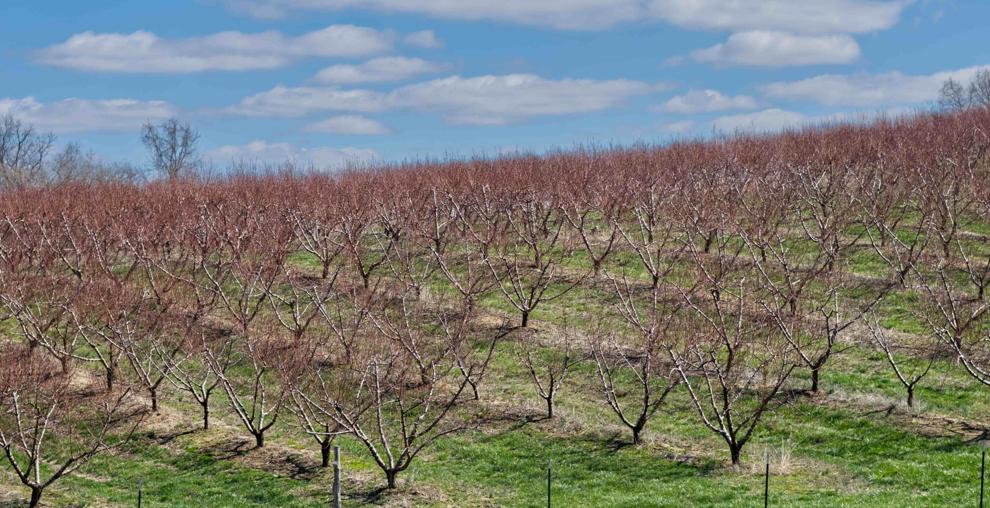
The sudden return to bitter temperatures is taking a toll on area crops and plants, especially the more vulnerable ones, like peaches.
Howard Taylor, the owner of KT's Orchard and Apiary in Canton, said the bitter cold in the past week has taken about a 40% hit on his peach crop. He said he's keeping his fingers crossed for the remaining 60%.
“That bloom's gone, that one's gone, that one's gone,” Taylor said Wednesday, March 15, as he pointed to his crops most heavily impacted by the temperatures.
He took inventory Wednesday on the peach blooms that have survived the cold and those that haven't. The most vulnerable are at full bloom.
“There's different blooms on different types of peaches,” Taylor said.
Elevation plays a key role, too.
“That one is going to have peaches, this one probably not,” Taylor said, assessing the damage.
He said, unlike what people may think, the primary culprit is not the harsh overnight low temperatures in the 20s in March. Rather, it's the unseasonable high temperatures the area has experienced.
“The 75s and 73s in January and December and February,” he explained.
It's those warm temperatures, he said, that popped out the peach buds a whole three weeks early, with some further along than others.
“It couldn't have happened at a worse time,” he said.
He estimates a 40% loss in his peach crop this year, hanging onto hope for the remaining 60%.
“That’s right. That won’t make me no money, but we’ll have some peaches. I think we're going to have some peaches on these... See, they weren't quite full bloom,” he said.
Taylor said he has had good years and bad, all depending on mother nature.
The Haywood County Extension Office said that's not unusual when it comes to growing crops in the mountains.
“You're never going to have a sure bet of when it’s going to be warm or cold from January to May,” said Haywood County Extension Director Sally Dixon.
She said some crops and plants will endure these up and down temperatures.
“We're still in that time of year where it depends on what level bud development you have within flowering plants and trees," Dixon said. "A lot of things that can withstand a cold night as long as you're still in like the first phase of bud development."
For the cold overnights ahead, she advises home gardeners to cover their plants or bring them inside.
As for Taylor, he will do his best to protect the bulk of his peach crop.
“I'll be spraying again late this weekend,” he said.
Overall, he remains hopeful, and he said his apples and berries remain in good shape.
Source - https://wlos.com