USA - Wireworms can cause damage across a large spectrum of crops

28.03.2023 542 views

Spring planting is right around the corner, and with that comes the possibility of wireworms invading grower’s fields and impacting yields.

“Wireworms are commonly seen across cereals – wheat, barley, oat, as well as other crops like corn, soybeans, dry beans and potatoes,” said Tracy Hillenbrand, regional technical representative for BASF.

Hillenbrand described wireworms as a “pesky” pest, due to their multiple life cycles.

“Looking at the life cycle for a click beetle (wireworms are click beetle larvae), the adult female will lay roughly 100 eggs,” she said. “That year, those eggs will go through different larval stages, and they can stay as a wireworm that feeds on your crop for 2-5 years. That’s where you’ll see the damage done to your root systems.”

As wireworms feed and continue to grow as more eggs are laid, growers will see increases in population quite quickly.

“They really enjoy moderate soil temperatures – roughly 50-85 degrees is when you’ll see most of the feeding damage occur,” Hillenbrand explained. “They really like some soil moisture, and if it’s too dry, they’ll burrow into the ground and away from the crop. The same goes for if it’s really warm – they’ll burrow away from the heat.”

Wireworms are most common in the springtime/early summer, based on soil conditions.

“They are attracted to the pheromones that plants release as they are germinating, so as you get that new crop that’s growing, it brings those wireworms to it, basically saying ‘it’s time to feed,’” Hillenbrand said.

Damage from wireworms can vary based on pressure.

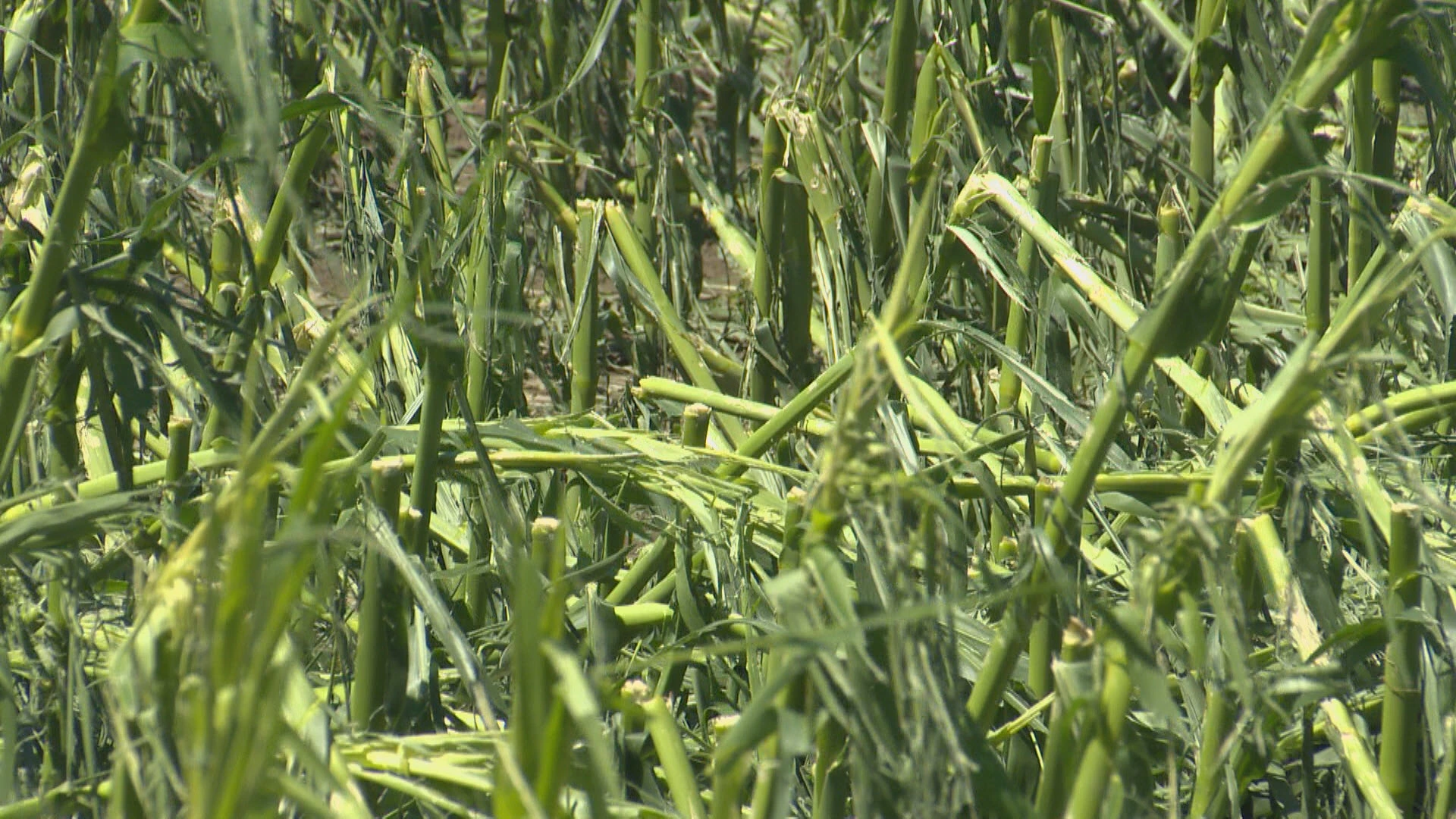
“With light pressure, sometimes you’ll see just stunted plants with reduced yield,” she said. “You can see low yield loss, maybe a couple bushels, or substantial yield losses, where your fields look like there were planter skips, and that may be more like 5-10 bushels per acre. Depending on your territory and pressure, damage could extend to 50-60 percent of your yield.”

Two years ago, BASF came out with a new product, Teraxxa, to help combat the damage done by wireworms.

“It’s a new insecticide, part of Group 30, and it’s different than any other insecticide on the market,” Hillenbrand said. “Teraxxa offers wireworm elimination where the wireworm will actually come and feed on the insecticide, which leads to mortality.

“Other products will reduce feeding that occurs and cause a ‘drunkenness’ effect, but it doesn’t eliminate the wireworms within the acre. With Teraxxa, it takes just one time of that wireworm coming in contact to cause mortality. After ingestion, it’s very quick, and feeding will stop within an hour,” she concluded.

Source - https://www.agupdate.com

25.01.2026

Guyana - Hundreds of Region Five rice farmers to receive historic crop insurance payout

Distribution of the certificates began yesterday at the Mahaica, Mahaicony, Abary (MMA) office at Onverwagt, where farmers gathered to formally receive documentation confirming their coverage under the historic UPL Crop Insurance Scheme.

25.01.2026

Canada - Saskatchewan announces $4.5M for livestock research and modernizes forage rainfall insurance for producers

Saskatchewan’s livestock producers will benefit from new research funding and a major update to a key insurance program, Provincial Agriculture Minister David Marit announced Wednesday.

25.01.2026

Cyprus extends deadline for €67.5m agricultural investment schemes

The Agriculture Ministry has announced that an extension has been granted for the submission of applications regarding the Major Investment Measure and the Young Farmer Installation intervention.

25.01.2026

Philippines - PCIC releases P7.27-M indemnity payments to flood-hit Isabela farmersv

More than a thousand farmers in Isabela have received financial relief after the Philippine Crop Insurance Corporation (PCIC) Cagayan Valley released over P7.27 million in indemnity payments to help them recover from crop losses caused by severe flooding last year.

25.01.2026

Vietnamese research targets banana Fusarium wilt

Researchers in southern Vietnam have identified native fungi and actinobacteria with activity against Fusarium wilt, a disease that affects banana production worldwide. The study was conducted by a research team including Tran V.T., Dinh T.Q., and Le D.D., and focused on Fusarium oxysporum f. sp. cubense tropical race 4 (TR4), the pathogen responsible for the disease.

25.01.2026

US$500,000 backs expansion of remote potato storage technology

SVG Ventures | Thrive has announced a US$500,000 investment in Calgary-based Cellar Insights through the SVG Ventures Pioneer Fund. The funding will be used to support the further development and commercial rollout of the company's remote monitoring technology for potato storage facilities.

22.01.2026

USA - Senators urge USDA to restore prevented planting coverage

Senate Agriculture Committee Chairman John Boozman and Ranking Member Amy Klobuchar led a bipartisan letter Wednesday urging the U.S. Department of Agriculture to reinstate additional crop insurance coverage for acres prevented from being planted.

22.01.2026

Türkiye boosts agricultural transformation amid 2025 climate risks

Türkiye’s agricultural sector faces climate risks in 2025 while accelerating reforms in water management, digital farming, food safety and rural investment.