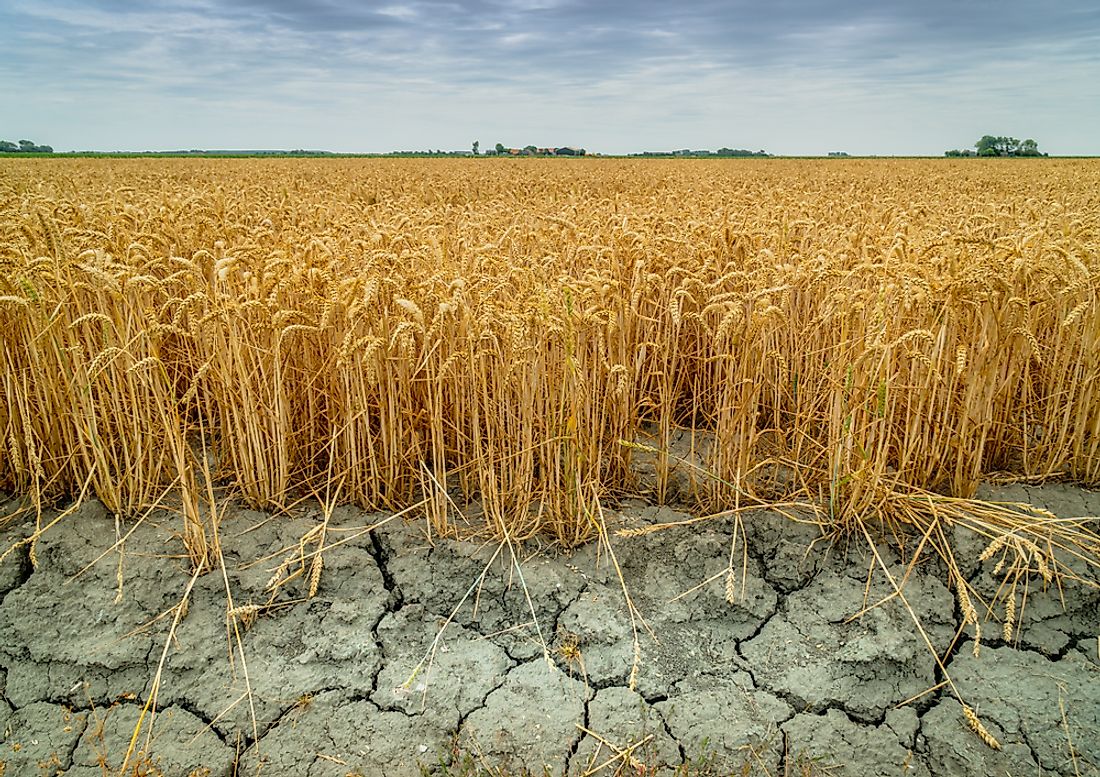
A European research-led consortium has been established to pioneer technologies to improve crop resilience to drought stress caused by climate change.
EpiSeedLink is a €2.69 million project funded under the European Commission’s Horizon Europe that will run for four years, exploring new methods to improve how farmed crops can survive prolonged dry spells by harnessing natural processes.
The research consortium is made up of partners in Ireland, France, Spain, Germany, the Netherlands with the Kerry-based biotech company BioAtlantis and the lead researcher, Dr. Sara Farrona at University of Galway.
EpiSeedLink employs two key strategies: understanding the molecular and epigenetic mechanisms behind seed germination and vigour to develop drought-resistant crops; and developing Molecular Seed Priming agents from renewable marine and terrestrial resources, such as seaweed, to improve seed performance under drought.
These approaches will be tested in laboratory and field trial conditions using model plants such as Arabidopsis – a flowering plant of the mustard family; as well as tomato and oilseed rape – two major crops grown in Europe.
Dr. Sara Farrona, Head of the Plant Development Epigenetics Laboratory of the School of Biological and Chemical Sciences, College of Science and Engineering, University of Galway, said: “Our goal is to research the potential for technologies that could help farmers grow crops under climate-related stress conditions, such as drought. As development of agricultural sustainable practices is essential in combating climate change, the goal of EpiSeedLink is to contribute to this challenge by driving progress toward a more sustainable world and advancing both foundational knowledge and practical solutions in agriculture.
“The research is investigating epigenetic mechanisms – essentially how cell function can be changed. Epigenetic processes in biology are analogous to a computer’s software. While genomes resemble the hardware running cells, epigenetic changes resemble software that manage when genes are switched on or off. Such changes can occur naturally in response to environmental factors, linking cells to their surroundings, but without altering crop DNA sequences.
“This project seeks to harness these natural processes to deliver new sustainable technologies to crop growers.”
The EpiSeedLink project involves research in three main areas:
- Seed Germination: Understanding how epigenetic factors influence the development of a new plant, known as seed-to-seedling transition.
- Stress Adaptation: Studying how plants respond to drought stress.
- Seed Priming: Developing technologies to improve drought tolerance using Molecular Seed Priming agents from renewable marine and terrestrial resources, such as seaweed.
As part of the EpiSeedLink consortium, University of Galway and BioAtlantis are hosting PhD students who are being trained as the next generation of plant scientists in innovative plant epigenetics research, offering new ways to improve crop yields and stress resilience.
Dr. Sujeeth Neerakkal, Head of Plant Research, BioAtlantis Ltd, said: “EpiSeedLink is a cutting-edge research project focused on modulating the epigenetic code in crops, using novel Molecular Priming agents. In this project, BioAtlantis will play a key role in developing these molecular priming agents to improve drought tolerance and to enhance growth and yield in crops, whilst also contributing to the training of the next generation of PhD level scientists in this field of research. As part of their training students will conduct scientific trials at BioAtlantis’ R&D facilities, using model plants and crops species such as, oil seed rape and tomato. BioAtlantis’ participation in EpiSeedLink is testament to its continued commitment to the development of STEM and biotechnology in Ireland, and our drive to deliver proven and sustainable solutions to crop growers worldwide.”
Source - https://www.agribusinessglobal.com