Vertical farms can use up to 98% less water than traditional agriculture

21.08.2023 610 views

"Water covers 71% of the planet's surface, but only 3% of it is suitable for consumption and agriculture, and its consumption grows at a rate twice that of the population. If we do not change our habits, global water demand could increase by 50% by 2030," the World Economic Forum warned.

"Agriculture is both a cause and a victim of water scarcity. According to estimates, it accounts for 70% of global water extraction, and freshwater resources are under heavy pressure from irrigation and food production. This also causes soil salinization, with the consequent deterioration of the quality of the crops."

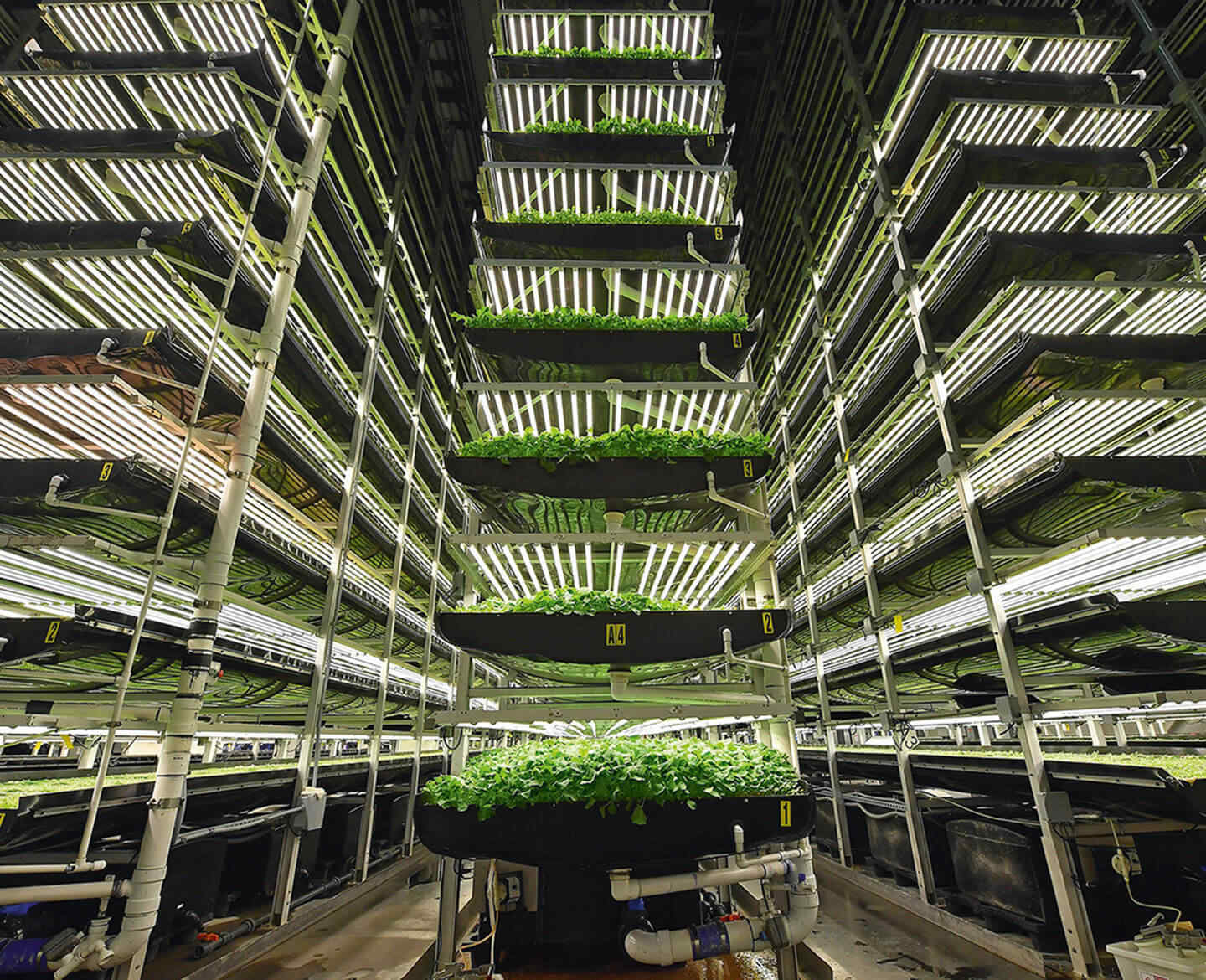
However, there is one farming method that can drastically reduce water consumption: vertical farming. "In some respects, vertical farming resembles greenhouse farming, but crops grow in stacked layers, using artificial lighting to manipulate plant growth, which also allows for 24-hour production, if desired. It's often much more sophisticated and has numerous advantages for crop production, including general metrics such as reduction of kilometers traveled per food, non-use of chemicals, and, in general terms, promotion of afforestation. Compared to greenhouse cultivation, this approach goes beyond environmental control, eliminates more variabilities, and is also beneficial in terms of water conservation."

"In advanced vertical farming solutions, water is applied in exact doses, which minimizes waste and increases productivity at all levels. This is achieved by recirculating and treating nutrient-rich water and capturing water that would otherwise be lost by perspiration. Filters, UV treatment, and complex treatment and recirculation systems are tailored to the exact needs of each plant, just as a hospital's treatment regimen would be tailored to a patient and their underlying condition and needs."

"In general, depending on the crop, vertical farms can use up to 98% less water than traditional agriculture."

Source - https://www.hortidaily.com

19.01.2026

FAO issues new guidance on food safety risks linked to climate mitigation chemicals in agriculture

As governments and agribusinesses race to curb greenhouse gas emissions while feeding a growing global population, the UN’s Food and Agriculture Organization (FAO) has released new guidance to help policymakers and industry assess food safety risks linked to emerging climate-mitigation chemicals used in agriculture.

19.01.2026

Indonesia pushes agricultural downstreaming to boost farmers’ income

Agriculture Minister Andi Amran Sulaiman has called on regional governments to accelerate downstreaming of local agricultural commodities - particularly coconuts, cashew nuts, and cocoa - to increase added value and raise farmers’ incomes. 

19.01.2026

Japan struggles to weed out plant threatening agriculture, ecosystems

The seemingly innocuous alligator weed, or Alternanthera philoxeroides, poses a real problem, especially to rice farmers.

19.01.2026

Canada - Kamsack-based Nytro promotes Green Lightning technology

The Green Lightning system uses electricity to convert water into nitrogen-rich fertilizer, with larger units designed to meet the needs of farm operations.

19.01.2026

Ireland - Almost €2.9m issued in farm scheme payments last week

Just under €3 million was issued in various farm scheme payments last week by the Department of Agriculture, Food and the Marine (DAFM).

19.01.2026

India - Horticulture Director gave his suggestions in the National Conference of Crop Insurance Scheme

A two-day National Review Conference was held in Bengaluru under the Pradhan Mantri Fasal Bima Yojana. 

18.01.2026

India - Bihar Launches Online Crop Loss Compensation Scheme: Farmers Can Claim ₹7,500–₹10,000 per Hectare

The Bihar government has announced financial assistance for farmers affected by crop losses under the Bihar State Crop Assistance Scheme. 

18.01.2026

Afghanistan - $30m new cold storage facility opens in Kabul to boost agriculture

The Ministry of Agriculture, Irrigation and Livestock (MoAIL) has inaugurated a new cold storage facility in Kabul, saying it will help reduce agricultural waste, cut imports, and strengthen the economy.