This year's summer-autumn rice crop has severely impacted the yield and income of farmers in many localities, with over 6,000 hectares of rice suffering from empty or partially filled grains. To learn from this experience and find effective solutions for future production seasons, reporters from Nghe An Newspaper and Radio & Television interviewed Mr. Phan Duy Hai, Deputy Head of the Provincial Department of Crop Production and Plant Protection.
A challenging production run.
PV:Sir, the fact that over 6,000 hectares of summer-autumn rice crops suffered from empty grains has significantly impacted the yield and income of farmers. From a professional perspective, looking back at a production season that revealed many challenges, from weather conditions to limitations in cultivation, what is your assessment of this issue?
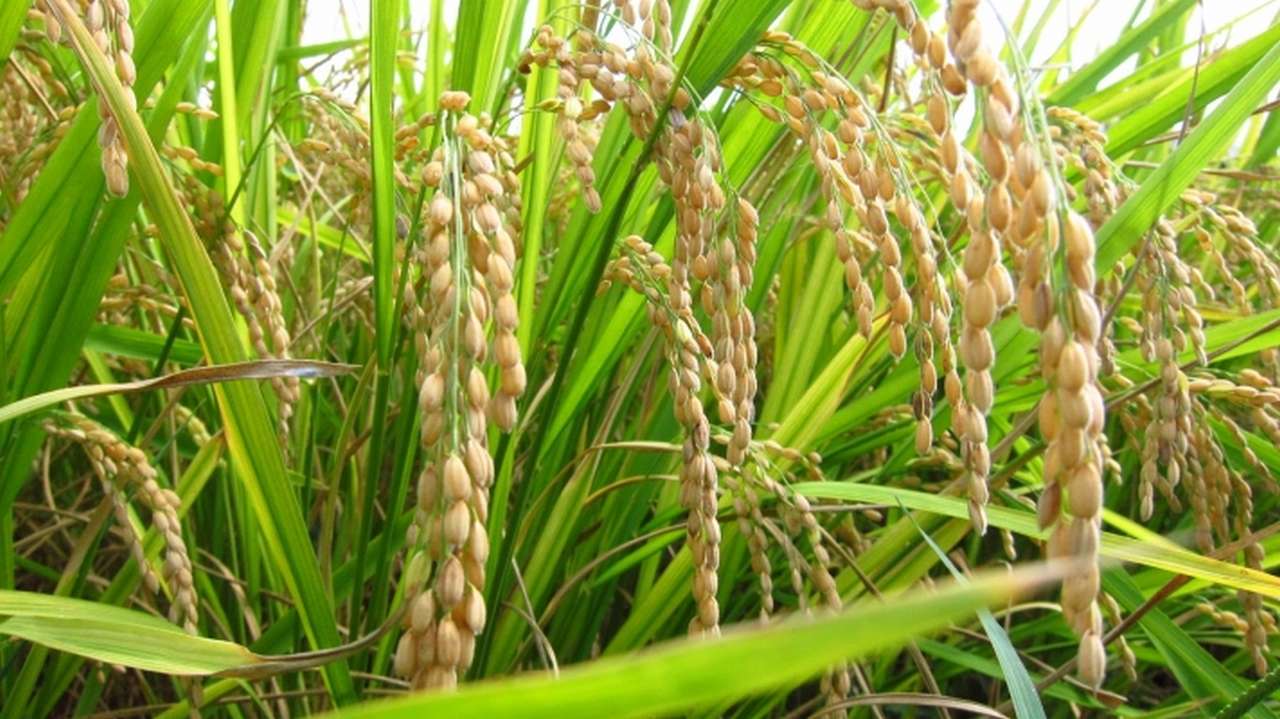
Mr. Phan Duy Hai:First of all, it must be stated that this year's summer-autumn crop season has been extremely challenging. The entire province planted over 68,000 hectares, of which over 48,000 hectares were dedicated to summer-autumn rice. At the beginning of the season, the rice plants grew very well, tillering vigorously, and water resources were generally sufficient. However, by harvest time, the province had recorded over 6,000 hectares of rice with severe empty or partially filled grains, with damage rates ranging from 30% to over 70%.
This situation is mainly concentrated in early-flowering rice crops before August 1st, in the communes of Hop Minh, Quan Thanh, Van Tu, Giai Lac, Binh Minh, Phuc Loc, Van Kieu... The damage is so severe that in some places, such as Nam Yen Cooperative (Quynh Anh commune), up to 135 hectares were completely destroyed, and farmers could not harvest because the cost of harvesting machines was higher than the money they would get from selling the rice.
In Phuc Loc or Binh Minh communes, many households harvest 4 sao (approximately 0.4 hectares) of rice but only get a few hundred kilograms of empty grains. The income is not enough to cover even half of the costs of fertilizer, seeds, and harvesting machine rental, not to mention the labor of planting, cultivating, and tending the fields for months.
Clearly identify the cause.
PV:Many farmers are concerned that the cause is due to the quality of the rice seeds. So, what is the assessment from the relevant authorities, sir?
Mr. Phan Duy Hai:Upon on-site inspection, the cause related to the variety has been ruled out. The phenomenon of empty grains occurred on a large scale across most of the rice varieties that were cultivated. Although early-flowering varieties like Khang Dan 18 suffered more damage, this was due to the fact that the flowering time of these varieties coincidentally coincided with the peak of extreme weather conditions, not because the variety itself was defective.
PV: To find the right solution, we first need to identify the root causes of this situation. So, what factors have directly contributed to the widespread phenomenon of empty rice grains this year?
Mr. Phan Duy Hai:Upon review, the agricultural sector identified the causes as stemming from both unfavorable natural factors and some limitations in farming practices.
Objectively, this year's summer-autumn rice crop suffered a double impact from two extreme weather patterns precisely during the most sensitive stages: heading, flowering, and milk-filling. In mid-July, when the rice was heading, intense heat combined with strong southwest winds caused very low humidity (only 41-52%), drying out pollen and reducing pollination. Immediately afterwards, from July 25th to August 10th, when the rice was flowering and ripening, there was prolonged heavy rain, with rainfall 50-80% higher than the multi-year average, washing away pollen and preventing pollination.
The erratic hot and humid weather also creates favorable conditions for pests to proliferate, such as bacteria, fungi, rice mites, stem borers, and diseases like grain discoloration. Even if rice grains are pollinated, rice mites suck sap, and fungal diseases and bacteria attack, causing the husks to turn dark, green, or yellow, resulting in the pollinated grains being shriveled, partially empty, or even completely hollow inside.
In particular, climate change, with its negative impacts, has transformed previously minor, localized pests such as rice spider mites into major pests, spreading widely and causing damage in many areas. Along with rice stem borers, this is one of the pests that cannot be effectively controlled without strict adherence to standards, regulations, and recommendations from specialized agencies.
In reality, because rice mites are very small and difficult to see with the naked eye, farmers often underestimate the problem, only starting to spray when disease symptoms appear on the rice plants. Meanwhile, for rice stem borers, spraying is only effective when detected at the newly hatched egg stage; once the larvae have burrowed inside the stem, killing the tillers and causing panicles to turn white, spraying is almost ineffective.
To minimize risks to production, the Provincial Department of Crop Production and Plant Protection proactively anticipated potential dangers and developed response plans early on. Specifically, in July 2026, we issued two directives guiding localities on controlling dangerous pests such as stem borers, leaf rollers, spider mites, and rice blast disease, while also intensifying technical training. However, due to negligence among some farmers, proactive field inspections and pest control spraying in some areas have not been truly timely.
Subjectively, due to the high cost of agricultural supplies, investment in crop care and pest control by some farmers has been limited. The mentality of "doing it just to maintain the land" has led to the lack of synchronized maintenance and dredging of irrigation canals in some areas, limiting water carrying capacity and causing localized water shortages during the rice heading stage. Furthermore, the habit of saving rice grains for seed sowing over multiple seasons in some areas has reduced the rice plant's resistance to disease.
Lessons learned and sustainable solutions for future production cycles.
PV: Based on the losses incurred during the 2026 Summer-Autumn crop season, what lessons has the agricultural sector learned, and what fundamental solutions are there for future seasons, sir?
Mr. Phan Duy Hai:The biggest lesson learned is that agricultural production cannot forever rely on favorable weather conditions, but must proactively shift from passive response to flexible adaptation to climate change.
Regarding fundamental and long-term solutions for subsequent summer-autumn crops, the relevant professional sector is focusing on four main groups of solutions:
Firstly, the planting schedule must be strictly enforced. The principle of "the earlier the better" must be seriously implemented. Low-lying areas must sow and plant early to harvest before August 30th in order to completely avoid the floods and unfavorable weather at the end of the season. Lower-lying areas should harvest before September 25th, and higher-lying areas should complete harvesting after this date.
Secondly, the crop varieties and intensive farming practices need to be restructured. The industry will review and incorporate rice varieties with better heat tolerance, drought tolerance, and pest and disease resistance. In particular, farmers should absolutely not use rice intended for consumption as seeds, and should apply balanced fertilization and irrigation practices. Priority should be given to applying sufficient amounts of organic fertilizer in balance with inorganic (chemical) fertilizer to increase the rice plant's resistance.
Thirdly, we need to improve pest forecasting and management capabilities. The Sub-Department will strengthen training courses and provide technical guidance at the grassroots level, helping people to identify pests such as rice mites and rice blast early so they can proactively spray at the right time.
Fourth, we need to boldly transform the crop structure. In highland (more arid) areas that are barren, have difficulty with irrigation, or frequently face crop failure risks, localities should resolutely encourage people to switch to planting short-term cash crops and fodder crops that are more economically efficient and safer.
Source - https://baonghean.vn