

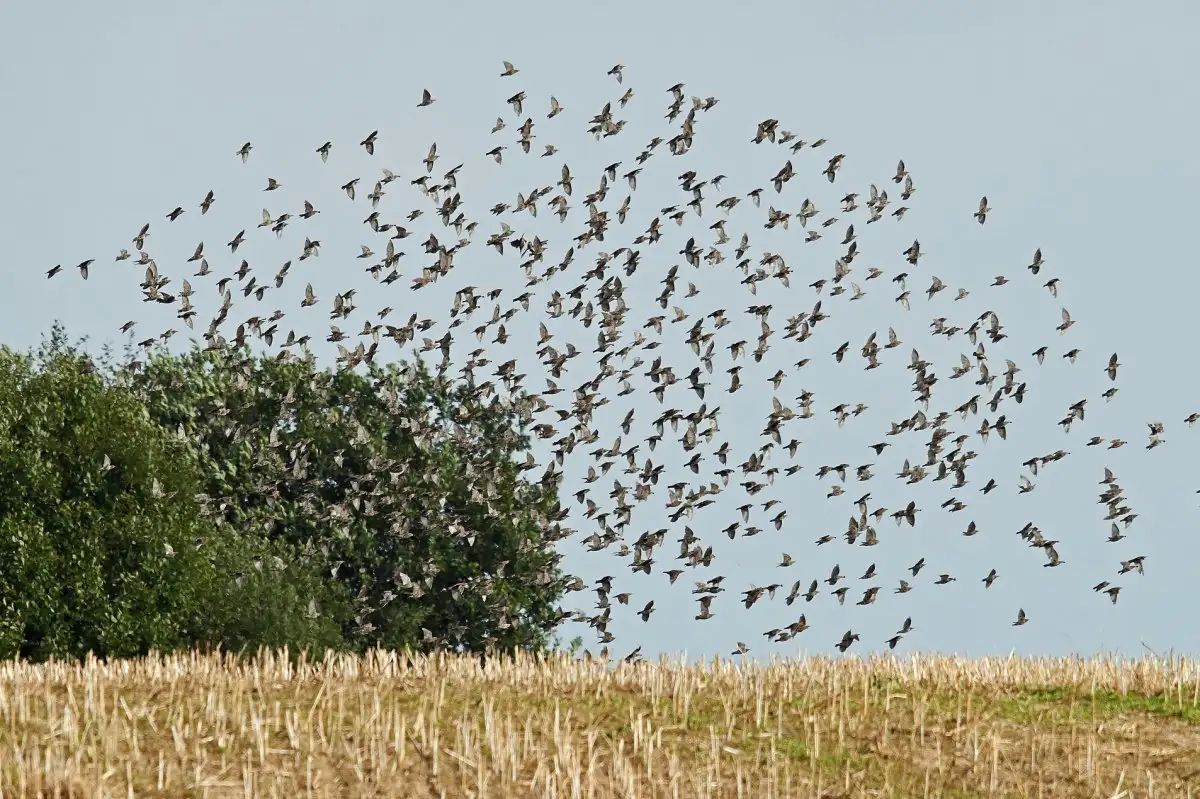
Quelea birds are currently ravaging sorghum and millet fields in two districts in Masvingo and Matabeleland North provinces in the country threatening food security and livelihoods for smallholder farmers in these areas, a chief government entomologist says.
Department of Migratory Pests and Biosecurity Control (MPBC) acting Director Shingirayi Nyamutukwa told the Herald on Wednesday that they had received reports of quelea outbreaks from Nyamandlovu, Mary Ellen in Matabeleland North and Chikombedzi in Masvingo provinces.
He said the red-billed quelea birds were attacking sorghum and millet crops which were now reaching the maturity stage.
Migratory Pests and Biosecurity Control Department teams were deployed swiftly to control the outbreaks.
"Control using physical netting has been implemented in Chikombedzi with an 80 percent kill rate while preparations are in progress for chemical control in other reported areas, " Nyamutukwa said.
"At this time of year, quelea birds are in their breeding season building nests and laying eggs as they multiply. During this period, adult quelea birds feed their nestlings with traditional grains as well as small insects. The traditional crops vulnerable at this time include sorghum and millets."
Last season, the department managed to contain all outbreaks of quelea birds to protect the 2022 winter wheat crop.
Teams were working round the clock to contain all outbreaks to safeguard the country's small grain crops.
Most farmers in areas receiving less rainfall plant traditional grains that perform better and this attracts the menacing birds.
"This year we will use chemical and physical trap netting while we continue to explore control using drones. Drone technology will become one of the latest technologies to be employed in quelea bird management," the chief Government entomologist said.
"We are going to use drones mounted with speakers echoing falcon bird sounds to chase away the menacing birds. We intend to explore the use of laser light in quelea management this year as we try to accommodate non- chemical ways of managing the birds.
"The technology is expected to come with better ways of determining quelea populations before and after sprays and their impact on crop loss."
If uncontrolled, quelea birds can worsen vulnerable farming households' food and nutrition insecurity.
In Zimbabwe, traditional Quelea breeding grounds include Pandamatenga, Matetsi, Hwange, Chikombedzi, Gonarezhou, Checheche, Malilangwe, Beitbridge, Muzarabani and Mana Pools amongst low-lying areas.
The invasion of unusually large populations also threatens other countries in the SADC region including Botswana and Tanzania.
Zimbabwe and Botswana signed an MoU on migratory pest management last year and the two countries are expected to conduct drone spray trials this year in the Pandamatenga and Hwange areas bordering the countries.
"This is a welcome development as most birds breed in this region causing heavy crop losses on both sides," Nyamutukwa said.
According to the Food and Agriculture Organisation (FAO) plant experts, an average quelea bird eats around 10 grams of grain per day and a flock of two million can devour as much as 20 tonnes of grain in a single day.
The red- billed quelea is a small weaver bird native to sub- Saharan Africa and renowned for its attacks on small- grain crops within Africa.
It is the most numerous bird species in the world, with a peak post-breeding population estimated at 1,8 billion.
Nomadic super-colonies can grow to millions of birds, making quelea not only the most abundant bird in the world but also the most destructive to cereal grains, especially sorghum and millets as well as wheat, rice and barley.
FAO has supported SADC countries to beef up response efforts in the urgent ground and aerial spray operations, surveillance and capacity building including alternative methods for controlling quelea birds in hardest hit parts of the region.
The red-billed quelea is an avian pest in Africa causing damage of approximately
US$88,6 million annually, according to the FAO.
Source - https://www.herald.co.zw










