NEWS
804
of 1226
News
24.02.2017

India - Crop loss: applications being processed

Farmers affected by crop failure will be eligible for drought relief from the State government as well as insurance claim under the Union Government’s Pradhan Mantri Fasal Bima Yojana After assessing the extent of crop loss based on land verification, the Agriculture Department is now in the thick of validating applications of the farmers and determining exactness of their PAN and Aadhar particulars since the compensation amount will be deposited directly into their bank accounts. The exact figures of the extent of crop loss and amount sought as compensation as drought relief and insurance claim will be arrived at within a few days, said Joint Director of Agriculture R.M. Subramanian. Paddy, maize and ragi crops in select locations have been notified for compensation under the scheme for Kharif season. Experiments have been conducted to determine crop yield. Source- http://www.thehindu.com

24.02.2017

USA - Crop Insurance Deadline Nears in Louisiana Courtesy Photo

USDA's Risk Management Agency (RMA) reminds Louisiana producers that the final date to apply for Whole-Farm Revenue Protection and insurance coverage on corn, cotton, grain sorghum, peanuts, rice, soybeans, and sweet potatoes is February 28. Current policyholders who wish to make changes to their existing policies also have until the sales closing date to do so. Crop insurance provides protection against crop production losses due to natural perils such as drought, excessive moisture, and decreases in revenue. Producers are encouraged to visit their crop insurance agent to learn specific details for the 2017 crop year. Crop insurance is sold and delivered solely through private crop insurance agents. A list of crop insurance agents is available at all USDA Service Centers and online at the RMA Agent Locator. Producers can use RMA's online Cost Estimator to obtain an estimate of their premium amount due. Learn more about crop insurance and the modern farm safety net at www.rma.usda.gov. Source - http://www.weeklycitizen.com

24.02.2017

Africa - New information service to help farmers control pests

Farmers in Sub-Saharan Africa are to benefit from a new project that aims to develop early warning system  to help cut crop losses resulting from pests. The project will forecast pest outbreaks using cutting-edge space infrastructure, Earth observation data and state-of- the-art modelling techniques. The project called Pest Risk Information Service (PRISE) is led by the UK-based Centre for Agriculture and Biosciences International (CABI) with £6.38 million (almost US$ 8 million) funding over five years from the UK Space Agency, according to a statement from CABI last month (27 January). Timothy Holmes, head of technical solutions, CABI’s Plantwise knowledge bank, tells SciDev.Net that PRISE will help farmers feed more citizens and earn more from trade and agricultural sales. “Pest outbreaks are becoming increasingly unpredictable due to climate change,” says Holmes, adding that farmers may receive forecasts through existing plant health systems, leveraging on networks in current programmes and projects to trigger appropriate action to deliver at-scale alerts and advice. The project is intended for Ghana, Kenya, Zambia and three others yet to be decided but likely in Sub-Saharan Africa. “Ghana, Kenya and Zambia have already been working with CABI's Plantwise programme to tackle pests and their associated crop losses. The PRISE project will reach citizens through mobile, radio, Web and extension services,” says Holmes. ‘‘The partnerships with governments and responsible organisations will help in its expansion together with strong links forged with them.” The project aims to contribute to understanding of how extreme weather patterns can affect farmers, and highlight the need for preparations that increase their resilience, Holmes explains. Misael Kokwe, technical coordinator of the Climate-Smart Agriculture project, UN FAO in Zambia, says that the project is timely because of recent unexpected outbreaks of pests, adding that it officially began in December 2016 but inception workshops will be held in Ghana, Kenya and Zambia in March 2017. The service will be developed and sustained by building in-country technical capacity and interrelated business plans that engage the private sector, for instance agro-dealers and insurance companies. Source - http://www.scidev.net

24.02.2017

Canada - Sask. crop insurance premiums, coverage going up

Bad weather last year means crop insurance premiums and coverage levels are going up in Saskatchewan this year. Agriculture Minister Lyle Stewart said premiums will average $8.51 an acre -- up 67 cents from last year's average. Stewart says the 8.5 per cent premium increase is needed to cover crops such as lentils and canola. "Those higher premiums reflect more revenue, but they represent higher risk and liability of the crop insurance corporation because of the higher value of the basket of crops that are being seeded on average across the province," Stewart said Thursday at the Saskatchewan Crop Insurance Corp.'s head office in Melville. Stewart said coverage levels will increase by $1 to $217 an acre. The minister also announced that the province will pay out an estimated $650 million in crop insurance claims from 2016 because storms and excess moisture delayed harvest. About 1.3 million acres of crop is still on the fields and it's got to come off, Stewart said. "It's always a serious issue when you have a crop to harvest before you can get in the field to seed. That's a problem," he said. "We know that our producers can get a lot of work done in a short time these days and we don't always expect miracles, but we quite regularly see them. We're mindful of the problem that that is for producers who are affected. We'll be there whatever the end result is in crop insurance." Crop insurance officials could not break down how much of each specific crop remains unharvested. They said the problem is spread across the province. Harvey Malanowich, a farmer in the Canora area and a director with the Saskatchewan Association of Rural Municipalities, said he still has canola to bring in. "The challenge is going to be in the quality of what's out there," said Malanowich. "Unharvested acres, they'll be done in a short time. We have equipment now that can take it off and manpower can do it also." The $650-million payout is not a record loss. That came in 2002 when crop insurance paid out just over $1.2 billion because of a drought. However, the increased crop insurance claims are being cited for the rising provincial deficit. Saskatchewan Premier Brad Wall said earlier this month that crop insurance claims are up $250 million from what was forecast and the deficit is up to about $1.2 billion. Despite the claims, Statistics Canada reported in December that farmers in Saskatchewan had higher production for most crops. The agency said canola production in Saskatchewan was up 2.3 per cent from 2015 to a record high 9.7 million tonnes in 2016 and growers reported producing 2.7 million tonnes of lentils in 2016. Source - http://regina.ctvnews.ca

23.02.2017

USA - Farmers monitor storms’ impact on crops, water supplies

Strong storms during the Presidents’ Day holiday weekend flooded farm fields, caused several dairy farms to relocate their animals and brought other impacts on California farms and ranches. The storms also added more water to an already overtaxed system, and led to renewed calls to modernize the system. “In the long term, the surge of storms should bring an improved water outlook,” California Farm Bureau Federation President Paul Wenger said, “but it has definitely brought worries to farmers and ranchers whose land is inundated or whose crops may be at risk. We remain hopeful that weather in coming days will minimize any problems.” Wenger noted that many reservoirs have filled and have had to release water, which underlines the need to enhance California’s water storage capacity. “Believe it or not, there are people who think we don't need more water storage, and that we should even tear down many of the facilities we now have,” he said. “These activists don't care how many people suffer from devastating floods in winters like this. They don't care how many people suffer from water shortages during droughts.” Wenger said California must move as quickly as possible to allocate money from the 2014 water bond, Proposition 1, to create more storage both aboveground and underground. “Environmentalists say we can solve water problems by conserving more water and storing more underground. But we’re not able to conserve most of the water flowing through the system now—we have had to let it go. And moving water into the ground takes time. You can’t replenish groundwater if you don’t have aboveground reservoirs and canals to hold and move water to where it can effectively filter underground,” Wenger said. Farm Bureau said farmers of a number of crops and commodities will be assessing the impact from the weekend storms, including: • Almonds: The storms hit just as almond trees were blooming. Bees that pollinate almond blossoms don’t fly in the rain and prefer temperatures higher than 55 degrees. In addition, a number of almond trees were blown down by strong winds during the weekend. But farmers said the tree losses weren’t as bad as feared, and expressed hope pollination would still be successful. • Berries: The rains delayed strawberry harvest along the Central and Southern California coast. Production may be temporarily reduced as farmers wait for waterlogged fields to dry and discard rain-damaged berries. • Dairy farms: Several dairy farms located near the Tuolumne and San Joaquin rivers needed to move their animals to higher ground as river levels rose. Other farmers are watching river levels carefully and preparing to move their animals if needed. • Field crops: Fall-planted grain crops that have germinated could take on too much water, which could ultimately reduce yields. Hay fields have also flooded. Soggy or flooded fields will delay planting for a number of crops. • Grapes: Vineyards in various grape-growing regions have been flooded. Farmers say that could leave vines vulnerable to root-rot damage if they remain flooded for too long. • Vegetables: Rains and muddy fields slowed vegetable harvest in Southern California and delayed planting in the Salinas Valley. Rain generally benefited vegetable crops in the Imperial Valley. • Walnuts: Flooded orchards that remain waterlogged for too long could be vulnerable to root diseases that can kill trees. • Miscellaneous: Heavy rains in foothill regions have washed out privately maintained roads, making it hard for cattle ranchers to reach their animals, and muddy pastures limit ranchers’ ability to reach herds on horseback. Pear orchards in Lake County have been flooded. Citrus fruit harvest was temporarily delayed. The storms brought large amounts of rain to Santa Barbara County farmers who have remained in severe drought. One farmer there reported losing about half an acre of avocado trees to a mudslide. The California Farm Bureau Federation works to protect family farms and ranches on behalf of more than 48,000 members statewide and as part of a nationwide network of more than 6.2 million Farm Bureau members. Source - http://www.lakeconews.com

23.02.2017

Australia - Insured Losses from New South Wales’ Bushfires & Hailstorms Pass US$53.7M

Combined losses from the two New South Wales catastrophes of bushfires and hailstorms,  have passed A$70 million (US$53.7 million), according to the Insurance Council of Australia (ICA). As of Feb. 20, insured losses for the NSW bushfires had reached A$28.5 million (US$21.9 million) from 1200 claims, said ICA, noting that insurers also have received about 17,500 claims in the aftermath of hailstorms on Feb. 18 across Sydney with estimated insured losses of A$42 million (US$32.2 million). ICA CEO Rob Whelan said losses from both events were likely to rise further. “Insurers have experienced another spike in claims this morning from businesses in relation to the hailstorms as owners returned to work,” Whelan said. “So far, homes and businesses in Sydney’s north-western suburbs and Northern Beaches seem to have been hardest hit by the hailstorms, mostly through damage to vehicles.” The damage from the Carwoola bushfire near Queanbeyan over the weekend has been incorporated into the ICA’s catastrophe declaration on Feb. 14, the ICA said. “Though this blaze, and the bushfires that destroyed at least 45 homes in the state’s Central West and the Mid North Coast are now under control, the value of losses is expected to rise further. That’s because agricultural losses, such as livestock, crops, fencing and equipment, typically take longer to identify and assess,” he continued. Source - http://www.insurancejournal.com

23.02.2017

Data-driven farming with agricultural drones

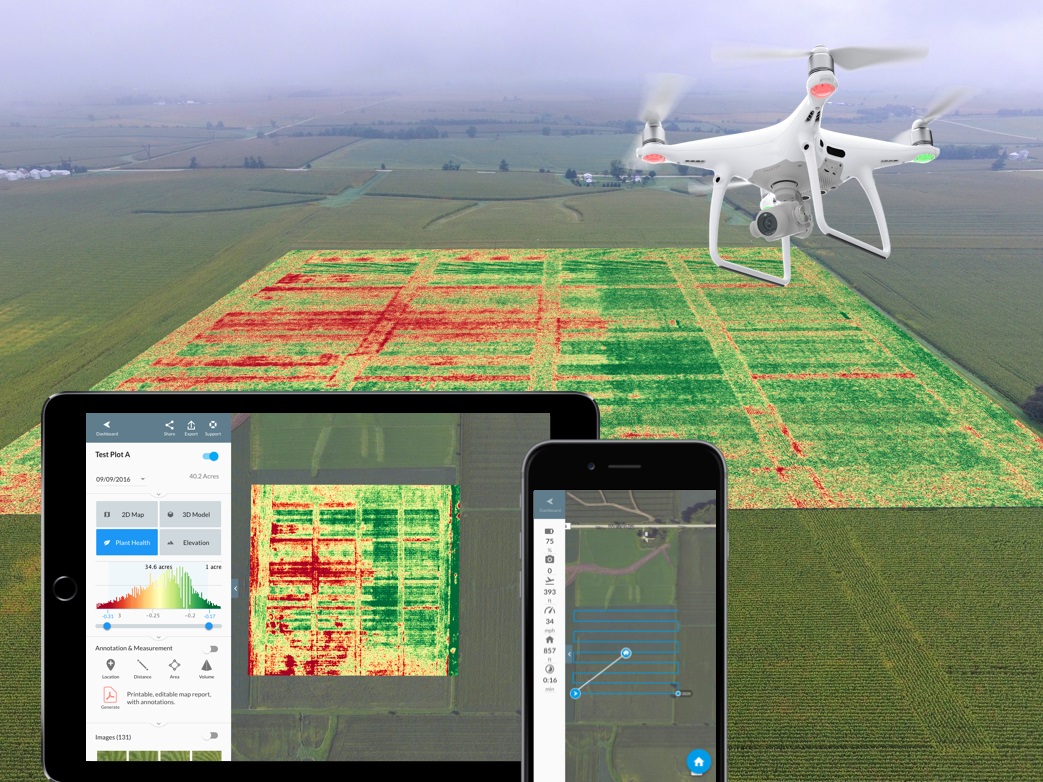
Industrial machinery manufacturer CNH Industrial previously revealed a concept for autonomous tractors that could turn farming into a desk job. Now, CNH is also partnering with DroneDeploy to offer farmers an all-in-one UAV system bundle. This isn't the first or the only agricultural drone package on the market, but it's exciting to see a large capital goods company like CNH getting serious about drone software. Agricultural drones have been around for a few years, but we expect to see rapid adoption of the technology, as several factors have suddenly combined to make drones much more appealing to farmers. Previously, agricultural drones were often fixed-wing UAVs, which were expensive and required expertise. Today's drones are built with many of the same components as our ubiquitous smartphones, so economies of scale make drones cheaper and smarter. They can do much more than take aerial photos -- though that is helpful, too. Drones can quickly gather data that can help farmers make decisions about how to manage crops. In addition to hardware improvements, drone software has also gotten better, with several apps that are specifically designed for farming. Finally, the Federal Aviation Administration recently made it much easier for anyone to become a commercial drone pilot. CNH's new offering includes a DJI Phantom 4 Pro drone with an RGB camera and a one year subscription to DroneDeploy's mapping software for flight planning and data capture. Farmers can use drones to capture real-time field imagery that apps analyze to help identify any crop health issues. For example, the system can detect parasites and fungi, quantify crops (for projections or insurance claims), monitor livestock, and identify crop stress. Flights can be automated and data can instantly be sent to an off-site location. Does this mean that farmers won't get their hands dirty anymore? No, but it can certainly save them a significant amount of time in the fields. Someday in the not-so-distant future, agricultural drones could even communicate directly with CNH's driverless tractors to take action such as fertilizing fields or applying pesticides. Together, the drones and tractors could work around the clock to monitor and maintain the fields while farmers sit in an office and analyze the data. The drones could follow a set schedule, take automated flight paths, and dock themselves for recharging as needed. This automated farming scenario is part of two much bigger trends across all industries: Data-driven work and the consumerization of technology. High-tech tools such as drones and driverless vehicles (in this case, tractors) are becoming less expensive and more intuitive. Sensors are everywhere, so data is easy to collect. The next generation of farmers just might have to become experts in data analytics. Source - http://www.zdnet.com

23.02.2017

Kenya - World Bank, Swiss Re Backed Livestock Index Insurance Pays Out

An index-based livestock insurance program in Kenya, which was launched with the backing of the World Bank and with reinsurance from Swiss Re (OTCPK:SSREF), has been triggered and will pay out $2 million to farmers hit by drought. The index insurance product utilises satellite technology to monitor and measure the state of vegetation available to livestock, particularly looking for the effects of drought, with payouts being made based on the index data when drought becomes particularly severe and the livestock's health are at risk. The Kenya Livestock Insurance Program (KLIP), launched in 2016, was developed by Kenya's Ministry of Agriculture, Livestock and Fisheries, with technical assistance from the International Livestock Research Institute (ILRI), the World Bank Group, and Financial Sector Development (FSD) Kenya. The project is now part of the Kenya governments national drought response strategy. Global reinsurance firm Swiss Re provided the capacity to underpin the program, with the insurance coverage offered as part of a public-private partnership between the Kenya government and seven insurers: UAP, CIC, Jubilee, Heritage, Amaco and Kenya Orient, led by APA Insurance. The payments to livestock owners are expected by the end of this month (February 2017) and the amounts to be received are based on the vegetation conditions, according to the index of satellite data. Kenya's drought in 2016 was the worst in 16 years and payouts are now due to over 12,000 pastoralist farmers. The average payment will be $170 per household, which is said to be enough to support 70,000 tropical livestock, largely cows, goats and camels, which sustain approximately 100,000 people across the counties of Turkana, Wajir, Mandera, Marsabit, Isiolo and Tana River in Kenya. Payments are made either directly into farmers bank accounts, or can be made via mobile phone accounts using M-PESA technology a popular mobile money alternative, with cheques available to those who do not have accounts. In order to derive the index, satellites record the colour of ground cover vegetation using both visible and infrared frequencies, then by comparing the differences between the two the data can establish whether there is enough green food available for cattle to eat. If there isn't, then the index insurance product is triggered, as has happened this year. Source - http://seekingalpha.com

23.02.2017

USA - Producers urged to consider risk protection coverage before crop sales deadlines

The USDA Farm Service Agency (FSA) reminds producers to review available USDA crop risk protection options, including federal crop insurance and Noninsured Crop Disaster Assistance Program (NAP) coverage. Federal crop insurance covers crop losses from natural adversities such as drought, hail and excessive moisture. NAP covers losses from natural disasters on crops for which no permanent federal crop insurance program is available, including perennial grass forage and grazing crops, fruits, vegetables, mushrooms, floriculture, ornamental nursery, aquaculture, turf grass, ginseng, honey, syrup, bioenergy, and industrial crops. This is a great option for local produce growers. The following crops in the collective Barbourville FSA service area have a NAP application deadline of: Top Searches March 1: Alfalfa, clover, grass, lespedeza, millet, mixfg, teff and vetch. March 15: Asparagus, beans, beets, broccoli, brussels sprouts, cabbage, cantaloupe, carrots, cauliflower, celery, corn, corn-hybrid seed, cucumbers, eggplant, garlic, gourds, greens, herbs, honeydew, hops, horseradish, kenaf, kohlrabi, leeks, lettuce, okra, onions, parsnip, peas, peppers, popcorn, potatoes, pumpkins, radish, rutabaga, scallions, sorghum, sorghum-grain, soybeans, squash, sunflowers, sweet potatoes, tomatillos, tomatoes, turnips and watermelons. USDA has partnered with Michigan State University and the University of Illinois to create an online tool at www.fsa.usda.gov/nap that allows producers to determine whether their crops are eligible for federal crop insurance or NAP and to explore the best level of protection for their operation. NAP basic coverage is available at 55 percent of the average market price for crop losses that exceed 50 percent of expected production, with higher levels of coverage, up to 65 percent of their expected production at 100 percent of the average market price available, including coverage for organics and crops marketed directly to consumers. Crops intended for grazing are not eligible for additional NAP coverage. NAP coverage is handled by the local FSA office. Source - http://harlandaily.com

22.02.2017

New, aggressive rust threatens wheat crops in Europe, Africa, Asia

Wheat rust, a family of fungal diseases that can cause crop losses of up to 100 per cent in untreated susceptible wheat, is making further advances in Europe, Africa and Asia, according to two new studies produced by scientists in collaboration with the United Nations. The reports, highlighted in the journal, Nature, following their publication by Aarhus University and the International Maize and Wheat Improvement Center (CIMMYT), show the emergence of new races of both yellow rust and stem rust in various regions of the world in 2016, the UN Food and Agriculture Organisation (FAO) informs. At the same time, well-known existing rust races have spread to new countries, the studies confirm, underlining the need for early detection and action to limit major damage to wheat production, particularly in the Mediterranean basin. “These new, aggressive rust races have emerged at the same time that we’re working with international partners to help countries combat the existing ones, so we have to be swift and thorough in the way we approach this,” said FAO Plant Pathologist Fazil Dusunceli. Wheat is a source of food and livelihoods for over 1 billion people in developing countries, according to the UN body. Northern and Eastern Africa, the Near East, and West, Central and South Asia – which are all vulnerable to rust diseases − alone account for some 37 per cent of global wheat production. “Preliminary assessments are worrisome, but it is still unclear what the full impact of these new races will be on different wheat varieties in the affected regions,” said Dusunceli, adding that this is what research institutions across these regions will need to further investigate in the coming months. “It’s more important than ever that specialists from international institutions and wheat producing countries work together to stop these diseases in their tracks − that involves continuous surveillance, sharing data and building emergency response plans to protect their farmers and those in neighboring countries.” Wheat rusts spread rapidly over long distances by wind, FAO says, adding that if not detected and treated on time, they can turn a healthy looking crop, only weeks away from harvest, into a tangle of yellow leaves, black stems and shrivelled grains. Fungicides can help to limit damage, but early detection and rapid action are crucial. So are integrated management strategies in the long run. Mediterranean,  Most Affected On the Italian island of Sicily, a new race of the stem rust pathogen − called TTTTF − hit several thousand hectares of durum wheat in 2016, causing the largest stem rust outbreak that Europe has seen in decades, FAO reports. Experience with similar races suggests that bread wheat varieties may also be susceptible to the new strain. In addition, farmers in the mainland Italy, Morocco and some Scandinavian countries are battling a yet-to-be-named race of yellow rust, while Ethiopia and Uzbekistan fights outbreaks of yellow rust AF2012. FAO also notes that TTTTF is the most recently identified race of stem rust. Without proper control, researchers caution, it could soon spread over long distances along the Mediterranean basin and the Adriatic coast. According to the UN agency, various countries across Africa, Central Asia and Europe, meanwhile, have been battling new strains of yellow rust never before been seen in their fields. Italy, Morocco and four Scandinavian countries have seen the emergence of an entirely new, yet-to-be-named race of yellow rust. Notably, the new race was most prevalent in Morocco and Sicily, where yellow rust until recently was considered insignificant. Preliminary analysis suggests the new race is related to a family of strains that are aggressive and better adapted to higher temperatures than most others. Wheat farmers in Ethiopia and Uzbekistan, at the same time, have been fighting outbreaks of yellow rust AF2012, another race, which reared its head in both countries in 2016 and struck a major blow to Ethiopian wheat production in particular. AF2012 was previously only found in Afghanistan, before appearing in the Horn of Africa country last year, where it affected tens of thousands of hectares of wheat, FAO adds. To offer support, the UN body, in collaboration with its partners, is stepping up its efforts in training rust experts from affected countries to boost their ability to detect and manage these emerging wheat rust races. As New Races Emerge, Old Ones Continue to Spread The already established Warrior(-) race of yellow rust −which came onto scientists’ radars in Northern Europe and Turkey a few years ago − continued its aerial march in 2016 and is now widely present in Europe and West Asia, it reports. The Digalu (TIFTTF) race of stem rust continues to devastate wheat in Ethiopia, while the most well-known race of stem rust – the highly potent Ug99 – is now present in 13 countries. “Having spread in a northward trend from East Africa to the Middle East, Ug99 has the potential to affect many wheat varieties grown worldwide as it keeps producing new variants. Most recently, it has been detected in Egypt, one of the Middle East’s most important wheat producers.” The findings of the Aarhus study build on training sessions conducted in 2016 in collaboration between the International Center for Agricultural Research in the Dry Areas (ICARDA), Aarhus university, CIMMYT and FAO. The training, which will be repeated this year, allows rust experts to strengthen their surveillance and management skills, coupled with surveys and collection of rust samples for tests and analysis by Aarhus University. The recently established Regional Cereal Rust Research in Izmir, Turkey, will host the training. These efforts have been part of FAO’s four-year global wheat rust program, which facilitates regional collaborations and offers support to individual countries eager to boost their surveillance capacity. It also helps countries act swiftly to control outbreaks before they turn into epidemics and cause major damage to food security. But further research, particularly into breeding resistant varieties, and national response. Source - https://southernafrican.news

22.02.2017

India - Technology’s benefits for crop insurance

In its budget 2017-18, the government has taken up several measures to revive the country’s agriculture economy. The emphasis on agricultural insurance through higher allocation for the Pradhan Mantri Fasal Bima Yojana (PMFBY), and other major allocations for the sector, are expected to boost credit flow to farmers apart from expanding crop insurance and irrigation coverage. The commitment shown towards agricultural insurance is an important step by the government, as it will help to provide financial stability for farmers. Agriculture is risky business and is susceptible to volatility in production and commodity prices. Hence, it’s important to encourage farmers to use innovative agriculture services and technology, which in turn will improve farm productivity and income, and help them deal with post-harvest challenges. Until a decade or so, agricultural insurance was a sector that developed mainly outside Asia. This started to change after 2005, when India and China began expanding their own agriculture insurance plans. Since then, we have seen a dramatic development, so much so that India is one of the largest agriculture markets in the world today, with index-based crop insurance covering a wide variety of crops in major provinces of the country. Still, there has been low penetration of agriculture insurance in India, with challenges like insufficient risk coverage, delayed and inaccurate claim assessment, and leakage. The banking channel continues to drive distribution of agriculture insurance, but there is a need for insurance companies to reach rural markets through new marketing mechanisms apart from the traditional bancassurance model. The challenges of infrastructure and distribution can be overcome with careful planning, innovative use of technology and favourable government policies. The government, through the PMFBY, is trying to bring more farmers (targeting 50% by 2018) under the scheme’s ambit. However, several key challenges need to be addressed to achieve this goal. Firstly, it is important that forecasts for seasonal crop productions are made with the highest possible accuracy, and field warnings detected early so that an action plan may be implemented for irrigation, agri-credit and agri-inputs. Secondly, stakeholders such as the government, insurers and agricultural research agencies need to be adequately equipped with the necessary technological know-how to deal with some of the farming issues. The introduction of new technology services into agriculture can provide a more detailed picture of risk at the farm level without the costs of collecting data manually. In addition to technological intervention, it is necessary to keep time lags in publishing crop yield statistics for the cropping period to a minimal. Historically, government officials in India have conducted random-sample crop-cutting experiments (CCEs) to arrive at estimations of yield at the sub-district level or at even finer granularity. The process is resource-heavy, and prone to sampling and non-sampling errors and manual subjectivities. It is, therefore, essential to bring in inclusive models that take into account ancillary data sets like weather and soil parameters to predict yield with more accuracy. The Internet of Things (IoT) here finds increased relevance. The IoT promises increased yields, reduced costs and other efficiencies, with the deployment of sensors, connectivity and analytics. Soil sensors as an IoT technology can also be used to broadcast real-time information on the state of the soil. This can be combined with other data to forecast crop yields. Another possible solution could be to use satellite images to map the crop types, identify potential yield categories, calculate the area under each category, find locations with the maximum area and then select the number of samples for CCEs. Based on the data received, from remote sensing techniques, climate and other weather parameters, one can even try to conduct a large number of CCEs in the area where the probability of loss is high. This can be complemented with hand-held devices and smartphones to procure multiple images, which capture the heterogeneity of different field conditions in a village. The use of drones to take images, recreate and analyse individual leaves from close-enough heights, assist in pest control, mid-season crop health monitoring, assess the soil-water-holding capacity and create weed maps or frost damage maps is another option. In addition, mobile apps can also help provide evidence of canopy coverage or estimate the amount of fertilizer needed. They can also be used to collect information on insured area, insurance coverage and farmer profiles, which can help insurers develop customized products for farmers. A promising outlook for crop insurance, aided by data and technology The budget allocation of Rs10,000 crore to the BharatNet Project and the set target of reaching nearly 150,000 gram panchayats with high-speed Internet will also lay the foundation for a digital revolution in agriculture in India. The core focus of the budget allocation is boosting agriculture credit. To ensure flow of credit to small farmers, all functional primary agriculture credit societies (Pacs) will be integrated with the core banking system of district cooperative banks. Banks are the core distribution channel for the PMFBY and digitization will ensure penetration increases and that each farmer having access to credit is protected. Easy Internet access will allow farmers to learn and implement the latest technologies available in the field of agriculture. The finance minister has proposed that e-NAM (the National Agriculture Market) would be linked to the commodities market to allow farmers to access better prices for their produce. For insurers too, the potential clearly exists for using technology to ensure implementation of agriculture insurance schemes in a sustainable manner. Insurers are always seeking ways to provide granular and objective risk profiles of individual farmers without the prohibitive costs of visiting and assessing single farms. Advances in technology and data processing may provide them with the means of doing so. Source - http://www.livemint.com

22.02.2017

USA - Warm weather could jeopardize mountain apple crop

Warm air could take a bite out of the apple crop this year. High temperatures are causing buds to start popping out. Benny Arrington, who runs runs Barber Orchards in Haywood County near Waynesville, said, right now, the crop is not in jeopardy, but it could be if warm weather continues. He said the buds are swelling, and, if they come out too far, they could be nipped by freezing temperatures. “If it gets down in the mid 20s, maybe even low 20s, it can take out some of the crop or all of the crop,” Arrington said. Arrington runs irrigation and wind machines on some of this orchards to protect the buds from freezing, but he doesn't have that protection on all his trees. He said the success of his crop depends on a steady mix of warmth and coolness. “Not a disaster yet. But if it doesn't turn cool soon, it can get us in trouble," Arrington said. Arrington had a complete apple crop loss in 2012 and a bad one five years before that He hopes this year isn't part of a five-year pattern. Source - http://wlos.com

22.02.2017

GEOSYS Becomes Anchor Customer of UrtheDaily Constellation

UrtheCast Corp. and Land O’ Lakes, Inc., one of the United States' premier agribusiness and food companies, today announced a long-term agreement for GEOSYS, a Land O’Lakes subsidiary, to purchase geospatial data from the UrtheDaily Constellation, UrtheCast’s planned constellation of Earth observation satellites which will deliver daily, medium resolution imagery of the entire planet’s landmass (with the exception of Antarctica). By entering this agreement, GEOSYS will become an anchor customer for the UrtheDaily Constellation. GEOSYS, already the UrtheCast group’s largest agricultural customer and one of the world’s leading providers of digital agriculture solutions, will use the data to improve the decision-making processes for their customers globally, including WinField United, the Land O’Lakes crop input business. “GEOSYS has 30 years of experience in the industry and views this flow of data as a highly innovative technical and commercial game changer for in-season field monitoring,” says Damien Lepoutre, GEOSYS founder and president. “The UrtheDaily Constellation is being built on a heritage of proven technology and is the only solution we’ve seen clearly designed to meet our demanding data requirements. This will dramatically increase the value of decision support tools made available to farmers through our customers. As a result, we are committed to helping UrtheCast bring UrtheDaily to market.” The UrtheCast group has worked collaboratively with GEOSYS in recent years – along with customers operating in such diverse sectors as water management, insurance, municipal planning, finance and defense and intelligence – to conceptualize and design the UrtheDaily Constellation. The Constellation, expected to be comprised of eight Earth observation satellites, is designed to capture medium-resolution imagery of the Earth’s entire landmass (excluding Antarctica) every day, producing machine learningready, scientific-grade data to help geoanalytics companies measure and monitor change on our planet, and ultimately help to address some of Earth’s biggest challenges, at scale. Providing the UrtheDaily dataset to GEOSYS will enable their customers to make more profitable and agronomically sound decisions. “We are honored to announce GEOSYS as the UrtheDaily anchor customer for agriculture,” stated Wade Larson, UrtheCast’s President and CEO. “The selection of UrtheDaily by GEOSYS, a pioneer in digital agriculture, validates our belief that UrtheDaily is the remote-sensing constellation of choice for the sophisticated geoanalytics market. We at UrtheCast are extremely pleased to partner with an organization that shares many of our core values and ambitions as we look to jointly harness the capabilities of UrtheDaily to tackle some of the world’s most pressing issues.” Under the terms of the agreement, payments will be made as soon as UrtheCast begins delivering UrtheDaily Constellation data to GEOSYS, subject to UrtheCast arranging its financing for the build and launch of the UrtheDaily Constellation, and other customary covenants for agreements of this nature. Source - www.geosys.com 

22.02.2017

India - 25,000 farmers use agriculture app for real-time weather information

There's a new ritual farmers in Ron taluk of Gadag district in North Karnataka follow, before they start sowing. They check their mobile phones, looking for messages from Havaamana Krishi, a software application developed by University of Agricultural Sciences, Dharwad. More than 25,000 farmers in nine districts use the app that provides daily weather forecasts tuned to their needs.While 100 farmers have installed the app, others have registered with the varsity and get alerts via text messages. H Venkatesh from the Institute of Agriculture Research on Climate Change, University of Agricultural Sciences, Dharwad, said climate change and erratic weather patterns had affected agricultural activities."This app helps address their worries and prepare for changing weather patterns," he said. Venkatesh said , " In Bagalkot district, this technology is being used to schedule harvesting of soybean and turmeric. Spraying of pomegranate, timing of pruning, and post-harvest operation in grapes are based on real-time weather forecasts. This has helped them reduce crop losses and increase profits." Varsity officials have exhibited the app at the ongoing 13th Agricultural Science Congress at the University of Agricultural Sciences campus in the city. Source - http://timesofindia.indiatimes.com

22.02.2017

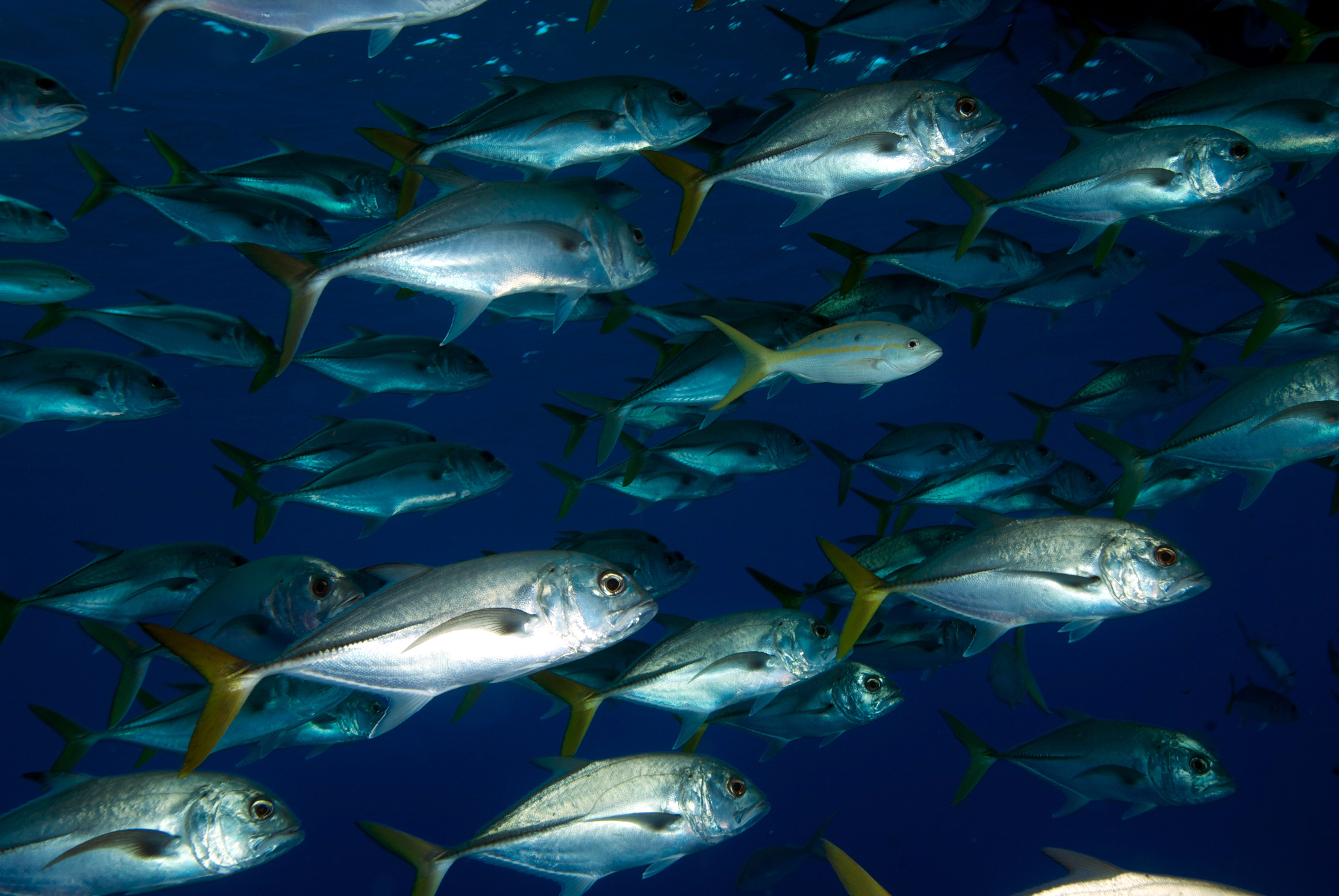
Smart reforms key to global fish recovery

New research has found that climate change will cause dramatic impacts in the world's fisheries, but with effective management most fisheries could yield more fish and more prosperity, even with a changing climate. Relative to today, this preliminary research illustrates that effective management reforms can lead, globally, to a nearly 90 per cent increase in profits, a third more fish in the water and a more than 10 per cent increase in harvest by 2100 in the face of climate change. The research also shows the effect is even more pronounced compared to doing nothing: where implementing effective management can yield nearly triple the profits, lead to a more than 50 per cent increase in the amount of fish in the water and over a third more fish for harvest. Scientists and economists at the University of California Santa Barbara, Oregon State University and Environmental Defense Fund previewed their preliminary results from this new research at the American Association for the Advancement of Science (AAAS) meeting in Boston, Massachusetts. "Climate change is going to have a dramatic impact on many global fish populations and the people who rely on them," said Christopher Costello, co-author and Professor of Environmental and Resource Economics at UC Santa Barbara. "But, these results show that, even in the face of climate change, we have an opportunity to build abundant and resilient fisheries for the future. Implementing effective fishery management is the single best thing we can do today to ensure healthy ocean ecosystems for the future." Effective management reforms that address the challenges posed by changing ocean temperatures include a combination of harvest policies that adapt based on current fish abundance, stronger international cooperation, as well as secure fishing rights. This research examined 780 species and 132 country-level stocks across the globe representing 4,424 fisheries from the Costello et al 2016 fishery database, accounting for 74 per cent of the global yield. The researchers worked with a scenario that the global mean surface air temperature will rise by an average of 2.2°C by 2100. By the turn of the century, the researchers find that more than one-third of the species studied will move completely out of at least one country's national fishing waters while the same amount are also expected to shift into at least one country's waters (exclusive economic zones). The research suggests that areas closest to the equator with warmer waters are more likely to suffer a net loss of fish from their waters, while cooler locations are likely to see a net gain in the abundance of fish, by the turn of the next century. However, the research also shows that, even in warmer waters, improved management can increase fish and prosperity for many fisheries. "Fish are becoming even more of a moving target in our oceans," said co-author Michael Harte, Professor, Oregon State University. "These changes will require greater multinational cooperation among nations to manage these resources effectively." Off the New England coast, we are already seeing fish like iconic cod move north into Canadian waters. In Europe, recent spatial shifts of mackerel led to the "mackerel wars" where the movement of the stock into new waters created conflict over the sharing of this catch and, ultimately, overfishing of the stock. "These challenges are not just problems of the future, but problems we are facing today," said Jake Kritzer, Director of Diagnostics and Design for Environmental Defense Fund's Fishery Solutions Center. "If governments move quickly to implement adaptive reforms that account for the change in our oceans, fisheries can be sustained, and even grow, helping provide nutrition and income for the hundreds of millions of people that rely on them for their survival." Source - http://www.thefishsite.com

21.02.2017

USA - Bee decline threatens crop production

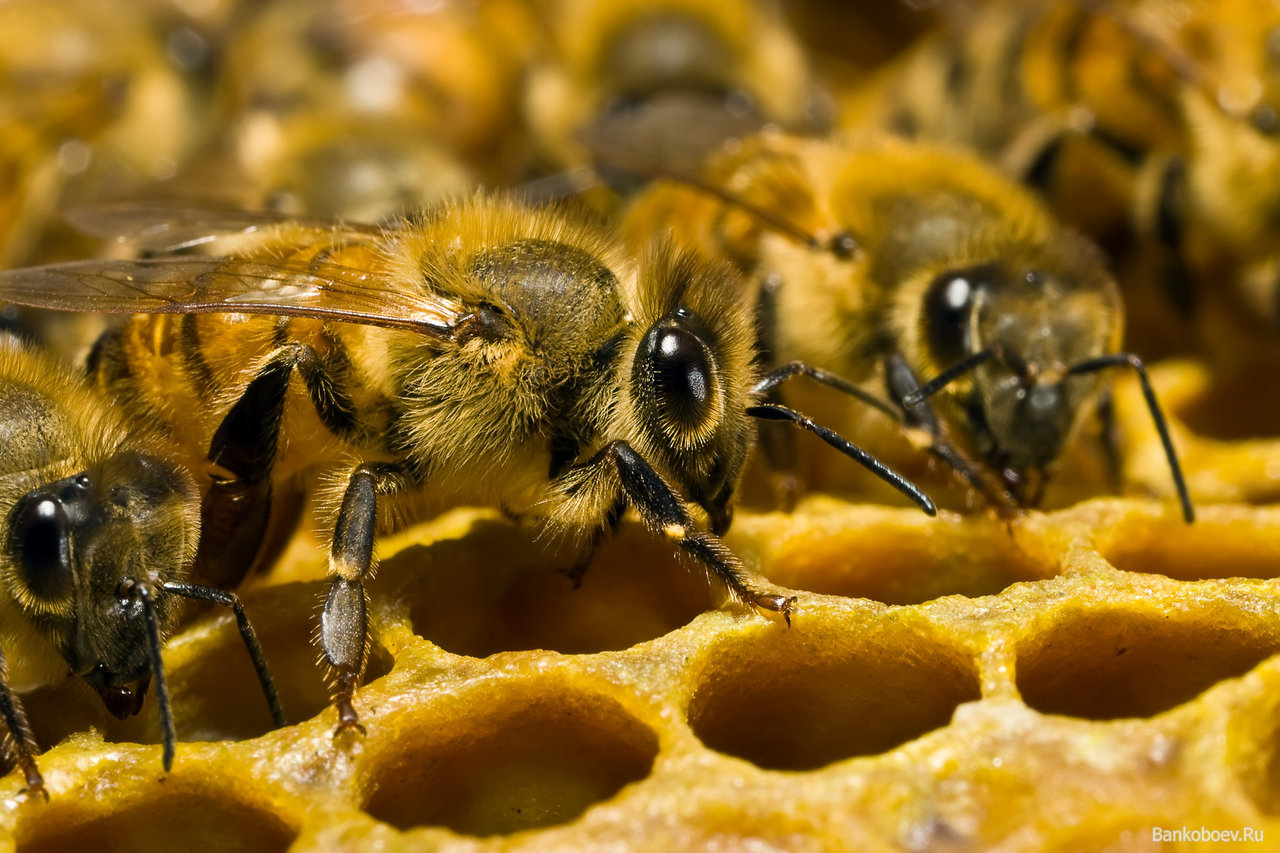
The first-ever study to map U.S. wild bees suggests they are disappearing in the country's most important farmlands - from California's Central Valley to the Midwest's corn belt and the Mississippi River valley. If wild bee declines continue, it could hurt U.S. crop production and farmers' costs, said Taylor Ricketts, a conservation ecologist at the University of Vermont, at the American Association for the Advancement of Science (AAAS) annual meeting panel, Plan Bee: Pollinators, Food Production and U.S. Policy on Feb. 19. "This study provides the first national picture of wild bees and their impacts on pollination," said Ricketts, Director of UVM's Gund Institute for Ecological Economics, noting that each year $3 billion of the U.S. economy depends on pollination from native pollinators like wild bees. At AAAS, Ricketts briefed scholars, policy makers, and journalists on how the national bee map, first published in the Proceedings of the National Academy of Sciences in late 2015, can help to protect wild bees and pinpoint habitat restoration efforts. At the event, Ricketts also introduced a new mobile app that he is co-developing to help farmers upgrade their farms to better support wild bees. "Wild bees are a precious natural resource we should celebrate and protect," said Ricketts, Gund Professor in UVM's Rubenstein School of Environment and Natural Resources. "If managed with care, they can help us continue to produce billions of dollars in agricultural income and a wonderful diversity of nutritious food." TROUBLE ZONES The map identifies 139 counties in key agricultural regions of California, the Pacific Northwest, the upper Midwest and Great Plains, west Texas, and Mississippi River valley, which appear to have most worrisome mismatch between falling wild bee supply and rising crop pollination demand. These counties tend to be places that grow specialty crops -- like almonds, blueberries and apples -- that are highly dependent on pollinators. Or they are counties that grow less dependent crops -- like soybeans, canola and cotton -- in very large quantities. Of particular concern, some crops most dependent on pollinators -- including pumpkins, watermelons, pears, peaches, plums, apples and blueberries -- appeared to have the strongest pollination mismatch, growing in areas with dropping wild bee supply and increasing in pollination demand. Globally, more than two-thirds of the most important crops either benefit from or require pollinators, including coffee, cacao, and many fruits and vegetables. Pesticides, climate change and diseases threaten wild bees -- but their decline may be caused by the conversion of bee habitat into cropland, the study suggests. In 11 key states where the map shows bees in decline, the amount of land tilled to grow corn spiked by 200 percent in five years -- replacing grasslands and pastures that once supported bee populations. RISING DEMAND, FALLING SUPPLY Over the last decade, honeybee keepers facing colony losses have struggled with rising demand for commercial pollination services, pushing up the cost of managed pollinators - and the importance of wild bees. "Most people can think of one or two types of bee, but there are 4,000 species in the U.S. alone," said Insu Koh, a UVM postdoctoral researcher who co-hosted the AAAS panel and led the study. "When sufficient habitat exists, wild bees are already contributing the majority of pollination for some crops," Koh adds. "And even around managed pollinators, wild bees complement pollination in ways that can increase crop yields." MAKING THE MAPS A team of seven researchers -- from UVM, Franklin and Marshall College, University of California at Davis, and Michigan State University -- created the maps by first identifying 45 land-use types from two federal land databases, including croplands and natural habitats. Then they gathered detailed input from national and state bee experts about the suitability of each land-use type for providing wild bees with nesting and food resources. The scientists built a bee habitat model that predicts the relative abundance of wild bees for every area of the contiguous United States, based on their quality for nesting and feeding from flowers. Finally, the team checked and validated their model against bee collections and field observations in many actual landscapes. THE GOOD NEWS "The good news about bees," said Ricketts, "is now that we know where to focus conservation efforts, paired with all we know about what bees need, habitat-wise, there is hope for preserving wild bees. Source - http://www.newsroomamerica.com

804
of 1226