NEWS
809
of 1226
News
03.02.2017

USA - Validus reaches agreement, acquires crop insurance business

Earlier this week, Validus Holdings, Ltd. announced that it had reached an agreement with a Decatur, Illinois-based primary crop insurance general agent. Through the transaction, Validus will acquire Archer Daniels Midland Company’s (ADM) Crop Risk Services (CRS). It will include a marketing services agreement under which both companies will cooperate to continue offering insurance, farm products, and services to CRS’s customers. CRS had $548.9 million gross premiums written for the 2016 reinsurance year. The unit currently has 1,170 agents across 36 states. Following the acquisition, Validus intends to have CRS operate as part of the Western World Insurance Group. Under the terms of the transaction, ADM will receive $127.5 million in cash, subject to certain working capital and balance sheet adjustments, in exchange for the entirety of its outstanding stock in CRS. Validus plans to use cash on hand to fund the transaction which is expected to close during the second quarter of this year, subject to obtaining required regulatory approvals and the satisfaction of other customary closing conditions. “I’m very pleased to welcome CRS to Validus,” said Validus chairman and CEO Ed Noonan. “CRS is a high quality crop insurance provider that has achieved excellent growth in recent years. Validus will benefit from CRS’s commitment to provide superior customer service to agents and farmers via their leading technology capabilities. The addition of CRS complements Validus’s existing agriculture book and participation in this market is a logical step as Validus continues to expand our presence in US primary specialty lines.” Source - http://www.ibamag.com

03.02.2017

India - Govt proposes to increase coverage under Fasal Bima Yojana

General insurance companies are in for a bumper revenue growth next year as the Fasal Bima Yojna allocation is raised to Rs. 13,240 crores next fiscal, from Rs. 5,500 crores now. The government today announced increasing coverage under Pradhan Mantri Fasal Bima Yojana to Rs 13,240 crore for the next financial year. The scheme will target to cover 40% of the crop area next year and 50% year after. As per the current scheme, the government had allotted Rs 5,500 crore under crop insurance for both Rabi and Kharif products. The government also expects agriculture to grow at 4.1%. The industry saw big push from the government as farmers rushed to cover their crops for both the season after having seen huge claims in the previous two years due to rainfall. Under the Fasal Bima Yojana, farmer’s contribution towards premium has been decreased to as low as 2% to be paid by farmers for kharif crops, and 1.5% for rabi crops making it possible to include the small and medium farmers to avail crop insurance. Also, the premium for annual commercial and horticultural crops is 5%. Also, non-loanee farmers such as share-croppers are included under the scheme. Agriculture Insurance Company of India (AIC) and 10 other organisations including ICICI-Lombard General Insurance, HDFC-ERGO General Insurance, IFFCO-Tokio General Insurance and SBI General Insurance are in the empanelled group of insurers. Also, under the scheme, there is no capping the premium rate and farmers will get claims against the full sum insured, without any reduction. The response of the scheme has been positive with many states like Andhra Pradesh, Jharkhand, Odisha, West Bengal, Himachal Pradesh, Uttarakhand and Andhra Pradesh have awarded contracts to the insurance companies to provide crop insurance coverage to farmers. Many drought-hit states have increased fund allocation under PMFBY significantly like Maharashtra has allocated Rs 1,855 crore in the state budget of 2016-17. GIC and foreign reinsurers receive significant share of premium from crop insurance in India. Pre-agreed formulas are applied to determine sum insured and the related loss in each season. Source - http://economictimes.indiatimes.com

03.02.2017

India - Hailstorm-hit farmers to get Rs 25,000 assistance from Madhya Pradesh government

Madhya PradeshChief Minister Shivraj Singh Chouhan has said that the state government would provide Rs 25,000 as financial assistance to the farmers, who lost 50 per cent of their crops during the recent hailstorm, for marriage of their daughters. "An amount of Rs 25,000 as financial assistance for the marriage of their daughters would be given to the farmers who suffered fifty per cent crop loss. The government would also facilitate the farmers to get loans next year," Chouhan said while meeting the hailstorm affected farmers at Bamore village in the state's Morena district yesterday. In addition, the farmers who suffered 100 per cent crop loss would be given food grains at a rate of Re one per kilogram, he said. The Chief Minister said that the district collector has been told to conduct the survey of hailstorm affected farmers at the earliest. Recommended By Colombia "The hailstorm and untimely rains have caused damage to crops of the farmers. The assessment of damaged crops will be done promptly and relief will be provided to farmers at the earliest," he assured. Chouhan said the crop loss will be compensated in two ways after the assessment. "Farmers who have crop insurance cover will be provided 25 per cent amount after preliminary assessment and full amount will be provided later on. On the other side, for farmers who have not taken insurance cover, the loss of crops will be compensated by the state government," he said. There were reports of crop loss in Gwalior-Chambal division and parts of western Madhya Pradesh during the hailstorm and untimely rains last week. Source - http://timesofindia.indiatimes.com

02.02.2017

USA - Policy changes boost crop insurance options

Hole farm revenue protection is one of the relatively new options in the federal crop insurance program, Badgerland Financial specialists reminded clients at a winter information meeting. The new product combines revenue from all agricultural activities by a farm enterprise into one policy, Laurie O'Brien pointed out. She explained that the purpose of the new policy is to recognize the production of organic and specialty crops, all income from animal production (including milk sales), and such crops as milo and rye along with the more conventional crops grown on most farms. Five years of data from the income tax Schedule F form are used as the revenue base for the whole farm policy, Jim Christensen pointed out. He strongly recommended having that policy serve as a piggyback to the long-standing multi-peril policies that provide coverage for particular major crops. New private policies In addition to providing the standard crop insurance policies that are governed by federal regulations, the insurance companies, which provide and administer the coverage have devised numerous companion optional add-ons. Among those being offered by one or more companies and being expressed in differing terminology and acronyms are policies which allow insured growers to pick months other than February and October as the reference for the futures pricing which is used in the guaranteed revenue for corn and soybean policies, O'Brien noted. For additional premiums, other possibilities are a policy which insures yields from the top rather than the bottom and a boosting of the selected price to 120 percent, she stated. O'Brien reminded farmers of the hail and wind policies which are also offered only by the private companies and which, despite the title, also cover losses by fire, during transportation, and from vandalism (for which a police report is required to verify the damage). Growers who anticipate the possibility of hail, based on weather forecasts, enjoy a 24-hour window before any such storm in order to obtain a wind and hail policy. Current concerns Given the mid-winter weather in the area, O'Brien cited the possibility of loss of alfalfa and winter wheat stands – similar to what happened in the spring of 2013. She emphasized that farmers need to get an appraisal of plant counts before destroying the crop in order to qualify for the payment appropriate to the insurance coverage they have. Another fairly new policy that is based on local weather is known as Pasture, Rangeland, Forage. As one of the options in the federal insurance program, it provides payments based on rainfall (typically the lack of it which limits forage growth) measured in local grids, O'Brien explained. In the case of prevented planting, the current payment rates are 55 percent of the insured guarantee for corn, 60 percent for soybeans, and 40 percent for canning crops but buy-ups of 5 or 10 percent for 25 or 50 cents per acre are available, O'Brien noted. Growers of silage specialty corn (brown mid-rib) would receive payments on yield losses measured in tons per acre rather than on bushels of grain, she added. For spring planted crops, March 15 is the deadline for making any changes on the levels of coverage, the crops being covered, or the acreage being insured. It is also the deadline for new crop insurance enrollment – for which beginning farmers are entitled to a discount on premiums for five years. Reporting requirements Christensen emphasized that the federal Risk Management Agency, which oversees the crop insurance program, is making proper documentation of the records on insured crop yields a point of emphasis. He said Badgerland Financial has a worksheet to help clients in complying. In all cases, either a written or printed record is needed for the loads and weights, Christensen remarked. Production must also separated by land sections and not commingled in the reporting data, he observed. Conservation compliance on all owned and rented land for which crop insurance is in place is also required if the operator wants to have the premium reduced by the federal subsidy. To be legal on that point, the AD-1026 form must be filed at the county Farm Service Agency (FSA) office. The promised Acreage Reporting Streamline Initiative, which would provide a one-stop report to both the FSA and the crop insurance agents on the insured acres, is not working in Wisconsin because the computers used by the two entities are not properly linked to share the data, Christensen reported. One convenience that Badgerland Financial is providing for its clients is the opportunity to electronically sign documents via their smartphone without even requiring a log-in. Source - http://www.wisfarmer.com

02.02.2017

Morocco - Cold weather has negative effect on vegetable production

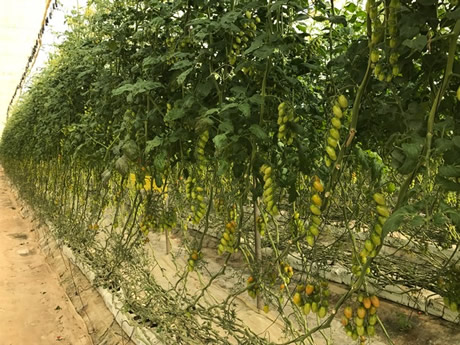
Jean-Paul Nuijten of SpecialTom, who visited the Agadir region last week, where the company produces round and Santa tomatoes said: “The cold weather has had negative effects on the Moroccan production, just like in Spain. The temperature is too low at the moment compared to normal periods in the past few years. This results in a lower production of tomatoes, peppers, and courgettes.” Jean-Paul in Agadir “The nights are cold with temperatures around 3 to 6 degrees Celsius and the amount of sun hours is not enough to properly colour the tomatoes on the plants. It is also visible that many plants suffer from the cold nights and the low temperatures result in little fruit setting,” says Jean-Paul. “The local market is very good in Morocco right now, the prices are high, and this causes a more difficult export to Europe. This does not only apply to tomatoes but to peppers and courgettes as well.” Cold damage   “Due to cold and viruses, a major part of the open field production of courgettes has been lost. The peppers are not properly coloured because of the cold, so the supply for export of peppers is limited,” Jean-Pauls continues. “It is expected that it will take a few weeks before there will be more tomatoes produced. Then the temperatures will have to be higher and more constant, the night temperatures will have to increase as well to get the production going. Finally, the market for Santa tomatoes is nearly empty and the demand is very high, so it will take some time before the market returns back to normal.” Courgettes will be difficult this season, because many hectares have been lost. It is expected that the pepper will return to normal sooner when the temperatures become normal,” Jean-Paul concludes. Source - http://www.freshplaza.com

02.02.2017

USA - Crop insurance saved 21,000 jobs in 2012 drought

Crop insurance saved nearly 21,000 jobs in four states during one of the worst droughts in two decades, according to a report from Farm Credit Services of America. The 20-page paper breaks down the history of the crop insurance program from the start in 1930s, with the Great Depression and Dust Bowl, to expansions in the 1980s and 1990s after a string of unbudgeted disaster relief bills strained federal coffers. The paper says farmers have plenty of “skin in the game” when it comes to crop insurance, and their participation helps minimize risk exposure for taxpayers. FCS provides a step-by-step guide to the public-private partnership that makes the crop insurance program efficient when it comes to covering losses. It also highlights key points including the fact that private companies sell the insurance products and that farmers, like all other insurance customers, pay deductibles and premiums. But the story of the drought of 2012 is where the paper really shines in showing just how important crop insurance is to keeping America’s food, clothing and fuel supplies secure. The drought was a devastating hit in a year that was supposed to be favorable for planting. Corn, soybean and hay production declined throughout that summer as the drought intensified. Corn production was down more than 29 percent and soybeans fell 6 percent. The low yields were coming on a year that started with low beginning stocks, the report notes, and tight U.S. and global supplies. Projected prices rose in anticipation of short supplies. Farmers faced low yields and ended up facing big expenses to buy crops at higher prices to fulfill forward marketing obligations and to feed on-farm livestock. Crop insurance helped cover the shortfall and saved 20,900 jobs across Iowa, Nebraska, South Dakota and Wyoming, with an annual labor income of $721.2 million, according to the report. That’s money that ended up in Main Street shops and restaurants. Money that allowed farmers to continue to pay the bills and get ready for the next season even after a disaster like the drought of 2012. And best of all, farmers didn’t have to go to Congress for an ad-hoc relief bill – just like Congress designed. “Crop insurance kept me farming,” farmer Denny Marzen, of Iowa, said in the report. “It’s a business tool I use with my marketing program and to help me deal with Mother Nature.” Source - http://kticradio.com

02.02.2017

Spain - The citrus crop estimate will decrease because of the frosts

Daifressh, the Valencian company which is in the middle of its orange export campaign, spoke about how the markets have been surprised by a cold wave. "This has affected the this season's export estimate. The initial forecast for the current campaign estimated that citrus production would increase by around 15%, a figure that has decreased because of the frost caused by the Siberian cold front," they said. The fruit and vegetable market has been affected by a decrease in the production of fruits and vegetables. So, as there wasn't enough product to meet the demand of the Central European markets, prices increased in January. The citrus producing countries most affected by the cold weather have been Italy and Greece, but the weather has also affected southeastern Spain, in the areas of Alicante, Valencia, Murcia and Almeria, "which have had much demand for oranges," according to Daifressh. "The frost damage on the first part of the export season oranges has resulted in losses for producers. Many tons of oranges have been left on the trees, first because of the drought, later because of the rains, and now because of the cold wave," they added. Daifressh expects that there won't be any frost to impair the production in the second part of the orange export season. "As a result, prices and the demand for this product can improve." According to Daifressh, the volumes and the quality in the first part of the orange export season remained the same in its main markets, such as Hungary and Poland, up until December." Source - http://www.freshplaza.com

02.02.2017

Guatemala - A quarter of the crops were affected by the frost

According to agricultural authorities and exporters, the low temperatures in Guatemala affected snow peas, blackberries, avocados and other crops, and endangered 1,840 quintals of peas and green beans. In a preliminary assessment, the Guatemalan Association of Exporters (Agexport) estimated that the frost affected 25 percent of the export plantations. Fanny Estrada, the director of Competitiveness at Agexport, said it would take them about two weeks to determine the actual percentage of the production that was lost to the frost. The damage was mainly recorded in the western highlands region of Guatemala, as the temperatures recorded in these area in the last week have been lower than those of recent years. Estrada said that in 2016 they had achieved low production volumes due a scarcity of rain, and that the frosts would also lead to an increase in prices. She said that most of the sector had been affected  by the cold season, especially small farmers, and that 90 percent of the blackberry crop was at risk of being lost. Agexport said that even though these climate problems were unavoidable, the authorities should strengthen the agricultural sector, as it is one of the largest employers in the country. The National Coffee Association (Anacafe), which brings together government representatives and producers, said the frost had an impact on the municipalities of Antigua Guatemala, Ciudad Vieja, and San Miguel Dueñas, in the department of Sacatepequez, among other places. Source - http://www.freshplaza.com

02.02.2017

USA - Albany farmer indicted for $800,000 crop insurance fraud

An Albany, Mo., farmer was indicted by a federal grand jury for a nearly $800,000 fraud scheme to receive federal crop insurance payments to which he was not entitled. Ryan A. Ruckman, 60, of Albany, was charged in an eight-count indictment returned by a federal grand jury in Kansas City, Mo. Ruckman owned and operated farms in the Missouri counties of Gentry, Davies, Nodaway, Worth and Harrison, as well as counties in southern Iowa. The indictment alleges that Ruckman defrauded the government by claiming federal benefits in his son’s name in order to receive additional payments from the U.S. Department of Agriculture under the Supplemental Revenue Assistance Program (SURE), the Direct and Counter-cyclical Payment program and the Multiple Peril Crop Insurance program. In order to be eligible to receive those payments, an applicant must be actively engaged in farming. Ruckman’s son, the indictment says, was a full-time student at Logan University College of Chiropractic in St. Louis, Mo. Ruckman allegedly placed crop ownership/production in his son’s name in order to increase the number of persons eligible to receive federal benefits. From February 2007 to May 2010, the indictment says, Ruckman submitted documentation to provide the appearance that his son was the producer of the crops and to conceal the fact that he was the actual producer of the crops. According to the indictment, losses incurred by the government as a result of Ruckman’s fraud scheme totaled approximately $795,935. According to the indictment, Ruckman used the proceeds of the fraud scheme to make payments on approximately $2.9 million in farm operating loans at Midstates Bank in Harlan, Iowa. The indictment charges Ruckman with eight counts of loan application fraud. The indictment also contains a forfeiture allegation, which would require Ruckman to forfeit to the government any property obtained from the proceeds of the alleged fraud. Source - http://www.kttn.com

01.02.2017

USA - Tech and social trends poised to transform agriculture

While it may not seem readily apparent, farms are about to engage warp drive and rapidly approach light speed when it comes to how they operate. Emerging tools, new technologies and a changing workforce are driving changes across the landscape — developments that can benefit the agriculture industry in Wisconsin and across the world. Technology changes that have expanded computing capability are also helping decrease the costs of doing business.  Consider Moore's Law, which describes roughly how computing power has doubled approximately every 12 to 18 months over the last five decades. Five emerging trends have the power to transform Wisconsin agriculture in coming years, and increasing computer capabilities plays a role in four: big data, artificial intelligence, autonomous vehicles and the sharing economy. The other trend is the changing and growing role of women in agriculture and food systems, a demographic shift that started around the turn of the century. Big data A virtual tsunami of data is cresting in the agricultural economy. New data collection devices are constantly being developed, adding to the growing science and business developing around big data, data science and data mining. Often referred to as the Internet of Things, ubiquitous sensor systems collect data from many sources. Examples include perhaps a tractor connected to an online mapping system, an air filter with an Internet protocol address that can communicate with its manufacturer to order a replacement without any human involvement, and devices placed among crops to measure sunlight levels, heat units and pest pressures. With the growth of data collection and computing capabilities, Wisconsin must find faster, more affordable and more reliable solutions to broadband, high speed Internet and mobile coverage. Artificial intelligence The collection of these massive amounts of data necessitates new ways of using this information to drive development of artificial intelligence systems, which can process information and use it to make critical decisions. The health-care industry offers examples and lessons. IBM is investing in its AI computer system, Watson, and partnering with several hospitals and research centers to help improve cancer treatment. Medical researchers publish more than 700,000 cancer treatment-related articles every year in scientific journals. While the average oncology or cancer specialist might read a couple of hundred articles a year, no one person can assimilate and put all this new information to use. But Watson can read, process, sort and identify patterns in those 700,000 articles in minutes. Give Watson a day, and a computer that's the size of five pizza boxes has assembled more knowledge and analysis on treating cancer than ever existed previously. Several examples are now emerging of artificial intelligence successfully suggesting treatment protocols or combinations of medication, precision surgery, pinpointed radiation, and other cellular and molecular therapies. Early agricultural applications might include managing pests, scheduling operations, optimizing animal health or establishing crop health treatments and regimes. However, universities must have the faculty and research capacity to inform, develop and build AI systems in part to ensure the interests of society, public health and consumers are prioritized versus other more commercial, proprietary interests. Autonomous vehicles Autonomous vehicles — including cars, trucks, tractors and UAVs — are an approaching reality. These familiar yet quite novel machines have the potential to profoundly transform not only how people get from here to there, but also how companies distribute products and farmers grow their crops. With development and marketing well underway, the biggest hurdle to their coming ubiquity will not be technological limitations, but rather government regulation and insurance considerations. All the major auto manufacturers are running large-scale highway trials of autonomous cars. Right now, most functional questions center on safety. At some point, though, and perhaps sooner than expected, things will shift, and safety will become the main selling point and reason to move ahead. On the farm, self-driving tractors will free up the farmer's time for other chores. Aerial drones that monitor crops will provide more detailed, timely and accurate information that can boost farm profits. Sharing economy The rapid emergence of economic relationships structured around sharing and collaboration is a trend that will continue to influence agriculture, which has been at the forefront of the cooperative business model for more than 100 years. In a manner similar to the Airbnb model of renting short-term lodging in residential properties, farmers and others in agribusiness will be able to collaborate and share portable or otherwise flexible assets. For example, software platforms that manage sharing transactions through maintaining data about trust and relationships can offset the cost of equipment, such as a $500,000 combine that only gets used 5 or 6 percent of the time in a given year. Apps and other software also could facilitate cooperative transactions involving processing equipment and storage facilities. Another aspect of the sharing economy that could affect agriculture is the availability of 3D printing — tractor parts could be manufactured on site. Or larger, regional depots could print any part needed on a farm on demand in hours and ship it by drone, rather than requiring a farmer to wait weeks for a delivery Women in agriculture Women play a major role in agriculture, and more are getting involved, whether as farmers or as veterinarians, scientists, economists, or owners of food processing businesses. The U.S. Department of Agriculture’s 2012 Census of Agriculture showed that women make up 30 percent of the nation’s principal farm operators (the person primarily responsible for the day-to-day farm tasks) or second or third operators. The crops and livestock produced by the 288,264 farms with women as principal operators accounted for almost $13 billion in market value in 2012. Globally, by 2045 or 2050, farmers will need to feed 9 billion people A huge share of population growth will be in regions that currently face hunger and food supply instability. However, those regions have great potential for growth in food production. The U.S. policymakers, other nations and international organizations see women as having a key role in reducing hunger and focus on empowering them as resource stewards and agricultural decision makers, especially in countries that have the capacity to improve their agriculture to meet need. One big priority is to recognize and purposely support the role women play in agriculture. Women perform 43 percent of the agricultural work in developing nations, yet, in many areas, they lack equal access to capital, machines and other technologies. In a developing country in Africa, Central America or parts of Asia, women farmers are often able to generate up to a 30 percent greater return on investment with the same resources as men. Several business studies point to this same phenomenon in the U.S. Overall, companies in the top quarter of the Fortune 500 with participation by women on corporate boards of directors generate 42 percent greater return on sales and 53 percent greater return on equity than those that don't include their investment. In Wisconsin, more women as enrolling in and graduating from programs in agricultural sciences at University of Wisconsin campuses in Madison, River Falls and Platteville. The Association of Women in Agriculture at UW-Madison is a well-organized and forward-looking student group, and women in the state are active in the nationally oriented Dairy Girl Network. Agriculture is increasingly a relationship business that requires collaboration to create opportunities. These five trends are not emerging in isolation. Each is connected to and feeding upon the others, through the growing power of computers, but also through how that resource changes how people work together and participate in the greater economy. The nature of agricultural jobs themselves will transform, and these changes will require educators and policymakers to prepare for how they’ll change the ways people work to feed the world. Source - http://www.wisfarmer.com/

01.02.2017

Chile - Biggest fire in history calls for industry aid

Strong winds, hot temperatures and a prolonged drought have led to some of the most disastrous wildfires in Chilean history – destroying over 385,000 acres (160,000 hectares) of forest, covering 70 districts of Chile. More than 100 wildfires have broken out in the past few weeks and have spread rapidly across vegetation that has been dried by unseasonably high temperatures. More than half of these fires are still listed as uncontrolled and continue to damage farms, livestock, vineyards, homes, buildings and even an entire town. Agriculture Minister Carlos Furche has declared this a farming emergency; crops and vineyards have been destroyed. With Chile’s lucrative impact on the produce industry, an environmental catastrophe such as this will have a significant effect on farmers, growers, and possibly even service. President Michelle Bachelet of Chile has declared a state of emergency, and called for international help to fight the unrelenting fires “never seen in the history of Chile”. Spain, Peru, Mexico and the U.S. are among the many countries sending international aid including heavy equipment and light aircraft to supply water and flame retardants from the skies. A Boeing 747 “supertanker” arrived from the United States to help put out the fires in some areas. It had been paid for with a $2 million donation from the foundation of Lucy Ana Aviles, a Chilean who lives in Denver and is married to Benjamin Walton, a Walmart heir. While these donations have helped Naturipe have called on others in the industry to donate to the cause saying: "More help is needed - with the destruction of crops, farms and the livelihood of our extended growing family of growers all across various regions of Chile, it is pivotal that the produce industry as a whole stands together in sending aid and salvation. Naturipe Farms is asking that all who can, especially those that have connections to produce in Chile to help. Source - http://www.freshplaza.com/

01.02.2017

Italy - Nets to protect orchards from insects, hail and rain improve quality

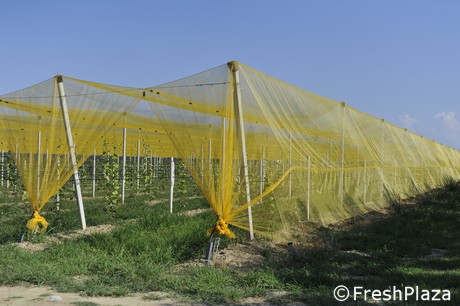
Nets seem to be the best solution to protect orchards. This was discussed on 26th January 2016 in Verona during a convention organised at Verona Mercato in collaboration with the Chamber of Commerce, professional organisations and the agricultural expert committee. "Nets were initially used to protect crops from hail, but are now also employed against rain, cracking, insects (Carpocapsa, Drosophila and brown marmorated stink bug) and birds. In addition, coloured nets can also improve the quality of the fruit," explained agronomist Michele Bravetti. Bravetti illustrated the data of Iridium photoselective nets. "They can modify both the quantity and quality of sunlight thanks to different levels of shading and to the effect they have on spectrum and wavelengths." Traditional black nets, while limiting the damage caused by sunburn, affect fruit colouring and delay ripening. Neutral (white) nets improve colouring but do not protect plants against sunburn and are less tolerant to mechanical stress. A test carried out in Sermoneta (Latina) showed that kiwis (of the golden variety) cultivated under yellow nets have a significant increase in dry matter content after harvesting. Another test carried out on green kiwis in Aprilia (Latina) showed how yellow nets had a positive effect on the number of fruits per tree (728 against the 500 under neutral nets) and dry matter content (15.5% against 15%). Source - http://www.freshplaza.com

01.02.2017

USA - Albany Farmer Indicted for Crop Insurance Fraud

A northwest Missouri Farmer is charged with eight counts of loan application fraud, US Attorney for the Western District of Missouri, Tammy Dickinson, announced Tuesday. According to a news release, Ryan Ruckman, 60, of Albany, was indicted by a federal grand jury for a fraud scheme to receive nearly $800,000 in federal crop insurance payments to which he was not entitled. Dickinson's office said Ruckman owned and operated farms in Gentry, Daviess, Nodaway, Worth and Harrison counties in Missouri as well as counties in southern Iowa. The indictment alleges Ruckman defrauded the government by claiming federal benefits in his son's name to receive additional payments from the USDA under the Supplemental Revenue Assistance Program, the Direct and Counter-cyclical Payment program and the Multiple Peril Crop Insurance Program. The indictment said Ruckman's son was a full-time student at Logan University college of Chiropractic in St. Louis at the time of the alleged fraud. Ruckman allegedly placed crop ownership/production in his son's name in order to increase the number of persons eligible to receive federal benefits. According to the release, Ruckman submitted documents to provide the appearance that his son was the producer of the crops and to hide the face that he was the actual producer of the crops from February 2007 to May 2010. The indictment shows losses incurred by the government as a result from the fraud scheme totaled approximately $795,935. Ruckman allegedly used the proceeds of the fraud scheme to make payments on approximately $2.9 million in farm operating loans at Midstates Bank in Harlan, Iowa. Tuesday's indictment also contained a forfeiture allegation, which would require Ruckman to forfeit any property obtained from the proceeds of the alleged fraud to the government. Source - http://www.stjoechannel.com

01.02.2017

India - Drought hits paddy in Pathanamthitta

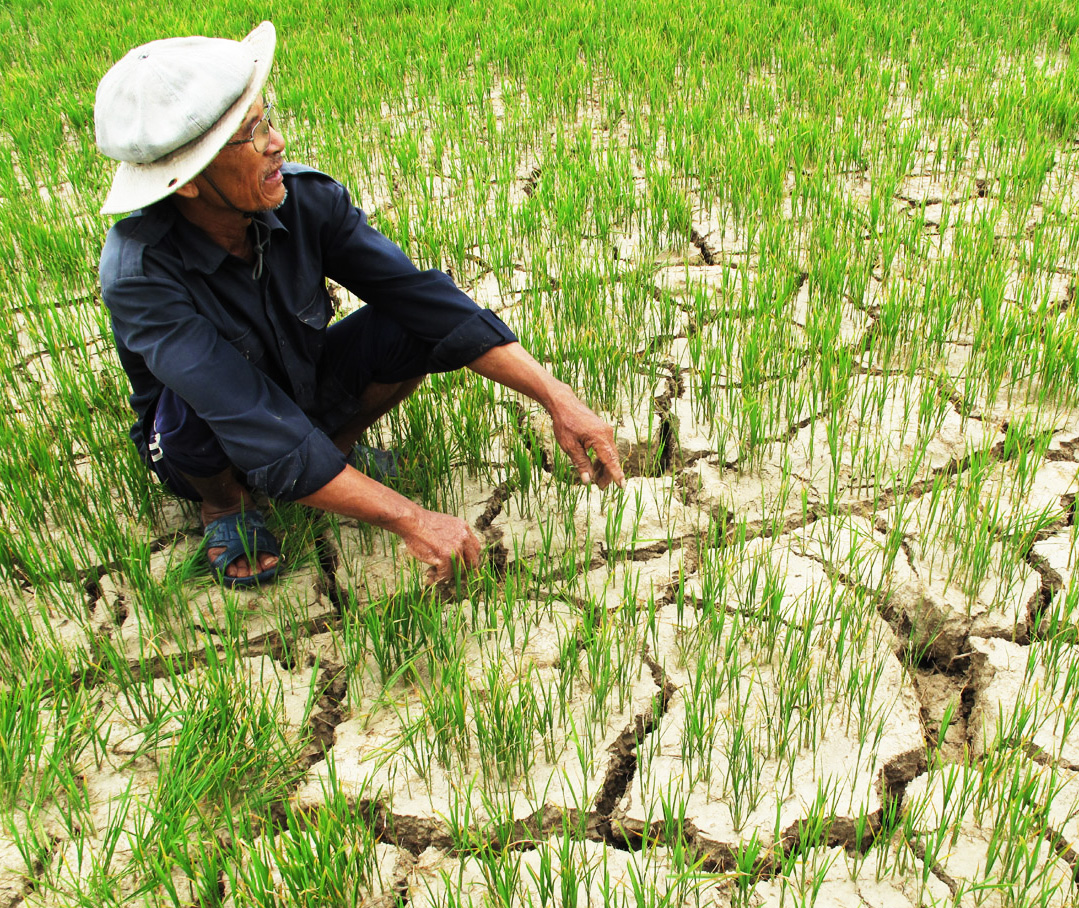
The unprecedented drought conditions in the State has affected paddy crop in as many as 1,090 hectares in Pathanamthitta, according to a survey conducted by the Agriculture Department. The survey report presented at the official meeting that reviewed the drought situation in the district the other day has categorically stated that scarcity of water has resulted in crop loss in many parts of the district. The district witnessed paddy farming in a total of 2,700 ha of land this year, including 320 ha that have been lying fallow for several years. The acute water scarcity due to failure of various lift irrigation projects and collapse of a portion of the Pampa Irrigation Project canal near Vadasserikkara added more worries to the crisis ridden farm sector. The crisis further deepened in certain areas, including a portion of the water-starved Upper Kuttanad region, with the the Rice Swarming Worm alias Rice Army Worm starting to devour the paddy crop. Not less than 500-acre crop land in the Upper Kuttanad areas of Peringara, Niranom, Kadapra and Kuttoor have been reportedly infested with the caterpillar locally known as ‘Pattalappuzhu.’ Crop loss has been reported from the paddy field of Kothaviruthy, Ayyankonary, Edayody, Vellaramkary, Erathodu, Padavinakom, Kaippala-West, Vengal, Koorachal, and Panakary in the Upper Kuttanad; Meenthalavyal in Thiruvalla; Karikulam near Eraviperoor; Edayody near Kozhencherry; Narikkuzhy, Naduvathody, Vettakulam near Vallikkode; Mavarappuncha in Pandalam; and in the Punnon paddy fields in Naranganam panchayat. Though there were reports that water will be released into the canals of the Kallada Irrigation Project in early January, the authorities now say that the KIP canals will be made live in February. It is also a fact that many reaches of the KIP and PIP canals have been badly damaged and it is quite unlikely to complete their repair works this year. Canals The canals have been lying blocked at many places with the local people constructing bunds across it to construct roads leading to their houses on either banks of them. “But, the Water Resources Minister, Mathew T. Thomas, is yet to take a serious note of the drought situation, and that too in his own home district, for reasons best known to him,” alleged P.P. Chandrashekharan Nair, a farmers’ group convener in Aranmula. Source - http://www.thehindu.com

01.02.2017

Canada - Crop insurance in Manitoba expected to hit record levels

The AgriInsurance Program in Manitoba has proven to be quite a hit with crop producers in the region, with estimates suggesting that the program’s coverage is on track to break records. Agriculture Minister Ralph Eichler confirmed on Jan. 17 during a conference that AgriInsurance coverage in the province is anticipated to surpass $2.6 billion this year, the second-highest level on record. Although coverage is increasing at an average of 7%, premium rates are down an average of 4% when compared to the previous year. “Through AgriInsurance, we continue to offer a comprehensive risk management program for Manitoba’s farmers, which is effective whether they are just starting out or have had years of experience,” Eichler said. “To ensure the long-term growth of our province’s agriculture sector, AgriInsurance is an essential tool, as it provides reliable protection against the unpredictable challenges of weather and other production-related risks.” A news release detailed that over 8,400 Manitoba farms are enrolled in AgriInsurance. Additionally, the province has the highest level of AgriInsurance participation in Canada, with more than 90% of annual crop acres covered. AgriInsurance is funded by the federal and provincial government, as well as participating farmers. The two governments’ share of AgriInsurance premiums for 2017-18 is expected to be $136.3 million, reported Manitoba Co-operator. Under AgriInsurance, premiums are shared among those funding the program. Participating farmers take 40% of the premiums, while the federal and Manitoba governments take 36% and 24%, respectively. Administrative expenses for the program are paid 60% by Ottawa and 40% by Manitoba. Source - http://www.insurancebusiness.ca

31.01.2017

USA - Drones For Farmers Makes Midwest Startup A Flying Success

There was a time when the idea of spraying insecticide and fertilizer on crops from the air seemed farfetched. Today airplanes do exactly that. Now the agricultural industry is considering another type of airborne vehicle — drones. More farmers are using the unmanned aircraft systems to maximize the efficiency of agriculture, increasing crop yields at reduced cost, effort and impact on the environment. Drones equipped with specialized cameras wirelessly linked to location software and mapping tools can survey fields from above to detect and diagnose crop stresses. Armed with this data, farmers can take corrective actions. Precision Drone embeds each vehicle with an infrared video camera and technology that can detect live vegetation. Credit: Precision Drone Although the use of drones in farming is in its formative stages, the Association for Unmanned Vehicle Systems International anticipates that farms will eventually account for an 80 percent share of the commercial drone market globally. In Indiana, drones are poised to become as ubiquitous as crop dusters. With nearly 15 million acres of farmland producing corn, soybeans, wheat, hay, and tomatoes, the state is a prime market for startup agricultural drone companies, like Precision Drone. Founded by Matt Minnes in 2012, Precision Drone manufactures unmanned aerial vehicles, or UAVs, that replace the time-consuming method of scouting fields by walking through rows of crops. Minnes formerly worked for a seed company in Indiana when inspiration struck. “I realized that walking hundreds of acres to monitor corn and soybean fields was no way to spot a problem unless you stumbled upon it," he said. Minnes was determined to alter the status quo. The entrepreneur confined himself to his garage in search of a solution. He bought an infrared video camera and a simple graphical indicator called an NDVI, or normalized difference vegetation index, that senses the presence of live vegetation on the ground. He then affixed both devices to a handmade aerial platform built from the parts of several store-bought drones. Next, Minnes collaborated on the development of software that integrates data from the video camera with additional feeds coming in from the NDVI and GPS monitor. These data sets are then automatically plotted on GIS (Geographical Information System) maps of the field being examined. Minines' last step was to obtain a pilot's license, a requirement at the time to fly an unmanned aerial vehicle. This requirement is gone now, thanks to new Federal Aviation Administration drone operator licensing rules that came into effect in August 2016. No longer must one be able to fly a plane in the sky to operate a drone from the ground. The Whirring Sound Of Money Minnes grew up around agriculture — his grandparents owned a farm — and double-majored in agribusiness and agricultural economics at the University of Illinois, where he worked on the school's prestigious research farm. “There's a lot of farmer ingenuity that goes into Precision Drone," he said. Precision Drone sells drones to farmers who know how to fly them. The company also pilots drones on farmers’ behalf for a fee. Credit Precision Drone. The name comes in part from precision farming, a revolutionary farm management concept based on observing, measuring and responding to field variability in crops. The objective is to produce greater yields and profits at less cost and environmental impact. The use of remote crop-health data is a key element of precision farming. Minnes beta tested his drones at the fields of a few young farming friends and seed-buying customers. “I tried a lot of different things before I found what worked best," he said. “For instance, I went from a quad copter with four rotors to a hex copter with six, which withstood wind gusts better. And I learned that intermittent pictures from two point-and-click cameras was a better means of capturing data than video." In 2014, Precision Drone opened its doors for business. The company sells drones for use by farmers trained to operate the aerial systems. It also operates the drones for a fee. In the past four years, Minnes alone has operated drones for farmers over more than 400,000 acres. The company has dealers in 26 states, Canada and Mexico, he said. “The demand for drones continues to rise across the country, as more and more growers migrate toward precision agriculture," he said. “With more of the country's farmland giving way to real estate development, the need for productivity solutions has to increase." Source - http://www.forbes.com

809
of 1226