NEWS
816
of 1225
News
04.01.2017

Canada - New cougar control measures targeting Sask. problem animals

New cougar control measures are making it easier for professional hunters to respond to complaints about problem animals in Saskatchewan. The provincial government announced in November it was introducing new rules to improve public safety by reducing conflicts with cougars. Ministry of Environment wildlife ecologist Mike Gollop said the changes give professional trappers and trained houndsmen easier access to deal with troublesome animals. New measures He said trappers who accidentally caught cougars are now allowed to keep the animals with a permit. Ranchers, who are allowed to kill predators to protect their property, can also obtain a permit to keep the big cat. "We're also allowing the RM, if they want to contract a predation specialist to come in and assist, try to remove cougars in a certain area, we will permit that if conditions are right," said Gollop. However, conservation officers and the Saskatchewan Crop Insurance Corporation remain the first point of contact for anyone with a cougar problem. They decide which method should be used to address the issue. Gollop said he was optimistic the new measures were helping to reduce cougar problems in the southwest, where run-ins between cougars, humans and livestock were more common. Hunting not the solution The provincial government has rejected requests to introduce a hunting season for the big cat. Gollop said that's because the ministry wanted to focus its response to areas with problem animals. "The problem with a hunting season is that you're taking random animals and they may not be at all associated with problems," he told CBC Radio's The Afternoon Edition. Conservation officers or the Saskatchewan Crop Insurance Corporation are the first point of contact to make a complaint about a problem cougar. (The Associated Press) Gollop added that hunters often targeted larger animals, meaning a disproportionate amount of adult males could be killed. Because those adult males could be the primary predator to cougar kittens, he said hunting could be counterproductive to reducing the animal's population. Although Gollop said cats of any age and sex could become problem animals, "teenage" cats trying to survive after leaving their mothers were more often drawn closer to humans in search of food. "I think like all cats, they tend to be curious and the younger ones tend to be a little less wary," said Gollop. 'Don't act like prey' He said it was rare to see a cougar, but advised anyone who crossed paths with one of the big cats to stand tall and hold their ground. "Definitely don't run, don't climb a tree, that sort of thing," he said. "Don't act like prey." "And remember too that they really are a curious animal so the fact that you see them watching you is not necessarily that they are stalking you." Source - http://www.cbc.ca

04.01.2017

India - J&K to implement crop insurance scheme

The Jammu and Kashmir government has decided to implement the new crop insurance, PMFBY, in the ongoing rabi season, covering a dozen crops including wheat and paddy. With this, total number of states and Union territories implementing the Pradhan Mantri Fasal Bima Yojana (PMFBY), launched early 2016, has reached 27. “The State has finalised the tender. The State-level coordination committee on crop insurance (SLCCC) met last week and finalised the notification,” a senior Union Agriculture Ministry official told PTI. The notification will be issued any time soon. Paddy, maize, wheat and some oilseeds will be covered under the scheme, he said. Although the State is implementing the policy almost towards the end of the rabi sowing, farmers can still take up PMFBY as the Central government has extended the deadline for enrolment till January 10. The J&K government had sought the Centre to give permission to cover horticulture crops, especially apple, mango and saffron under PMFBY, but its proposal was denied. Kharif crops The State had last offered the crop insurance scheme NAIS (National Agricultural Insurance Scheme) for 2013 kharif (winter) crops, under which 4,545 farmers had enrolled insuring a sum of Rs 1,858 lakh, while the claims to the tune of Rs 2.34 crore was given to about 183 farmers. It had also offered Weather-based Crop Insurance Scheme (WBCIS) in 2014, under which 1,364 farmers had enrolled insuring total sum of Rs 461 lakh and Rs 30 lakh claims was given to all those who had taken the policy. These two crop insurance policies were merged to launch a new crop insurance scheme PMFBY, under which farmers pay very nominal premium and get full claim for the crop damage. PTI Source - http://www.thehindu.com

04.01.2017

India - Unseasonal rain and hailstorm causes crop loss in western Odisha

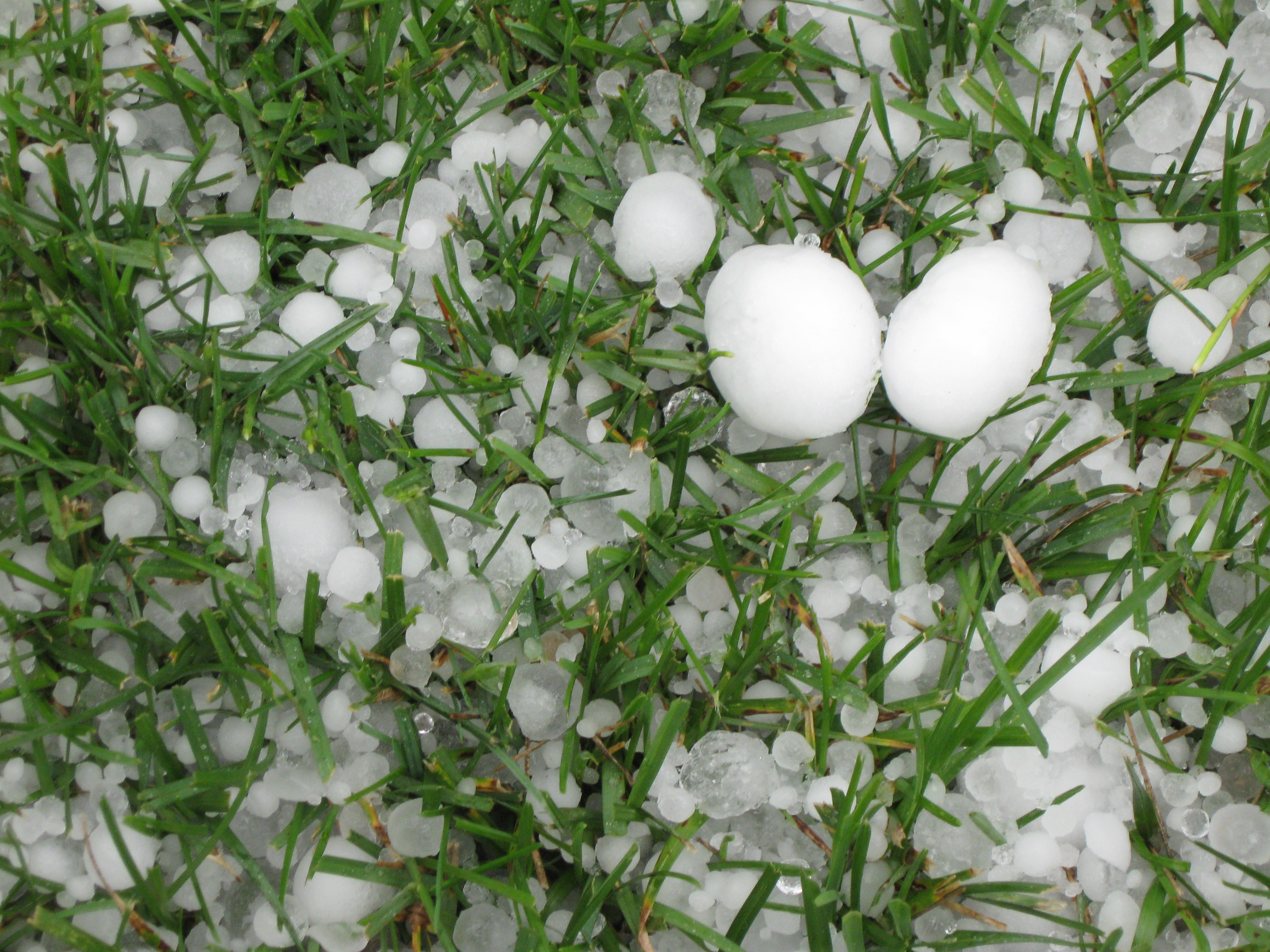
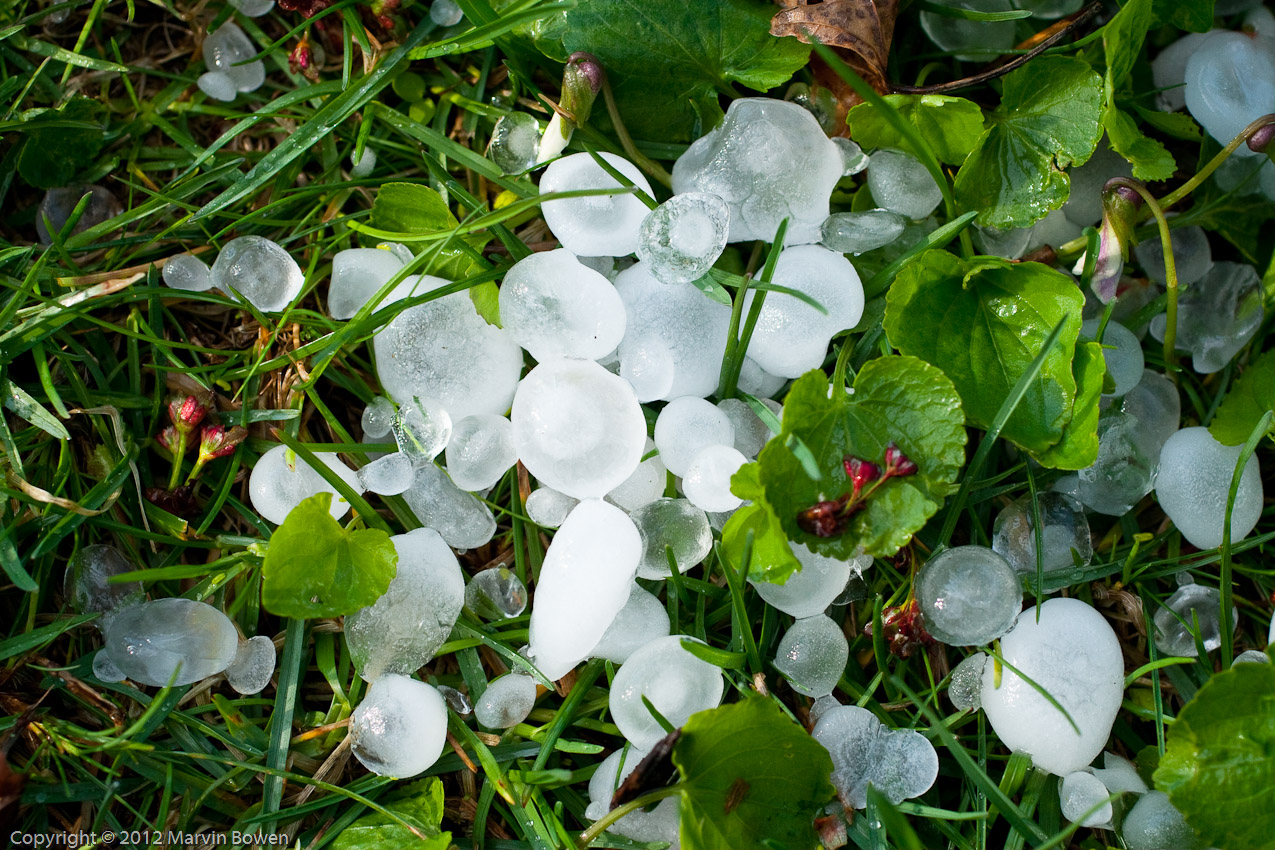
Unseasonal rain and hailstorm lashed in different parts of western Odisha on Monday evening bringing the temperature down in the region. The rain has badly damaged harvested paddy crops and onions. There was a sudden burst of rain in Jharsuguda at 5 in the evening and it continued for three hours, forcing people to desert roads and markets. The rains dampened ongoing Jharsuguda Zilla Mahotsav as water gushed into stalls causing loss in business. "We had predicted rain in some parts of the state due to a trough formation over the state. Besides, western disturbance and interaction between hot and cold air coming from opposite sides has caused rain and hailstorm in some areas," said IMD's Bhubaneswar centre director, Sarat Chandra Sahoo. "The rain and hailstorm will drop the maximum and minimum temperature by a couple of degrees," Sahu added. Jharsuguda recorded maximum temperature of 26.6 degree celsius and minimum of 13.1 degree celsius on Monday. The unseasonal rain had caught many unaware in the chilly winter evening. "We were about to go home after my tuition but when we it started raining so we had to stop but we were thrilled to see the hailstorm" said Rachit Agarwal , a student. Farmers are in fear of harvested paddy and vegetable crop loss due to this unseasonal rain and hailstorm in the district. "We have sowed onion crops but due to this hailstorm I fear that I may incur a huge loss." said Surendra Kumar Sahoo, a farmer of Hirma Village Jharsuguda. Recommended By Colombia Similarly another farmer Baikunta Sahoo said, "I have planted mustard crop in my half acre land along with tomato and I am afraid everything will get damaged in the rain." Many farmers who kept their harvested paddy in open will incur heavy loss as the crops got wet. "I have kept five hundred bags of paddy in the open, which got damaged," said Dilip Badhei, general secretary of Paschim Odisha Krushak Sangathan Samavya Samiti (Jharsuguda). "Agriculture department will do the assessment as per the norms and calculate the crop loss. The farmers will be compensated as per the relief code set by the government, said Jharsuguda sub-collector Ajay Jena. Rain and hailstorm were witnessed in Sambalpur district also. Source - http://timesofindia.indiatimes.com

30.12.2016

Australia - Multi peril crop insurance: Call for stamp duty consistency

THE stamp duty paid on multi-peril crop insurance is inconsistent between states, and farmers are calling for change so they manage their risk better. Analysis  shows South Australian farmers face the highest stamp duty on insurance premiums — 11 per cent. In Victoria the Government offers an exemption from the 10 per cent stamp duty rate, on hail insurance policies for cereal crops. But no exemption is applied for those taking out insurance for other perils such as drought or flood under a multi-peril crop insurance policy. And to further complicate things in Victoria, there is no stamp duty relief for farmers insuring their high-value canola or legume crops against hail. In Western Australia a 10 per cent stamp duty is levied on multi-peril crop insurance and regular crop insurance. In NSW the applicable stamp duty rate on MPCI policies, and all other insurance including hail, is the lowest in the nation at 2.5 per cent. In addition, stamp duty in all states is applied after GST, in accordance with the agreement reached by states and the Federal government before the introduction of the GST in 2000, which means growers are paying stamp duty on the GST amount. A recent Independent Pricing and Regulatory Tribunal multi-peril crop insurance review for the NSW government found MPCI providers estimated policies could cost farms $25,000 to $50,000 a year. Based on a $50,000 premium the difference between the stamp duty paid on a $50,000 MPCI policy premium in South Australia compared to NSW would be about $5000. The NSW Primary Industries Minister Niall Blair, who according to sources, is planning to offer MPCI premium subsidies following the recent review, was tight-lipped on stamp duty relief and a spokeswoman said they were still considering the tribunal’s final report. In South Australia, which has the highest rate of stamp duty, Grain Producers of South Australia chief executive Darren Arney said they were lobbying for a stamp duty exemption on MPCI products as “a way of mitigating against droughts and floods”. South Australian state opposition agriculture spokesman David Ridgway said they planned to abolish the duty on multi-peril policies if the Liberal Party was elected in 2018. “Farmers take the burden off taxpayers in a drought (with multi-peril policies). It seems a bit of a no brainer to exempt stamp duty,” he said. He said last year in NSW growers paid three and a half times more in MPCI premiums than South Australian growers, but the farmers in his state paid more than the NSW farmers in stamp duty on those polices. A spokesman for South Australian Treasurer Tom Koutsantonis said very few farmers had taken up MPCI because the premiums were very high “and the benefit of the Liberal proposal to farmers who do take out the insurance would be minimal”. Mr Koutsantonis said his Labor Government had introduced other measures including abolishing stamp duty on plant and equipment and introduced a stamp duty exemption for farms transferred between family members. In Western Australia, which has been hard hit by frost damage this season, WA Farmers Federation president Tony York said they were lobbying hard to get a stamp duty exemption on MPCI products. “We are actively working to try and encourage the Government to look at it as a form of risk management,” Mr York said. A spokeswoman for West Australian Treasurer Mike Nahan said their MPCI policy was “to provide information and analysis to assist farm business decision making and risk management ... rather than provide direct financial assistance to support the ­uptake of insurance.” Director of multi-peril provider SureSeason Australia, Darryl McCrae, called for consistency across the states to ensure the products, which were still in their infancy, had the chance to mature. “For multi-peril (insurance) to be a success in Australia there is risk to the insurers, and we have to have geographical spread,” he said. Victorian Farmers Federation president David Jochinke said the fact stamp duty still existed was a problem. “When GST came in we thought stamp duty would be a thing of the past along with payroll tax,” he said. The intergovernmental agreement struck with all states and territories prior to the introduction of the GST in 2000, agreed states would eliminate “a number of existing inefficient taxes which are impeding economic activity” and “review the need for retention” of stamp duties in exchange for GST revenue. Source - http://www.weeklytimesnow.com.au

30.12.2016

Canada - A post-long-harvest wrap up

I truly hope that by the time you are reading this your harvest has been completed. If not, a spring harvest could bring financial challenges that you’ll need to address to ensure your farm doesn’t end up in undue financial stress because of lost income or a deferred, if any, crop insurance payment in spring. With some of your crop under snow, you could be facing unpaid input bills or be unable to make land or equipment payments. Crop insurance will defer payments until spring, waiting to see what you will get for bushels before finalizing your claim. If you exceed your bushel coverage threshold after adjustment for grade has been calculated you may not receive any payment from insurance. Will your cash flow get you through the spring seeding season? Do you have any available line of credit? At times like this it is vital to have accurate financial records so you can evaluate your current situation and determine what steps you need to take to ensure your operation is able to weather a bad harvest year. Do you have saleable inventory you can market to help meet your cash flow needs for the next 12 months? Should you take a cash advance against your grain to help get you through until the spring? What condition is the grain in that you have in the bin? Do you have the option to hold onto it to price at a later date, or do you need to sell it sooner because of the quality concerns? Do you need to condition it to store it properly? Do you need to consider refinancing land or machinery? Can you make all your debt payments over the next 12 months? Some financial institutions such as FCC are already offering special circumstance financing options for producers facing financial hardships because of the delayed harvest. Let your lenders them know your situation and see what they can do to help. Discussions with accountants, bankers and financial planners would be advisable at times like this. They can help you work through various scenarios to see what would work the best for all parties involved. If your farm operation is run by a farm family team, you need to get everyone involved is these discussions. Wages, benefits, holidays, equity, debt and profits could all be impacted. Grain marketing From a grain marketing perspective there are some things to think about in order to maximize value from your inventory. First, get each and every bin of grain graded so you know the quality of what you have for sale. Get a grading sheet from each company and ask them what they are willing to offer you for a package deal. Get it in writing so you can compare it against the others. Knowing the grade and grade factors, moisture, bushel weight, green count for canola and falling number for milling quality wheat will help you make better decisions about how and where you will market your grain. Ask each company about their grade discounts. Each company likely has a different discount between grade levels. They may all offer you a No. 2 for your wheat but if one company has a $0.20/bu. discount from a No. 1 down to a No. 2 and the other has a $0.35/bu. discount you need to know that, as it will mean a big difference in net return. Spreads can change daily, so before you sign a contract re-confirm the spreads. Next, find out what current tough and/or damp discounts are for each grain at each company you may deal with, as they could also be different. If any companies offer grain drying ask what those costs would be for the different grains and what levels of moisture they will accept for drying — most have maximum moisture levels they will accept to maximize drying efficiency and reduce their risk of grain going out of condition in their facilities, which can cause major headaches for everyone involved. Now you can sit down and look at the grade specs for your grain. If you have tough or dame grain you need to decide if you can aerate or dry the grain yourself. Are you set up to move and dry grain easily between bins? How long will it take and what will it cost, compared to taking it to the elevator to have it dried and sold? What will net you the best value for your grain with the least amount of work involved? Most of you don’t fully account for your time or wear and tear on farm equipment —you could end up spending way more time and money drying grain yourself than if you had it done at the elevator. Review all these numbers then do the math and see what makes the most sense. It’s been a long harvest and you don’t need to work any harder. Work smarter, crunch the numbers, then see what will give you the best return and do it. Source - http://www.grainews.ca

30.12.2016

Australia - Highs and lows in Queensland agriculture in 2016

"The most obvious [highlights] are rain in some parts of the state and we've had some really good livestock prices, record prices in most cases and grain yields are up," AgForce president Grant Maudsley said. "So in terms of the production side of things, it's certainly turned the corner and looking quite optimistic. "We have seen the very early signs of optimism in terms of getting sheep back into the central west even, people are a lot more excited than they have been in previous years." On the political front, 2016 saw proposed changes to vegetation management laws, which were ultimately rejected by State Parliament. "That was really disappointing, but that led to a positive, because we saw a bit of regional reinvigoration of people and producers and what you can actually achieve if you try hard, led from the front and people follow on an issue," Mr Maudsley said. "We did see a reinvigoration of people power, where people have just had enough of what's been going on and the regional seats are starting to feel the pressure and will feel more pressure going forward." While everyone on the land hopes for good seasonal conditions, a state election looms and Mr Maudsley said a key issue for the bush in 2017 was the lack of commitment by Labor for a strategy for northern development. "We have got a government that is saying it is open for business, but the reality is we don't have a strategy for a northern development agenda," he said. "In an election year you have got to have some sort of northern development agenda; the challenge for organisations like AgForce is to make sure the right of Labor understands that, so we will have to apply a lot of pressure on people in those seats like we said we would do in the veg debate." Backpacker tax dominated the horticulture industry The prolonged backpacker tax issue dominated the horticulture industry in 2016. A new tax rate of 15 per cent for working holidaymakers, to replace the rate of 32.5 per cent, which would otherwise have applied from January 1, was finally passed by the Senate, with the help of the Greens, on the final sitting day of Parliament. "We can all safely say that the backpacker tax is an issue that we're very glad to have put behind us," Growcom chief advocate Rachel Mackenzie said. Ms Mackenzie said both the Coalition and the Federal Opposition must take responsibility for causing growers so much anxiety and distress in 2016, and that it was only the support of the minor parties, and in particular the Greens, that got the new rate of 15 per cent across the line. But she said the fallout from the issue would extend beyond the year's end. "There's still a lot of confusion, [growers] don't know whether people need to fill in a new tax file declaration, there's just been a real lack of clarity about how this is supposed to move forward and then we've hit Christmas and then the first of January is really soon," she said. Ms Mackenzie said the highlights for the industry in 2016 included an initiative to investigate insurance options for horticulture producers and the increased focus on agriculture by the Australian Competition and Consumer Commission. She said growers were also keen to pursue a scheme to better manage labour hire companies, after an investigation by the Fair Work Ombudsman revealed widespread unscrupulous labour hire practices in Queensland and elsewhere in Australia. "There seems to be a legislative push by the Queensland Government and we'll be watching that closely and making sure we provide input into that issue paper," Ms Mackenzie said. "There's also a push nationally for a self-certification scheme, so we will be very keen to ensure that something is in place fairly soon because these [dodgy labour hire companies] are a scourge in our industry." Chickpeas a winner for grain growers From the high yields and low prices of wheat, to the wildly varied fortunes of chickpeas, Queensland's grain growers have had mixed fortunes this year. Grain Growers' northern region coordinator Susan McDonnell said chickpeas were certainly the highlight of 2016. "Central Queensland had a fantastic harvest, most of their cereal yields were average to above but the chickpea was the standout crop," she said. "Central Queensland really did pull off the trifecta, they had high prices, good quality and excellent yields." But the picture was not quite so bright for growers closer to the Queensland–New South Wales border. "The biggest issue was the prolonged rain through the growing period," Ms McDonnell said. "There were a lot of crops lost but it did come around in the end and although we did lose a percentage to ascochyta, mould and waterlogging, [for] the crop that did come through, the yields were excellent." Ms McDonnell said some of the biggest challenges for 2016 were header fires and problems with packing chickpeas, with packers unable to keep up with volumes being harvested. "That's been a massive problem and I am very concerned that it will affect our reputation overseas, so there is a lot of work to be done in that area," she said. Header fires were also a major issue for growers that the industry planned to tackle in 2017. "If insurance companies aren't prepared to insure headers that are going to strip peas, then growers are going to be paying a huge premium to have it done or they're going to have to buy their own headers," Ms McDonnell said. [caption id="" align="alignnone" width="700"] PHOTO: Cane farmers have struggled to harvest their crops due to wet weather throughout the crush. (ABC Open: Brad Marsellos)[/caption] Hardest cane harvest in decades punctuated by high prices As the clock ticked over to 2017, some Queensland cane farmers were still working to harvest one of the biggest crops in a decade. Canegrowers chairman Paul Schembri said the rain-interrupted crush has been categorised by one word: frustrating. "We have potentially on offer a crop of around 35 million tonnes of cane, which if we could harvest would be the ninth successive year of increased production," he said. But he said record prices through the season had boosted confidence heading into the new year. "Merely 18 months ago sugar prices were languishing around 12 US cents a pound, we've seen sugar prices reach in the last three months highs of around 24 US cents a pound," Mr Schembri said. Those prices though are only of benefit to farmers who have on-supply agreements, and Mr Schembri said the challenge now was to end the marketing dispute that had dominated much of the past year. "Six out of seven milling companies now have contracts in place between growers and millers," he said. "My call is again for Wilmar to get on with it, stop playing for time, those growers in the Wilmar areas are desperate — they need a contract and they need a contract that gives them choice." [caption id="" align="alignnone" width="700"] PHOTO: Queensland dairy farmers hoped to isolate themselves from the price crisis in southern states. (ABC Rural: Kim Honan)[/caption] Queensland dairy farmers nervously await price decision As the southern dairy industry struggled to overcome a price crisis this year, farmers in Queensland have watched on hoping they would not be caught in the crossfire. President of the Queensland Dairy Farmers Organisation Brian Tessmann said much of the year was focussed on quarantining the northern industry from the troubles in the south that started with a falling world market. "That was combined in the south with some issues in the processors themselves and certainly caused a huge problem in the south," he said. "Our issue in Queensland has been to try and keep Queensland functioning, we somewhat bottomed out from our issues and we didn't want to take another fall as a result of that." He said increased production during the year coupled with the ACCC review of the industry and new legislation that could address imbalance between farmers and processors were highlights. But he said New Year's Day would likely see the negotiations for a milk price with Parmalat enter arbitration, which had significant implications for the industry. "There's a lot of negotiation between Parmalat and Premium [the farmer's collective bargaining representative]," he said. "Where that milk price ends up for Parmalat farmers, which are over half the farmers in Queensland will be the first really vital issue." Data drought highlights bush inequality Families and businesses have been disappointed with the roll-out of the national broadband network in the bush in 2016. Co-founder of the Group Better Internet for Rural, Regional and Remote Australia (BIRRR) Kristy Sparrow said for many hoping for a better internet service from the Skymuster satellite the 'data drought' continues. "For the BIRRR team, Skymuster has been very disappointing, it's an unreliable service, it's had lots of outages and lots of issues," she said. "We can't really continue to call them teething problems because they are ongoing, it's also limited in data and high in cost." Kristy Sparrow said while there have been some positives, especially for remote education, the government needs to look seriously at investment in regional communication and innovation in communications because satellite is very limiting. "There are a lot of towns going on to satellite, that currently get ADSL and that is a backward step for them, while it is a faster service, hey are going from unlimited plans for a small amount of money, to very limited plans for a lot more," she said. "We need to be looking at the infrastructure that is in place." BIRRR wants a universal service obligation that covers broadband access. "We need to come up with out-of-the-box thinking on how we are going to meet the needs of regional Australia, in terms of their data use, because it is just growing exponentially and we are currently not meeting their needs," Ms Sparrow said. Source - http://www.abc.net.au

30.12.2016

Zimbabwe - Hailstones destroy crops

High value tobacco and maize crops in Headlands took the brunt of unforecast precipitation, coupled with heavy hailstones and strong winds, which decimated thriving crops, some just days before harvest. The storm reportedly shattered an estimated 80 percent of the crop along its path, putting an abrupt end to harvest. The heavy hailstones and strong winds also destroyed farm property and uprooted trees of various sizes. The worst affected farms were Rungutai Farm, owned by Retired Colonel Topira Mutasa and the adjacent Ziswa Farm. The damage estimated at hundreds of thousands dollars – with the farmers still agonising under its effect – as insurers were expected to assess the full extent of the cumulative losses. As the rainfall lashed the area on Saturday afternoon, farmers initially received it as a blessing, but suddenly dashed their hopes of a bumper harvest with nearly-ripened tobacco harvest flattened completely. The sensitive tobacco leaves were shredded, pock-marked and ripped by hail stones. The maize crop, which was at the sensitive knee-high growth stage was pruned, leaving the farmers in a quandary and unsure if it will rebound or not. Even if it survives, longer-term impacts, such as lower yields, are likely. Crops can recover after being defoliated if the hail did not damage a particular plant’s “growth points” responsible for cell division. If the growth point is damaged, that plant is gone for good. The storm has damaged the branches of many trees while uprooting fruit trees. The damage to plant leaves was most severe as most them were sprouting and growing tender new leaves and stems. In an interview, Chenge Mutasa, of Rungutai Farm, about 21km outside Rusape, said it was disturbing that the tobacco suffered damage a few days before harvest. “We were impressed with its quality (tobacco leaf). It was the best we have grown and we were looking forward to harvest in a few days. It’s really disappointing to see the crop that you have worked so hard on all year wiped out in a flash like that,” said Mr Mutasa. Last year also a hailstorm accompanied by wind-storm hit the area causing about 80 percent crop damage.  Farmers along the vulnerable belt, which stretches roughly for 20km from Mr John Stanger’s Farm, have time and again sought insurance cover for their crop. It is believed the storm was about 10 kilometres wide and ran for at least 20 kilometres, but the damage to crops and trees, varied in severity depending upon the type of crop and tree and the force and size of hail that fell. However, more than six months’ production and the livelihoods of some growers across the belt may have been lost after the freak storm. Mr Mutasa said although they had insured the crop, the hail dealt them a devastating blow. “It’s my first time to experience something like this, we had 87ha of maize under Command Agriculture, 20ha was knee-high, and another 40ha was at the early vegetative stage. Tobacco covered 50ha, and 30ha of the irrigated crop is a write-off and the dry land tobacco, which was at the 12-leaf stage, was severely damaged too. We had projected a harvest of three and half to four tonnes per hectare, and this hail has dealt us a fatal blow. It is a major setback. “It happened when we thought we had scored, I have never seen anything like it,” said Mr Mutasa, adding the loss was a shattering end to what had been shaping as a good season. “We eke a living out of growing crops, so you dedicate a fair amount of time and effort into it suddenly it all goes up in a smoke like that, it’s really sad. “We have been having rains for several weeks, and when it rained again on Saturday, I saw it as a blessing which will boost our expectation of a bumper crop and subsequently a huge turnover, but our crop has suffered massive damage due to hailstorm. It turned into a complete disaster that dashed our hopes for a bumper harvest,” he said. Mr Ziswa said the hailstones destroyed the standing crops ruining his precious source of income and hard work. He said his tobacco took a beating from the unforecast storm, which shattered up to 70 percent of the crop thereby putting an abrupt end to harvest. He said the storm has caused huge frustration for farmers that were looking at a reasonable return for their investment. Farmers are still reeling from a horrible season last year when the Government declared a national agricultural disaster as a result of El-Nino induced drought. Source - http://www.thezimbabwedaily.com

30.12.2016

USA - 5 Crop Insurance Tips for Winter

Stellar yields, dismal commodity prices or both ensured many producers did not get payments for 2016 crops. Even if the outlook is the same for 2017, farmers still need to work closely with their crop-insurance agents to try to secure at or above-breakeven profitability with any available tools. “It’s very, very important that they take that opportunity once a year to review that policy,” says Sherri Tomhave, crop insurance product and training specialist with Farm Credit Illinois. This annual review is pertinent to the accuracy of the policy regarding all entity and personal information, as well as the actual coverage attached. Examples to consider are whether the people with substantial business interests in the policy have changed. Make your decisions before the federal government’s spring average price is locked in this February and as global fundamentals tilt away from U.S. producers, particularly on the soybean side of the balance sheet. “Soybeans have considerable downside price risk under normal Northern and Southern Hemisphere yields,” says Jamie Wasemiller, an analyst and crop insurance agent at the Gulke Group in Chicago. Here are five tips farmers should consider this winter. Buy the harvest price option. Priced at 2¢ to 3¢ per bushel, the harvest price option is the closest thing to a cheap call option that producers can buy, Wasemiller says. If harvest prices go above the spring average price, producers can realize higher revenues on their 2017 crops. The Harvest Price Option is there to help farmers in scenarios that mainly involve low production. Purchase an 80% or 85% policy when possible. Buying a federal policy with a higher coverage level is simply good risk management, Wasemiller says. Policies at 70% or 75% coverage leave too much risk on the table. “The more crop insurance I can buy with a government subsidy … [the] less bushels I have to protect on my own,” he says. Producers can consult their agent about whether it makes sense to reduce coverage of individual crops from 85% to 80% and add a product such as Whole Farm Revenue Protection, which covers numerous crops and livestock under a single blanket policy. Evaluate enterprise units and trend adjustment. Enterprise unit structure can be applied to a specific county crop, allowing producers to maximize subsidy dollars. “The advantage is I’m going to manage my premium by taking on more of that risk,” Tomhave explains. In other cases, trend adjustment can be applied for a per-acre fee to boost a farm’s actual production history (APH). Consider buying alternate pricing methods. These private products are offered by almost all crop-insurance agents and can supplement federal multi-peril crop insurance (MPCI), Wasemiller says. Although producers will pay more for these products because they are unsubsidized, they can be beneficial by providing a spring price higher than the government-guaranteed price. “You need to weigh the cost versus the reward,” he says. Producers should calculate 2017 breakeven for crops as best as possible, then lock in insurance rates that help them achieve revenue at breakeven or better. Weigh whether to decide for 2018, too. During the June-through-August time frame this summer—when commodity prices tend to be at their highest point in the year—go ahead and look at purchasing a private alternative pricing method product at those price levels for your 2018 crops, Wasemiller recommends. This could help you secure a 2018 spring average price higher than the government price. Tomhave says that can be a good move once you’ve evaluated subsidized coverage to ensure you are maximizing the benefits it provides. “They are definitely value-added tools farmers need to be aware of … so they can make a better decision on where [they] want to spend those dollars,” she says. Source - http://www.agweb.com

30.12.2016

India - 1.2 crore non-loanee farmers under insurance scheme

Union Agriculture Minister Radha Mohan Singh on Thursday said that Pradhan Mantri Fasal Bima Yojana managed to bring 102.60 lakh non-loanee farmers under its umbrella since it was launched early this year. At a press conference to inform about achievements of his ministry in last 30 months, he said "About 309 lakh farmers of 23 states had been covered under Fasal Bima during previous Kharif Season 2015, in which 294 lakh farmers were loanee and 15 lakh farmers were non-loanee. During Kharif 2016, however, 366.64 lakh farmers have been covered, out of which 264.04 lakh farmers are loanee and 102.60 lakh farmers are non-loanee." The Pradhan Mantri Fasal Beema Yojana has been implemented by 21 states during Kharif season. Singh also said that in-principle approval to integrate 399 markets with e-National Agriculture Market (eNAM), which aims to to create a unified national market for agricultural commodities, was given and Rs 93 crore were released for it. He said that 12.74 lakh hectare was brought under micro irrigation under Pradhan Mantri Krishi Sinchayee Yojana during 2014-16, which was an increase of 200 percent compared to period 2013-14, when 4.3 lakh hectare was so covered. "Also, honey production has increased from 1,48,450 MT during 2012-14 to 2,63,930 MT during 2014-16 which is an increase of 78 percent," Singh added. Singh said several mobile apps were launched for the welfare of farmers. These apps are Kisan Suvidha, PUSA Agriculture, Agri Market, Crop Insurance and Crop Cutting Experiment (CCE). He also said that the Narendra Modi government also brought jute, sugarcane, cotton & aoarse cereals under National Food Security Mission, which till 2013-14, only focussed on rice, wheat & pulses. "In year 2016-17, demonstrations of new techniques for pulse production are being carried out in 31,000 hectares by 534 Agriculture Science Centers through ICAR & State Agriculture Universities and Rs 25.29 crore were allocated for this purpose," Singh said. He said that annual milk production has increased by 6.3 percent during 2015-16, while fish production increased from 186.12 lakh tonnes during 2012-14 to 209.59 tonnes during 2014-16, or an increase of Rs.12.61 percent. "Egg production is now increasing by 5.66 percent annually. In comparison to 2012-14 during 2014-16 egg production growth rate is 10.99 percent. Annual egg production rate is 5 percent. Per person availability of egg has reached 66." Singh also said that there were no adverse effects of demonetisation on agriculture. "Before demonetisation the average sale of milk per day was Rs 64.55 crore. After demonetisation it has increased to Rs 74.25 crore per day in November-December. Also for Mother Dairy, average sale has been increased from 28.06 lakh litre to 29.61 lakh litre per day," he said. He also pointed at sale of milk under Delhi Milk Scheme, which have seen average sales increasing from 2.7 lakh litre to 2.76 litre after the demonetisation. Source - http://www.business-standard.com

29.12.2016

Africa - Postharvest losses still major challenge

Smallholder farmers can reduce post-harvest losses and improve income by adopting better storage management practices and technologies. According to Food and Agriculture Organisations (FAO) about one-third of the food produced globally is lost or wasted representing a loss of 1.3 billion tonnes of food per year. In Tanzania, results from different research studies demonstrate that farmers lose up to 40 percent of the harvest through post-harvest losses. This has a negative impact on their income, livelihood and production incentives. However, there are challenging conditions for smallholder farmers including lack of credit for investments in post-harvest technology, unreliable electric power supply, lack of transport options, storage facilities and packaging materials as well as a host of other constraints. Fortunately, there is a wide range of simple post-harvest technologies from which to choose and many practices have the potential of meeting the special needs of small-scale food handlers and marketers. Congress on post-harvest technology It is from this backdrop that the Inter Region Economic Network (IREN) moved up to organise post-harvest technology congress next year to address and reduce the level of loss that accounts for more than 30 percent of the food produced for human consumption. IREN's Chief Executive Officer James Shikwati said the first ever 'East Africa post-harvest Technology' congress and challenge will be held in Nairobi, Kenya toward the end of next year's quarter. "This competition will enable us to identify a range of technologies that have the potential to help the continent confront and counter the huge challenges in postharvest management," Shikwati said in a statement from Nairobi. IREN is coordinating the congress in partnership with the USAID East Africa Trade and Investment Hub and Syngenta. Effective post-harvest management key Effective management during the post-harvest period, rather than the level of sophistication of any given technology is the key in reaching the desired objectives. Simple, low-cost technologies often can be more appropriate for small volume, limited resource commercial operations, farmers involved in direct marketing, as well as for suppliers to exporters in developing countries. Obviously, post-harvest management determines food quality and safety, competitiveness in the market, and the profits earned by producers. The major constraints include inefficient handling and transportation, poor technologies for storage, processing, and packaging involvement of too many diverse actors and poor infrastructure. In light of the incidence of the huge post-harvest losses in the region and new challenges faced under trade liberalisation and globalisation, serious efforts are needed to reduce post-harvest losses. This would include linking operations and actors involved more closely and systematically, modernising marketing infrastructure and technologies, capacity building of individual actors, and strengthening the policy/institutional settings for better marketing. Identifying innovations and technologies He said the key highlight of the congress will be the inaugural 'Post-harvest Technology Challenge 2017,' which aims to identify ten scalable innovations and technologies, from the East Africa Community block. "IREN welcomes entries featuring post-harvest innovations and technologies that demonstrate potential for scale-up and wider dissemination from institutions, innovators, researchers and individuals aged 18 and above from the East African member countries namely Kenya, Tanzania, Uganda, Rwanda and Burundi," he said. The challenge centers to address challenges in post-harvest management of perishable food crop commodities, perishable livestock and fish products, and nonperishable food commodities that include grains, cereals, pulses and processed foods. Shikwati said yesterday that the main strategic partner in the congress organisation is the Rockefeller Foundation. Others include the Netherlands Development Organization (SNV), Swiss Agency for Development and Cooperation (SDC), Horticulture Innovation Engine (USAID), Post-harvest Education Foundation (PEF), Global Alliance for Improve Nutrition (GAIN), East Africa Grain Council (EAGC) among others. And top 10 contestants will be invited to showcase their projects at The 1st All Africa Post Harvest Congress and Exhibition and pitch to potential investors. A recent report by the World Bank revealed that each year, significant volumes of food are lost after harvest in sub-Saharan Africa, the value of which is estimated at 4 billion US dollars for grains alone. Based on the aforementioned reasons, experts now agree that investing in post-harvest losses reduction is a quick impact intervention for enhancing food security. Reducing food losses, therefore, offers an important pathway of availing food, alleviating poverty and improving nutrition.  Source - http://www.bizcommunity.com

29.12.2016

India - Government yet to issue notification for crop insurance scheme

Even as the state is staring at its most severe drought in recent years, the state agriculture department has not issued a notification for the weather based crop insurance scheme (WBCIS) for the ongoing Rabi season which could have benefitted thousands of farmers. Though the notification for the Rabi season had to be issued by October, the agriculture department is yet to select the implementing agency in the state prior to the issuance of the notification. This is when the tender document for selecting the implementing agency, from among insurance companies', states that the last date for applying for crop insurance will be January 15. That would leave the farmers with a very limited window period to enrol for the scheme, even if the government completes the procedures by then. The government had declared all the 14 districts in the state as drought- hit on October 31. The central government sponsored insurance scheme intends to provide protection to farmers from adverse weather conditions, such as high mean temperature and low mean temperature, deficit rainfall and excess/unseasonal rainfall, temperature fluctuation etc., which would have come as a relief to farmers battling drought conditions in the state this season. "Farmers in the state are already in dire straits and facing crop losses due to high monsoon deficit and a gruelling summer season on the anvil. The weather based crop insurance scheme would have provided much relief especially this season. But the delays from the government's side in notifying the scheme has made the situation all the more untenable," K Unnikrishnan, a farmer based at Ottapalam in Palakkad said. Recommended By Colombia Only around 30,000 farmers had signed up for the scheme during the 2016 Kharif season. Also, the state had not implemented the Pradhan Mantri Fasal Bima Yojana in the last Kharif season. Officials in the agricultural insurance sector said that the delay in issuing notification would hinder the effective implementation of the weather based crop insurance scheme. "If the window available for farmers for taking insurance is less, then the participation of the farmers would naturally come down. As per the scheme the notification was to be issued in September and latest by the first fortnight of October," D Rajesh, regional manager of the Agriculture Insurance Company of India said. As per the bid document, the weather-based insurance will be implemented in 12 districts for ten crops. The insurance payments will be linked to fluctuations in weather data collected from over 130 weather stations across the state. Meanwhile, agriculture department officials said that they were in the process of finalizing the implementing agency and the notification would be issued for WBCIS soon. Source - http://timesofindia.indiatimes.com/

29.12.2016

India - Programme to popularise crop insurance scheme in Ballari, Koppal

A programme to not only persuade farmers to make use of the rabi crop insurance scheme under the Karnataka Raitha Suraksha and the Pradhan Mantri Fasal Bima Yojana but also to help them to avail themselves of its benefits has been launched in a big way in Ballari and Koppal districts. The two districts are reeling under severe drought for the second consecutive year, owing to failure of monsoon and post-monsoon rain. Kharif crops have been damaged in both the districts. To ensure that the farmers would not suffer further loss in the rabi season, the district administration has taken steps to ensure that more farmers use the crop insurance schemes by enrolling before December 31. In Ballari district, Ramprasath Manohar, Deputy Commissioner, has said that the farmers could submit their application forms for crop insurance, along with premium and other relevant documents (photo copies) at their respective gram panchayats. Gram panchayat officials will forward it to banks and get their names enrolled. While appealing to bankers to extend their cooperation to ensure that farmers got crop insurance cover, Mr. Ramprasath also cautioned them of action against bank staff who were non-cooperative. In Koppal, M. Kanagavalli, Deputy Commissioner, has taken a decision to depute officials of the departments of Revenue, Agriculture and Horticulture to bank branches to assist farmers in getting crop insurance cover. She also underlined the need for the bank staff to complete the processes expeditiously. “Officials deputed to bank branches should be present throughout the day to help farmers fill forms and guide them to provide the required documents. They should also ensure that no farmer would return without getting insurance cover. Bankers, on their part should open separate counters for collecting premium. Data entry operators attached to gram panchayats will be deputed to bank to assist the officials,” she said. Ms. Kanagavalli directed village accountants and panchayat development officers to popularise the insurance scheme. She also wanted the officials to submit a day-to-day report on the progress of insurance cover extended. Source - http://www.thehindu.com

29.12.2016

India - HP Government to offer liberal credits to peasantry following Demonetization

Himachal Pradesh Government would provide liberal credits to the farmers as it was keenly observing the adverse impact on them following Demonetization. Addressing the meeting of lead banks and Central Governmental officials, Additional Chief Secretary Narender Chauhan said that the State Government was quite sensitive towards the demonetization move of Government of India and remained vigilant and sensitive every moment towards the situation so that the common man did not suffer. He said the State Government arranged for transportation of cash through helicopter to the difficult areas of Kinnaur and Lahaul-Spiti districts to mitigate the problem of cash shortages to be faced by the residents in these far-flung areas. Mr. Chauhan was presiding over the 142nd meeting of State level Bankers Committee (SLBC) HP convened by UCO Bank to review of Banking Sector performance in the State. He said the demonetization had induced the conducive environment for use of digital mode of transaction through the technology platform. He emphasized all the banks and stakeholders to encourage for the use of the digital payments in the field for building up of a strong cashless society for which he stressed upon the need of organizing public awareness camps and training camps at every corner in the State. He asked the banks to arrange for providing of Point of Sale (POS) terminal in Government Offices, hospitals, public utility services to reduce the dependence on the cash. He expressed that  banks had handled the post demonetization cash shortage situation efficiently and citizens at large have redressed their cash requirements very patiently without disturbing peace. He emphasized for use of Aadhaar platform for making payments through the Aadhaar enabled payments bridge for transferring the benefits under DBT scheme directly to the account of beneficiaries. He added that the State Government was making payments of benefit due under various schemes like MNREGA, pensions under social security scheme, scholarships etc. He informed 72,52,880 residents of the State had their Aadhaar numbers thereby 100 percent achievement and Rs. 506.39 crore had been paid through DBT scheme. He asked the bankers for 100 percent seeding of Aadhaar number in the bank account of beneficiaries in a time bound manner. He however expressed concern that farmers were not fully covered under Crop Insurance Scheme and there was a big gap between the loaned amount and number of beneficiaries. He asked the bankers for liberal loaning in agriculture sector particularly to the small and marginal farmers. He also laid focus on doubling the income of farmers by the year 2022 for which there would be the need of strengthening the rural infrastructure, road infrastructure, micro and minor irrigation schemes etc. He also asked for settling various cases of insurance in a time bound manner. He also asked the bankers for improving Credit-Deposit ratio which was only 55.64 percent. Source - http://www.himvani.com

28.12.2016

USA - Warm, dry fall leaves Weld County, Colorado winter wheat farmers worried about crop

As Marc Arnusch of Keenesburg said, farmers are optimists. They have to be. But the way the winter wheat season has started, it makes staying an optimist hard. It was an unseasonably dry and warm fall. Winter seems to be finally cooperating, at least a little; the snow that fell just before Christmas was equal to the large storms expected in October or November. Yet the need for moisture is still there. Arnusch planted both irrigated and dryland wheat this fall. He prolonged planting as long as possible in hopes of better conditions, but the crop insurance deadline in early October called for it to be finished by then. Arnusch said his irrigated crop is doing well, but the dryland wheat has places where there isn’t even a sprout. The recent snow would help with that. “There isn’t really anything we can do,” Arnusch said. “In spring, we will re-evaluate.” Some farmers around him decided to replant to see if that will help. It won’t be until spring farmers know what they’re dealing with, but for Arnusch, it could mean farmers plant corn, sunflowers and millet to salvage some of the lost winter wheat crop. Not everyone has had bad luck. Dave Anderson farms in Haxtun, which is in Phillips County, in the northeast portion of the state. Anderson said his area has received enough moisture. All of his wheat has emerged and has strong stems. “I think this crop is off to a really dry but good start,” Anderson said in early December. “At least around here.” Brian Brooks, president of the Colorado Association of Wheat Growers, didn’t see any moisture in the fall. Brooks said early August was the last time his fields saw rainfall. Brooks farms in Walsh, which is in the far southeast corner of the state. As of Monday, according to the National Weather Service, there was no snowcover in or near Walsh. Brooks said with a dry start to fall, he and other farmers waited to plant their crops until some moisture set in. It didn’t until much later this year. “These other people, they sat there — like myself included — we sat here and waited for the rains, and it just never did come, so we dusted it in, and we’re still dry,” Brooks said. Farmers also need a good winter start to the crop to offset the low prices farmers got with this summer’s crop. Last year, Colorado had its largest winter wheat crop in history, coming in at 48 bushels per acre. The high yields were bittersweet, though, as the low prices meant most farmers were set up to just break even. Some growers, like Arnusch, Anderson and Brooks, stored some of that wheat in the hope prices would rise. Atop the warm temperatures and dry fall, Australia farmers aren’t doing a lot to help ease some of the worry for Colorado farmers. Like Colorado farmers saw with the 2016 harvest, Australian farmers are riding the wave of high yields. With the wheat market in Colorado highly dependent on international prices, the chance of a decent rebound doesn’t look great at the moment. Unfortunately for some farmers, the lack of moisture during planting and early growing could carry over and beat up the summer harvest, too. “In particular for our area, the entire fall on our dryland acres felt very dire in terms of the kind of planting conditions we had and the moisture prospects we received,” Arnusch said. Source - http://www.greeleytribune.com

28.12.2016

India - Farmers urged to apply for crop insurance

The Agriculture Department has been prevailing upon farmers to insure their crops under the Karnataka Raitha Suraksha Pradhan Mantri Fasal Bima Yojana. The department has deployed officials at Raitha Samparka Kendras (RSKs) to educate farmers about crop insurance for the rabi season. The officials are also assisting many banks and co-operative institutions (lacking manpower) in insuring crops. Thousands of applications have been dispatched to hobli centres for farmers to insure their crops. The officials posted at RSKs will guide farmers in filling the forms and submitting it to banks or co-operative societies with required documents. Somasundra, Joint Director of Agriculture, and Nagendra, Agriculture officer, said on Tuesday that a few crops such as horse gram, ragi, maize, Bengal gram, cowpea and other catch crops are grown across the district making use of residual moisture content in soil. Crops were grown particularly in a few irrigated areas where paddy was harvested some days ago, they said adding that there would be residual moisture in paddy fields after the harvest. Mr. Nagendra said horse gram is grown in over 26,150 hectares, ragi in 4,500 ha, maize in 4,416 ha, Bengal gram in 3,020 ha, and cowpea in 1,980 ha. Farmers need to submit copies of the RTC, Aadhar card, and bank pass book while insuring their crops in banks or co-operative societies. Last date for insuring crops is December 31. Source - http://www.thehindu.com

28.12.2016

Ethiopia - Oromia Insurance Paid 380,000 Birr for Drought Damages

Oromia Insurance Company SC (OIC) disclosed it had paid a total of 380,000 Birr as compensation for farmers. The claims by the farmers were made following the drought Ethiopia experienced last year as a consequence of El Nino phenomenon. The Insurer made the payment to 400 famers residing in 2 kebeles of East Showa Zone; Kemo Gerbi and Desta Ajata. In the same way, OIC paid close to a million Birr to farmers covered by PAA and JICA projects. According to Capital, OIC sold 44,479 policies of Weather Index Crop insurance (WICI) in the current year. These policies will cover staple crops such as Teff, Maize and wheat in both projects. OIC is currently operating in 48 kebeles with regard to WICI. The minimum premium for the policies is 100 Birr and there is no upper limit to it. The farmers decide how many policies they want to purchase depending on the size of their farmland and productivity of the season. Source - http://www.2merkato.com

816
of 1225