NEWS
831
of 1225
News
03.11.2016

Morocco to raise $30bn for agricultural adaptation in Africa

A new initiative aims at mobilising US $30 billion to help the agriculture sector in African countries to adapt to climate change. The initiative has been launched by the Moroccan Government, which will also host COP22. During COP22, talks will be held in order to discuss African agricultural climate adaptation, and promising strategies will be showcased, so as to deliver food security throughout the continent. The African agricultural sector aims at focusing on innovative solutions, especially in science and technology. According to the Media Advisory Team of COP22, 100 per cent of countries on the continent already include agriculture in their Nationally Determined Contributions. Climate change represents a high threat to the African continent – especially due to the already warm climate - both regarding food security and economic growth. The event, focused on agriculture, will be held on Sunday 13 November during COP22 in Marrakech, and will focus on innovations and investments in the sector. The main topics that will be discussed are sustainable and resilient soil management, improved agricultural water management and climate risk management. A framework will be developed, from major policy recommendations, to help with the implementation of the Moroccan Adaptation of African Agriculture Initiative, which applies to the whole African continent. Source - http://www.freshplaza.com

03.11.2016

India - Central team in Karnataka to assess drought-hit areas

With Karnataka facing drought for the sixth consecutive year, the centre on Wednesday sent a team to assess the ground situation in the state. "A central team has been dispatched to assess the drought situation in Karnataka. The team left on Wednesday and will tour the affected region for two days," a senior Union Agriculture Ministry official told PTI. The team after taking stock of the situation will submit a report, which will be placed before the high-level committee (HLC), headed by Home Minister Rajnath Singh, for consideration of release of relief funds from the National Disaster Relief Fund (NDRF). Last week, the state government had submitted a memorandum to the Centre seeking a financial aid of Rs 3,375 crore to tackle the situation. It has also sought additional assistance of Rs 120.13 crore to help those farmers who have not sown paddy in the Cauvery command area districts. The Karnataka government has declared 110 taluks of 25 districts as drought-hit during the 2016 kharif season. In the memorandum, the state government has said that prolonged continuous dry spell in the drought-declared taluks has destroyed an area of 25.57 lakh hectares crop and loss is estimated at Rs 11,051.33 crore. Though the state had an overall deficit of 18% during South-West monsoon, there is very high spatial temporal variability of rainfall pattern across the state. The state government said the rainfall deficit was (-) 57% in South Interior Karnataka, (-) 37% in Malnad during August and (-) 72% in South Interior Karnataka and (-) 36% in Malnad during September. Buoyed by good rains during June, cultivation of kharif (summer) crops was taken up briskly across the state in 71.67 lakh hectares. As the season progressed, good rainfall received during June and July was completely offset by deficit rainfall received during August and September, it added. Source - http://www.business-standard.com

02.11.2016

China - Qiongzhong green oranges hit by Sarika typhoon

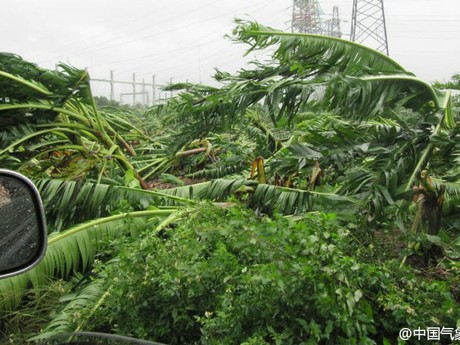
Last week, super typhoon "Sarika" landed in Hainan, and caused tremendous losses to fruit and vegetable growers in Qiongzhong city, especially to green orange growers. Around 667 hectares of green oranges were impacted, of which 33 hectares had almost no harvest. Originally scheduled to be picked around the 25th of this month, the overall green orange output dropped to around 10,000 tons, nearly 800 tons of loss or about 20% of the harvest volume. In addition to the loss of volume, green orange growers also worry about pest issues in the aftermath of the typhoon. Because temperatures normally rise after a typhoon, this could lead to water evaporation on orange trees and, due to damaged roots, mean that they can no longer supply sufficient water to the trees, which can eventually lead to pest issues. Moreover, immature green oranges can suffer from the wounds caused by the typhoon, which makes them more prone to bacterial infections, especially the sour & rot disease. Due to the typhoon impact, the green orange harvest will be postponed until November. So far it is uncertain whether the taste of green oranges will be affected by the typhoon and ensuing heavy rains, as it also depends on the weather in the future. In order to ensure the flavor and taste of green oranges, they have to be picked when the Brix level reaches 12 degrees. Prices are expected to rise.  Source - http://www.hinews.cn/

02.11.2016

USA - Crop insurance claims: What you need to know

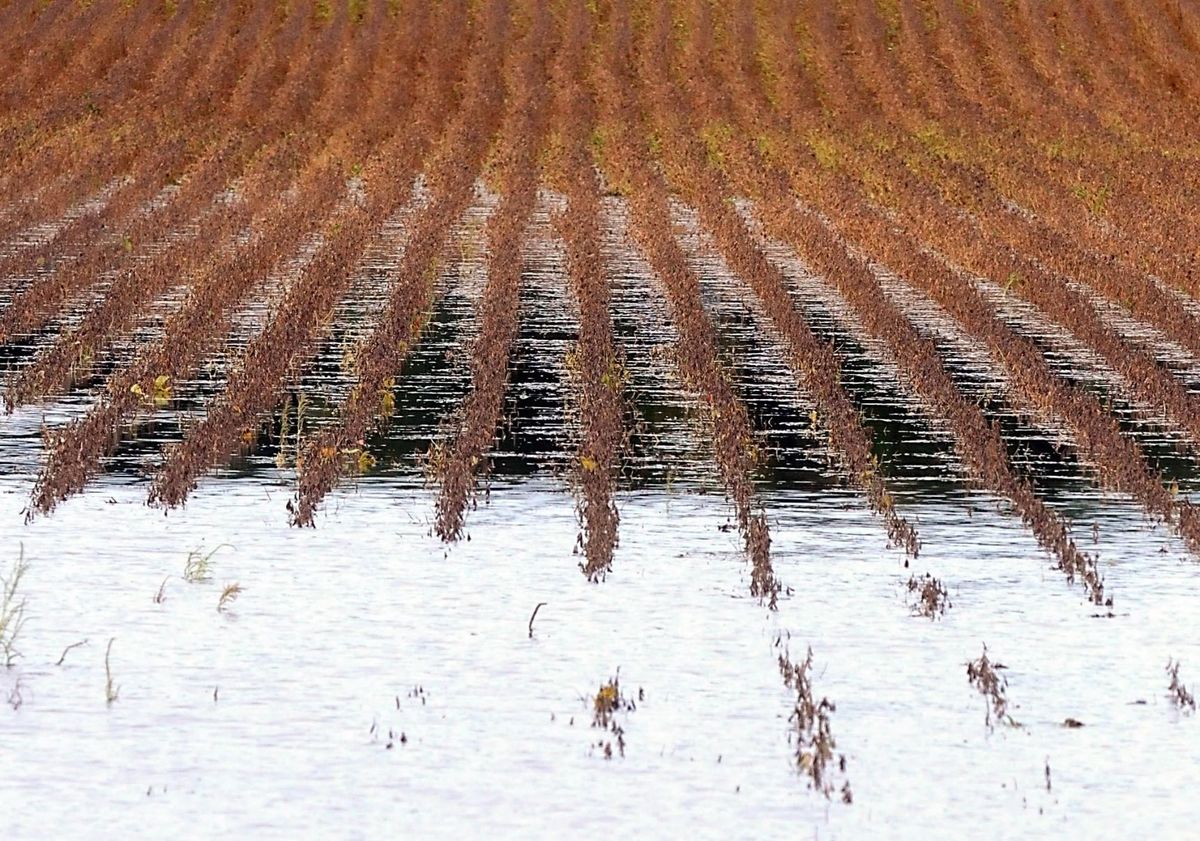
As the USDA projects record corn and soybean yields for 2016, our regional crop yields look good but variable across Indiana, Ohio, Kentucky and Tennessee. Though not widespread, we’ve seen pockets of drought and flooding that reduced yields and grain quality. Some hard-hit farms are posting corn yields at just 75 to 100 bushels per acre or less. They won’t be the only ones submitting crop loss insurance claims this year. For some farmers, low grain prices will be the biggest challenge that triggers a claim. Nationwide, corn crop prices are looking like they will be well below the spring guarantee corn price of $3.86. If corn is in the $3.00 to $3.35 range, that will likely trigger many revenue-based crop insurance claims. In these market conditions, it’s a good idea to stay in contact with your insurance specialist to evaluate potential claims and their impact on your farm’s bottom line. Claim Example This year, most of our claims will almost certainly be a result of a low corn price. But depending on where you are, yield loss from weather could be a factor as well. Consider the following scenarios. To start, let’s say you have an approved production history (APH) of 180 bushels per acre at 80 percent revenue coverage, which guarantees you 144 bushels per acre. The 2016 spring price guarantee was $3.86. 144 bushels X $3.86 = a spring guarantee of $555 an acre. Now, let’s look at how $3.00 corn this fall can put you under your guarantee even if you are right at your APH. Say your average harvest this year is 180 bushels an acre, which is the same as your APH, and the fall price sits at $3.00. 180 bushels X $3.00 price = $540 an acre, or $15 below your spring guarantee, which will trigger a revenue claim. What if you face a combination of low price and below-average yield? Let’s say your harvest is 160 bushels per acre and the corn price is at $3.33. 160 bushels X $3.33 price = $532 an acre, or $23 below your spring guarantee, also triggering a claim. There are plenty of crop insurance questions to answer. For example, what if your yield is at or somewhat above your guarantee but the corn price is low? What is your coverage level? Is your policy on enterprise units or optional units? Did you choose 80 percent or 85 percent coverage? These details and others can make a big difference in determining if you should be getting an insurance payment and, if so, how much. Working closely with your crop insurance provider can help shed light on your unique situation this season. Source - http://www.agweb.com

02.11.2016

USA - Maximize your crop insurance benefit

One of the things our Farm Credit crop insurance specialists like to do is ride in the combine with customers. Not only can we bring the paperwork along and talk though what-if scenarios, we can see firsthand exactly what the crop situation is. One example is southern Indiana, where the corn on high ground looked really good even though the low ground corn was stunted by too much moisture. Time in the combine seat with our farmers gives us a chance to discuss how each field tends to perform in different types of weather and brainstorm about different crop insurance strategies. As pockets of trouble turn up in the field, we want our farmers to call us. One farmer even sent a video from his combine showing his field issues and questions on what-if scenarios. Our team thrives on getting farmer input about how harvest is going and how crops look. Even if you’ve already completed harvest, it’s often a good idea to meet with your Farm Credit insurance specialist while field conditions are fresh in your mind. What-if scenarios Variability within fields may affect both short-term and long-term plans. Short term, you might need to get approval to destroy a crop as a total loss, or to harvest it as silage. In such cases, an adjuster must come out, inspect and sign off before you finish the field. Long-term planning might involve helping you decide whether you should be insuring by optional units (by farm) or enterprise units (entire crop by county). The unique yield variability within a field, from field to field or farm to farm can make a big difference in what structure works best for you. Tobacco producers might be a good example for all farmers. Wet conditions on some tobacco fields this year may result in poor yields or poor quality. Tobacco insurance claims are a very regimented step-by-step process that starts in the field and continue into the curing barn. When in doubt, be proactive and call us. With tobacco or any crop, communication with your Farm Credit crop insurance specialist is crucial to helping make sure you have the right insurance and that your claims are submitted properly to be paid at the end of the year. Source - http://www.agweb.com

02.11.2016

Australia - Robots team up with drones to help farmers in the fields

Robots are teaming up with drones and taking to the rural countryside to assist farmers with their everyday tasks. Together, drones and robots can create the future-connected fields of the 21st century. The Ida Bot, as the ground bots are called, uses radio identification tags attached to trees to work out its routing. For example, a farmer can input that trees four and seven need chemicals, and when the bot senses the appropriate tag in its vicinity, it will start spraying. “It automatically, without human intervention, applies the chemicals, and it does so at very low pressure,” Josh Griffin, assistant engineering professor at Northwest Nazarene University and project leader, said in a report published Sunday. “The chemicals go where we want them to go, and we do not overspray.” The bots communicate with drones scouring the skies. They carry multi-spectral cameras, capturing vines and fruit trees and relaying the data back to the bots to analyze which trees need spraying. In the future, a vision system integrated into the bot will be able to capture fruit tree yield, vital information for farmers that want to inform suppliers of crop yields months in advance. Ground-based robots have seen increasing interest due to their low speeds and ability to carry heavy loads. Starship Technologies has been exploring the use of a similar bot for last-mile deliveries in big cities, while Australia Post envisions ground drones helping mailmen complete their rounds. But Ida Bot is different as it combines these advantages with an aerial element, meaning that in the confined space of a vineyard, the bot can call on the drone to provide greater accuracy during a chemical spray. The robot is expected to cost relatively little, “in the order of maybe buying a pickup-truck,” Griffin said, with farmers benefitting from cost savings in other areas due to the Ida Bot’s efficiency. Source - http://www.freshplaza.com

02.11.2016

USA - Deadline nearing for pasture, rangeland, forage insurance

The USDA's Risk Management Agency (RMA) reminds farmers and ranchers in Colorado, Kansas, Missouri and Nebraska the final date to apply for insurance coverage on pasture, rangeland, or forage acres for 2017 is Nov. 15. The Rainfall Index Pasture, Rangeland, Forage (PRF) pilot program provides coverage to protect livestock operations from the risks of forage losses on acreage being grazed or harvested for hay. Current policyholders who want to make a change to an existing policy can do so until the Nov. 15, 2016, sales closing date. The PRF pilot program is an area-based plan of insurance that uses a rainfall index to determine losses and trigger indemnities. The rainfall index uses National Oceanic and Atmospheric Administration (NOAA) Climate Prediction Center precipitation data. Each grid is individually rated based on the data for that grid. The rainfall index is designed to insure against a decline in an index value that is based on the long-term historical average precipitation for the same area for the same period. It is important for ranchers and farmers to understand that payments are not based on individual rain gauges on their farm or a single weather station. Online tools are available to assist producers to determine how well the program correlated with their past forage production. Index tables provide historical information ranchers can use to decide whether this plan is right for them and a decision support tool are available on the RMA PRF webpage. Crop insurance is sold and delivered solely through private crop insurance agents. A list of crop insurance agents is available at all USDA Service Centers and online at the RMA Agent Locator. Producers can use the RMA Cost Estimator to get a premium amount estimate of their insurance needs online. Source - http://www.fortmorgantimes.com

02.11.2016

India - Planthopper hits basmati on 3,000 hectares in Ambala

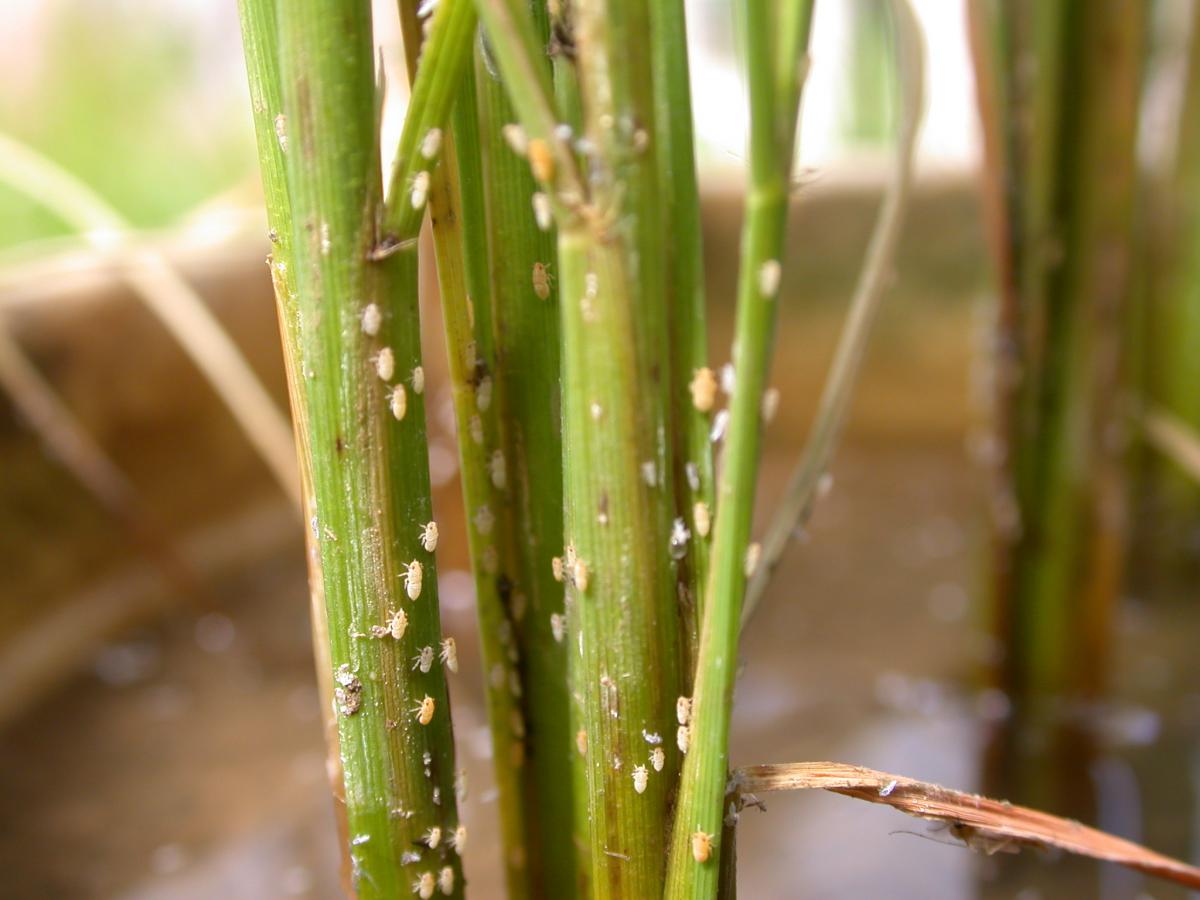
Basmati crop on nearly 3,000 hectares has been affected by brown planthopper and blast disease. Ranbir Singh, a farmer from Amipur village, said, “Pusa-1121 and C-30 varieties on nearly eight hectares in my fields have been affected by the diseases. Nearly 70 per cent crop has lodged and the yield is four-five quintal per acre. A huge amount of money was spent on pesticides and other sprays to save the crop, but to no avail. Pesticide sellers say they don’t know why the medicines are ineffective. Besides, I also followed the suggestion of agriculture experts, but nothing happened. A large area of  the adjoining six to seven villages have also been affected. ”He said, “A team of agriculture experts and officials inspected my fields a few days ago. I have not received any further information since then. The crop is insured under the Pradhanmantri Fasal Bima Yojana and we request the officials to provide compensation to us at the earliest.” Another farmer said, “We are finding it difficult to clear the fields now. Getting the field clear in this situation is a costly affair and we are looking for other means to get the job done.” Agriculture experts said the attack of brown planthopper was contagious and it shifted to adjoining fields. It is a plant-sucking insect and it sucks the juice of the plant due to which the leaves turn yellow before turning brown. Dr JN Bhatia, professor, plant pathology at Krishi Vigyan Kendra, said, “The temperature is favourable for the diseases, but the major issue is that farmers are not aware of the usage of fertilisers and other chemicals. They don’t consult agriculture experts before using them and follow the suggestions of commission agents and fellow farmers, which is wrong. The excessive use of urea also caused the outbreak of the disease.” SS Yadav, Deputy Director, Agriculture, said, “According to the survey, nearly 3,000 hectares under the basmati and Pusa-1121 crop have been affected by the diseases in Ambala-I. No major loss has come to notice in other parts of the district. Crop cutting experiment is still on and the farmers who have got their crops insured will get the compensation for their losses.” Source - http://www.tribuneindia.com

01.11.2016

USA - Crop insurance payments will be limited in 2016

As the 2016 corn and soybean harvest season is wrapping up, some producers have wondered if there will be any 2016 crop insurance payments, given the lower crop prices this fall, especially for corn. A large number crop producers in the Upper Midwest have had above average yields in 2016, and crop prices have increased slightly during October, which will eliminate any potential 2016 crop insurance payments in many instances. Some crop producers in southern Minnesota, northern Iowa, and other areas, which were impacted by excessive rainfall and severe storms during the growing season, are realizing final 2016 corn and soybean yields that are below their crop insurance actual production history (APH) crop yields. There are also other portions of the U.S. that may have experienced reduced corn and soybean yields due to dry weather late in the growing season. Any of these areas could potentially realize some 2016 crop insurance indemnity payments, due to reduced crop yields this year. Crop insurance payments are more likely on corn acres, as compared to soybeans, due to more variable yields, and a lower corn harvest price relative to the spring base price. As of Oct. 31, the estimated 2016 crop insurance harvest prices were $3.49 per bushel for corn and $9.74 per bushel for soybeans, with the USDA Risk Management Agency (RMA) finalizing the harvest prices on Nov. 1. The crop insurance harvest prices are based on the average CBOT price in the month of October for December corn futures November soybean futures. The harvest prices will be used to calculate the value of the 2016 harvested crops, and for the revenue guarantee for the Revenue Protection (RP) soybean policies that include harvest price protection. The established base (Spring) prices for 2016 RP and Yield Protection (YP) crop insurance policies were $3.86 per bushel for corn and $8.85 per bushel for soybeans. The base price will be used to calculate RP crop insurance revenue guarantee for corn, since the corn harvest price was lower than the Spring price, which will help improve the likelihood 2016 corn indemnity payments. The level of crop insurance coverage will be a big factor in determining the amount of insurance indemnity payment that is received for crop revenue reductions, with most producers having 75%, 80%, or 85% RP insurance coverage on their 2016 corn and soybeans. For example, a producer with a corn APH yield of 190 bushels per acre, carrying a 75% RP insurance policy in 2016, would have a revenue guarantee of $550.05 per acre. By comparison, a producer with the same APH yield, and an 80% RP policy, would have a 2016 revenue guarantee of $586.72 per acre, and a producer with an 85% RP policy would have a revenue guarantee of $623.39 per acre. If the actual farm yield for 2016 is 160 bushels per acre, which could be common on some farms in the areas that were impacted by the excessive rainfall, the producer with a 75% RP policy would not receive a 2016 crop insurance indemnity payment for corn revenue losses. By comparison, the producer with an 80% RP policy in 2016 would receive a gross crop insurance indemnity payment of $28.32 per acre, and the producer with an 85% RP policy would receive a gross indemnity payment of $64.99 per acre. Farm operators that incurred yield losses, and had an 80% or 85% RP crop insurance policy in place on their 2016 corn crop are more likely to receive a 2016 crop insurance payment. A producer with an APH corn yield of 190 bushels per acre would have RP crop insurance indemnity payments initiated at a final 2016 corn yield below 179 bushels per acre with an 85% RP policy, at 168 bushels per acre with an 80% RP policy, and below 158 bushels per acre with a 75% RP policy. A soybean RP policy will function similarly to a yield only (YP) policy, with payments based on yield reductions. So, a producer with a 52 bushel per acre APH soybean yield would have RP crop insurance payments initiated at 44 bushels per acre with an 85% RP policy, below 42 bushels per acre with an 80% RP policy, and at 39 bushels per acre with a 75% RP policy. Farm operators in areas with some yield losses that chose “optional units” for their 2016 crop insurance coverage, rather than “enterprise units”, will likely be in a more favorable position to collect indemnity payments on this year’s crop losses.  “Enterprise units” combine all acres of a crop in a given county into one crop insurance unit, as compared to “optional units”, which allow producers to insure crops separately in each township section. In recent years, a high percentage of crop producers have opted for “enterprise units”, due to substantially lower crop insurance premium levels. Crop losses in 2016 were highly variable from farm-to-farm within the same county and township. Producers that have crop revenue losses in 2016, with potential crop insurance indemnity payments, should properly document yield losses, regardless of their type or level of insurance coverage. A reputable crop insurance agent is the best source of information to make estimates for potential 2016 crop insurance indemnity payments, and to find out about documentation requirements for crop insurance losses. Source - http://cornandsoybeandigest.com

01.11.2016

Philippines - P622 million set aside for farmers hit by Karen, Lawin

The Department of Agriculture said its attached agency, the Philippine Crop Insurance Corp. (PCIC), has set aside P622 million “to indemnify losses” suffered by farmers following Typhoon Karen (international name: Sarika) and super-typhoon Lawin (Haima). Karen battered the country on Oct. 15 to 16 while Lawin, so far the most destructive to enter the Philippines this year, lingered in the Philippine Area of Responsibility for two days starting Oct. 19. The twin weather disturbances cut paths of destruction significantly in the Luzon region. Citing a quick assessment report to Agriculture Secretary Emmanuel F. Piñol on the post-typhoon situation, the statement said PCIC reported around 103,338 hectares operated by 81,700 farmers were damaged. The report said the rice sector suffered the most, accounting for about 77% of the total number of farmers and size of farms affected. Corn accounted for about 15% of farmers and 13% of farms, while high-value crops (HVC) accounted for over 7% of farmers and around 9% of the farms. PCIC said rice accounted for 85.78% or P533.26 million of the indemnity allocation; corn, 1.86% or P11.55 million; and HVC, 12.36% or P76.82 million. A detailed accounting of the PCIC field reports showed that Region II bore the brunt of the storms with agricultural losses reaching P198.81 million. This was followed by the Central Luzon Region with P154.35 million worth of losses and Ilocos Region with P90.82 million. Earlier, Mr. Piñol had directed the government’s agricultural insurance provider to assist the affected farmers and hasten the processing of damage claims in less than the average 20-day regulation period. PCIC is a government-owned and controlled corporation mandated to provide insurance protection to farmers against losses arising from natural calamities, plant diseases, and pest infestations of their produce. As of Oct. 22, the country, according to the Agriculture Department, has incurred P10.2 billion worth of agricultural losses from typhoons Karen and Lawin. Rice crops recorded the biggest damage with P7.78 billion worth of yield. In another development, the Insurance Commission (IC) is eyeing to provide an affordable property insurance pool for victims of super-typhoon Yolanda (international name Haiyan). Following the rebuilding of homes after that 2013 calamity, “[t]he next step is for them to get fire insurance for their new houses, and also insurance for typhoon and floods,” Insurance Commissioner Emmanuel F. Dooc said in a statement e-mailed to reporters over the weekend. He added that anyone willing to participate “can be a part of the pool” to be set by non-life industry group Philippine Insurer and Reinsurers Association, Inc. (PIRA). Mr. Dooc said insurance companies in the pool would insure the new houses to be financed by the ASEAN Insurance Council (AIC) and PIRA, while Gawad Kalinga will be in charge of homes that have yet to be built. AIC Chairman Michael F. Rellosa, who is also the deputy chairman of PIRA, said the PIRA Board of Trustees will soon meet to discuss the details of the insurance pool. “We will start with this AIC-PIRA-GK village and the communities under Gawad Kalinga in Leyte,” he said. “Once we already have all details in place, then we can expand to include other communities in Samar, Cebu, Iloilo and Palawan that were also affected by Yolanda. Hopefully we can do the same for those affected by super-typhoon Lawin in Northern Luzon,” Mr. Rellosa added. Yolanda left around 7,000 dead after it cut through central Philippines and parts of southern Luzon on Nov. 8, 2013. Tacloban City was the worst hit by the storm. According to the United Nation’s Asia-Pacific Disaster Report 2015, the Philippines ranked second among 15 countries that had the highest risk from national disasters, of which 9 out of 15 countries are in the Asia-Pacific region. The insurance industry booked a decline in its total premium income in the first half of the year to P105.52 billion, down by 9.12% from the P116.11 billion in the same period last year, amid persisting market volatility prompted clients to invest cautiously, according to data based on quarterly reports submitted by life and non-life companies to the IC. Source - http://www.bworldonline.com

01.11.2016

China - Typhoon Haima led to banana harvest failures

Typhoon Haima caused serious damage to the agricultural produce in Shanwei city. Rice and banana harvests were badly affected and certain aquaculture industries are even more severely impacted, with the growers facing a hard time to get their investment back. According to statistics from the Shanwei Disaster Prevention bureau, around 56,000 hectares of agriculture land has been impacted, leading to a direct economic loss of over 300 million Yuan. In terms of the aquaculture industry, over 3.688 million tons were impacted and the economic losses were 43,600.000 Yuan. Source - http://www.freshplaza.com

01.11.2016

Jamaica - Flooding destroys banana farm for second time

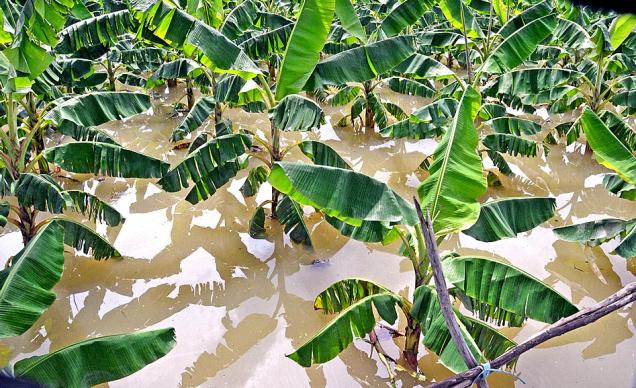
After three days of torrential rainfall last week, which ravaged Frederica Appleby's farm at Windsor in Portland, she has lost hundreds of fully grown bananas on the verge of harvesting. Marking the second time in six months that flooding has destroyed her farm. Appleby, who also suffered a heavy loss in April of this year when the Rio Grande washed through every inch of her four and half acres of farmland, is now struggling to come to grips with a second straight loss from a livelihood in which she has invested heavily. "This is like a nightmare," she told The Sunday Gleaner. "I am yet to recover from the devastation in April of this year and now I am facing another catastrophe. I was banking heavily on this crop to save the day, but now I don't even know where to turn. I have lost approximately 700 fully grown banana trees, which were ready for harvesting in a month's time, but now all is gone." Standing on the farm, as far as the eye can see, the flattened banana trees tell it all. Yet, amid the devastation, a sole banana plant, covered with blue plastic, an indication that harvest time was just around the corner, remains standing. Appleby is not the only farmer affected for the second time in less than a year. Her neighbour, Vincent Barrett, also lost one acre of the fully grown fruit. Both are now seriously considering whether to undertake the ordeal of replanting or to count their losses and flee their flood-prone properties. Estimated cost of damage to agriculture produce in the Rio Grande Valley following the recent six days of continuous, heavy rainfall, could run into hundreds of millions of dollars. A team from the Rural Agriculture Development Authority is scheduled to begin assessment of the damage later this week. Source - http://www.freshplaza.com

01.11.2016

Australia - Floods wipe out farmers' incomes

Farmers in South Australia's biggest vegetable growing region are now pulling out their ruined crops, after waiting weeks for the saturated soil to dry. Trang Xuan and her family lost most of their 70,000 tomato and bean crops when the Gawler River burst its banks at the start of the month, and swamped several hundred producers in the North Adelaide plains. The family had just spent six months installing $500,000 worth of new infrastructure at their Buckland Park farm. They were just starting to pick tomatoes when the flood hit, but instead of making money from the plants, they are now pulling most of them out. "This is our first crop that was supposed to produce some return on that investment and we're not going to see anything," she said. Neighbour, Thi Bich Loan Nguyen, is also wondering what might have been, as she and her husband cut down their cucumber plants. The couple had high hopes of a good season with the price of cucumbers three times higher than at the same time last year. But she said her entire crop of 50,000 plants had been destroyed, leaving her with no income for months. Between 1,000 and 1,500 hectares of greenhouse and field crops were inundated when storms swept through the state, with the latest estimated damage bill topping $50 million. The South Australian Government has announced it would set up a waste management program to handle the large amount of spoiled crops. It was also offering to reimburse growers up to $10,000 for clean-up costs. Source - http://www.freshplaza.com

01.11.2016

India - With high hopes on groundnut, farmers look to Rabi

Having seen heavy losses during the past two years, groundnut farmers in Mahbubnagar, Wanaparthy, Gadwal and Nagarkurnool districts are pinning their hopes for good yield on at least this Rabi season.  According to Agriculture Extension Department officials in Mahbubnagar, this year, out of expected 2.60 lakh hectares of total crops sown, the farmers in all the four districts are expected to sow groundnut over 88,787 hectares. Unlike in Kharif, which is mainly dominated by paddy, maize and jowar crops, farmers during Rabi season go for various types of crops like groundnut, sunflower, onions and other horticulture crops in addition to maize, paddy and Jowar. However, this year, majority of farmers is inclining towards sowing groundnut crops, despite having seen huge losses during the past two years. As part of this, the Agriculture Department is also well prepared and has stocked about 98,000 quintals of different varieties of seeds to be distributed to the farmers. “Out of 98,000 quintals of total seeds, we have already dispersed 48,000 quintals of groundnut seeds to various mandals for stocking, of which 27,000 quintals of groundnut seeds have already been distributed to the farmers on subsidy,” informed Dr Ramakrishna, Agriculture Extension Coordinator, Mahbubnagar. If we go by district-wise details of the cropping pattern this Rabi season, as against a normal sowing of 56,956 hectares of area in Mahbubnagar, about 25,844 hectares of land is expected to be covered with groundnut crop this season, while remaining land is expected to be cultivated with other crops like pulses, green gram, sunflower, onion and mirchi. In Wanaparthy, out of a total 35,485 hectares of cropping during Rabi, this season about 24,938 hectors accounting to more than 70 per cent of the total cropping areas will be covered by groundnut. During the past two years I have lost heavily sowing groundnut just because of lack of rains. This season we have had enough rains and the groundwater levels have risen. Even the tanks which were left empty during the past two years have adequate water. So this year again am going for groundnut and expecting to reap a good yield,” informed Banovath Narasimha, from Korlakunta village of Pangal mandal from Wanaparthy district. Similarly, the farmers in Nagarkurnool district are also giving more focus on sowing groundnut crop. Out of a total 39,472 hectares of cropping areas, the farmers in this district are sowing groundnut over about 27,995 hectares. However, unlike about three district farmers, the ryots  in Gadwal district are giving priority to green gram and pulses which is expected to cover over 22,012 hectares, while groundnut crops is expected to be sown over 10,050 hectares. Overall, the farmers in Mahbubnagar, Wanaparthy, Nagarkurnool and Gadwal districts are expecting good groundnut yields due to adequate rains and rise in groundwater levels. However, the agriculture officers are advising the farmers to be cautious and asking them to check the water source availability before going to groundnut sowing. Source - http://www.thehansindia.com

31.10.2016

USA - Drought in Southeast States Wreaking Havoc on Crops, Increasing Fire Risk

Six months into a deepening drought, the weather is killing crops, threatening cattle and sinking lakes to their lowest levels in years across much of the South. The very worst conditions – what forecasters call “exceptional drought” – are in the mountains of northeast Alabama and northwest Georgia, a region known for its thick green forests, waterfalls and red clay soil. “Here at my farm, April 15 was when the rain cut off,” said David Bailey, who had to sell half his cattle, more than 100 animals, for lack of hay in Alabama’s scorched northeast corner. “We’ve come through some dry years in the `80s, but I never seen it this dry, this long,” Bailey added. “There’s a bunch of people in a lot of bad shape here.” The drought has spread from these mountains onto the Piedmont plateau, down to the plains and across 13 southern states, from Oklahoma and Texas to Florida and Virginia, putting about 33 million people in drought conditions, according to Thursday’s U.S. Drought Monitor. In Mississippi, a man died when his farm field burned out of control, authorities said Friday. In Alabama, blazes have charred more than 12,000 acres in the past 30 days. “There are places getting ready to set records for most numbers of days in a row without rain. It’s a once-in-100-year kind of thing for this time of year,” said John Christy, Alabama’s state climatologist. The South has historically enjoyed abundant water, which has been fortunate, because much of its soil is poor at holding onto it. But the region’s booming growth has strained this resource. A legal battle between Georgia and Florida over water from rivers and their watersheds goes before a federal court official Monday, and the U.S. Supreme Court is expected to review his recommendations. The dry weather is only making things worse. “We’re 10 days away from a drought at any given time,” Christy explained. “Unlike the Midwest and other places in the country, we are closer to a drought than almost any place else.” Parts of northern Georgia and Alabama have now seen their driest 60 days on record, Thursday’s national drought report showed. If the drought persists, authorities said it could lead to the kinds of water use restrictions that are common out West, but haven’t been seen in parts of the South in nearly a decade. During a major drought in Georgia in 2007, police in Atlanta’s suburb of Alpharetta were given the power to criminally cite anyone watering their lawns. In Alabama that year, people were fined for watering on the wrong day and many homes became infested by thirsty ants and cockroaches. At the height of the 2007 drought, then-Georgia Gov. Sonny Perdue prayed for rain with hundreds of residents at the state Capitol. The Georgia Department of Agriculture is reviving the practice: It has announced plans for a Monday “Pray for Rain” gathering with the state agriculture commissioner and Republican U.S. Rep. Doug Collins in the northeast Georgia town of Lavonia. In west Georgia this month, the Tallapoosa River dropped below the intake the Haralson County Water Authority uses to provide water to at least four small towns. Some major cities are spending big to prevent future water shortages: Atlanta has begun a $300 million project to store 2.4 billion gallons of water – a month’s water supply – and pipe it under the city. This summer was particularly hot as well as dry, with 90-degree temperatures day after day that evaporated what little moisture the soil had left, said Bill Murphey, Georgia’s state climatologist. This summer was the second-hottest on record in Atlanta, where seasonal rains still haven’t arrived: During the past 30 days, just over two-tenths of an inch of rain has fallen in Atlanta, 94 percent below normal, and in Cartersville, about 45 miles northwest of Atlanta, the weather service has recorded no rain at all. The South’s usually temperate forests have turned into tinderboxes, worries Denise Croker, a chief ranger with the Georgia Forestry Commission in northwest Georgia. In the arid western U.S., cigarettes tossed from cars have been known to start forest fires. In the South, higher humidity generally keeps that from happening, but not this year. Even a spark from a chain dragged from a truck could set the northwest Georgia woods on fire, she said. “Our dirt is like talcum powder,” she said. A man died Thursday in drought-plagued Montgomery County, Mississippi, the state Forestry Commission said. It appeared he was burning an agricultural field despite an outdoor burn ban when the fire roared out of control and overtook him. Outdoor burning has been banned due to fire risk across parts of Louisiana, Mississippi and Alabama, and burn permits aren’t being issued in parts of Georgia. “This is the worst drought that I’ve ever experienced and I’ve been farming for 45 years,” said Phillip Thompson, 60, who spent Tuesday night trying to snuff out a smoldering, 150-acre brush fire near Scottsboro, Alabama, where he farms corn and soybeans. “It’s just a bleak situation.” Some of the South’s best known crops – cotton, peaches, peanuts and sweet potatoes – have largely escaped damage, because they’re mostly produced outside the worst drought areas, and in some cases got rain from Hurricane Matthew and other tropical weather, trade groups said. Peanut yields will be down due to heat, drought or hurricanes, but that won’t likely affect consumer prices, said Dan Koehler, who directs the Georgia Peanut Commission. As for sweet potatoes, the drought has been both good and bad: Hard ground can damage skin and lead to rot in stored tubers, but they also start curing in the ground when it’s really dry, which means “they’re really sweet,” said Sylvia Clark, secretary of the Mississippi Sweet Potato Association. Source - http://www.insurancejournal.com

31.10.2016

Rwanda - How small scale irrigation has turned Rwandan farmers into multi-millionaires

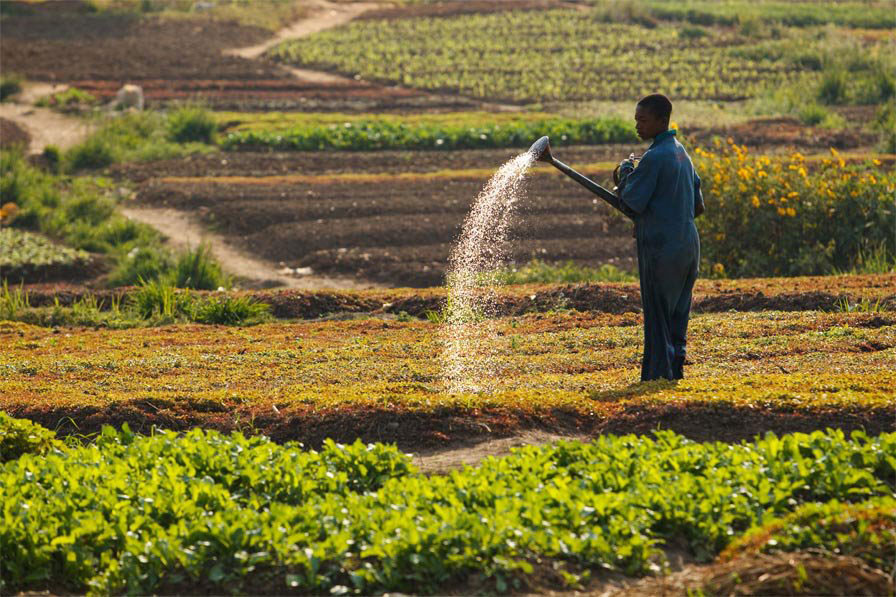
The long awaited rainy season is finally with us and is a great relief to many small scale farmers around the country who depend on the rains for farming. In the dry season, many farms are visibly dry and bare as farmers abandon them for lack of rain and seek other means of making a living for their families. This is contrary to the new way of life for farmers in Nyagatare District, many of whom solely depend on agriculture for their daily bread. Farmers here no longer rely on seasonal rainfall for farming activities. In fact the dry season is to them the most profitable. While other farmers are lamenting the dry season for lack of rain, they are smiling all the way to the bank under the hot scorching heat. In 2014 the government of Rwanda through the Ministry of Agriculture and Animal Resources (MINAGRI) embarked on a project that has seen many farmers’ lives improve by leaps and bounds. Many have seemingly been turned into over night millionaires. The small scale irrigation technology project was set up by MINAGRI to benefit farmers having land up-to 10 ha. MINAGRI through the Rwanda Agriculture Board (RAB) created water channels near farms by diverting rivers in the locality. According to Innocent Nzeyimana, the head of Land Husbandry, Irrigation and Mechanization Department at RAB, Rwanda has 121,000 hectares with potential to benefit from small scale irrigation. The government’s annual target for land under small scale irrigation (SSI) is 2,000 hectares. Currently 4,000 hectares are under small scale irrigation and by 2018 the number is expected to have reached 10,000 hectares and above. Since the majority of the Rwanda agriculture is rain-fed, RAB is working closely with private sector, and mobilising NGOs and projects to contribute in increasing the annual SSI target, and thus expand area under SSI technologies. In partnership with FAO, IFAD, AfDB, OXFAM, and other key partners, support to farmers on SSI equipment and training has been undertaken countrywide, particularly in Eastern and Southern Provinces. During the dry season, as you travel by road the evidence of drought is all around. Vast bare fields with only scattered stunted dry maize crops that seem to have been forgotten from the last season by their owners. It is therefore as if one is ushered into a whole new world when you come to Nyagatare. As far as the eye can see is acreage after acreage of lush green plantations – a stern contrast of scenery. In one of the farms, a farm manager is busy setting up a rain gun irrigation sprinkler to irrigate beds of capsicums and tomatoes that have been recently planted. Around him are trees of oranges that spread out a huge distance behind him. He says that he is not sure about the number of orange trees but they must be more than 3,000. Interspaced on the land where he is standing are numerous tree tomato trees. There is little to no fruit on them because he has just finished harvesting its last fruits and plans to uproot them and plant new ones. The farm is five hectares and on a rotational basis throughout the year he plants water melons, eggplants, papaya, chilli and onions in addition to capsicums and tomatoes. The sprinkler is effective and does not require anyone to operate it as the water is spread through out the patch of nursery beds he needs irrigated. This has reduced on labour costs for the farm. Nonetheless, this farm has created jobs to close to one hundred youth and women. On a daily basis, there are 50 people working on the farm doing various activities from preparing land for planting, planting and tending to the various crops. As we converse, a young man is busy surveying the pipe that is ferrying the water from a nearby canal to make sure that the water is being pumped properly. The water canal is a diversion of River Muvumba and stretches some 29Kms from the source. More than 1,085 farmers, most of whom farm tomatoes and watermelons, have access to the water canal which does not dry up during the dry season. Given the availability of water all year round, the seasons here are only distinguishable by the transition from one crop to another. The farm manager admits that “had it not been for the water, many of us would have abandoned Nyagatare in search of other means to feed ourselves and our families. We have remained here because we have water to use in our farms and many of us have found jobs in the farms so we can earn a living and look after our families well.” In another farm, Francois Ndajimfura jovially gives a tour of his 5 hectares farm as his workers look on. Currently he has planted tomatoes on the entire piece of land and in less than two months he’s expecting to reap a great harvest. Ndajimfura also accesses water for irrigation from a nearby canal which means that throughout the year he has access to water for his farm. It is only one year since he started to access the water and during that time he has ventured into tomato and onion farming. So far he has harvested more than 300 tonnes of tomatoes. In two months time he expects to make Rwf. 5,000,000 from the tomatoes on his farm. This is in great contrast to when he only used to get Rwf. 300,000 from the same piece of land when he used to rely on rain fed irrigation for his farm. Ndajimfura is married with 6 six children. “I can afford to pay school fees for all my children without any problem and the health insurance (mutuelle) payments is up to date for the entire family.” He happily explains. According to Nzeyimana, farmers can easily make as much as Rwf. 600,000 to 1 million per season on every hectare from vegetables and Rwf. 2,500,000 to Rwf. 3,000,000 per hectare of banana plantations. In addition to establishing water canals for farmers to access water throughout the year, RAB gives a 50% subsidy to vulnerable famers to purchase irrigation equipment. Ndajimfura paid Rwf. 175,000 for his irrigation kit while an equal amount was paid up by RAB to cover the total cost of the irrigation kit. RAB has partnered with 9 local distributors of irrigation to supply, install and train farmers on how to do minimal maintenance of the equipment. All equipment comes with a one year guarantee and is supplied according to the nature of the terrain of farms. RAB extension officers work closely with farmers and the suppliers to ensure that they get equipment that works for their unique terrain. RAB has partnered with Integrated Polytechnic Regional Centres in Gishari, Rwamagana and in Huye to train people on how to operate, maintain and repair irrigation kits. Farmers have not only been able to reap more from their farms through small scale irrigation, they have also found new avenues of revenue by renting out the irrigation kits to other farmers. Once they have used the irrigation equipment to water their crops, they rent out the equipment when not in use. Encouraging small scale irrigation is important as the Government’s target in Vision 2020 for a sustained annual GDP growth of 11.5 per cent with agriculture growing at 8.5 per cent cannot be delivered as long as the sector is dependent on rain fed irrigation. The government subsidy greatly reduces the burden for farmers to purchase the irrigation equipment and contributes to the growth of the sector as farmers are empowered to diversity crops and improve farming practices to get maximum yield from their crops. Nzeyimana says that small scale irrigation is the answer to climate change today and crop productivity. Given that climate change is now a global issue, relying on rain-fed irrigation is hard and farmers need to be innovative not only to adopt small scale irrigation as they are adopting improved seeds and fertilizer inputs, but also harvest rain during the rainy season which they can use for irrigation during the dry seasons and also for their livestock. RAB conducts mobilization campaigns at the grass roots level to encourage farmers to buy tanks and dam sheets to store collect and store water. Both water tanks and dam sheets are bought at government subsidized prices. Source - http://www.newtimes.co.rw

831
of 1225