NEWS
830
of 1225
News
07.11.2016

Are US-style insurance schemes the way to go for CAP?

EU farm prices are more volatile now than ever before because Europe can no longer use border or trade measures to stabilise the market. Decoupled direct payments, which substituted for the high market price support, do not vary in response to farm income conditions. They are the most stable part of any farm income. However, they are not particularly well targeted for this purpose in that farm sectors, such as horticulture, which are more exposed to instabilitym do not receive higher direct payments as a result. In its most recent farm bill, the US eliminated its decoupled payments, in part because it was hard to justify making income support payments to farmers at a time when farm incomes were booming due to favourable prices. They substituted instead a range of counter-cyclical payments which together make up the US farm safety net (see info box on the right). Similar proposals have been circulating in Europe. In the 2008 CAP Health Check, member states could use up to 10pc of their direct payment ceilings to support crop and livestock insurances, although there was little interest in this facility. The 2013 CAP reform moved support for insurance products into the revamped rural development regulation. It also extended the toolbox to include support for mutual funds which set up income stabilisation insurance for their members. Again, the uptake of this measure in the rural development programmes submitted by member states was very limited. The Commission in its recent proposal to revise the CAP basic acts has suggested that the rules on operating conditions for these income stabilisation funds could be relaxed in an effort to stimulate their uptake. Which system is better? Most people insure against the very occasional risk of an emergency and are willing to pay a small premium to cover this eventuality. Insuring farmers against market price risk would be a challenge for insurance providers. Market price variability could mean much more frequent pay-outs and thus correspondingly much larger premiums. Administrative costs could be high. The cost efficiency of the US insurance programme is poor. It has been estimated that every time an American farmer receives $1 through the insurance system, it costs the American taxpayer $2. US farm insurance policies The US farm safety net has three pillars: federal crop insurance, farm commodity programmes, and disaster assistance. Under the 2014 farm bill, the projected cost of these three pillars is $8.8bn, $4.2bn, and $0.5bn, respectively. Actual costs will differ because these are counter-cyclical programmes which cost more in bad years for farming than in good years. Federal crop insurance Federal crop insurance is the centrepiece of the US farm safety net. It makes available subsidised crop insurance to producers who purchase a policy to protect against losses in yield, crop revenue, or whole farm revenue (including livestock producers to a limited extent). The producer selects a coverage level and absorbs the initial loss themselves. For example, a coverage level of 70pc has a 30pc deductible initial loss (for a total equal to the expected value prior to planting the crop). Policies pay out for an individual farm loss in yield or revenue. Policies are sold to producers by private insurance companies. Producers pay a portion of the premium which increases as the level of coverage rises. The federal government pays the rest of the premium (62pc, on average, in 2014) and covers the cost to insurance companies of selling and servicing the policies. The government also absorbs some of the losses of insurance companies in years when payouts to farmers are particularly high. Around 1.2m policies are purchased annually, providing nearly $110bn in insurance coverage. More than 120 commodities are insurable. For major crops, more than three-quarters of the US planted area is insured under this programme. Supplementary cover option The 2014 Farm Act authorised a new Supplementary Coverage Option (SCO) to help producers to cover the deductible loss on farm crop insurance policies. Farmers can now purchase a second policy on the same acreage, with the amount of coverage related to the liability level and approved yield for the underlying policy. Unlike the underlying policy, which is triggered where there is an individual farm loss in either yield or revenue, the SCO is triggered when there is a county-level loss in yield or revenue (not an individual farm loss). So it is possible for a farmer to receive an SCO payment even where he or she has not made a claim under the underlying policy, and vice versa. For example, for a revenue insurance policy, the SCO option begins to pay when county average revenue falls below 86pc of its expected level. The full amount of the SCO coverage is paid out when the county average revenue falls to the coverage level of the underlying policy (assume this is 70pc). This supplementary option therefore provides protection for up to 16pc of the value of the crop. The premium for this policy is covered by a 65pc subsidy. Dairy Margin Protection Programme This new insurance programme introduced in the 2014 farm bill makes payments to participating milk producers when the national margin (average farm price of milk minus an average feed cost ration) falls below a producer-selected margin. Producers elect how much of their historic production will be covered and at what margin, between $4 and $8 per hundredweight. Insuring the milk margin at the lowest level only requires payment of a nominal administrative fee. Elections above $4 per hundredweight require payment of an additional premium above the nominal base fee. To date, only dairy producers who enrolled at the $6 through $8 margin trigger coverage level have received payments. Source - http://www.independent.ie

07.11.2016

India - Crops damaged in rain

Low pressure-induced rain has damaged paddy crops in the coastal Kendrapara district. Crop loss is being reported from villages of Aul, Mahakalapada, Rajnagar, Marsaghai and Garadapur blocks of the district. Heavy rain lashed the district damaging autumn paddy crops and seasonal vegetables. Gayadhar Dhal,  the secretary of Kendrapara district Krusaka Sabha, has demanded survey of the damage caused to the crops by rain and appropriate compensation for affected farmers. “We have lost harvested paddy. Many of us had taken loans to grow autumn paddy,”said Ashok Jena,  a farmer of  Pattamundai. Farmers are apprehensive that quality of paddy will deteriorate due to rain and this will not fetch them the minimum support price (MSP). Contacted, Prafulla Chandra Mishra, the  Deputy Director of Agriculture, Kendrapara, said farmers of the district had raised autumn paddy in over 12,350 hectares of land this year.  “We had earlier asked the farmers to shift their ripe paddy crops to their homes, but many did not do so. They kept the harvested paddy in their agricultural lands and threshing areas and the stocks were damaged as they were not covered with polythene sheets,”he said. Source - http://www.newindianexpress.com

07.11.2016

Chile - Up to 48% fewer cherries due to rainfall

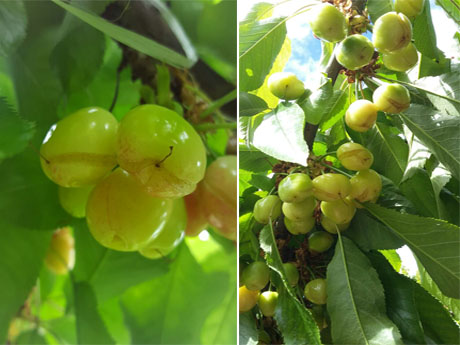
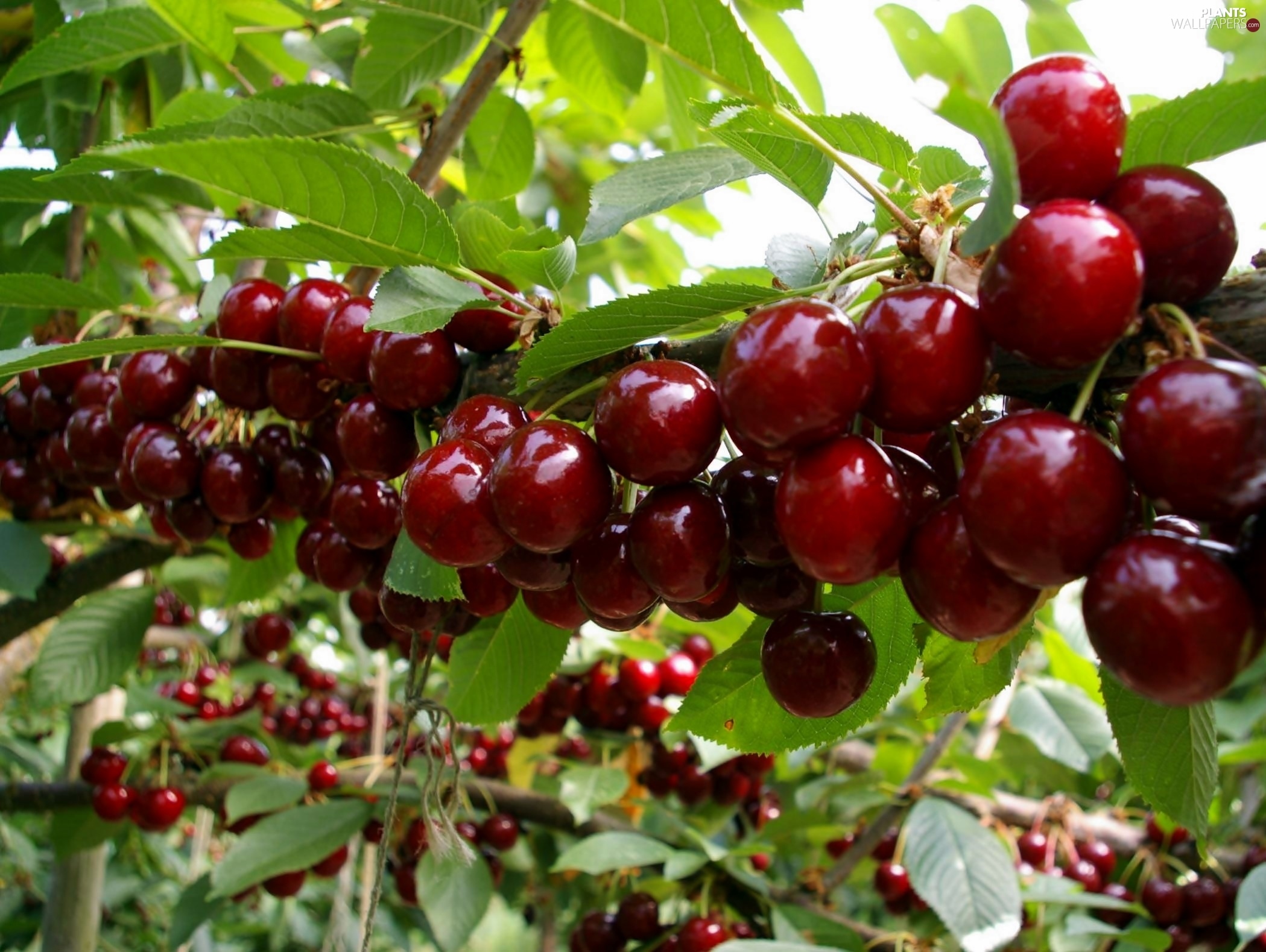
In mid-October, the Chilean cherry harvest was damaged by heavy rains, which affected cherry producing areas like Curic and the Metropolitan Region. A couple of days ago, the same areas again reported heavy rainfall accompanied by gale-force winds and low temperatures. Producers in the area say that this will cause further damage to the crop, although the actual extent is still unknown. Industry sources stated that the rainfall of Tuesday and Wednesday could reduce the volume intended for export by up to 48%. "It is estimated that there were about 2.5 million boxes to be harvested before the rain and, with this, about two million will be lost," affirmed the representatives. It is worth noting that the October rains may have resulted in a loss of 30% of the harvest in the Seventh Region and of approximately 20% in the Sixth Region and the Metropolitan Area. The problem would primarily affect the early varieties, such as the Royal Dawn, the Brooks and, to a lower extent, the Santina. Source - http://www.freshplaza.com

07.11.2016

India - Odisha provides aid to drought-hit farmers via e-transfer

The Odisha government today began the disbursement of special drought assistance to the affected farmers in the state beginning with Baragarh, Bolangir and Khurda districts through electronic transfer system. The state government provided a financial assistance of Rs 100 per quintal to the drought-hit farmers who were affected during the Kharif season last year. “The farmers of the state have successfully survived the natural calamities in the previous years. Despite the adverse conditions, they have successfully battled them, increased productivity with hard labour and brought laurels for the state. The state government is with them and has continued its efforts to resolve their issues on priority basis,” Chief Minister Naveen Patnaik said. Earlier in November last year, Chief Minister Naveen Patnaik had announced a drought assistance of Rs 100 per quintal of paddy to the affected farmers in 21 districts, during a farmers rally at Sohela. The state government would transfer the amount directly to their bank accounts. With this, an estimated 3 lakh farmers would be benefitted in the state. It may be noted here that over 29000 villages in 27 districts were drought hit due to insufficient rain last year. The Food and Consumer Welfare Department had prepared an estimated loss report where the extent of crop loss was 33 % and above. As per the data prepared, around 3 lakh peasants would be eligible to get the assistance, subject to a maximum of 50 quintal of paddy per farmer. Notably, scores of farmers – particularly in western Odisha – committed suicide due to crop loss and debt burden. Source - http://odishasuntimes.com

07.11.2016

Italy - First damage caused by brown marmorated stink bug in Veneto

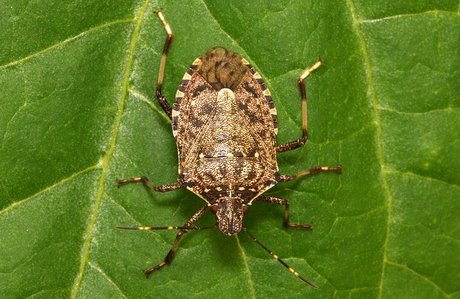
The presence of the brown marmorated stink bug (Halyomorpha halys) is worrying kiwi producers in the Padua area.   The local Confagricoltura branch explained that "partners have been reporting damage to up of 30% of the production, as the insect bites the upper part of the fruit, damaging it and making it fall to the ground. This species has started to appear this year and could cause even more problems in the future." The presence of this insect in various parts of Italy seems to be also due to the fact that temperatures have not been too low during the past two winters. Denis Gobbo, grower from the south Padua area, explains that he "cultivates 20 hectares of kiwi (G3 and Hayeward), but luckily the insect has not been causing too much damage so far. I am more worried about other diseases such as root rot."  But the areas most affected by the insect need some strategies to deal with it. "The only thing that can be done at the moment is to cover orchards with nets, but it is quite an expensive solution. We have involved the Region to consider specific solutions. The best thing would be to go back to cold winters, but climate change does not seem reversible in the short term." Source - http://www.freshplaza.com

07.11.2016

Australia - Storms destroy cherry crops

Australia's cherry growers have suffered a disappointing season; cold and wet weather across Australia pummeled farms in September leaving producers with a significantly smaller than expected harvest for 2016. This means that the price of cherries could soar by more than $5 a kilogram. Australian Cherry Growers Association president Tom Eastlake said he had never seen a harvest this bad. 'We are in uncharted territory at the moment, crops have never been this low. But the quality is good and customers who love cherries will pay more,' Mr Eastlake said. Mr Eastlake said farmers around the country could harvest 9,000 tonnes of the fruit, half of the 18,000 tonnes that was expected. 'It's going to be tough for farmers to make a profit because the yield is so low,' he said. But he encourages consumers to buy cherries and support the Australian cherry farmers. 'Assuming the good weather patterns hold, we’re going to see some of the best fruit we’ve ever produced in Australia and the fruit size is going to big this year,' he added. Mr Eastlake also said there would certainly be cherries available between November and February. He also said the $5 extra price projection, reported by The Daily Telegraph, was in no way certain, despite a significantly smaller than expected harvest for 2016. Also affected by the storms were potato crops in farms across southern New South Wales and Victoria, which has caused a shortage of supply that could last until the next season. Source - http://www.freshplaza.com

04.11.2016

Drones lead way in precision agriculture

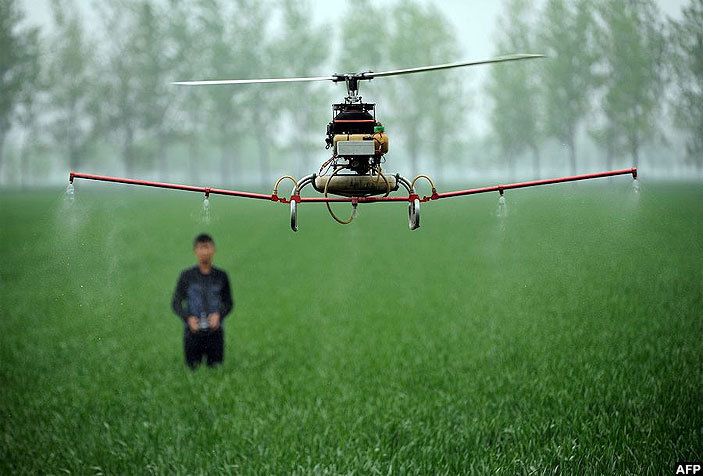
Consider the technological possibilities in agricultural that lie just beyond the horizon. Fully autonomous farm equipment that seed and harvest crops under control from a distant laptop computer. Unmanned aerial drones that can monitor crops throughout their growth cycle and apply precise amounts of pesticides or herbicides exactly where and when they are needed. Smart ear tags that alert the rancher whenever a cow, horse, sheep or pig appears to be sick or in distress – and then transmit the animal’s exact location. Is it all some futuristic flight of fancy? Perhaps, but the technology to make all these things possible is nearing reality. In August, CNH International, the parent company of both Case IH and New Holland Agriculture, unveiled an autonomous concept tractor at the Farm Progress Show in Boone, Iowa. Employing radar, LiDAR (light imaging, detection and ranging) and on-board video cameras, the Case IH Magnum can sense both stationary and moving obstacles in its path and automatically adjusts for implement widths to plot the most efficient route. It’s designed to operate unmanned and around the clock, controlled remotely via a desktop computer or portable tablet. It doesn’t even have a seat. Japanese farmers are already using drones to apply pesticides in steeply inclined fruit orchards and in flooded rice paddies where access with traditional sprayers is difficult. Researchers at the Leibniz University in Hannover, Germany, are developing an infrared laser that can accurately identify emerging weeds by examining their shapes and contours, then kill the sprouts with a low-powered zap to the plant’s growth center. And smart livestock ear tags are already a reality. Companies like CattleWatch and SMARTRAC offer computerized coils, collars and ear tags capable of detecting and transmitting the physiological condition of each animal every 30 seconds. Agriculture stands at the doorstep of a new technological revolution, with the potential to increase farm efficiency unlike anything since the “green revolution” of the 1950s, ’60s and ’70s, when the introduction of hybridized seeds, synthetic fertilizers and pesticides doubled global production of cereal grains. The work of improving varieties of high-yielding grains, fruits and vegetables will continue, as will the development of more effective and less environmentally damaging herbicides and pesticides. But the next revolution in agriculture will almost certainly be driven by the introduction of new precision farming techniques that are almost surgical in their application. Robert Blair stands in his field of winter wheat holding a Sensefly ebee Ag drone, the primary UAV he uses to monitor crops on his farm. (Photo: Photo courtesy of Robert Blair) “We are at the forefront of the information revolution,” Robert Blair said. “On my farm we’re using that information to drive the tractor and to plant precise quantities of seeds in different locations. Using other data, we’re able to better understand how to manage our crops and lower our input costs.” Blair, 47, is a fourth-generation farmer who runs a 1,300-acre dryland wheat, barley and pulse crop farm near Lewiston, Idaho. Less than two decades ago, when Robert took over daily operations on the family farm, the Blair farm’s financial records were still written out in longhand. Today, Blair is a nationally recognized advocate of precision agriculture. On his own farm he employs cutting-edge technologies like variable density planters, variable rate chemical sprayers and unmanned aerial vehicles (frequently referred to as drones) to conduct real-time crop analytics. Blair is a recipient of the Eisenhower Fellowship for emerging leaders, he was awarded a McCloy Fellowship in agriculture and sits on the University of Idaho’s College of Ag Science Advisory Committee. On Oct. 22, Blair spoke at the 101st annual convention of the Montana Farmers Union to explain the growing potential for UAVs in agriculture, in a presentation he refers to as “the unmanned farmer.” “We have to learn and adapt,” Blair told the audience of perhaps 100 Montana farmers, “but most importantly, we have to learn to set goals. What do we want this new technology to do?” The seeds of precision agriculture were first sown nearly a quarter century ago. In 1992, the company Ag Leader Technology introduced the first commercially available grain yield monitor, a device that allows farmers to accurately measure the mass of grain harvested by a combine on an acre-by-acre basis. With this information, farmers can better understand where their fields are most productive and where problem areas exist. They can then formulate management plans to address any deficiencies. This was followed by the introduction of auto-steer guidance. Using global satellite navigation systems, machinery operators can now guide their tractors and combines to within a single foot of any plotted location. This can virtually eliminate “slop-space,” putting more rows in a farmer’s fields and increasing his per-acre productivity. But it’s taken decades for these technologies to become widely accepted. “It’s been nearly a quarter century before finally these features are becoming standard equipment on a combine,” Blair said. “The first auto-steer unit I dealt with was basically just a little wheel mounted on the steering column with a gyro-compensator installed behind the seat. Now it’s become something that’s standard equipment in the tractors. We’re also starting to get the data and information to work with existing farm equipment.” The next step is to provide farmers with near-real-time data on crop growth, plant health, emerging weeds and insect damage. Armed with more and better information, farmers will be able to target specific areas of their fields to apply pesticides and fertilizer more precisely, adjust irrigation to precisely match crop needs and even remotely monitor livestock as they are grazing. Much of this new information is becoming available because of continuing advances in drone technology. Deer and elk tracks through Robert Blair’s wheat field are clearly shown in this photograph taken by a UAV. The photograph proved to be critical evidence in Blair’s successful effort to obtain crop damage payments. (Photo: Photo courtesy of Robert Blair) The promise: Multiple point crop analysis While grain yield monitors have proven themselves as valuable tools, Blair notes they are limited because they only measure the productivity of a field at harvest. “The difference between utilizing a UAV versus a yield monitor is that a yield monitor is reactive data,” Blair said in a 2016 interview for the expouav trade journal. “The crop has matured and died, and we’re harvesting the seeds, so we can no longer do anything to affect the outcome of that crop for that growing season because we’re harvesting it. UAVs enable us to get proactive data that allow us to make better management decisions.” Equipped with a range of sensors and cameras, a drone can take measurements that extend beyond visible light. Some sensors can identify specific weed species, or create 3-D models that display plant heights and population densities. The information can then be transmitted to combines and sprayers, directing them to problem spots and cutting down on the amount of water and chemicals that a farmer needs to address those problems. “If you can identify weeds before the crop canopy is over, then you can make informed management decisions,” Blair told the Tribune. “Instead of spraying 100 percent of the field, I’m spraying 30 percent now because I’m spraying exactly where it is needed instead of across the whole field. That’s huge – to be able to identify those areas to treat before the treatment takes place.” Blair predicts that most producers could lower their chemical input costs by 15 to 25 percent using these applications. That could easily amount to tens of thousands of dollars in savings on an average size farm, while reducing chemical runoff into surrounding uncultivated areas. This aerial image of a wheat field has been enhanced to show plant population densities. Good stands of winter wheat appear gray, thinner stands are red, and bare earth appears yellow. Armed with the knowledge gained with images like these, ag producers can adjust their seed rates to compensate in areas of low productivity and thus improve overall crop yield. (Photo: Photo courtesy of Robert Blair) The problem: Imperfect technology and insufficient bandwidth The existing generation of optical sensors are already adept at identifying broad-leaf weeds like Canada thistle and spotted knapweed, but the technology is more challenged when it comes to spotting grassy weeds like wild oats and cheat grass. “Wheat is a grass,” Blair points out. “One thing that’s very hard is to distinguish a grassy weed in a grassy crop. Whatever type of grassy weed is out there — they’re all going to be very similar in that spectrum of light. Where are they located in the spectrum? But as we move forward you will begin to see better cameras with better sensing capabilities out there.” While the sensing capabilities of drones are likely to improve with time, a greater obstacle to will be getting all that information into a farmer’s hands in a timely manner. The explosive growth of wireless communications has exposed the insufficiency of wireless infrastructure in many rural areas. It’s hard to get reliable cell service in many parts of Montana, and the existing infrastructure is insufficient to transmit the large packages of data UAVs are currently capable of delivering. “I have a 0.5 Mbit/s upload speed and I’m trying to put 50 or 60 gigabytes through that?” Blair said of his digital service in Idaho. “We’re trying to collect a fire hose worth of data through a straw in rural America, and we simply can’t do it.” “If I can’t get that information from the UAV into the cab of a tractor to make management decisions, that information’s no good. They have to work in conjunction, and at this time unfortunately, we simply don’t have the infrastructure to handle this.” The promise: Relaxed federal guidelines on UAV operation For the past decade the Federal Aviation Administration has struggled with how to regulate UAVs. Except for a few limited exemptions, U.S. airspace remained closed to the commercial use of drones and any operator wanting a permit for commercial applications was also required to obtain a private pilot’s license. Those rules effectively quashed the use of drones as a commercial tool. Hobbyists were free to do a fly-over analysis of their backyard vegetable patch, but if a commercial producer used the same technology to monitor the health of a crop he planned to sell in the fall, in most cases he was probably violating federal law. On Aug. 29 of this year, the FAA finally approved long-awaited revisions to its rules on the operation of unmanned aircraft. Currently UAVs may weigh no more than 55 pounds, may not fly higher than 400 feet or at speeds in excess of 100 mph, can only be operated during daylight hours and must remain within the line of sight of their operator. Most significantly. however, commercial operators no longer need to obtain a fully fledged private pilot’s license but can legally operate a UAV for commercial purposes after obtaining the much less intensive “remote pilot airman certificate.” A quadcopter hovers over a field of garbanzo beans in central Idaho. (Photo: Photo courtesy of Robert Blair) The problem: America’s crowded skies The United States has both the most pilots and the most congested airspace in the world. The prospect of collisions between manned aircraft and UAVs was the greatest obstacle to amending regulations on commercial drone applications, and it remains a serious concern. In particular, crop dusters and the professional organizations that represent them have expressed uneasiness about a sudden proliferation of drones within the low-altitude air space. “Near misses between agricultural aircraft and UAVs are not uncommon,” said Christian Rice, coordinator of Public Relations for the National Agricultural Aviation Association. “If a mallard weighing less than 3 pounds can crash through a manned aircraft window and injure, if not kill a pilot, a 55-pound UAV would certainly be deadly.” The NAAA is pushing for technological requirements for UAVs that would allow manned aircraft pilots to know when a UAV is nearby, and also encourages UAV operators to use strobes to allow pilots to see them. Both Rice and Blair agree that consistent communication between UAV operators and traditional aircraft pilots is key to reducing the risk of accidents. “Our hope is that farmers using UAVs will inform agricultural pilots of their whereabouts so there aren’t any collisions,” Rice said. The promise: Widespread use of UAV technology in ag within five years In its most recent forecast of aerospace trends, the Federal Aviation Administration predicted that by 2020 there will be 7 million unmanned aerial vehicles in the United States, outnumbering conventional manned aircraft by more than 30 to 1. Smaller, hobbyist models are expected to make up the bulk of that, but as many as 2.7 million drones will find their way into commercial applications including industrial inspection, real estate, aerial photography and for insurance adjustments. More than half a million drones are expected to be actively used for agricultural purposes, one for every four farms in the country. This headlong rush into drone technology comes with a few precautions. “I’ve seen a lot of companies trying to sell a product to farmers even though they don’t understand agriculture,” Blair said. “It’s unfortunate we’ve had so many manufacturers and service providers overselling what could be done with the technology and the services.” In addition to managing his Idaho farm operation, Blair also serves as the vice president of agriculture for Measure, a drone service provider headquartered in Washington, D.C. Measure is among a growing list of companies that don’t sell drones but offer their expertise in operating them to companies and individuals who aren’t immediately interested in owning and operating their own drone. “It comes down to time and expertise,” Blair said. “When you start flying UAVs, it takes time away from your farming operation or from your family. Do you really want another job (learning to fly a UAV) or do really just want the information?” Then there’s the cost. A commercially appropriate UAV with all the cameras, sensors and software capable of interpreting the data currently costs between $30,000 and $40,000 — and if you’re not an experienced pilot, there’s a strong possibility of catastrophic crashes. “Why would I want to put that type of investment into a technology that’s going to evolve and change quickly, instead of hiring to have it done and work with the data?” Blair asked. “Then you have liability issues and federal regulations.” Blair foresees a new model of agricultural production developing in the United States, one that involves a more collaborative approach in which individual farms share technological resources. “The business model I see is not necessarily implement dealerships and agriculture service providers working with the individual farmer, but rather working with a company or an organization they have a bond with,” he said. “It might be the local farmers co-op, maybe it’s an organization like the Montana Farmers Union. Your working through that company to fly for their customers, and that’s how you reach the growers.” On Aug. 29, Case IH unveiled a concept model of its new autonomous tractor at the Farm Progress Show in Boone, Iowa. Employing radar, LiDAR (light imaging, detection, and ranging) and onboard video cameras, the Case IH Magnum can sense both stationary or moving obstacles and automatically adjusts for implement widths to plot the most efficient route. (Photo: Courtesy CNH Industrial and Case IH) The problem: Change is hard The continued consolidation of small farms into larger properties, labor shortages that force many producers to import farm workers from hundreds if not thousands of miles away, the astronomical expense of replacing sophisticated farm equipment; all these trends suggest that in the future, farmers will have to rely more upon automation and computer analytics then time behind the wheel of a tractor and a “from-your-gut” sense for making things grow. That’s not always a welcome prospect. “On the one hand, government officials, agricultural input suppliers, and the media have trumpeted the efficiency and productivity of large, mechanized farms and the fact that less than 2 percent of our population now works on farms,” wrote Diane May Mayerfeld in a report for the University of Wisconsin. “On the other hand, there is a growing sense that these trends have gone too far. The shrinking number of farms in America no longer represents people liberated from the drudgery of agricultural toil. Instead it brings to mind families forced to leave the land and work they love by falling agricultural prices and rising costs of production.” Blair admits to encountering some resistance, especially from older farmers, to implementing technologies that seem to continue to take producers further away from the soil. However, if the threat to the American family farm is low prices and rising costs, then farmers must take advantage of every opportunity available to make their operations more efficient. “I enjoy my time in the dirt,” Blair said. “I enjoy my time on the tractor, riding on a combine and bringing in a crop that you’ve nurtured throughout the season working with your family. There’s no greater job in life than that, and precision agriculture is one way to ensure that both me and my children can keep on doing it.” Source - http://www.greatfallstribune.com/story/news/local/2016/11/03/drones-lead-way-precision-agriculture/93272348/


04.11.2016

USA - Hail destroys O'Donnell cotton at 'worst possible time'

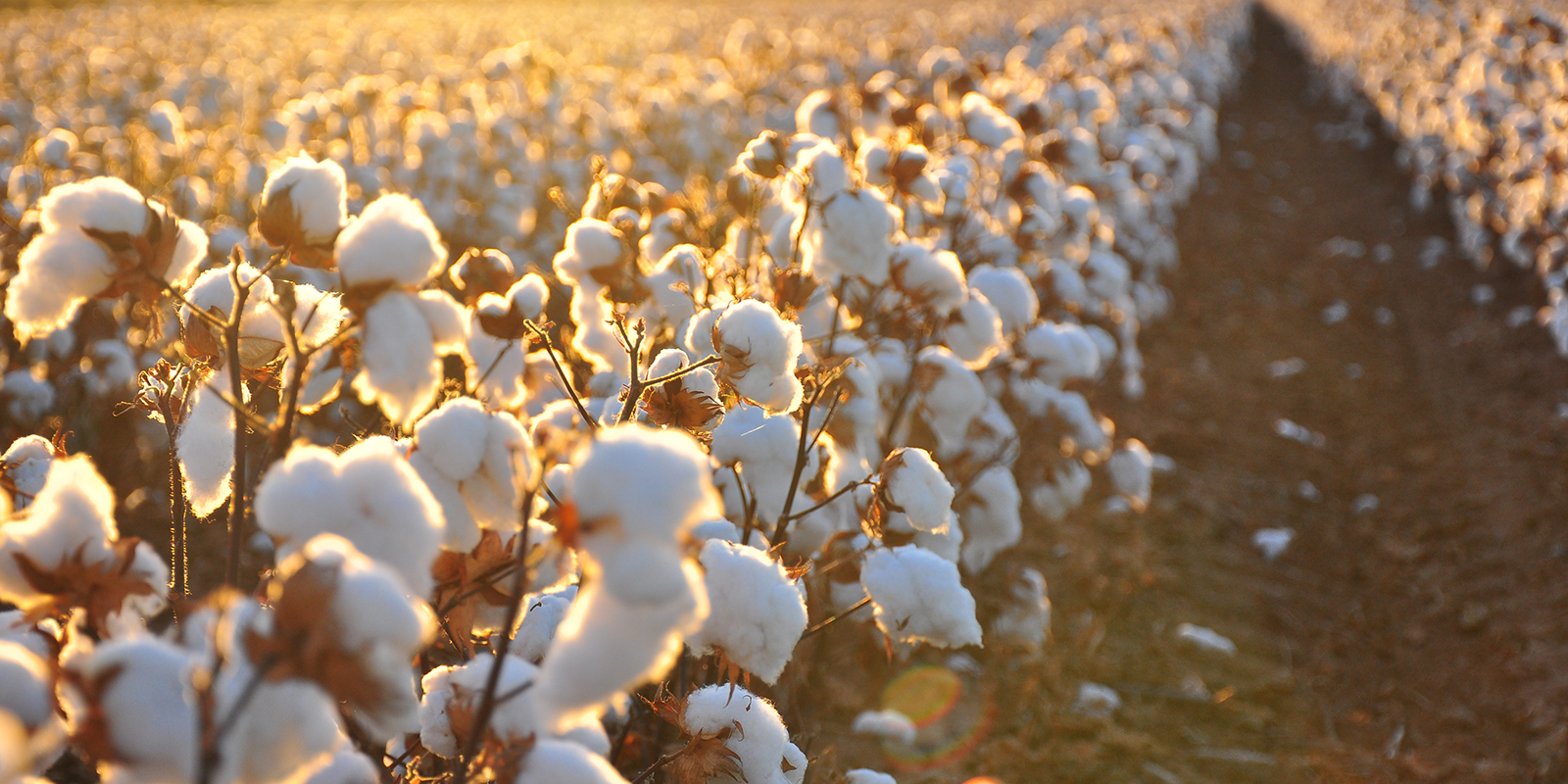
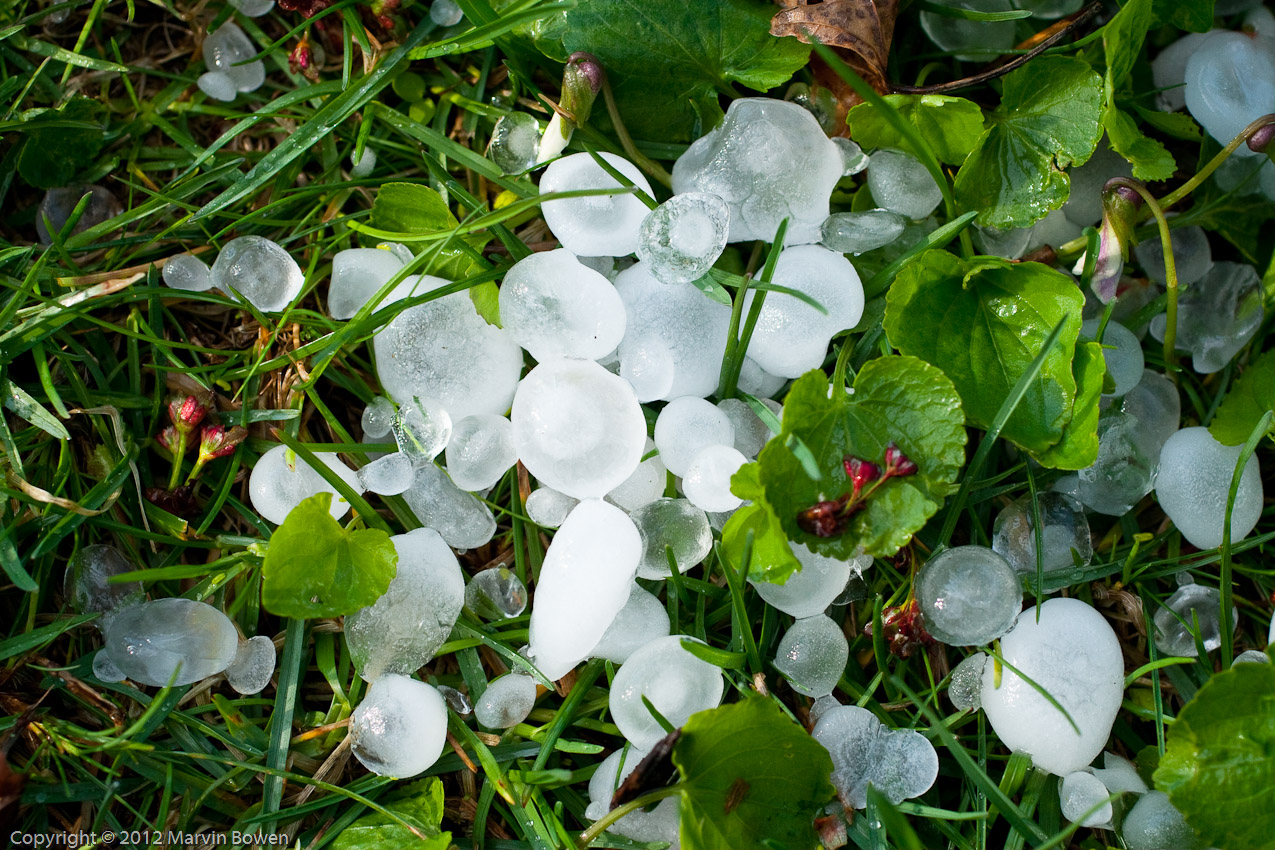
Tatum Bessire does not sugarcoat his cotton’s hail damage. “It’s pretty ---- bad,” the O’Donnell farmer said, shaking his head. Producers at the Farmers Co-op Association of O’Donnell on Thursday morning estimated about 30 percent of the area’s cotton has already been harvested. Of the rest, they expect both yield and quality losses from a hailstorm the night before. The storm came along with a cold front that brought some heavy downpours across the South Plains. But the most intense severe weather — including golf ball-size hail driven by 60 mph winds — was focused mostly around the O’Donnell area, said Meteorologist Robert Barritt with the National Weather Service in Lubbock. Hail tends to be more common earlier in the growing season. While certainly no fun at that point either, the investments into a crop have been smaller. But with the crop days away from harvest, the loss is extra painful. “We got everything possible in it now — all we were waiting for was to pull it off the stalk,” Bessire said. “... It’s never a good time, and this is the worst possible time.” For South Plains cotton already harvested, a warmer-than-normal October helped quality. So did sunny skies; overcast days were rare that month. Harvest aids such as defoliants and boll-opening chemicals tend to prefer those conditions. “The above-average October temps were great,” said Seth Byrd, a cotton agronomist with Texas A&M AgriLife Extension Service. “...We not only saw good maturing conditions, we saw really good conditions for defoliation and boll opening.” Now, the Lubbock branch of the U.S. Department of Agriculture’s cotton-classing program is seeing some great crops. Samples are scoring low in a category that measures contamination with extraneous matter such as tiny leaf pieces. “It’s definitely looking good,” manager Danny Martinez said. “Overall, compared to last year, the cotton’s very clean.” Byrd is not surprised. “That’s a direct reflection of the environment we’ve been defoliating and harvesting in the last few weeks,” he said. Of course, those high grades could change when the classing office starts receiving rained-on cotton. Wet fields will delay harvest operations a few days. But what if the rain also triggers extra plant growth, when it’s no longer necessary? Well, that depends largely on how many harvest aid applications those crops have had, Byrd said. In fields with no applications yet, for example, more plant growth could mean more leaves to defoliate and a greater risk of contamination. Fields that have had their first of two applications could still see some terminal growth, though. Acreage with both applications might even have some juvenile regrowth, Byrd said, as he’s already seen on some stalks at his AgriLife research station. Looking for a bright side At a futures price of 68-72 cents per pound, the market looks OK — but not outstanding — Darren Hudson said. The Texas Tech agricultural economist points toward increased cotton use in China and elsewhere as encouraging signs. “Global use is going up, but global production is going up about the same pace,” he said. “The balance of use to supply has tipped a little in favor of higher prices, but those changes are small.” Still, when you recall the past couple years of barely break-even prices, it’s hard to complain. Hudson describes the general outlook as “neutral.” “We’re better than we have been,” he said. “We should view the current situation as positive compared to the last few years, both from a production standpoint and a price standpoint.” Steve Newsom just started harvesting his 3,000 cotton acres near Sundown. The Hockley Countian could view the rain as an inconvenience, but he’s too grateful for its long-term benefits. “It’s worrisome with all the bolls we have open, but we never, hardly ever, wanna turn down rain on the High Plains,” he said. Bessire, the O’Donnell farmer, poured 4 inches from his rain gauge Thursday morning. While he can’t do much about the hail that accompanied it, he still has his faith. “Just hope for the best,” he said. “It’s not in our hands — it’s up to the good Lord.” Source - http://lubbockonline.com/

04.11.2016

India - Central team visits three drought-hit taluks

Parched lands and withered crops greeted the three-member Central drought study team in Chamarajanagar district on Thursday. The team consisting of S.M. Kolhatkar, Director, Oilseeds, Hyderabad, Sathish Kumar Kamboj, Senior Joint Commissioner, Water Resources, and Neeta Tahiliani, Under Secretary, Rural Development, visited Kollegal, Yelandur and Chamarajanagar taluks and witnessed crops withered in large track of lands. The team also visited many villages which were hit by drinking water scarcity. The team spoke to few farmers and gathered information about the crop damaged owing to deficient rainfall. The Chamarajanagar district administration furnished details about crop loss and explained the drinking water shortage situation. Deputy Commissioner B. Ramu explained about depletion of groundwater and said crops such as paddy, ragi, sugarcane, maize, and oilseeds had been damaged completely He said crops worth over Rs. 34 crore had been damaged and explained the adverse impact of dried up tanks on animals. He said there were incidents of wild animals straying into villages in search of water and damaging crops and injuring humans. The team will tour four taluks of Mysuru district on Friday. All taluks of Mysuru were declared drought hit and crops on over 1 lakh hectares were damaged.  Source - http://www.thehindu.com

04.11.2016

Madagascar - Crop losses means "severe hunger" will persist

The loss of crops due to years of drought, combined with the El Niсo weather phenomenon, means that "severe hunger" is likely to persist across southern Madagascar into next year. That's according to a new report from the World Food Programme (WFP) and the Food and Agriculture Organization (FAO). Nearly 850,000 people are "acutely food-insecure" and require an "intensified humanitarian response" say the agencies. Lack of rain in the Androy region alone, has led to an 80 per cent decline in the maize crop compared with already reduced levels for last year. Prolonged drought has also seriously affected the cassava crop, another staple, which has fallen by half. Source - http://famagusta-gazette.com

04.11.2016

USA - Sunflower pest damages plants in central South Dakota

A recent, informal survey of sunflower fields in Hughes and Sully counties in central South Dakota revealed the presence of Dectes stem borer in roots or at the base of many of the sunflower stems. Ruth Beck, SDSU Extension agronomist who conducted the survey, said that although Dectes can be found in sunflower fields most years, in many cases, the stalk boring by Dectes in sunflowers has no measurable impact on seed yield or oil content. However, significant losses can occur when the insect girdles the sunflower plant and causes lodging. The survey she conducted this fall showed that in most infested sunflower fields, the borer had girdled the plants. Beck attributes this to the dryer growing conditions of 2016. "Dectes larvae cannot physically girdle a radius greater than about half an inch. Therefore, lodging will occur more frequently in situations of high plant density and drought conditions that lead to a small stalk diameter," Beck said. Hot dry conditions that result in stalk desiccation will trigger the larvae to stop feeding and begin the girdling activity. "In situations where soil moisture remains high close to harvest, sunflower stalks can remain damp and the larvae will continue to feed until cool temperatures limit their feeding," said Adam Varenhorst,  SDSU Extension field crop entomologist. Under these conditions, Varenhorst said few larvae complete the girdling process and some do not girdle at all. Therefore, lodging does not become such a problem. Oilseed dryland sunflowers at greatest risk Typically, oilseed dryland sunflowers are more at risk because they are planted at higher populations than confection types. In many years, sunflowers can tolerate Dectes infestations without sustaining any losses. To avoid issues, Beck encouraged sunflower growers to carefully control plant spacing to manage stalk radius and other cultural practices that preserve soil moisture. She also pointed out that in regard to crop rotation, Dectes can also be a pest in soybeans and is hosted by a number of common weeds including ragweed and cocklebur. "Information from Kansas suggests that wild sunflower is resistant to this pest," she added. During the summer, the Dectes stem borer, also referred to as the long horn stem borer, lives inside the sunflower stalk as a white larva. The larvae arise when adult stem borers lay eggs in the sunflower plant. The female Dectes stem borer chews a hole in the stalk just under the leaf petiole and places its eggs in the hollow cavity at the core of the petiole. Upon hatching, in early July, the legless larvae bore down the petiole and into the core of the main stalk. The larvae will only feed on the moist pith and will not consume dry material, "Therefore, stalk desiccation will signal the end of larval feeding. At this time the larvae (only one per stem) will terminate feeding and prepare for winter by cutting a disk-shaped incision about ½ inch in radius from the center of the stalk," said Patrick Wagner, SDSU Extension entomologist. "The larvae then plug the tunnel below the girdle with plant frass or shavings to seal itself in the chamber for the winter." During Beck's survey, nearly all of the Dectes found in surveyed fields were sealed in a chamber at the base of the plant just under the soil surface. Source - http://www.tristateneighbor.com

04.11.2016

USA - USDA official checks out Hurricane Matthew crop damage in the east

jwplayer.key="Xb4pq7jNsbZ4Vfx+msWU558xEnsZPO4TpfmMIQ=="; jwplayer("player").setup({title: "USDA Exec tours flooded farmlands",mediaid: "USDA Exec tours flooded farmlands_3675710",file:"http://gray.vod.anv.bz/vod_witn/524/16/11/03/3675710/3675710_467AD0C66BD2485F892A9AD043F90C03_161103_3675710_USDA_Exec_tours_flooded_farmlands_2000.mp4",image:"http://gray-uploads.s3.amazonaws.com/captures/8C6/B9A/8C6B9AA3C4FB4154A51D310466D42765.jpg",tracks: [{file: "http://gray-uploads.s3.amazonaws.com/cap/238/D2F/238D2F6315E14E5589949BFD8E071DE6.dfxp"}],advertising:{client: "vast",schedule: {"myAds":{"offset":"pre","tag":"http://pubads.g.doubleclick.net/gampad/ads?sz=640x480&iu=/301721715/WITN&ciu_szs&impl=s&gdfp_req=1&ad_rule=0&vpos=preroll&env=vp&output=xml_vast2&unviewed_position_start=1&correlator=[timestamp]&cmsid=1715&vid=ANV_GRTV_3675710"}}}, autostart: false, ga: {label: "mediaid"}, width: "100%",aspectratio: "16:9"})The USDA sent a top official to eastern North Carolina Thursday to see the flood damage to crops. USDA Under Secretary Michael Scuse, Congressman GK Butterfield and NC Farm Service Agency Executive Bob Etheridge, checked out the damage and talked with farmers about how USDA programs can help with their loss. At Penola Farm in Edgecombe County, that loss exceeds $800,000. Soybean and sweet potato farmer Kent Smith says provisions need to be changed in the USDA's non-insured crop disaster assistance program. Smith says, "It goes by countywide average so if I've got another farm over here that I've harvested the sweet potatoes on, and this farm here was under water and rotton and they've condemned it, then they take the average from the other farm and this one and average it together and it puts me over the criteria to meet to get any assistance" Scuse says, "Talking with the producers, what's been working for them, okay, when something like this happens, what doesn't work and what changes need to be made to make sure that if something like this happens again we can make programs better." Edgecombe County is one of 39 counties in North Carolina that the USDA has designated a primary natural disaster area due to flood damage and crop loss. Source - http://www.witn.com

03.11.2016

India - Crop damage assessment: Rajasthan's wait for central team gets longer

Winter has set in but the Rajasthan government is still waiting for the central teamwhich was to assess the losscaused to crops and infrastructure due to heavy rains during the monsoon season. The team was scheduled to visit the state on October 24-26, but it was postponed at the last minute. No new date has been announced so far. "Till a team from Delhi comes and assesses the loss caused to crops and infrastructure, the Centre does not release assistance," said an official. But the time consumed in conducting this routine exercise is mind-boggling in this time and era. The team was mainly to assess the damage caused to crops and infrastructure like roads. The irony is that the crops which survived the rains have been harvested now and the state is still waiting for the central team. "The team was scheduled to visit on October 24-26, but later on, it was cancelled and no fresh date has been fixed for now," said the official. The farmers would have benefitted had the team arrived on time for assessment of loss to crops. The state government is also waiting for the arrival of the team so that repair works of rural roads which got washed away in heavy rains could be initiated. However, the officials are clueless as to when the central team would arrive. Source - http://timesofindia.indiatimes.com/

03.11.2016

USA - Montana State Hail Board to hold meeting Nov. 30

The Montana State Hail Board will meet at 10:00 am on Wednesday, Nov. 30 at the Heritage Inn in Great Falls to review the 2016 hail year. “The state hail insurance program has been protecting Montana farmers for 100 years,” said Ron de Yong, Montana Department of Agriculture director. “This past year was a tough hail year for many folks, which only underscores the importance of this program.” The board meeting will be held on Wednesday, November 30 at 10:00 am at the Heritage Inn in Great Falls (1700 Fox Farm Rd).  An agenda is available on the department’s public notice website. The 2016 hail year was tough on many producers. 1108 policies were issued with $69,827,675 risk written. There were 513 losses, with $9,150,881 paid in claims. The Montana State Hail Insurance program was created at the request of producers in 1917 to provide basic hail insurance coverage on any crop grown in Montana. The program is directed by a five-member board consisting of three producers appointed by the governor, the department director, and the state insurance commissioner. Source - http://www.agweek.com

03.11.2016

Canada - Brazeau County declares state of agricultural disaster

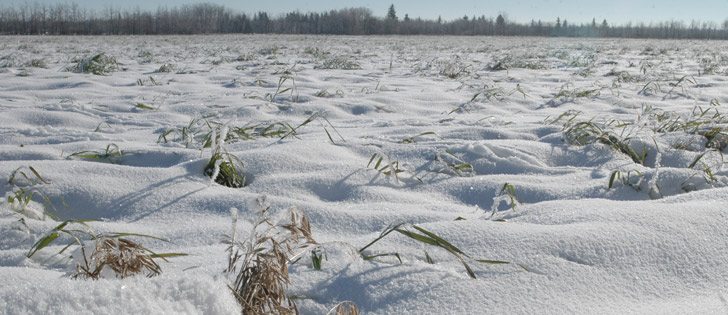
After a disastrous season for farmers, Brazeau County has declared a state of agricultural disaster for the second time in just over two years. At a meeting earlier this week, the county council voted unanimously to declare the emergency. Brazeau County, 160 kilometres southwest of Edmonton, includes the town of Drayton Valley, the village of Breton and eight hamlets. County Reeve Bart Guyon said the harvest has been so poor that council didn't have a choice. "According to some regional information, it's around 75 per cent that hasn't been harvested," he said. "The crops are actually amazing but they are all flat, and underneath that flattened crop is two inches of water. We've got guys that are coming in that would never come in and ask for help, and that's kind of what's going on. "We need a perfect scenario," Guyon said. "We need about two weeks of solid warm, dry weather followed by some frost. The quality of the crops is certainly going to go down the longer it stays in the field. But even bad feed is better than no feed." Recent years have been tough for the county, which experienced drought last year. The county last declared an agricultural state of disaster in July 2015. In 2001 and 2002, Guyon said, the county refunded farmers taxes to keep them going. 'A real heartbreaker of a year' Oneil Carlier, minister of agriculture and forestry, said in a statement the weather has impacted farmers across the province. "It's been a real heartbreaker of a year," Carlier said. "We understand the wet and snowy conditions are delaying harvest and having an impact on the quality of crops in many parts of Alberta. "The wet harvest season has been challenging for our farmers, including in Brazeau County. Producers are concerned that they will not be able to harvest until spring. Our government is committed to supporting our farm families and we take this issue seriously." The province will provide Alberta farmers with help through the Agriculture Financial Services Corporation, Carlier said. AFSC helps farmers, and other agriculture related businesses, with loans, crop insurance and farm income disaster assistance. Declaring an agricultural state of disaster allows Brazeau to ask the provincial and federal governments for disaster recovery funding. Guyon said things are so bad in his county that standard crop insurance won't cover farmers' losses. "There's lots of little quirks with insurance that doesn't necessary work out. They sometimes give you a bit of pain with this fall, and then they have to wait until you see what you get harvested in the spring time. And in the meantime, the bills don't stop coming in." Source - http://www.cbc.ca

03.11.2016

India - Joint survey pegs crop loss at Rs 79 crore in Mysuru

An expected visit of a Central team to the region on Thursday to gather first hand information on prevailing drought and crop loss has raised the hopes of beleaguered farmers. Mandya, Mysuru, Chamrajnagar and Hassan districts have been severely affected for the second consecutive year due to monsoon failure. The Mysuru district has recorded a 44 per cent deficit rainfall affecting the crops in 1.18 lakh hectares. Against the long time average rainfall of 723.6 mm, the district received 408 mm rain till October 25 this year accounting for a shortage of 315.6 mm. The farmers had completed sowing of ragi, maize, pulses and tobacco apart from cotton. But, as the monsoon failed, the crops dried up. A recent joint survey conducted by Revenue and Agriculture Departments estimated the crop loss at Rs 79.53 crore.The state government has declared all the seven taluks of the district drought-affected. In H D Kote alone, crops in 36,836 hectares dried up. With no resources to feed their families and nothing to fall back on, many of them are migrating to Kodagu, Kerala and other places for jobs. Rural Development, Animal Husbandry, Revenue and Agriculture Departments is expected to submit a comprehensive report to the visiting Central team. Director of Oil Seeds Corporation S S Kolhatkar, Senior Joint Commissioner of Water Resources Satish Kumar Kamboj and Under Secretary of Union Rural Development Ministry Neeta Tahilani are the members of the team. State government officials are set to apprise the team of the drinking water scarcity, depleting underground water, likely fodder scarcity and the need for employment generation schemes and additional funds to create employment. The team is scheduled to arrive in Mysuru on Thursday evening and visit Muradagalli, Kellahalli and Haro Halli in Mysuru taluk, Chamalapura and Kythanahalli in H D Kote taluk, Bilikere, Dharamapura and nearby villages in Hunsur taluk and Kampalapura and Hunswadi in Periyapatna taluk. Source - http://www.newindianexpress.com

830
of 1225