NEWS
833
of 1225
News
26.10.2016

USA - Shock, Rescue, Recovery: North Carolina Farmers Deal With Storm Loss

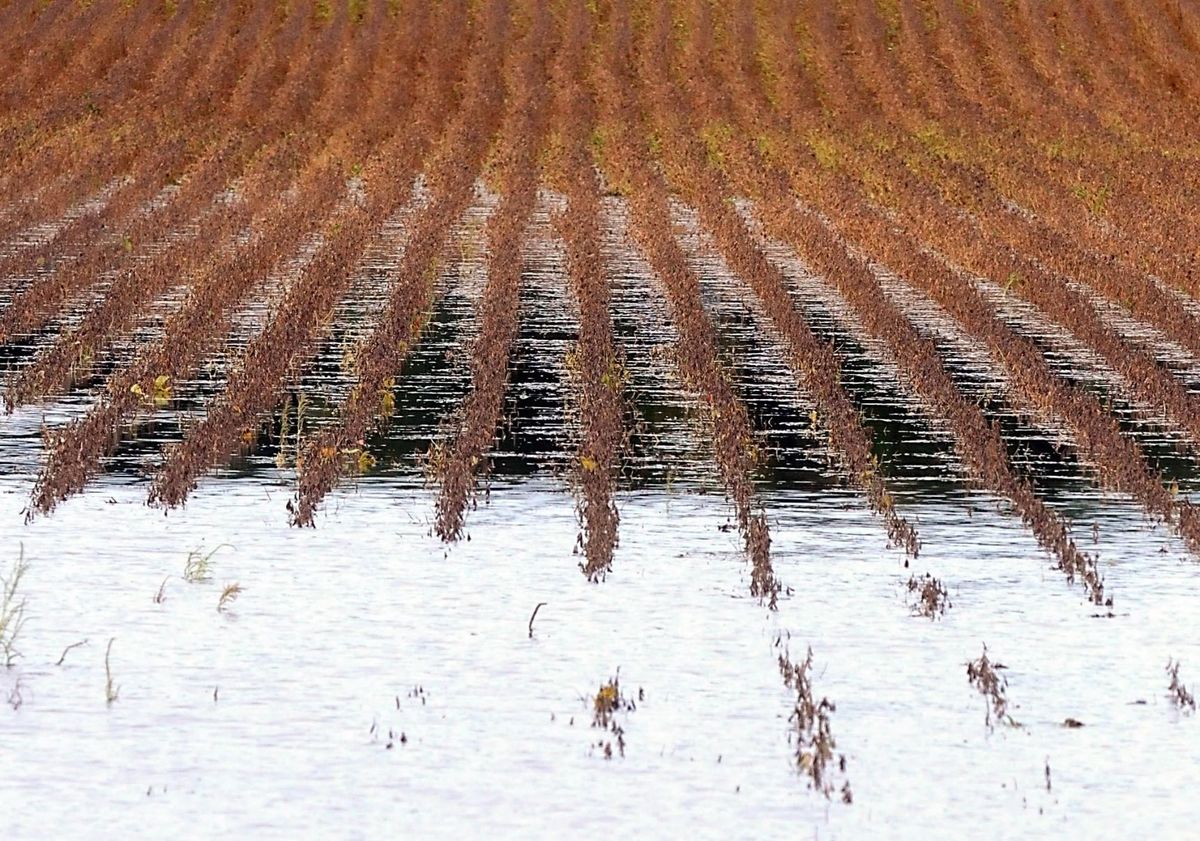
The flood waters are subsiding along with the national news stories about the devastation wrought to North Carolina in the wake of Hurricane Matthew, but for the farmers who have lost everything, the nightmare is far from over. “We’ve got some areas where whole counties were underwater because of riverine flooding and where farmers lost not just their crops, but their homes and their equipment,” Brian Long, the director of public affairs for the North Carolina Agricultural Department tells Modern Farmer in a phone interview. The storm devastated parts of the Caribbean before it hit the U.S. and tore a path along the coast of North Carolina  two weeks ago causing massive flooding, killing 26 people and more than a million farm animals. The estimated price tag—an early tally— is about $1.5 billion in damages. The entire length of the eastern region of the state, from the north to south, was hit hardest, but the central portion of the state was also affected. Long says agriculture in nearly half of North Carolina’s counties, 48 of 100, was negatively impacted by the storm and subsequent flooding. North Carolina Gov. Pat McCrory told CNN that farming could be one of the hardest-hit sectors—affecting everything from peanuts and sweet potatoes to poultry and pigs—and could have “a major, devastating impact on our (agricultural) community.” The state is the number one producer in the country for broiler chickens and sweet potatoes, and the second largest for pork, according to Curtis Hayes, the public relations director for the North Carolina Farm Bureau, an organization that represents about 50,000 farms and nearly 90 percent of the state’s farmers. The Farm Bureau also has a crop insurance wing, and is anticipating around 20,000 insurance claims, he says. Seventy percent of the state’s agricultural output was affected by floodwaters, including the top ten animal agriculture producing counties with poultry farmers suffering losses of around 1.9 million birds killed, mostly broiler chickens, but about 100,ooo turkeys also perished, Hayes tells Modern Farmer. About 3,300 hogs were killed. For crop farmers the estimates are still up in the air. “There’s still a lot of peanuts, sweet potatoes, soybeans flooded out in the field,” says Hayes. “There’s three phases with these natural disasters: Shock, rescuing and stabilizing, and then recovery. Right now we’re still in the stabilization phase.” In some counties,  flooded rivers are just now starting to recede allowing farmers to begin to get back into their fields to “get their eyes on just how bad it might be” says Long. “In some cases, it might not be as bad as they feared. In several of the counties that were affected, sweet potato growers are now able to resume harvesting and some of them are cautiously optimistic that their crop may have survived the wet conditions, but it’s still too soon to know what the true impact on quality it may have. It’s one of those things where time will tell you for sure,” he says. The state’s Department of Agriculture spent most of last week providing feed and water for livestock stuck on farms surrounded by floodwaters and with limited access, says Long. Now, the focus is shifting to recovery mode. One of the big issues is disposing of the dead livestock, especially poultry. Long says his department is sourcing and delivering wood shavings that can be used for on-farm composting of the carcasses. The department is also still trying to determine the exact scope of the losses to the state’s agriculture sector. For North Carolina farmers trying to wrap their heads around their new reality, the North Carolina State University Agricultural Extension set up the North Carolina Disaster Information Center, a website that provides a range of information, from how and where farmers can apply for aid, to practical advice, including videos, on how to move forward and salvage what crops they can. Whether Hurricane Matthew will turn out to be as bad as 1999’s Hurricane Floyd, which caused $543 million in crop damage, $256 million in farm structure damage, and $13 million in livestock damage, is still an open question. Long says he obviously hopes it won’t be as bad, and believes that the livestock sector, specifically hog farmers who were better prepared this time around and were able to get their animals to safety, will probably fare better than the did back in 1999. But for crops farmers, “it’s still too soon to tell.” For the folks who want to help farmers and other residents whose lives have been devastated by the storm, there are several disaster relief funds that have been set up, including the North Carolina Disaster Relief Fund for Hurricane Matthew and one by the North Carolina Community Foundation. Hayes says when Louisiana was badly hit by flooding in August, various state farm bureaus, including the farm bureau in North Carolina, “came together and sent people, money, and donations” to help Louisiana farmers. “We’re seeing the same kind of thing here in North Carolina—people from other states reaching out and farmers helping each other. I’m very proud to be associated with the farm bureau and to work with such good folks who always come around to help each other,” he says. Source - http://modernfarmer.com
26.10.2016

USA - 2017 acreage reporting deadlines, signature requirements

To comply with Farm Service Agency (FSA) program eligibility requirements, all producers are encouraged to visit the Jefferson County FSA office to file an accurate crop certification report by the applicable deadline for the 2017 crop year. Producers' crop insurance agents and FSA will work with the Acreage and Crop Reporting Streamlining Initiative (ACRSI), a result of the 2014 Farm Bill which standardizes data requirements for acreage reporting between FSA and crop insurance providers. Producers must sign all acreage reports at a local FSA office to meet the FSA program requirements. Producers may also have to sign forms with their local crop insurance agent. The following acreage reporting dates are applicable for Jefferson County: Nov. 15 — perennial forage, fall mint, fall-seeded small grains, pasture, range land and forage; Jan. 15, 2017 — apples, cane berries, cherries, cranberries, currants, hops, huckleberries, pears and strawberries. Some exceptions may apply to the acreage reporting dates. Source - http://www.lakecountrynow.com

26.10.2016

India - Huge crop loss in Hassan, input subsidy of Rs. 101.57 crore sought

The decrease in the rate of rainfall has caused a huge loss to farmers of Hassan district. The Department of Agriculture has found that of the total 2.06 lakh hectares of land cultivated this kharif season, agriculture crops in 1.68 lakh hectares have been affected due to the dry spell. The agriculture area where more than 33 per cent of the crop has been affected is 1.63 lakh hectares. Production of cereals, pulses, oilseeds and commercial crops will be affected badly this season. During this season, paddy cultivation was targeted in 50,000 ha. However, the total cultivated area was only 25,572 ha and of that crop in 17,828 has been affected due to dip in rainfall. The rainfall has been less than normal in all parts of the district. Following this, except Sakaleshpur, all taluks have been declared drought-hit. The district recorded 25 per cent less than normal rainfall during the monsoon. The normal rainfall expected this season (From June 1 to Oct 25) in the district was 802 mm, however, the actual received was only 602 mm. Input subsidy Considering the loss of crops, the district administration has submitted a proposal for input subsidy of Rs. 101.57 crore to the State Government. The input subsidy has been estimated for small and marginal farmers. As per the proposal, the input subsidy for the rain-fed area has been calculated at Rs.6,800 per ha and in the case of irrigated land it is Rs.13,500 per ha. Besides that, the department has also sought input subsidy of Rs.15.42 crore for big farmers, other than small and marginal. Apart from a dip in rainfall, the farmers those in irrigated area were hit due to the release of Cauvery water to Tamil Nadu. The farmers cultivated paddy expecting water from Hemavati reservoir. As they could not get sufficient water from the reservoir, the yield was affected. Source - http://www.thehindu.com

26.10.2016

USA - Crop insurance fund goes to a vote in December

If passed in December, a statewide crop insurance measure would provide additional protection for some grain sellers, but it also would force producers of wheat, corn, soybeans and sorghum to fund the insurance program — regardless of whether they voted for the measure. The Texas Grain Indemnity Fund referendum is the result of high-profile grain elevator failures in Texase, such as the 2009 collapse of an elevator in Sherman that cost farmers millions of dollars. If the measure is voted in, grain sellers will be insured against the devastating economic loss that can be incurred in the event of a grain elevator failure, said Ben Scholz, a North Texas wheat farmer and board member of the Texas Grain Producers Indemnity Fund. "I don't want to make it sound like (elevator failures) are a frequent deal, because they're not. But these things do happen and they can leave you in a predicament," Scholz said. When farmers sell their crop — in many cases to buyers with the ability to store grain in large silos — they generally don't get paid right away. The payment is deferred, and between the time of the sale and the time of payment, a grain buyer can go out of business because bankruptcy, legal trouble or other reasons. In such cases, farmers may not be reimbursed for the value of the siloed crop. The proposed crop insurance program would require producers of wheat, corn, soybeans and sorghum to pay an additional 0.02 percent of their grain value to elevators, which then would send the money to the state. Scholz said the fee money would not mingle with other funds in state coffers and would collect interest. Farmers also would have the ability to request a refund of money previously paid into the fund, he said. An informational campaign for the referendum has been rolled out by the industry groups supporting it, such as Corn Producers Association of Texas, Texas Wheat Producers Association and the Texas Farm Bureau. However, the last attempt to create a state agriculture insurance fund failed in 2012. In 2011, Gov. Rick Perry initially signed the bill allowing the referendum to take place. One of the original sponsors of the law was state Sen. Craig Estes (R-Wichita Falls). But a year later, farmers voted the measure down — Scholz said producers were not provided with enough information about the fund. "We lacked the exposure: what this fund can potentially do to protect a producer in the event of an elevator failure," he said. Only farmers who have produced grain in the past three years may cast a vote on the measure, which is not listed on the general election ballot in November. Voting can be done at county AgriLife extension offices or by mail. The referendum will be conducted Dec. 5-9. Source - http://www.timesrecordnews.com

26.10.2016

India - Deficit rainfall triggers crop loss in Nellai

When they unbelievably saw with brimming joy the 11 overflowing dams of Tirunelveli district just ten months ago, farmers believed that they would be blessed with yet another bumper ‘kar’ paddy as in the case of ‘pisanam.’ Their belief got further strengthened when more than 2,400 of the 2,518 irrigation tanks were then overflowing. All the joy has evaporated now as farmers are agonisingly staring at withering paddy as the southwest monsoon has let them down. While all the 11 dams have almost reached ‘dead storage,’ 1,634 systemised and rainfed tanks are now bone dry. Since the district recorded a rainfall of 952.95 mm against the average of 485 mm in October-December last year during the northeast monsoon, farmers reaped a bumper harvest in the ‘pisanam’ season and believed that even an average southwest monsoon would guarantee a decent yield in the ‘kar’ paddy season. Contrary to their belief, the southwest monsoon dashed all their hopes this year. Consequently, the district received only 225 mm rainfall against the actual rainfall of 348.60 mm between January and September 15, which has seriously affected ‘kar’ paddy. “Though we had set a target of 20,000 hectares for ‘kar’ paddy, farmers could take up cultivation only on 17,300 hectares owing to water scarcity. And their worst fears became true when paddy cultivated on over 800 hectares withered. Now a joint survey by revenue and agriculture department officials is on to assess the crop loss,” said Kanagaraj, Joint Director of Agriculture. Agriculture officials, based on monsoon predictions, have encouraged farmers to go for pre-monsoon sowing of black gram and maize in the dry regions. Farmers have started their work on raising rainfed crops as they are not prepared to repose their faith on paddy. Builder P. Sivamani, a resident of KTC Nagar in Palayamkottai, said groundwater table in their area, which got recharged in an unprecedented fashion last year, had not reached the alarming level as the nearby tank had water till a few weeks ago. “Among the 2,500 houses in the area, deep borewells in more than 1,500 houses were literally dry before the northeast monsoon. However, the active precipitation dramatically revived the groundwater table and it got recharged till a few weeks ago with water stagnating in the nearby tank despite hot summer. If the onset of northeast monsoon gets delayed further, the groundwater table may go down,” Mr. Sivamani said. Following is the water level in Tirunelveli dams (in feet, maximum capacity in brackets) on Tuesday: Papanasam 19.25 (143), Servalar 49.21 (156), Manimuthar 38.82 (118), Gadana 25 (85), Ramanadhi 25 (84), Karuppanadhi 24.77 (72), Gundar 16.75 (36.10), Adavinainar 17 (142), Vadakku Pachchaiyar 2 (67), Kodumudiyar 2 (57) and Nambiyar 9.18 (25). Source - http://www.thehindu.com

25.10.2016

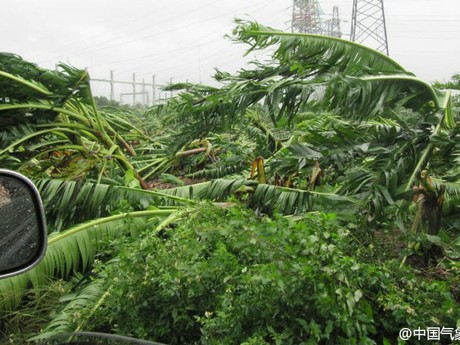
China - 'Sarika' destroys banana plantation

Due to the tropical storm Sarika, on October 18, coastal wind speeds of 9 to 11 beaufort were recorded. In the West of Canton, waves of 4 to 6 meters high were reported. The photo shows the devastation in Yuwen county in Zhanjiang near Canton. Banana trees and corn were blown to the ground over large areas as well as many papaya trees. Source - http://www.freshplaza.com

25.10.2016

India - Ballari District seeks Rs. 133 crore for crop loss

The district administration has forwarded a proposal seeking an assistance of Rs. 133.49 crore from the State government for crop loss during the kharif season. As per a joint survey, more than 33 per cent of crops on about 1.88 lakh hectares (ha) in rain-fed areas of the district have been affected. Against the targeted area of 2.09 lakh ha in rain-fed areas for the kharif season, sowing had been completed on 2.05 lakh ha. The farmers are facing crop loss owing to the failure of the monsoon for the second consecutive year. According to the rainfall data, the district recorded a deficient rainfall of 53 per cent between September 1 and 21. The district received 54 per cent deficient rainfall in August too. Kudligitaluk was the worst affected where crops on 75,248 ha have been affected. The figures for other taluks are HagariBommanahalli (46,491 ha), Hadagali (39,418 ha), Sandur (14,194 ha), Hosapete (8,373 ha), Ballari (4,618 ha) and Sirguppa (nil). In Sirguppa, a vast area is covered by irrigation. Source - https://www.ibcworldnews.com

25.10.2016

Japan - Typhoons hit potato production

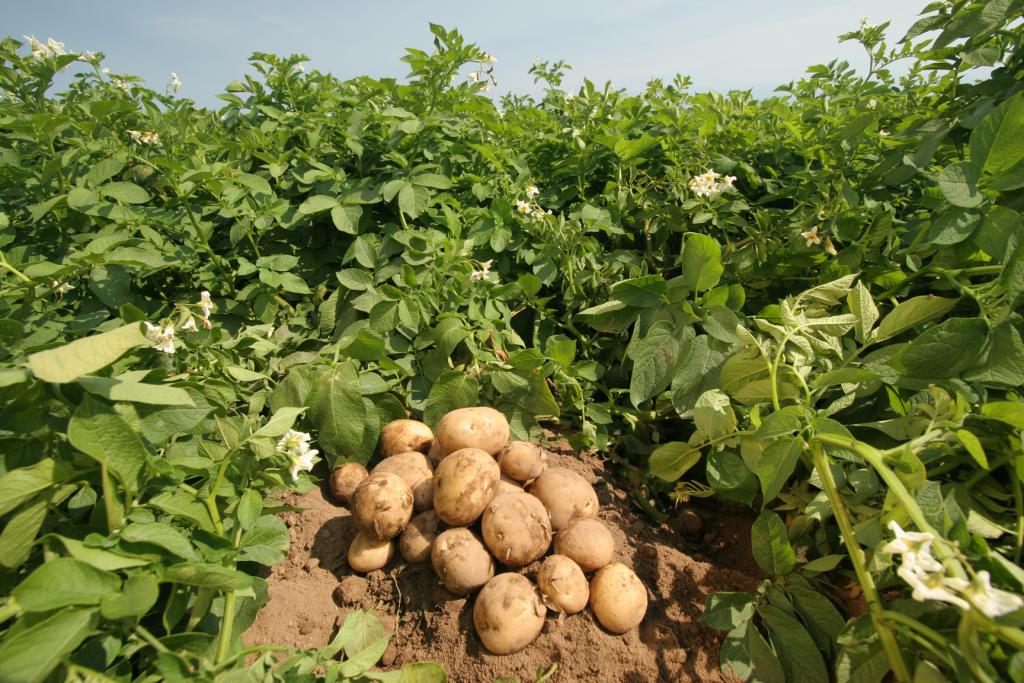
Hokkaido is Japan's largest fresh potato producing region, accounting for nearly 80 percent of total domestic production. Agriculture in Hokkaido is relatively large in scale and the weather is cool, providing suitable conditions for potato cultivation. Hokkaido is generally spared from the rainy seasons and typhoon strikes that more often afflict the southern islands. However, four typhoons struck Hokkaido in August 2016 for the first time since record keeping began, more than 100 years ago. The Ministry of Agriculture, Forestry and Fisheries (MAFF) reported that approximately 24,000 ha of land received damaging levels of rain as well as flooding, including those producing fresh potatoes. USDA FAS representation in Japan, estimates a 20 percent yield loss, reducing national production to 1.9 million metric tons (MMT) in MY 2016/2017 compared to 2.4 MMT in MY 2015/16. They have adopted a conservative forecast, given the continued uncertainty of the damage, and acknowledge some reports of damage in excess of 25 percent. As of mid-September, some farms were still too wet for harvester entry, and overall potato harvest in Hokkaido is behind schedule. Some farmers have plowed-under potatoes to prepare for wheat cultivation, which usually follows potatoes as a rotation crop. In addition, further losses are expected during storage due, in part, to a high moisture content of harvested potatoes. Farms designated to produce seed potatoes were affected by the typhoons and floods in 2016 and USDA-FAS estimates a minimum loss of 10 percent to seed potato production. Therefore a decrease in planted area to 70,000 ha is forecasted, a 9.5% decrease from MY 2016/17. Source - http://www.freshplaza.com

25.10.2016

African farmers taking up smart agriculture

Climate change is causing extreme weather patterns in Africa, affecting agriculture and impacting food security. To overcome these problems, African farmers are turning to, what experts call, climate smart agriculture. In Kenya, like most African countries, small-scale farmers who are the majority, are opting for sustainable solutions. One such farmer is Albert Waweru, a retired police officer with 1.75-acre farm in Kasarani on the outskirts of Nairobi. He has 50 dairy cows, poultry, dairy goats and several greenhouses where vegetables are grown. He is practicing climate smart agriculture. To counter the challenge of water, for example, he embarked on harvesting rainwater from rooftops in his compound and storm water flowing into his compound. “I harvest any drop that comes my way,” he says. The water is preserved in a network of several underground concrete tanks some of them 12 metres deep. This has ensured that he has enough water at any moment on his mixed farm. “I have been invited to various forums where I have interacted with policy makers, I didn’t know that my solution to water scarcity would be showcased as a good practice to fellow farmers,” he says. He adds that farmers from Kenya and neighbouring countries visit his farm for bench marking. Knowledge and best practices sharing among countries and individual famers is in fact vital. Participants in the Second Africa Climate Smart Agriculture (CSA) Alliance conference from October 11-13, 2016 in Nairobi shared this view. They said it would enhance adoption of best practices suitable to the needs of each country. The Alliance is a continental platform, formed to help smallholder farmers reduce climate risks. Source - http://www.freshplaza.com

25.10.2016

USA - USDA offers assistance for farmers affected by drought

The United States Department of Agriculture designated 32 counties in Alabama as primary disaster counties. Fifteen other counties in the state were deemed contiguous counties. Of the 50 states, Alabama has the fourth highest number of primary disaster counties behind Georgia, California and New York. Lee, Chilton and Macon counties are all considered “primary.” Autauga, Bullock, Coosa, Dallas, Elmore and Montgomery counties are all contiguous. The Alabama Department of Agriculture and Industries released a statement on Monday to inform farmers that USDA financial aid is available to them if their condition is bad enough for them to qualify. There are three different program options for farmers who qualify. Garry Henry, owner of HCC Farms in Hope Hull, said he is hopeful that he will be able to utilize government assistance. “We invested insurance,” Henry said. “So, we can use that when we reach a certain level.” Henry said the drought has left him with no grass to feed his livestock. He had to start feeding his cattle the hay he had stored up for winter. “We usually don’t start using that until Thanksgiving,” Henry said. “We had to get into it about 40 days early this year.” Henry said he has spoken with other farmers in the northeastern part of the state where the drought has had an even greater impact. “A lot of them have used all of their hay already,” Henry said. “Some have had to even liquefy herds because they just can’t feed them.” Henry said he doesn't think he will have to result to selling his livestock, but he will have to start buying feed because hay is in short supply. He said this will hurt his bottom line. According to Alabama Commissioner of Agriculture and Industries John McMillan, farmers are also seeing their products sold at cheaper prices because they are competing with producers who have not suffered a drought. “Usually you can compensate for lower prices with a good crop,” McMillan said. “This year, they are facing lower crops and less product. It’s a double whammy.” McMillan said the state’s priority right now is traveling to farms statewide to find new hay resources. “We have reached out to many peanut farmers to get them to use the plants to make hay,” McMillan said. He said dealing with bad weather is part of a farmer’s job, but that the current situation is serious and concerning. “We want farmers to know that there is assistance, and also where to go to find an agency to get the details,” McMillan said. Source -  http://www.wsfa.com

25.10.2016

India - Micro agents can now sell govt-sponsored schemes

In a move that can expand the reach of crop insurance schemes, micro insurance agents have now been permitted to sell government-sponsored crop insurance products to farmers. The Insurance Regulatory and Development Authority of India (IRDAI) has issued a circular to this effect. The decision of the regulator came in the wake of requests made by some stakeholders to categorise government-sponsored schemes as micro insurance products irrespective of the sum insured under the individual policy. With this decision, crop insurance products under schemes such as Pradhan Mantri Fasal Bima Yojana (PMFBY), Weather-Based Crop Insurance Scheme (WBCIS) and Coconut Palm Insurance Scheme (CPIS) can be bought by farmers from micro insurance agents without any limit on the sum assured. However, key modalities, such as the sum insured, premium, premium rate per crop, and unit area will remain as notified under the respective government-sponsored insurance schemes without any change, PJ Joseph, Member, Non-Life, IRDAI, said. Till now, micro agents could only sell crop insurance products with a maximum cover of ₹1 lakh, according to the norms issued by the regulator last year. Also, currently, government-sponsored insurance schemes are mostly sold along with crop loans taken by farmers. Under the PMFBY, the flagship low-cost insurance scheme for farmers launched by the government last year, about 3.20 crore farmers were insured for the kharif season, government data show. The WBCIS operates on an actuarial basis with premium subsidy ranging from 25-50 per cent, equally shared by the Centre and the States. According to the IRDAI’s annual report 2014-15, the number of farmers insured under this scheme during kharif 2014 was about 2.5 lakh. The CPIS, a component of the National Crop Insurance Programme, is available to all coconut-growing States, but is yet to gain popularity. Only 2,845 coconut farmers were insured under this scheme in 2014-15. Source - http://www.thehindubusinessline.com

24.10.2016

USA - Overcoming hailed corn losses

After a devastating hail storm hit the Lingle area on July 27, producers were wondering what their next step would be. They weren’t the only ones. Fields and test plots at the University of Wyoming James C. Hageman Sustainable Agriculture Research and Extension Center had also been destroyed. The SAREC staff put their heads together and devised a plan to utilize the destruction to the advantage of future hail victims. According to Carrie Eberle, systems agronomist at SAREC, their plan is to determine the most economically viable and sustainable options following late season destructive hail on irrigated corn. They will look at the best way to remove the damaged corn, find the best forage cover crop to plant following the event, study the impact of management and crop choice on next year’s cash crop, and determine the economic costs and gains for each treatment. Area producers were invited to a field day on Oct. 18, where they had a first-hand look at early results. Eberle said the SAREC researchers were pleased with the turnout of community producers and business people. “It’s still real early in the research, but we wanted people to see the fields, going into the next year.” She said they were pleasantly surprised at how well the crops are doing, considering the amount of biomass that was taken off. The tillage treatments were surprising, especially the no-till stand. “Usually it’s hard to get good stands in corn residue,” she explained. “It’s hard for the seed to get contact with the soil, and get a crop up around corn residue.” On the other hand, she was disappointed with the sorghum results. The poor stand could be due to late planting, she noted. However, there is still a year to go with the research, and Eberle and her fellow researchers look forward to trying different treatments. “We want to evaluate the results and find what works best for everyone,” Eberle said. “We still have a full year to go before we get final results.” One of the aspects of the research is determining the value of the fall replacement crop. Wheat, rye, triticale and sorghum were planted on the hailed corn plots. They have determined biomass yield and cost to this point, which includes seed, fuel, equipment, herbicide and labor. They have also determined animal unit days per acre, and the cost per AUD. Treatments varied per crop. For corn management, replacement crops were direct drilled into standing corn. Stalk shredded corn was left in the field. Standing corn was disked twice. The stalk shredded corn was followed by one pass with a disk and Landstar. Preliminary study summary results, based on biomass production and cost of operation, indicate that wheat planted into hailed corn that was disked twice, will produce the most economic animal feed at $0.75/AUD, which is significantly cheaper than buying alfalfa at the current price of $90-145/ton ($1.17-1.89/AUD). Eberle emphasized that these results are preliminary and final budgets and cropping system values will be reported at the end of the study next fall. Fall 2016 activities will include grazing crops this fall and winter, then corn will be planted next spring after the termination of each cover crop. Economic analysis will continue for each cropping system. Forage clippings will be taken this fall and winter to measure feed productions, and livestock will be grazed. Aerial imaging will also be used to measure crop preference. Soil fertility will be tested and ground cover will be measured to estimate the erosion control value of each system. In the spring, ground cover will be measured again to determine how persistent erosion control was, and soil samples will be taken again at planting to measure fertility. In the fall of 2017, corn yield will be used to measure the impact of each cropping strategy on corn production. Other SAREC staff involved in the project are Steve Paisley, beef cattle specialist; Brian Lee, economist; Kevin Madden, farm manager; John Tanaka, director; and Kelly Greenwald, administrative associate. Source - http://www.starherald.com

24.10.2016

Philippines - Agri damage from typhoons assessed at over P10 billion

“Base[d] on initial assessments, damage inflicted on the agriculture and fisheries sector has reached P10.2 billion, with rice, corn and vegetable suffering the greatest losses,” according to a DA statement e-mailed to reporters over the weekend. According to a separate summary from the DA, as of Oct. 22, rice bore the bulk of the impact from the two typhoons with estimated damage of P7.78 billion. This was followed by vegetables and corn with losses of P1.71 billion and P602.32 million, respectively. The fisheries sector saw losses worth P85.78 million while livestock damage worth P6.58 million. Cassava crops recorded P2.29 million worth of damage. The report is only partially validated and subject to further checks in the field. “This does not yet fully reflect the destruction brought by supertyphoon Lawin in these regions as we are still in the process of assessing all sectors,” Agriculture Secretary Emmanuel F. Piñol was quoted in the statement, referring to the later of the two storms. Mr. Piñol has ordered all DA officials and personnel to provide food assistance to affected farmers and fisherfolk, validate the extent of damage, estimate the number of farmers and fishers affected, and distribute seed from pre-positioned buffer stocks, fertilizers, fishing equipment, and other assistance. “I have also instructed the concerned DA agencies, particularly the Philippine Crop Insurance Corporation and the Agricultural Credit Policy Council, to swiftly process crop insurance payments to enable the farmers and fishers cope with their loss,” he added. Latest figures show that more than 68,886 farmers were affected by the onslaught of Typhoon Lawin, translating to more than 467,617 hectares of damaged areas in the Cordillera Administrative Region, Cagayan Valley, central Luzon, Calabarzon, Mimaropa and Bicol regions. Of the affected areas, 260,485 hectares are assessed to have prospects for recovery. Source - http://www.bworldonline.com

24.10.2016

Nepal - Uptake of crop, livestock insurance encouraging

Crop and livestock insurance recorded growth of 88 per cent (in value of policies sold by insurance companies) in last fiscal as compared to fiscal 2014-15 and there was encouraging progress in crop insurance, according to Insurance Board — the insurance sector regulator. Crop and livestock insurance programmes have been given high priority by the government to safeguard farmers and the programmes are also expected to lure more people in commercial agriculture. The government has been offering 75 per cent subsidy in premium of crop, livestock and fowl insurance since fiscal 2013-14. However, the results were not encouraging initially due to lack of information of the government’s scheme. “But, we have witnessed encouraging results in the last two fiscal years,” said Kundan Sapkota, deputy director of the Insurance Board. In the previous fiscal, 2015-16, Insurance Board had sought Rs 60 million from the government in addition to the allocated Rs 120 million to extend premium. According to Insurance Board, insurance companies claimed Rs 169.82 million against the subsidised premium of the insurance policies sold by the insurers worth Rs 5.99 billion under crop, fish, livestock and fowl headings. In fiscal 2014-15, insurance companies had sold polices worth Rs 3.19 billion under the crop and livestock insurance. Livestock insurance covered large chunk of insured amount worth Rs 4.7 billion in fiscal 2015-16, according to the Insurance Board. Similarly, the claim amount was also high for livestock as compared to others. In fiscal 2015-16, the claim amount for livestock stood at Rs 146.08 million against the total premium of Rs 232.98 million collected by the insurance companies. The claim amount for fowl and fishery insurance is very low when compared to livestock and crop insurance. NLG Insurance with 29.41 per cent, Siddhartha Insurance with 15.88 per cent, Nepal Insurance with 15.88 per cent, Shikhar Insurance with 9.65 per cent and Sagarmatha Insurance with 4.95 per cent secured top five positions in terms of market share of crop, livestock and fowl insurance. Source - https://thehimalayantimes.com

24.10.2016

USA - New Drought Insurance for Forage Crops to be Offered

Enrollment is now open for farmers to sign up for a federally subsidized, pilot drought insurance program designed to protect hay and other forage crops. Historically, crops such as hay have been viewed as low risk in Maine, due to adequate rain fall.  But this year has been difficult for some hay growers, especially in southern Maine, and elsewhere in New England. University of Maine Cooperative Extension  recently polled growers of a number of crops to ascertain how the summer drought has affected yields. "Anecdotally, a lot of people said they had reduced hay yields, their second and third cuts were lower."  says Erin Roche a crop insurance specialist with University of Maine Cooperative Extension. But whether farmers are spooked enough to seek out the new insurance, remains to be seen. The insurance, known as the Pasture, Rangeland, and Forage Crop Pilot Program, works differently to other kinds of crop insurance. It's not based on historical yields to determine impact and payout, rather it relies solely on historic rainfall data collected by the National Oceanic and Atmospheric Administration, or NOAA,  over the last 50 years. "If the actual rainfall during that year falls below a certain percentage of that 50 year average rainfall, then a loss payment might be triggered." says Roche. Many such payments would be triggered automatically under the pilot system, which Roche says could mean less onerous reporting  for growers. "But it's important for farmers to know that if they experience a loss, but there is no corresponding drop in measured rainfall, no payment would likely be issued. It's different from other types of insurance they may be familiar with." Premiums are federally subsidized by 51% to nearly 60%. Source - http://mainepublic.org

24.10.2016

Philippines - WV fisherfolks need insurance protection

The Philippine Crop Insurance Corporation (PCIC)-6 encouraged the fisherfolk in Western Visayas to avail of the Fisheries Insurance Program offered by the agency. PCIC-6 Regional Manager Charlito Brilleta said that they provide insurance protection to fish farmers/fisherfolk/growers against losses in unharvested crop or stock in fisheries farms due to natural calamities and fortuitous events. “The object of insurance shall be the unharvested crop/stock in fisheries farms specified in the application for fisheries insurance and which the assured fish farmer/fisherfolk/grower has insurable interest on,” he said. PCIC said those who qualify are duly licensed owners/operators of fishponds, fish cages, fish pens and fisheries farms which culture or produce selected fish species such as milkfish, shrimps, groupers, snappers, tilapia, mudcrab, and seaweeds, whether borrowing or self-financed. Also eligible are duly licensed owner, co-owner, operators, lessees, Fishpond Lease Agreement (FLA) holders, farmer organizations engaged in fish farming/fisheries projects who culture/produce different fish species such as milkfish, shrimps, groupers, tilapia, mudcrabs and seaweeds whether borrowing or self-financed duly endorsed by Fishery Technologist/Technician. The fish farmer/fisherfolk must also agree to place themselves under the technical supervision of an accredited Fishery Technologist/Technician. The insurance shall cover the cost of production inputs, the value of the fish farmer/fisherfolk/grower’s own labor and those of the members of his own household, including the value of labor of hired workers per Fisheries Farm Plan and Budget (FFPB). For 2016, PCIC targets 2,663 fisherfolk in Western Visayas as prospective beneficiaries of its Fisheries Insurance Program. PCIC, a government-owned and controlled corporation (GOCC) under the Department of Agriculture (DA), is the implementing agency of the government’s agricultural insurance program. Source - 

833
of 1225