NEWS
839
of 1225
News
03.10.2016

USA - Crop insurance critical in flood areas

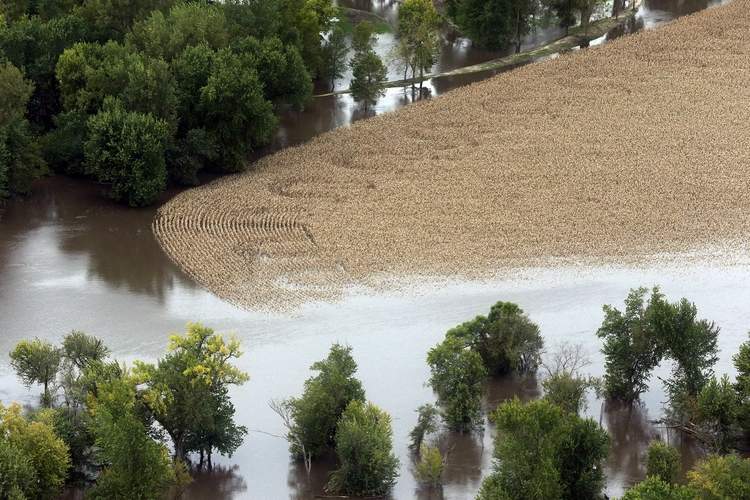
Crop insurance is seen as an important safety net for farmers, and that’s especially true during a disaster. Eastern and central Iowa farmers dealt with torrential rains and subsequent flooding last week. They’ve seen the devastation first-hand. Grassley recently surveyed the flood damage in several eastern Iowa cities, and discussed his experience on "I saw debris and damage left by receding floodwaters, many homes underwater, preparations to mitigate flooding downstream and farmers surveying their flooded crops," Sen. Charles Grassley (R-Iowa) said on Money Matters, a program on the Iowa Agribusiness Radio Network. Grassley told host Ben Nuelle that crop insurance, which is partially funded by farmers and delivered by the private sector, will be crucial for farmers whose crops flooded this year so close to harvest. "With grain prices as low as they have been in years, that program will provide some relief to insure producers who will be forced to take a complete loss on their flooded fields,” Grassley said. “It is important reminder heading into the farm bill of the critical role crop insurance plays in the farm safety net." Source - http://www.porknetwork.com

03.10.2016

India - Massive crop loss in Marathwada

WITH rain refusing to relent in the last two days, Marathwada, which is facing unprecedented flood-like situation, has suffered a massive crop damage. According to initial official estimates, crop worth over Rs 500 crore has been damaged in at least three districts of Latur, Beed and Osmanabad, which had been under a severe grip of drought till recently for the fourth consecutive year. In all the three districts, soyabean is the major crop, followed by cotton, tur and moong. In Latur, crop on over 4 lakh hectares — sowing had been done on over 6 lakh hectares — has been damaged. “Soyabean crop has suffered complete damage on 4 lakh hectares,” said an agriculture official in Latur. Officials in the department put the loss at over Rs 300 crore. Manjara dam, the lifeline of Latur that had hit rock-bottom, is now 100 per cent full. All major rivers in the district are overflowing at present. Nana Barde, a farmer and sarpanch of Masurdi village in Ausa taluka that was among the worst affected by drought in Latur, said, “Over 400 farmer families, which had sown soyabean, tur, urad, til on 1,000 hectares of land have lost all the crop… For four years, we had severe drought and now this tragedy.” Beed District Collector Naval Kishore Ram said soyabean crop on 2 lakh hectares had been damaged. “Our initial estimation is that the crop worth around Rs 200 crore must have been damaged. But it is difficult to give out the exact figure,” said Ram. For the last couple of days, the officials claimed, the district administration had been busy rescuing people trapped in flood waters. “Scores of villagers, especially those living close to rivers, have been rescued in the last couple of days,” said Ram. Osmanabad district seems to be worst affected in Marathwada. District Collector Prashant Narnaware said his administration had been hard-pressed to bring the situation under control as all major dams were overflowing and rivers were in spate. According to initial estimates, Narnaware said, crop spread over close to 3 lakh hectares had been damaged. Sowing had been done on 3.5 lakh hectares. “But these are initial estimates… We estimate that the loss could be up to Rs 250 crore,” he said. Nanded Collector Suresh Kakani said crop loss in the district had been reported along the overflowing rivers. “Last night, we rescued 22 people near Limboti dam after there was discharge of water.” Both Ram and Narnaware said farmers should not worry as their crop had been insured. “We will carry out proper assessment and ensure that each and every farmer gets the insurance benefit,” said Ram. Narnaware said the Kharif crop might have been lost but this rain would benefit the Rabi crop. After a couple of days’ lull, the rain started pounding Marathwada from Friday. In the last two days, Latur, Beed and Osmanabad have received maximum rainfall. All three districts, which were once worst hit by drought, have recorded over 100 per cent rainfall so far, with Beed receiving maximum 125 per cent rain. In the last 24 hours, Latur has received 69.75 mm rain, followed by Beed (50.64 mm), Osmanabad (41.69 mm), Nanded (32.31 mm), Hingoli (38 mm), and Parbhani (29.9 mm). Collectively, all eight districts in Marathwada have received annual average rainfall of 107 per cent. Source - http://indianexpress.com

03.10.2016

Australia - Rural Business Support aids storm affected producers

Storm affected producers have been urged to seek assistance from Rural Business Support, with heavy rainfall, flooding and damaging winds impacting on many farmers and rural businesses across South Australia. While the initial response to any emergency is to firstly ensure the safety of people and livestock, Rural Business Support is prepared and ready to respond to an increasing number of requests for assistance. Reports of damage to hay and cereal crops have already been received, with the expectation that some crops will be lost or yields severely downgraded. Rural Business Support has a team of rural financial counsellors located across the state ready to work with primary producers who may face hardship as a result of the storms. Rural Business Support CEO Brett Smith said his team of professionally trained staff were able to work with businesses in all aspects of business analysis and could assist with applying for grants which may be available. “Many producers were optimistic of a good harvest this year following good rainfall and to have their hopes dashed just prior to harvest will be a disappointment for those affected. Those who hadn’t yet organised crop insurance will face some tough decisions on how to manage a period of tight cash flow," he said. “Talking with a Rural Financial Counsellor can help ease the stress of trying to work out how the farm business can recover from the storm event." Current support available includes emergency relief payments through the Department of Communities and Social Inclusion to eligible households. Farm businesses may also be eligible for the Farm Household Allowance - a fortnightly payment (up to three years) to assist farming families to get back on their feet. Community refuge centres have also been set up in affected regional locations. “Managing the recovery from a business shock can be a difficult time. Working with a Rural Financial Counsellor can provide clarity and a plan to return to normal business operations,” Mr Smith said. He urged producers to contact Rural Business Support for assistance. Source - http://www.transcontinental.com.au

03.10.2016

India - Heavy rains drown the hopes of farmers in Bidar

Heavy rainfall in Bidar on Friday night further crushed the hopes of farmers who were praying for recovery of crops damaged by floods in September. In just one night , the district received 64.5 mm of rainfall, as against the monthly average of 90.2 mm for October. This is very high for one day. This can further damage crops like red gram, said K. Ziaullah, Joint Director of Agriculture. If the crop suffers water logging for 3-4 days, it will suffer physiological death. Low to moderate rain is expected in the next two days. Even light showers will have to be considered excess as they will add to the flood discharge. Water will not percolate as it has breached the optimum level, he said. According to preliminary surveys by agriculture department, Soya has suffered nearly 100 per cent loss due to the dense showers in September. The district received over 1200 mm of rain in the first nine months, which is beyond the annual average of 900 mm. This caused widespread loss including breach of six tanks and loss of crop on over 1.6 lakh hectares. Rain related incidents caused the death of five persons, including a six-month-old child. As many as 19 bridges were submerged, cutting of around 120 villages from the main land. District administration officials had submitted a memorandum seeking input subsidy of Rs. 102 crore for crop loss affected farmers. Chief Minister Siddharamaiah who visited rain-hit areas, announced an interim relief of Rs. 50 crore. Source - http://www.thehindu.com

30.09.2016

USA - Heavy rainfall in mid September damages crops

The past several days has been filled with news reports, photos, and stories about the flooded roads, buildings, and towns across many areas of south central, southeast, and central Minnesota. Historic rainfall amounts occurred in a portion of that region on Sept. 21 and 22, with a large portion of the region receiving 4-6 inches of rainfall, and some areas receiving 10-14 inches of rainfall in a 48 hour period. Nearly every river, stream, and creek in that region has been flooded, and was out of its banks following the heavy rainfall event, causing millions of dollars of damage to homes, roads, bridges, and farm fields. This flooding event is comparable to the severe early fall flooding in many areas of south central Minnesota in September 2010. The flooding, which is among the worst ever in many areas, was caused by the 4-14 inches of rain across much of the region during the two days. This type of intense rainfall is very unusual in September, and is usually more likely to occur in the spring and early summer. Some locations across the region also had strong winds and hail, along with the heavy rains, which caused additional damage to some crops. The University of Minnesota Research and Outreach Center at Waseca recorded 10.16 inches of rainfall on Sept. 21-22, which is likely the highest 48-hour total ever recorded during September, in the over 100-year history of the Waseca site. As of Sept. 22, the U of M research site had recorded a total of 14.37 inches of rainfall in September, which is also the highest on record. The normal precipitation total for September at Waseca is 3.19 inches. The Waseca research site has now received a total of 48.68 inches of precipitation for 2016, which is 40 percent above the normal average precipitation of 34.70 inches for an entire year at Waseca. The Research Center has now recorded 35 inches of rainfall in the past three months, since July 1. Harvest delays In addition to the property and infrastructure damage caused by the extreme rainfall and flooding, there will likely be considerable crop loss, along with potential major delays in the 2016 corn and soybean harvest. The corn and soybean fields near any rivers, streams or creeks will likely be a total loss in most of the region, as will most other low lying, poorly drained portions of farm fields. Many of these fields had some fairly good yield potential prior to the storms and flooding; however, in some locations, portions of these fields had already been damaged from storms and heavy rains back in June. Most farmers in southern Minnesota and northern Iowa are now dealing with completely saturated soil conditions, which is likely to delay soybean and corn harvest across the entire region. A majority of soybeans in the region will soon be ready to harvest, as will a considerable amount of corn, once field conditions are fit for harvesting. In some areas it will be several days before combining can begin, while in other areas it will take a week or longer of dry conditions for fields to be fit. In many fields farmers will be forced to combine a portion of the field, leaving the balance until the fields dry out. Soybean harvesting is the number one concern right now for most producers. Once the soybeans are mature, they dry down rather rapidly in the field, especially with warm, sunny weather conditions. Once this occurs, the soybean pods can “pop open” in the field prior to harvest. There is also concern regarding the stem strength of the soybeans that were in partial standing water for several days. If field conditions remain too wet to harvest the soybeans for a long period, there is potential for considerable field loss during soybean harvest. The wet field conditions also increase corn harvest concerns in the region. Some corn has been damaged by strong winds and hail that occurred in severe storms during the 2016 growing season in some locations. The storm-damaged corn, together with a higher than normal incidence of stalk rots, increases the likelihood of more stalk breakage in corn this fall. This problem will likely increase later in the fall, especially in fields with considerable amounts of standing water. The crop damage and harvest delays are especially difficult for affected crop producers that are facing very tight profit margins in 2016. Farm operators were looking at some very good corn and soybean yield potential for this year’s crops in many locations. The soybean yield potential appeared especially solid across the region, with the corn yield potential being a bit more variable. Now, many producers are in a “wait and see” mode regarding corn and soybean harvest, hoping that the yields on a majority of the crop acres are strong enough, in order to offset yield losses in the fields and portions of fields that were lost to the heavy rains and flooding. Crop insurance considerations Farm operators with crop losses need to contact their crop insurance agent prior to harvesting fields with significant crop losses to make sure that those losses are reported and verified. Producers also need to keep good yield records, and follow crop insurance verification procedures, in order to maximize crop insurance indemnity payments on damaged crop acres. Crop insurance indemnity payments will vary from farm-to-farm, depending on the level and type of insurance coverage that was purchased for the 2016 crop year, and on the final 2016 corn and soybean yields. Producers facing significant crop losses that have “optional units” for crop insurance policies in 2016 could be in a position to collect considerable crop insurance indemnity payments on farm units with large losses. However, producers that have “enterprise units” for their 2016 crop insurance coverage may have more difficulty verifying sufficient crop losses to gain substantial indemnity payments for the 2016 crop year. “Optional units” insure crops on an individual farm basis, so a producer can collect crop insurance indemnity payments on one or two farm units, while not receiving payments on other farm units. “Enterprise Units” require all the crop land of a given crop in a County to show a crop loss, in order to receive crop insurance indemnity payments. Many producers have switched from “optional units” to “enterprise units” in the past few years, due to significant savings in the crop insurance premium costs with “enterprise units.” Source - http://www.minnesotafarmguide.com

30.09.2016

USA - Precision Farming and Crop Insurance

When crop insurance and precision farming technology are combined, improved risk management solutions will soon follow. Precision farming technology has been steadily growing for years and has provided significant gains in producer productivity and efficiency. Roughly six in ten production farmers are expected to adopt various precision technology solutions by 2018. From auto steer to variable rate applications, farmers have an abundance of new capabilities available to improve production farming. More recently, precision farming technology has been used by some farmers to simplify - and make more accurate - their crop planting and production information for required government reporting as a participant in the federal crop insurance program. Using the equipment GPS monitor and farm management software, producers are able to collect and report both planted and production acres without traditional paper records like planting logs and scale tickets. In short, by leveraging their precision farming technology capabilities, farmers are able to “digitize” their planting and production records, making it more accurate and easier to report and manage critical planting and production information. The creation of digitized farm data can also provide much greater insight into farming practices, including the ability to better understand crop production risk, particularly when combined with related data like weather, soil conditions, topography and more. When greater insight and understanding of crop production risk is developed, insurers are better able to not only offer more risk management solutions, but more accurately underwrite and price the risk. While crop insurance is significantly different than many other lines of insurance, it does share some fundamental principles similar to home and auto insurance. For example, auto insurance today is underwritten and priced significantly different than it was 10 years ago because of the use of telematics/GPS information obtained from the automobile. Auto insurers are able to more precisely underwrite and price auto insurance risk because telematics/GPS data generated from the automobile create better understanding of driver risk (i.e. speed, braking, etc.). Data generated from the automobile, combined with other traditional driver risk data, result in improved predictions of potential risk of an accident. In a similar fashion, precision farming technology can provide insurers with more precise and greater information about planting and production activity (i.e. seed spacing, etc.) that can improve the prediction of potential crop performance beyond what weather alone might cause. So how might precision technology and crop insurance solutions look in the future? Some solutions already exist. For example, Farmers Mutual Hail Insurance provides a discount on a crop hail insurance policy when a customer uses a combine head that integrates GPS technology from the combine. The GPS-enabled combine head is able to more effectively “pick-up” downed corn from a windstorm as the combine is more precisely guided along the row line obscured by flat corn stalks. Because less production loss is expected when using the GPS-guided head, insurance risk is less and a lower insurance premium can be applied. Significant potential exists to leverage farmers' use of precision farming technology to improve agricultural risk management, including crop insurance. Using precision farming technology to collect and organize field data can lead to greater insight into crop production risk. Working within a clearly defined environment where the farmer controls and owns their data, trusted advisors can help farmers to identify and obtain new solutions, including improved risk management tools that more accurately reflect individual farmer risk and the solutions desired to protect against the risk of loss. Source - http://www.agri-pulse.com

30.09.2016

Philippines - Senate bill seeks to expand crop insurance

A BILL filed in the Senate will seek to make crop insurance mandatory for certain classes of rice farmers and those cultivating other staples. Senate Bill 1171 or the Expanded Crop Insurance Bill was filed by Senator Francis N. Pangilinan, who noted how farmers routinely become indebted during times of calamity. “We should help our farmers ensure their sacrifices are not for naught, especially during typhoon season,” said Mr. Pangilinan Thursday. Under the bill, “crop insurance shall be compulsory for those with loans for palay under supervised credit programs and optional for self-financed farmers provided they agree to place themselves under the supervision of agricultural production technicians.” Mr. Pangilinan noted that farmers remain among the country’s poorest workers, with two-thirds of Filipinos directly or indirectly involved in agriculture. Yet, he said data from the Philippine Crop Insurance Corp. show only 3% of some P10 billion worth of crops were insured across 30 provinces. Source - http://www.bworldonline.com

30.09.2016

Taiwan - Typhoon ag losses hit almost US$32m

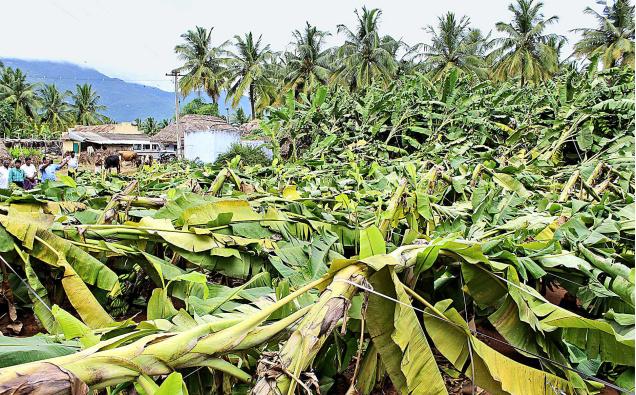
Taiwan's agricultural losses from Typhoon Megi have reached at least NT$1 billion (US$31.89 million) as of Wednesday 27 September, according to an initial estimate released by the Council of Agriculture (COA). As of 5 p.m., agricultural losses as a result of the damage caused by the storm had reached NT$1.03 billion, with Yunlin County in the central-south part of western Taiwan suffering the heaviest losses, the COA said. Typhoon Megi made landfall on Tuesday in Hualien County, eastern Taiwan, causing four deaths and 527 injuries and leaving more than 3.64 million households without power before moving away toward China early Wednesday. Farmers in Yunlin suffered NT$210.2 million in losses, or 20 percent of the national total, according to the COA figures. Kaohsiung reported at least NT$165.1 million in agricultural losses, ahead of Taichung, with NT$144.05 million in losses, and Tainan, with NT$76.06 million in losses, the COA data shows. Miaoli County reported NT$74 million in losses. Crop damage accounted for most of the losses, according to the COA, with 18,570 hectares of farmland and NT$964.75 million-worth of crops damaged. The COA said banana growers took the biggest hit, suffering crop losses of NT$136.51 million and damage to 294 hectares of farmland. Growers of rice and guavas, persimmons and taro also suffered heavy losses, the COA said. Source - http://www.freshplaza.com

30.09.2016

Spain - Hail damages 2,720 hectares in Lleida

The hailstorm recorded in the afternoon of last Friday in several municipalities of the county of Segrià, Lleida, has caused damage to a total of 2,720 hectares of crops, as reported on Monday by the director of the Territorial Services of Agriculture, Livestock, Fisheries and Food in Lleida, Ferran Noguera, who visited the areas affected. Llardecans, Aitona, Seròs, Massalcoreig, Torrebesses and Sarroca de Lleida are the most affected municipalities. In these towns, most of the damage to sweet fruit crops has affected the trees, as the harvest had almost been completed. 900 hectares have been hit; 400 in Seròs, 350 in Aitona and 150 in Massalcoreig. As for almonds, whose harvest was half way through, damage has been recorded to 110 hectares. The Plant Health Service of the DARP has recommended the application of treatments to minimise the risk of the spread of diseases in the plantations affected, and to ensure the good healing of the trees. The Department of Agriculture has reminded the municipalities hit by the storm to carry out a coordinated monitoring of the damage and to work together to expedite the aid to the affected farms. Also, another storm accompanied by hail was recorded on Sunday afternoon, which hit a total of 723 hectares of farmland south of the region of Urgell, Lleida, affecting the municipalities of Sant Martí de Riucorb, Omells de Na Gaia, Malda and Vallbona de les Monges. The most affected crops are olives, almonds and grapes. The most significant damage has been recorded by almond crops and grapes that had yet to be harvested, with up to 50% of the production affected. Source - http://www.freshplaza.com

30.09.2016

Australia - Unusual frost affecting harvests in Wheatbelt, South West and Great Southern regions

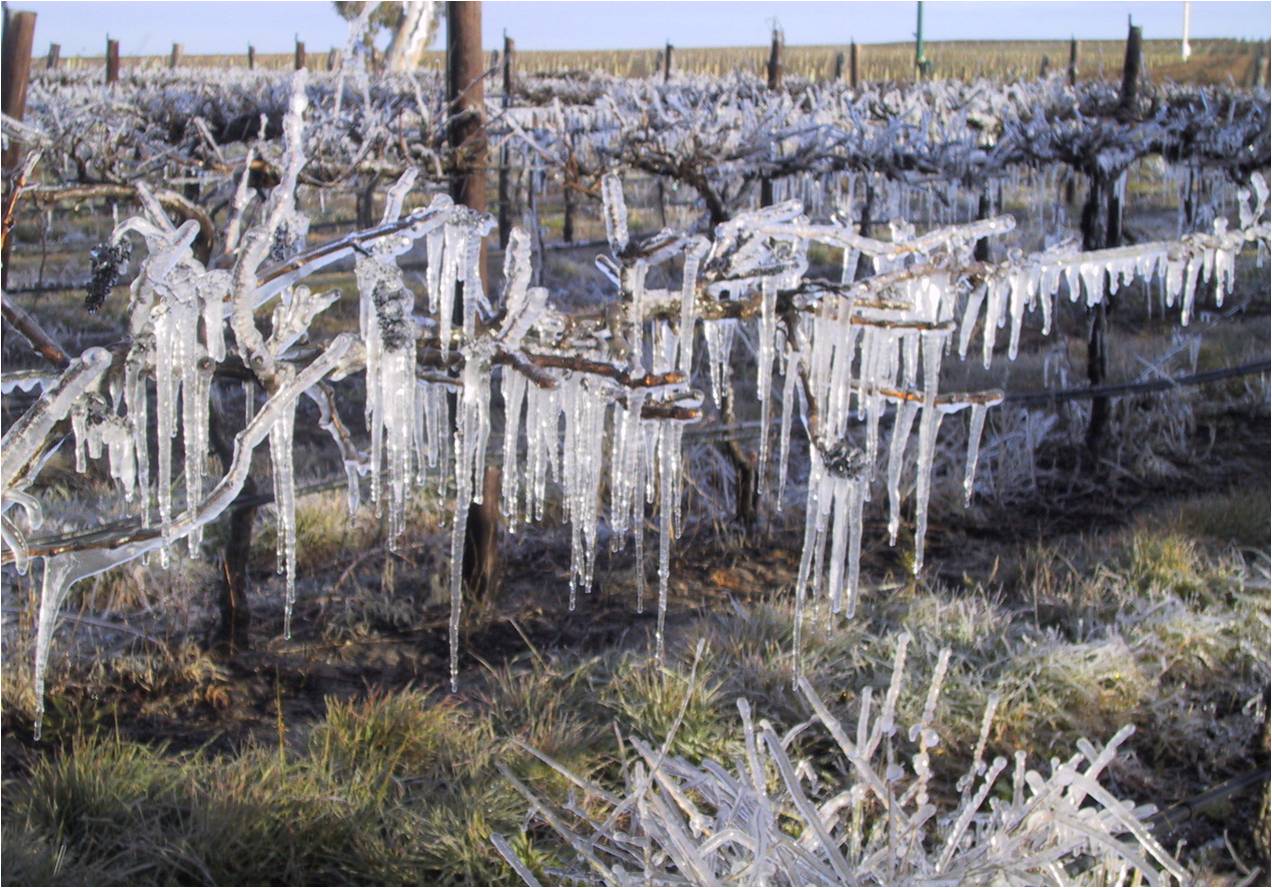
Braden Grylls was cutting hay at his property west of Corrigin on Thursday morning, when he saw the frost start to build up across his paddock. "When we were cutting hay on a low paddock on one of our farms, we noticed the old white hay started coming in across the paddock and thought ... this is when it's going to start chilling down," he said. "All the ice starts forming on your cutter as you're going around the paddock .... every few minutes I kept looking back behind me and I'm going 'Oh yeah it's still building up, still building up'. "I walked out in the wheat paddock beside me where I was cutting hay and right up through the head of the wheat was frozen solid so I'd say no doubt we'll be cutting some low-lying areas of wheat down but it will be a week or two before we can really assess the damage." The Bureau of Meteorology (BoM) had thought areas in the south-eastern agricultural district would be worst affected but temperatures actually dropped lower in areas to the Central and Western Wheatbelt. Some farmers have reported losing up to 50 per cent of their crops, while others have been virtually unaffected. Mr Grylls said it is disappointing given how well the crops were going. "It's one of those things, you have such a good year like you're having this year and you think well something's going to give," he said. "You just back on putting a crop in knowing you're going to get a frost .... we've been getting these three of four mil events and then you might get a frost the next morning which on a normal year, that's unheard of, it's just one of those things that's happening this year, on such a good year unfortunately," he said. The BoM has characterised the number of frosts as being unusual and said they were probably caused because of the state's unseasonably cold start to spring. 'Worst season for frost in 20 years' Further east, Hyden farmer Colin Nicholl was also out surveying the damage from what has been one of the worst seasons for frost in 20 years. His paddocks have already been hit by several cold snaps earlier this month. "You wouldn't get any yield out of this, the better value in this is now to cut it for hay and bail it up", Mr Nicholl said. Ironically, what was shaping up to be one of the most promising seasons in recent years has also proven to be vulnerable to the freezing conditions. "One of the vagaries of frost is that the better the crop the harder frost hits it," Mr Nicholl said. "We are now growing much higher yields than we have ever done before, but I think there are other factors in that, we just seem to be getting later frosts and frosts of more intensity than we ever used to before." Agronomist Helen Wyatt has seen widespread damage. "We're seeing varied levels of frost damage through out the region," she said. "In some areas its hard to tell the extent of the damage yet, there's been consecutive frost events and some this morning as well so we really won't see the full effect of that for another 7 to 10 days." While Colin Nicholl knows there are no guarantees or insurance against frost, after 50 years of farming he is philosophical. "It's all part and parcel of farming, while it's difficult to take, to be successful you can't just throw the towel in," he said. The state's grain handler, CBH has lowered its forecast for the season but said it would not know the true extent of the losses until harvest starts. Source - http://www.abc.net.au/

29.09.2016

USA - Heavy rainfall damages crops

The past several days has been filled with news reports, photos and stories about the flooded roads, buildings, and towns across many areas of south central, southeast and central Minnesota. Historic rainfall amounts occurred in a portion of that region on Sept. 21 and 22, with a large portion of the region receiving 4-6 inches of rainfall, and some areas receiving 10-14 inches of rainfall in a 4- hour period. Nearly every river, stream and creek in that region has been flooded, and was out of its banks following the heavy rainfall event, causing millions of dollars of damage to homes, roads, bridges and farm fields. This flooding event is comparable to the severe early fall flooding in many areas of south-central Minnesota in the September 2010. The flooding, which is among the worst ever in many areas, was caused by the 4-14 inches of rain across much of the region during the two days. This type of intense rainfall is very unusual in September, and is usually more likely to occur in the spring and early summer. Some locations across the region also had strong winds and hail, along with the heavy rains, which caused additional damage to some crops. The University of Minnesota Research and Outreach Center at Waseca recorded 10.16 inches of rainfall on Sept. 21 and 22, which is likely the highest 48-hour total ever recorded during September, in the over 100-year history of the Waseca site. As of Sept. 22, the U of M research site had recorded a total of 14.37 inches of rainfall in September, which is also the highest on record. The normal precipitation total for September at Waseca is 3.19 inches. The Waseca research site has now received a total of 48.68 inches of precipitation for 2016, which is 40 percent above the normal average precipitation of 34.70 inches for an entire year at Waseca. The Research Center has now recorded 35 inches of rainfall in the past three months, since July 1. HARVEST DELAYS In addition to the property and infrastructure damage caused by the extreme rainfall and flooding, there will likely be considerable crop loss, along with potential major delays in the 2016 corn and soybean harvest. The corn and soybean fields near any rivers, streams or creeks will likely be a total loss in most of the region, as will most other low lying, poorly drained portions of farm fields. Many of these fields had some fairly good yield potential prior to the storms and flooding; however, in some locations, portions of these fields had already been damaged from storms and heavy rains back in June. Most farmers in southern Minnesota and northern Iowa are now dealing with completely saturated soil conditions, which is likely to delay soybean and corn harvest across the entire region. A majority of soybeans in the region will soon be ready to harvest, as will a considerable amount of corn, once field conditions are fit for harvesting. In some areas it will be several days before combining can begin, while in other areas it will take a week or longer of dry conditions for fields to be fit. In many fields farmers will be forced to combine a portion of the field, leaving the balance until the fields dry out. Soybean harvesting is the No. 1 concern right now for most producers. Once the soybeans are mature, they dry down rather rapidly in the field, especially with warm, sunny weather conditions. Once this occurs, the soybean pods can “pop open” in the field prior to harvest. There is also concern regarding the stem strength of the soybeans that were in partial standing water for several days. If field conditions remain too wet to harvest the soybeans for a long period, there is potential for considerable field loss during soybean harvest. The wet field conditions also increase corn harvest concerns in the region. Some corn has been damaged by strong winds and hail that occurred in severe storms during the 2016 growing season in some locations. The storm-damaged corn, together with a higher than normal incidence of stalk rots, increases the likelihood of more stalk breakage in corn this fall. This problem will likely increase later in the fall, especially in fields with considerable amounts of standing water. The crop damage and harvest delays are especially difficult for affected crop producers that are facing very tight profit margins in 2016. Farm operators were looking at some very good corn and soybean yield potential for this year’s crops in many locations. The soybean yield potential appeared especially solid across the region, with the corn yield potential being a bit more variable. Now, many producers are in a “wait and see” mode regarding corn and soybean harvest, hoping that the yields on a majority of the crop acres are strong enough, in order to offset yield losses in the fields and portions of fields that were lost to the heavy rains and flooding. CROP INSURANCE CONSIDERATIONS Farm operators with crop losses need to contact their crop insurance agent prior to harvesting fields with significant crop losses to make sure that those losses are reported and verified. Producers also need to keep good yield records, and follow crop insurance verification procedures, in order to maximize crop insurance indemnity payments on damaged crop acres. Crop insurance indemnity payments will vary from farm-to-farm, depending on the level and type of insurance coverage that was purchased for the 2016 crop year, and on the final 2016 corn and soybean yields. Producers facing significant crop losses that have “optional units” for crop insurance policies in 2016 could be in a position to collect considerable crop insurance indemnity payments on farm units with large losses. However, producers that have “enterprise units” for their 2016 crop insurance coverage may have more difficulty verifying sufficient crop losses to gain substantial indemnity payments for the 2016 crop year. “Optional units” insure crops on an individual farm basis, so a producer can collect crop insurance indemnity payments on one or two farm units, while not receiving payments on other farm units. “Enterprise Units” require all the crop land of a given crop in a County to show a crop loss, in order to receive crop insurance indemnity payments. Many producers have switched from “optional units” to “enterprise units” in the past few years, due to significant savings in the crop insurance premium costs with “enterprise units”. Source - http://www.crowrivermedia.com

29.09.2016

Turkey - Government’s Ag Insurance Pool to cover banana frost damage

Banana growers in Alanya, Gazipaşa and Anamur can finally breathe a sigh of relief as the Government’s Agricultural Insurance Pool confirms it will cover crops against frost. Ahmet Şeref Gümüş, chairman of the Chamber of Agriculture in Anamur, states that frost regularly causes heavy losses in the region. with some growers suffering up to 50% loss last year “we have been working with the Chambers of Agriculture in Alanya and Gazipaşa in our discussions with the Ministry of Agriculture to ensure banana growers are compensated for frost damage”. Source - http://www.freshplaza.com

29.09.2016

India - Rains destroy commercial crops

-    Maize, pulses & chilli in Atmakur sub-division & three mandals of Srisailam constituency, spread over 10,000 hectares, suffer extensive damage -    Officials estimate loss at Rs 30 crore -    Farmers, who took up kharif cultivation with Rs  30,000 loan suffered losses on account of rains -    Thirty days ago they had incurred a loss of Rs 80 crore as their crops withered due to deficit rainfall Maize, pulses and chilli crops in Atmakur sub-division and three mandals of Srisailam constituency, spread over 10,000 hectares, suffered extensive damage following heavy rain that lashed the area.  The chilli crop was ready for harvesting. Officials estimate the loss at Rs 30 crore. Commercial crops in 17,500 hectares during the kharif season so far have been submerged. Commercial crops were damaged  in Atmakur, Pamulapadu, Kothapalli, Mahanandi, Bandi Atmakur and Velugodu mandals. Farmers, who have taken up kharif cultivation with a loan of Rs.30,000, suffered losses on account of rain and floods. Thirty days ago they had incurred a loss of Rs 80 crore as their crops withered due to deficit rainfall. Following heavy rain and floods, to and fro transport links to 12 villages in Kothapalli mandal have been snapped for the last three days. Meanwhile, the irrigation department staff repaired the cavity in the Siddapuram bund. Source - http://www.thehansindia.com  

29.09.2016

India - Farmers switch crops, risk losing insurance cover

More than 35% of farmers in Bareilly district have taken a loan under Kisan Credit Card (KCC) for cultivating sugarcane but have sown paddy or wheat instead. Agriculture officials said as there is no provision of filling separate forms under Pradhan Mantri Fasal Bima Yojana, if any calamity happens and affects the crops, these farmers will not get any cover under the insurance scheme. In Bareilly district, there are more than four lakh farmers and as many as 68,000 of them are covered under the crop insurance scheme. Officials at the agriculture department said over 35% of these farmers have taken a loan under KCC for cultivating sugarcane but have sown paddy or wheat. "As farmers get a loan of Rs 1 lakh per hectare for sugarcane, most of them took a loan for it. Rs 50,000 per hectare loan is available for paddy and wheat. After taking a loan under KCC for sugarcane, many farmers later shifted to wheat and paddy for their convenience. The farmers have sown wheat or paddy in their fields," said a senior official at the agriculture department. He added, "The premium is automatically deducted for insurance scheme for farmers having KCC. However, there is no provision under Pradhan Mantri Fasal Bima Yojana for farmers to inform about the crop they have sown. The bank maintains the record through KCC. However, if the crop is exposed to incessant rain, flood or drought condition, such farmers will not be liable for insurance despite paying premium for sugarcane because they have sown another crop." A farmer, Suresh Gangwar of Behroli village under Meerganj block, said, "A large number of farmers have opted for another crop but had taken loan for sugarcane. Due to lack of awareness among farmers, none of them has informed the bank that they are cultivating another variety of crop." He added, "The government should take steps in this connection as poor farmer will suffer in case of a calamity even after paying premium." District agriculture officer Ram Tej Yadav said, "This is the problem with the scheme. In such a scenario, the farmers should submit an application with the bank about the crop they have grown to get insurance cover." He added, "If the crop of any farmer is damaged, he can call at the toll free number for Bareilly- 1800 103 0061- to get help. A team will conduct a survey of the field." Source - http://timesofindia.indiatimes.com

29.09.2016

Nepal - Parbat Farmers Fed Up With Insurance Hassles

Crop insurance, a priority programme of the government, has failed to deliver real benefits to farmers in Parbat district with many of them complaining that they have not received compensation for their losses. Lack of compensation and the lengthy paperwork involved in buying crop insurance has discouraged farmers in this district in western Nepal from seeking coverage against risks for their agricultural products. The government has been providing a 75 percent subsidy on the premium for agriculture related insurance policies for the last three years. The incentive helped non-life insurance companies to increase farm insurance policy sales to Rs6 billion in the last fiscal year from Rs3.2 billion in fiscal 2014-15. Although more and more farmers in other parts of the country have started insuring their crops, cultivators in Parbat have not shown keen interest in buying these insurance schemes. Ek Narayan Poudel, a farmer from Dhairing, said insurers harass farmers by asking for unnecessary documents. “This has worked as a deterrent for farmers who wish to insure their products,” said Poudel, who has been conducting commercial farming of vegetables on 14 ropanis of land for the last two decades. According to him, around 100 farmers are engaged in commercial agriculture in the area where he lives. As per the Parbat District Agricultural Office (DAO), farmers have to submit a recommendation letter from the village service centre, land ownership certificates, official papers on the estimated cost of their crops and projected earnings from sales of the crops to buy a farm insurance policy. Agreeing with local farmers, Basudev Regmi, senior officer at the DAO, said cumbersome paperwork was the main reason slowing down demand for agricultural insurance products in the district. “We are encouraging farmers to insure their crops. However, they are not showing much interest in doing so,” he said. To facilitate the process of insuring crops and promote agricultural insurance, the Ministry of Agriculture Development deployed a liaison officer as the focal person for farm insurance last year. Ajay Adhikari, the liaison officer at the DAO, said his office was disseminating information to farmers visiting the DAO. According to the office, a large volume of crops was damaged by hailstone and frost this year. “If the process of purchasing insurance had been simplified, more farmers would have insured their crops,” Regmi said. Commercial farming is being carried out in Katuwachaupari, Shankar Pokhari, Dhairing, Nanglibang, Durlung, Mallaj, Barrachaur, Pang and Papaltari of Parbat district. Source - http://kathmandupost.ekantipur.com

29.09.2016

India - Sum insured under PMFBY jumps over 70% in kharif 2016

Reflecting wider coverage of the recently launched Pradhan Mantri Fasal Bhima Yojana (PMFBY), the total sum insured for the kharif 2016 crops has increased by over 70 per cent to Rs 1.18 lakh crore. In the 2015 kharif season (summer), total sum insured was only Rs 69,360 crore under the previous crop insurance scheme. As per the official data, as many as 3.15 crore farmers took advantage of the PMFBY in the just completed 2016-17 kharif season, against 3.09 crore farmers in the same season last year. "So far, 3.15 crore farmers have taken the policy in kharif 2016. Banks are yet to submit the final data on the coverage of farmers. What is interesting is that the sum insured has jumped by 71 per cent to Rs 1,18,426 crore," Joint Secretary in the Agriculture Ministry Ashish Bhutani told . Earlier, crops were underinsured, but this scenario is changing. More farmers are taking advantage of the new crop insurance scheme, under which premiums are kept low and farmers will get claims for full sum insured, he said. Good progress has been achieved in the implementation of the PMFBY in the 2016 kharif season even though several states delayed notification of the scheme. About 22 states and union territories have rolled out the scheme, he added. Under PMFBY, farmers' premium has been kept lower between 1.5-2 per cent for foodgrains and oilseed crops and up to 5 per cent for horticultural and cotton crops. There is no cap on the premium and 25 per cent of the likely claim will be settled directly in farmers' accounts. Going forward, Bhutani said, "The coverage of farmers in the coming rabi season is expected to increase as the initial hiccups have been addressed at all levels. Even banks are aggressively promoting the scheme." In fact, the number of farmers to take up the crop insurance scheme in the 2016 rabi season is likely to surpass the last year's level of 80 lakh, he noted. Under the PMFBY, the number of kharif crops insured vary from the state to state. In Bihar, only paddy and maize are covered, while in some states about 40 crops. PMFBY replaces the existing two schemes National Agricultural Insurance Scheme and Modified NAIS, which have had some inherent drawbacks. LUX CS MR Source - http://timesofindia.indiatimes.com

839
of 1225