NEWS
840
of 1225
News
28.09.2016

New Zealand - Farmers Break Free Of Crippling Subsidies

In 2006, Chris Hausman, a fourth-generation Midwestern farmer long accustomed to depending on government support for survival, traveled across the world to witness a revolution in agriculture. It had been more than 20 years since a left-leaning government in New Zealand chose to eliminate government subsidies for farmers, and Hausman was surprised at what had transpired since. Image source: Wikimedia Commons New Zealand Farmers “I will tell you it was a shock to their agricultural system,” says Hausman, 58, who farms corn and soybeans on a 1,500-acre plot 150 miles south of Chicago. “You had a system dictated by government programs that was thrown out the window overnight,” Hausman adds in a recent interview with The Daily Signal. “But the farmers kind of reinvented themselves and now New Zealand is a powerhouse when it comes to agricultural production on the world stage.” Hausman, like others in the industry, is careful not to equate New Zealand’s experience with what could happen in the U.S. He is thankful for federally subsidized crop insurance that his government provides. Officials predicted at the time that the sudden cutoff of government aid would cause a mass exodus of farmers walking off their land. But those who participated in this small island nation’s grand farming experiment hold it up as a valuable case study for policymakers worldwide. “Every country is different—that’s an important caveat to put on the conversation,” said Mike Petersen, New Zealand’s special agricultural trade envoy, during an event last week at The Heritage Foundation. “But what I can say is that we did start an incredible process of innovation, guts, and determination from those people who really wanted to make this work.” ‘Drastic Action’ New Zealand’s jump to a handout-free policy for agriculture was born out of necessity. Facing a budget crisis in 1984, the incoming Labor government took the first step in implementing a long list of market reforms when it eliminated about 30 different agricultural production subsidies and export incentives. “I’ve talked to diplomats serving New Zealand at that time, and they were paying the country’s expenses on personal credit cards,” says Petersen, who is a practicing farmer in Waipukurau and not considered a government official. “The government at that time had to take drastic action, and they looked at the pieces they thought would be easiest and quickest.” But this was no small decision. New Zealand’s economy is more dependant on agriculture than the U.S. economy is. New Zealand is a country of about 4.6 million people without much of a domestic market for products such as milk, meat, and wool. However, New Zealand produces enough food for 40 million people, Petersen says, and, unlike the U.S., exports about 90 percent of its production. Officials predicted at the time that the complete and sudden cutoff of government aid—without much of a support system to ease the transition—would cause a mass exodus of farmers walking off their land. “There was minimal financial assistance from the New Zealand government to assist farmers making the transition to an unsupported market,” says Nick Clark, general policy manager of the Federated Farmers of New Zealand. In response to emailed questions from The Daily Signal, Clark says the government provided a “exit grant” to farmers who wanted to leave their jobs, amounting to about two-thirds of their previous annual income. In addition, he says, low-income farmers were entitled to social welfare support. The government also contributed funding to a trust established to advise farmers on whether it made financial sense to stay in business. “Overall, though, there was no substantive government effort to soften the effect of change,” Clark says. By 1987, falling commodity prices and rising costs depressed incomes and exacerbated the debt problems of many farmers, who already were paying high interest rates due to inflation. [caption id="" align="aligncenter" width="610"] New Zealand’s dairy farmers are experiencing losses lately due to low milk prices. (Photo: Ingram Publishing/Newscom)[/caption] The price of land, which had been “artificially inflated due to subsides,” Clark says, plummeted. Still, the sudden removal of government support had less impact than expected. Only about 800 farms, or about 1 percent of total farms at that time, took the exit grant, he says. Much of the dislocation happened in rural communities, some of which made sure to expose their pain to the government. Maurice McTigue, a member of New Zealand’s parliament in the 1980s, recalled in an interview with The Daily Signal that thousands of farmers protested on the capital, Wellington, cutting sheep loose on government property to make a point. The decision to embrace dramatic change was personal for McTigue and others in government. About 40 percent of the members of parliament were farmers, including himself, McTigue says. “I’ve got bruises and bumps still to show from it,” says McTigue, now vice president of outreach at the Mercatus Center at George Mason University in Arlington, Virginia, a research organization that describes itself as bridging the gap between academic ideas and real-world problems. “It’s easy to look back at it and say this was a good decision and farming benefited, but to actually live through it was a very difficult experience,” McTigue says. ‘How Good They Are’ Today, New Zealand’s farmers are some of the world’s most productive and innovative. Farmers underestimate just how good they are, just how successful they can be without government support. Removing government assistance completely, New Zealand officials say, freed farmers to produce what people really want, and to do so in an efficient way that could turn a profit. Since the reforms, New Zealand farmers have cut costs, diversified their land use, and developed new products, Clark says. Additionally, productivity in agriculture has grown faster than the New Zealand economy as a whole. “Having been through pain, we can say going cold turkey was the right thing—although frankly I don’t think any other country would do that and I wouldn’t expect them to either, because the social pain would be too much to bear,” Petersen says. “But here, we’ve developed a newfound sense of resourcefulness that has encouraged farmers to look after their own interests. For many farmers, I think they underestimate just how good they are, just how successful they can be without government support.” The New Zealand government has encouraged innovation, enacting legislation allowing groups representing different agricultural sectors to vote every six years on whether their members want to pay a levy to fund research and development. New Zealand’s dairy farmers today produce 2,200 products from milk, compared to about 35 before the reforms, McTigue says, including antibody milk and chocolate cheese. The country also has a thriving wine industry that barely existed prior to the reforms. Despite these successes, New Zealand’s dairy industry has experienced tough times in the last three years, as farmers face persistently low milk prices. While the lessons America can learn from New Zealand are debatable, New Zealanders seem to know what they want. “In our experience, farmers do not want subsidies back,” says Clark, the Federated Farmers of New Zealand official. “Most farmers want government out of their lives and do not want to be beholden toit.” Petersen frequently travels the world to tell the New Zealand story—and to advocate free trade. Though he claims not to be comfortable making policy recommendations, he says he has an obligation to share his country’s successes. “The reality is the demand for food in the world, particularly for high quality food we can produce, is growing like never before,” Petersen says. “We have a responsibility to see if we can encourage production of food as efficient as possible for the sake of the world and its future.” Source - http://www.valuewalk.com

28.09.2016

India - Drones deployed to assess crop loss

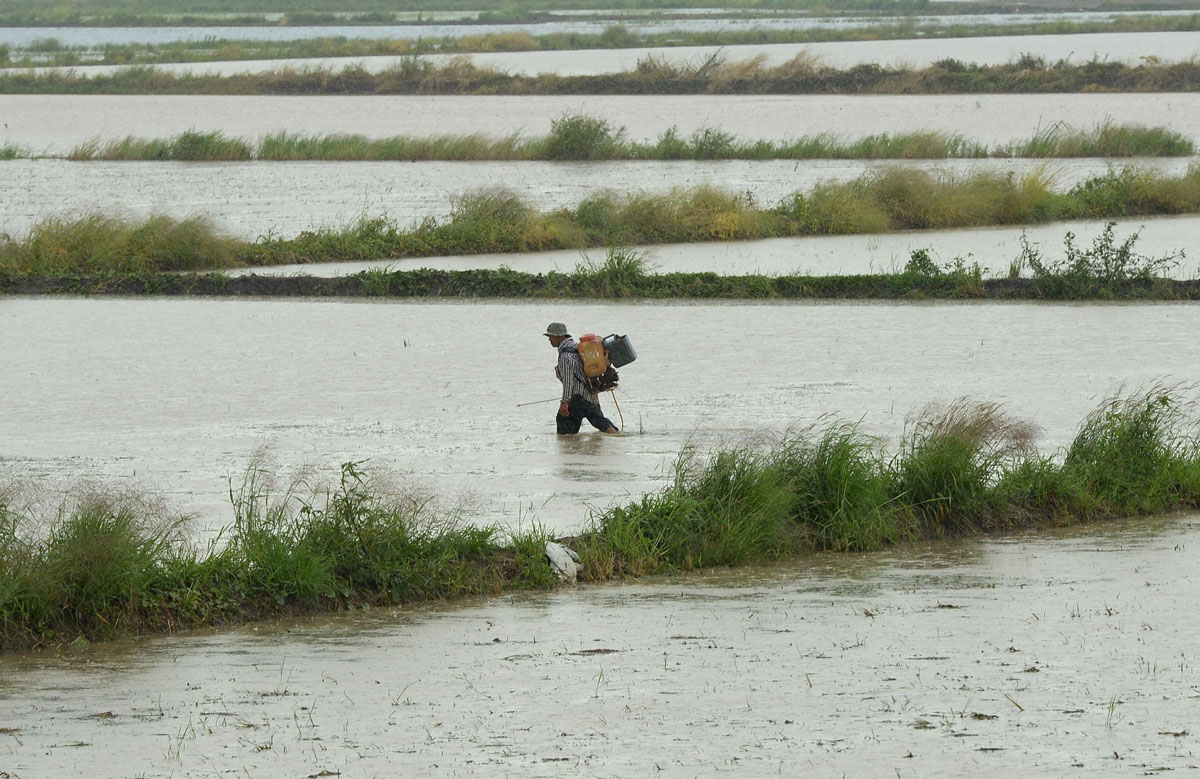
The heavy rains in the last few days have left the farmers of Ichhapuram region of Srikakulam district high and dry, with paddy crops in around 600 hectares have been inundated. With the officials lifting the gates of reservoirs as a precautionary measure to prevent flood, the canal water has swelled up on to the fields. The agriculture authorities has deployed drones to assess the severity of possible crop loss.The rain left the Bahuda river overflowing, inundating the nearby paddy fields. “I cultivated paddy in three acres nearby the Padmanabha channel and the crops have grown well. Now my fields have been inundated with the channel overflowing,” said U Neeladri Reddy, a farmer of Innesupeta village. The two-acre paddy fields of P Hari Krishna Reddy from Telukunchi have been submerged with the water overflowing from the brimming Bheema Samudram channel. Agriculture joint director G Rama Rao said that paddy crops in 600 hectares had been inundated in the Ichchapruam region including Kaviti and Kanchili mandals. Source - http://www.newindianexpress.com

28.09.2016

India - Rains damage crops in Medak

Incessant rains for the past few days have resulted in crop damage in large areas in Medak district. As on Monday, agricultural officers have estimated that about 22,619 hectares of Kharif crop has been damaged due to heavy rains. Worst affected are cotton farmers with a crop damage to an extent of 11,387 hectares; 6,451 hectares of soya bean, 2,622 hectares of paddy, 597 hectares of maize and 1,350 hectares of red gram have been estimated to have been damaged. This number is only tentative and it could increase based on weather conditions for the next few days. Rains have not spared vegetable crops as well. Out of the 6,806 hectares of vegetable crop sown in Kharif by August, 2,572 hectares of crop has been damaged. High crop loss was seen in Jinnaram, Sangareddy, Kondapur, Narayankhed, Zaheerabad, Sadasivpet, Chinnakodur, Wargal, Gajwel and Mulugu mandals. Apart from the losses due to heavy rains, it has to be recalled that more than 50 per cent of paddy crop was not cultivated this Kharif due to deficit rains, leaving the crop wasted in nursery stage itself, without being transplanted. More than 50 per cent of maize crop (around 60,000 hectares) was already damaged in August due to deficient rains. Source - http://www.thehansindia.com  

28.09.2016

China - Hailstorm ruins strawberry greenhouses

Yesterday morning, at 1pm, saw exceptionally heavy rainfall in the Shunyi district. In some regions, the rain turned to hail. The storm continued until daybreak. On the Xingfu farming fields, located in Yang village, 31 greenhouses for strawberry cultivation have been destroyed. The young strawberry sprouts are completely drowned and a part of the greenhouse rooftop has collapsed. The farmers estimate that the damage exceeds a million RMB. Source - www.bjwb.bjd.com.cn

28.09.2016

India - Officials begin crop loss survey across Mysuru

A joint crop loss survey by officials of the Revenue, Agriculture and Horticulture Departments has begun in the district in the wake of monsoon failure. Major crops such as paddy, hybrid maize, ragi, jowar, toor dal, cowpea, groundnut, and cotton have withered in most parts of the district. The survey has been initiated by the district administration to assess the exact extent of crop loss owing to failure of rains. K.M. Somasundra, Joint Director of Agriculture, said on Monday that the survey, being taken up at the village level, is expected to be completed in three weeks. Village accountants and assistant agriculture officers are involved at the village level, while agriculture officers, revenue inspectors, and horticulture officers are involved at the hobli level. The Assistant Director of Agriculture and the tahsildar are involved at the taluk level. Gone to waste Paddy is grown in over 68,801 hectares in the district, ragi in 11,335 ha, toor dal in 2,931 ha, groundnut in 3,092 ha, and cotton in 396,49 ha. All the seven taluks — H.D. Kote, Hunsur, K.R. Nagar, Mysuru, Nanjangud, Periyapatna, and T. Narsipur — have not received even close to normal rainfall. The district has received 387.1 mm of rain this year, as against the normal rainfall of 586.8 mm. The deficit in the past couple of months has been crucial, Mr. Somasundra said. In August, Mysuru district received just 31.9 mm of rain, as against the normal rainfall of 80.1 mm. In 2015, the August rainfall was 89.2 mm. Till September 26, the district has received 15.2 mm rain, as against the normal rainfall of 84.4 mm for this period. Source - http://www.thehindu.com

28.09.2016

Italy - Grape cultivation in Puglia partially flooded after nonstop rain

It started raining in Italian grape-producing region Puglia three weeks ago, and it has not stopped since. “It rained nonstop last week as well, and especially the lower-lying plantations have flooded,” says Lucien de Wit, who visited the area last week. De Wit distinguishes between outdoor grapes and tunnel grapes. “The outdoor grapes have all been lost, and about 30 to 40 per cent of the tunnel grapes have been lost as well. We also have significant damage due to botrytis caused by the rain,” the importer explains. [caption id="" align="alignnone" width="460"] Left: botrytis in the grapes after heavy rainfall Right: Checking quality and picking leaves for later harvest[/caption] “Until December, mainly Italia and Red Globe grapes will be harvested. It has been disastrous for the cultivators concerned, some of them have lost complete harvests,” De Wit says. Yet De Wit does not expect enormous grape shortages on the market. “We will have fewer volumes from Puglia, but there will still be plenty of grapes on the market. Prices will recover, you can already see that now with the Sicilian grapes.” Source - http://www.freshplaza.com

27.09.2016

India - Centre to insure farmers against crop loss

The Centre has formulated a scheme to insure farmers for crop losses, Union Agriculture Minister Radha Mohan Singh said today . "The scheme has been formulated to ensure compensation for crop loss of farmers through the Pradhan Mantri Fasal Beema Yojana within a month," Singh said when asked how his ministry plans to tackle farmers suicide. Singh was here to attend a seminar at the Deen Dayal Dham. Attacking the Congress, he said, "Slogans like Garibi Hatao were just chanted, there was no serious effort towards it. However, the present government has taken a lot of steps to improve condition of villagers and poor." The Centre is working on the ideologies of Deen Dayal Upadhyaya, and is taking welfare scheme to the last person, he said. "While the Avas Yojana is for the poor, the irrigation scheme is for farmers," he said, adding Rs 1 lakh will be given to farmers engaged best practices of agriculture. Source - http://www.business-standard.com/

27.09.2016

India - Crop Loss in 5 Lakh Acres in Telangana

Citizens in the city heaved a sigh of relief as rains slowed down after the two-week long spell. The rains not only disrupted day-to-day life, but also cause huge losses to agriculture and core sectors in the state economy. The MET department attributed the recent rains to the low pressure area over Vidarbha and adjoining North Telangana region. Though low pressure is weakening, monsoon is active. Hence, modest to heavy rains at isolated parts in Telangana are more likely, said YK Reddy, Director at MET, Hyderabad. MET Department is yet to get clarity over LaNino. If it gets strengthened, La Nino will result in more rains in October as well, said Reddy. Hyderabad MET Department has further said that another upper air cyclonic circulation may form by 1 October. “But, it’s away from Andaman. We have to study whether it would form into low pressure,” said Reddy. Modest to heavy rains are likely in Hyderabad and other parts of Telangana. However, this relief will only be short lived as a fresh upper air circulation is over North Andaman Sea and is likely to affect the East Coast as well as Telangana around September 29, according to Skymet. Thus, there may be an increase in the intensity of rains over Hyderabad during the last two days of September. Highest rainfall in 100 years  So far, Hyderabad has received 425.2 mm of rainfall against its monthly mean of 132.9 mm of rainfall. Hyderabad has already surpassed the decade’s highest rainfall of 266.6 mm in September, 2007. The all-time high of monthly total rainfall stands at a whopping 499.4 mm which occurred in the year 1908. Hyderabad has already received highest rainfall in last 100 years, according to Skymet. The previous wettest spell in Hyderabad was in August 2000 when the city recorded 24 cm rainfall. Crop Loss in 5 Lakh Acres  The record rainfall in the century has caused huge damage to crop in Telangana as it’s estimated that over five lakh acres have been submerged. Half of affected agriculture land is in Medak and Nizamabad districts. Agriculture department has sent nine teams to districts to assess the crop loss and advise to farmers on taking remedial measures. Based on the report, Telangana government will decide on compensation to farmers. The government has already decided to give 50 percent subsidy on seeds during Rabi. Rs100-Cr Loss As 180-km Roads Damaged  GHMC officials made a preliminary estimates on loss due to damaged roads after the recent heavy rains. GHMC Commissioner Janardhan Reddy said that 180 kilometers of roads in the city were damaged due to heavy rains and flood water. The Commissioner said: “Repairing works have begun. The GHMC is taking steps to repair at least 1,500 potholes everyday. We’ll ask for funding support from the state government.” GHMC has set up special squads to remove illegal constructions along the nalas and encroaches in tanks. The Commissioner has written a letter to Collectors of Hyderabad and Ranga Reddy to hand over the 4,000 vacant Vambe flats so that it can accommodate poor families evacuated from illegal houses along the nalas. The town planning department in GHMC is facing acute manpower shortage as it has only 76 staff as against the requirement of 268. KCR Takes Up Districts Tour  Chief Minister K Chandrashekhara Rao on Monday left for Karimnagar. KCR cancelled Cabinet meeting scheduled on Monday and directed all the ministers and MLAs to stay in their constituencies to monitor the situation. KCR has also alerted Irrigation minister Harish Rao and officials to keep regular vigil at all the projects. ATC didn’t allow helicopter tour owing to bad weather conditions. KCR started off by road to assess flood situation, water levels in projects and loss in the agriculture and other sectors. KCR will visit mid Maner as its spillway broke due to heavy flood water pressure. Godavari in Spate at Bhadrachalam  The water level in Godavari at Bhadrachalam is rising. The water level was above 21 feet on Sunday and it’s expected to reach 43 feet by Monday. If the water level reaches 43 feel, officials will issue first caution, second caution for 48 feet and third caution for 53 feet. Officials expect that the water level may reach 43 feet level by Monday night. No Production in Opencast Mines  Heavy rains disrupted production activity in all the opencast mines of Singareni Colleries. Production activity at all the opencast mines in Karimnagar, Adilabad, Warangal and Khammam districts have been halted and officials shifted machinery to the ground. Water Levels at Projects  Jurala: Present water level 1043.77 feet, full water level 1045 feet, present storage 8.86 tmc, total storage 9.66 tmc. Musi Project: Present water level 643.8 feet, full water level 645 feet, present storage 4.15 tmc, total storage 4.46 tmc. SRSP Project: Present water level 1089.80 feet, full water level 1091 feet, present storage 83.77 tmc, total storage 90.31 tmc. Nizam Sagar Project: Present water level 1400.5feet, full water level 1405 feet, present storage 12 tmc, total storage 17.80 tmc. Ellampalli Project: Present water level 481 feet, full water level 485.56 feet, present storage 16.41 tmc, total storage 20.18 tmc. Kadem Project: Present water level 697.95 feet, full water level 700 feet, present storage 7.08 tmc, total storage 7.60 tmc. Lower Maneru Project: Present water level 914.35 feet, full water level 920 feet, present storage 19.42 tmc, total storage 24.07 tmc. Singur Project Present water level 1716.45 feet, full water level 1717.93 feet, present storage 27.53 tmc, total storage 29.91 tmc. Srisailam project: Present water level 880.40 feet, full water level 885.01 feet, total storage 190.33 tmc, present storage 215.78 tmc. Nagarjuna Sagar project: Present water level 517.60 feet, full water level 590 feet, total storage 312.05 tmc, present storage 144.94 tmc. Source - http://www.sakshipost.com

27.09.2016

USA - Harvest stalled by wet weather

With much of the corn and soybean crop mature, farmers are itching to get into the fields. But above average rainfall most of the summer and a wet start to fall has halted the harvesting of what promises to be a very good crop. While the fields are too wet to drive in now, in many areas of the region harvesting could resume with about a week of dry weather. All of this week is forecast to to have little or no chance of rain. But for farmers east and southeast of Mankato, harvest is a long way off after 10 inches or more of rain fell in 48 hours. Jeffrey Vetsch, of the Southern Research and Outreach Center in Waseca, said all of Waseca County is oversaturated. "The crops are at maturity. It's a bad time to get this much rain. He said that because the plants are no longer growing they can't take up moisture and help remove excess water in the fields like they would earlier in the season. "The only way this is going to go away is through the tile drainage systems in the fields. But the rivers and streams and ditches are so full it's going to be weeks." Vetsch said that crops sitting in water in low areas won't be harvested anytime soon, even if dry weather returns. "They may never get harvested, or if they do it will be November," he said. "Farmers will just have to start in the higher areas of the fields and as they dry out and try to come back and get those low areas." He said the wet weather is also starting to rot the stalks of corn plants, leaving them susceptible to breaking over in the wind. And the saturated soil means that when heavy farm equipment does get in the fields they will compact the soil. "That doesn't bode well for fields for years to come." Still, he said, the crop in the field is good if farmers can get it out. Outside of Waseca County and parts of eastern and southeastern Blue Earth County, fields are wet but generally not flooded. Pat Duncanson, who farms west of Mapleton, said several of the earlier rains missed them. They harvested some corn Tuesday and Wednesday and got 3.5 to 4 inches of rain Wednesday night and Thursday. "We've got some flooding but not of biblical proportion. The fields are very wet but nothing close to what Waseca is seeing." He said that when they were in the field, the soils were in better condition than expected. "We were pleasantly surprised that the fields were firmer than we thought. We were still getting some compaction, which isn't good, but we went through real well." Kent Thiesse, farm management analyst and vice president at MinnStar Bank in Lake Crystal, said fields near any rivers, streams or creeks will likely be a total loss in most of the region, as will most other low lying, poorly drained portions of farm fields. He said soybean harvest is the main concern for producers right now. "Once the soybeans are mature, they dry down rather rapidly in the field, especially with warm, sunny weather conditions. Once this occurs, the soybean pods can pop open in the field prior to harvest." Thiesse said the crop damage and harvest delays are especially difficult for farmers that are facing very tight profit margins. He advised that farmers with crop insurance contact their insurance agent prior to harvesting fields to make sure that losses are reported and verified. The U.S. Department of Agriculture is still predicting a bumper crop for the state, a bit higher than the big yields seen last year. Topsoil moisture in the state was rated at 62 percent adequate and 36 percent surplus. Nearly half of Minnesota corn acreage was mature and the condition of corn is rated 84 percent good to excellent. More than 90 percent of the soybean crop was turning color and 56 percent of the crop was dropping leaves or beyond. Source - http://www.mankatofreepress.com

27.09.2016

USA - Flooding threatens Iowa corn, soybean crops

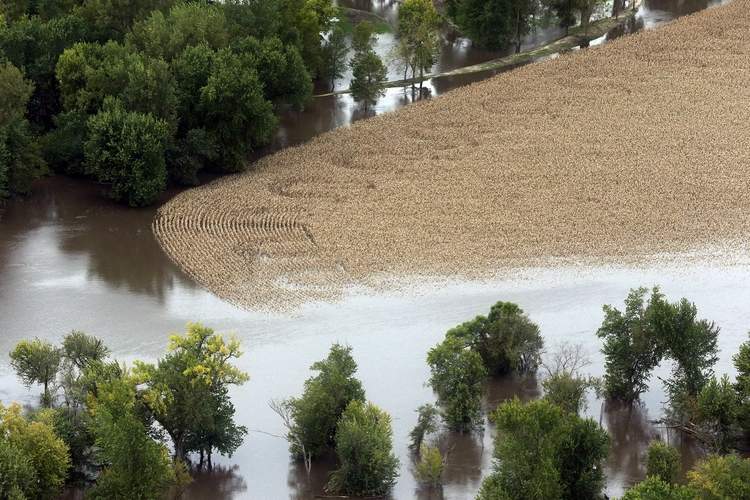
Recent heavy rains and flooding have damaged and destroyed crops and waterlogged the soil, threatening to delay and prolong the harvest. “The longer it stays in the fields, the higher the risk of field loss” caused by moldy ears, dropped ears and fallen stalks, Iowa State University Extension corn specialist Mark Licht said. Licht said the U.S. Department of Agriculture’s Aug. 12 projection of a record 197-bushels-per acre Iowa corn yield will fail to materialize. “Field losses will go up, bringing those numbers down,” he said. Iowa Agriculture Secretary Bill Northey said it’s too soon to tell how the recent inclement weather will affect yields. But in recently inundated fields, moldy grain and weakened stalks will reduce both the quantity and quality of the harvest, Licht said. “If the (corn) ears and (soybean) pods were under water, that would likely be considered adulterated grain, contaminated by bacteria or farm chemicals, which cannot be sold or fed to livestock,” he said. Under federal crop insurance programs, adulterated grain would be considered a complete loss, for which farmers would be compensated by their insurance, he said. In addition, soggy fields will delay the harvest and worsen mold and stalk problems, Northey said. Both Licht and Northey said patience will be required to keep anxious farmers from entering their fields too soon. Heavy equipment on saturated fields will compact the soil, reducing productivity for years to come, Licht said. Referring to the likelihood that many heavy combines, tractors and grain carts will get stuck in the mud during harvest, Northey quipped that log chain salespeople could have a good quarter. ‘It’s really bad’ Rainfall has been above normal and at times excessive in northeast Iowa since June, according to State Climatologist Harry Hillaker. That trend worsened in September when downpours on saturated soil twice pushed area rivers beyond flood stage. While the statewide average rainfall for September stood Monday at 6.29 inches — well above the 3.38-inch average for the entire month of September — the monthly rainfall averages for the northeast and north-central regions stood at 9.21 inches and 10.1 inches, respectively, Hillaker said. Through Monday, Charles City’s September rainfall totaled 15.83 inches, Hillaker said. More than a foot of rain fell last Wednesday and Thursday on parts of Butler and Floyd counties, causing both flash flooding and flooding on the Cedar, Wapsipinicon and other area rivers. “On the lowland bottom ground, there is a lot of crop damage. It’s really bad,” said Jay Jung, a farmer and Farm Bureau Financial Services agent in Charles City, one of the northeast Iowa areas hardest hit by last week’s heavy rains. On two fields north of Charles City, where 10 inches of rain fell last week, Jung said. “I’ve got kernels sprouting on the ears. It’s terrible.” “By comparison, we are in good shape,” said Iowa Corn Growers Association Vice President Mark Recker, who farms near Arlington, Fayette County, where four to five inches of rain fell on his fields last week. “We are not inundated. We should be back in the fields by late Wednesday,” Recker said. Iowa Corn Growers Association Chairman Bob Hemesath, who farms near Decorah, said he has weathered “four different rain events of at least four inches this year.” His biggest concern, he said, is corn root and stalk damage, and whether the crop will remain upright until it is harvested. ‘It’s still September’ Most farmers have never seen such flooding in the fall when their crops are ready to be harvested, said Dennis Lindsay, an Iowa Soybean Association District Advisory Council member. The 6.5 inches that fell on his Masonville farm last week drove Prairie Creek from its banks, covering a soybean field and flattening more than 25 acres where the current was swiftest, Lindsay said. Despite that loss, Lindsay said, “It’s still September. If the weather turns nice, we are going to be all right.” Optimal harvesting of soybeans requires both dry fields and a moisture content in the 13 percent range — conditions that may be especially difficult to attain simultaneously this fall, according to Grant Kimberley, director of market development for the Iowa Soybean Association. The longer mature soybeans remain unharvested, the greater the risk the pods will split, spilling beans on the ground, Kimberley said. Source - http://www.thegazette.com/

27.09.2016

India - Elephant herds create havoc in Odisha districts

Elephant herds have gone on a rampage in Odisha’s Mayurbhanj and Sonepur distrcts causing extensive damage to property and agricultural fields. The marauding pachyderms numbering around 70— that have sneaked into Baripada forest range in Mayurbhanj district— have damaged the standing paddy and maize crops in Badasul and Bhatachhatar villages of Moroda reserve forest under Rasgobindpur range in the district. “The villagers are scaring them away to which they are trying to enter. They are damaging the crops. The electricity supply has been disconnected in the area due to the rampaging elephants. The dark nights and the fear of elephants are giving us sleepless nights,” a villager said. “It appears that they would return back to West Bengal. But, we cannot say anything on that now. We would like to minimize the damage to paddy crops. Horses would be deployed to drive them away,” said Sanjay Kumar Swain DFO, Baripada. In view of this, a 24-hour control room has been opened in Baripada divisional forest office. Similar is the sight at Kutmenda village Ulunda block in Sonepur district where the jumbos have created havoc. Not only in Kutmenda village, the jumbos are also moving in three other pancyayats causing huge crop loss to acres of land. “The elephants have strayed into the village and have damaged crops on around 15 acres of land. The forest officials haven’t been successful to drive them away,” a villager alleged. The elephants have come from Rairakhol forest division. We would ask the affected villagers to apply for compensation for crop loss due to jumbo menace. We would verify it and provide them compensation, a forest official said. Source - http://odishasuntimes.com

27.09.2016

Ireland - IFA calls for five point plan for weather-hit farmers

IFA president Joe Healy has called on the government to implement a package of measures to support farmers, particularly tillage farmers, in areas of the country hit by difficult weather conditions. Healy and the IFA has called for on the government to implement a five point plan to help address the difficult situation on many farms this autumn. Healy's demands include: A crisis aid package for tillage farmers who have suffered serious crop losses A fodder Scheme for farmers unable to save enough hay or silage A relaxation of the qualifying criteria for the Farm Assist programme An extension of the slurry spreading deadline And prompt and on time payment of all farm schemes this year All across the country, many tillage farmers are facing into the reality of heavy crop losses following a very difficult spell of weather around harvest time preventing them from harvesting crops this year. Similarly, in parts of the west and north west many farmers have been unable to save the required amounts of fodder to see them through the winter period and Healy is calling for a fodder scheme to address this shortfall. The IFA says it has asked Teagasc to carry out an assessment of the fodder deficit among farmers affected and also to ascertain the level of crop losses suffered by some tillage farmers this year. Healy said the Department of Agriculture must deliver all scheme payments on time this October as it is critically important farmers receive payments on time this year to tackle the severe cashflow issues on many farms. “The harsh reality on almost all farms this year is that the direct payment is the only net income coming into the family household from farming,” said Healy. Source - http://www.farmersjournal.ie

26.09.2016

USA - Suspected dicamba damage begins to come into focus for Bootheel soy farmers

Worries about this year’s soybean harvest in the Missouri Bootheel are no longer just projections. They’re reality. As the harvest gets underway, some farmers in the state’s southeastern corner are beginning to get a better understanding of the financial losses they face from crop damage believed to be caused by illegal use of unauthorized or “off-label” varieties of the herbicide dicamba. Though harvest won’t reach its peak until early to mid-October, initial indications paint a painful picture for yields. Mark Beaird, a soybean farmer near Parma, Mo., has harvested roughly a quarter of his 1,500 acres so far. In those areas, he says he’s lost about a third of his crop compared to past yields, mustering 40-odd bushels per acre in fields that normally produce 65 to 75 an acre. With soybeans able to fetch close to $10 per bushel, Beaird says his losses approach $250 an acre. Multiply that by the nearly 400 acres harvested at this point and Beaird’s financial shortfall is just shy of six figures already, with more losses expected to follow. “I’m scared to get into the numbers, really,” Beaird said. “We’re gonna be out a lot of money, I know that. And we started off with about as perfect a season as you can start off with.” But things took a turn for the worse in late June and July, when complaints of crop damage skyrocketed across the Bootheel. In just over a one-month stretch, more than 100 incidents of suspected herbicide drift were reported from four Bootheel counties alone, surpassing the usual statewide total for an entire year. The cases, which remain under investigation by the Missouri Department of Agriculture, are thought by many to have been triggered by widespread, illegal usage of dicamba. The herbicide is highly volatile, especially in hot weather, tending to vaporize into a gas and drift across wide areas. For non-GMO soybeans and other crops, contact with even low concentrations of dicamba can be harmful. Soybean leaves, for instance, can become cupped and yellow after dicamba exposure. Meanwhile, Missouri’s largest peach farm, situated in the area, may lose half its trees to similar leaf damage from suspected drift. Though the herbicide is not new, it seems to have gained newfound popularity after this year’s release of dicamba-resistant soybeans — known as Roundup Ready 2 Xtend soybeans — by Creve Coeur-based seed company Monsanto. But Monsanto’s form of dicamba meant to be applied to Xtend seeds was not released, as it has yet to be approved by the U.S. Environmental Protection Agency. The unreleased dicamba variety would supposedly be less volatile, but many believe its absence led some growers with dicamba-resistant crops to spray older, “off-label” forms of the herbicide, leaving their fields unharmed but jeopardizing others Even though clear warnings forbid use of unauthorized dicamba substitutes, Beaird believes that rule-breaking was inevitable, especially with insufficient fines in place for wrongdoers. “I think the seed company is partially responsible because they put the seed out there without the chemical,” Beaird said. “It’s like putting the carrot in front of the horse’s nose.” Things may improve slightly for Beaird going forward. The early plantings he’s already harvested are the ones that he says got hit the worst, catching multiple “whiffs” of drift, while other beans may have only been affected once or twice. He says this year’s crop damage didn’t just hurt his yields, but also caused him to spend more time and money than ever before on weed control. “When dicamba hit the beans they just about stopped growing,” said Beaird, explaining that the slowed growth meant they couldn’t shade out weeds. “The next thing you know you got another crop of weeds you wouldn’t have had.” Beaird is not alone. Other soybean farmers are reporting similar, or even worse, crop losses. And many yet to harvest are nervously waiting to learn the price tag associated with their own damage. “They’re definitely damaged, I just don’t know to what extent,” said Ted Rouse, another area soybean farmer. “Until I get ’em threshed, I won’t have a whole lot of information.” Insurance companies have indicated that they won’t compensate farmers for losses from illegal herbicide usage. And while many are preparing for lawsuits to recover damages, Beaird worries that legal disputes won’t be resolved in time to save some farmers from going out of business this year. Looking ahead to next year, Beaird says he’ll have to hedge his bets and switch to dicamba-resistant seeds. He says he needs assurance that he won’t be a victim of suspected dicamba use again as he tries to work toward retirement. “When you get my age, you’re trying to get money together so you can quit,” says Beaird, who turns 56 next month. “I worked this year for nothing, put it that way.” Source - http://www.stltoday.com

26.09.2016

Australia - Insurance Council declares damage in Forbes a catastrophe

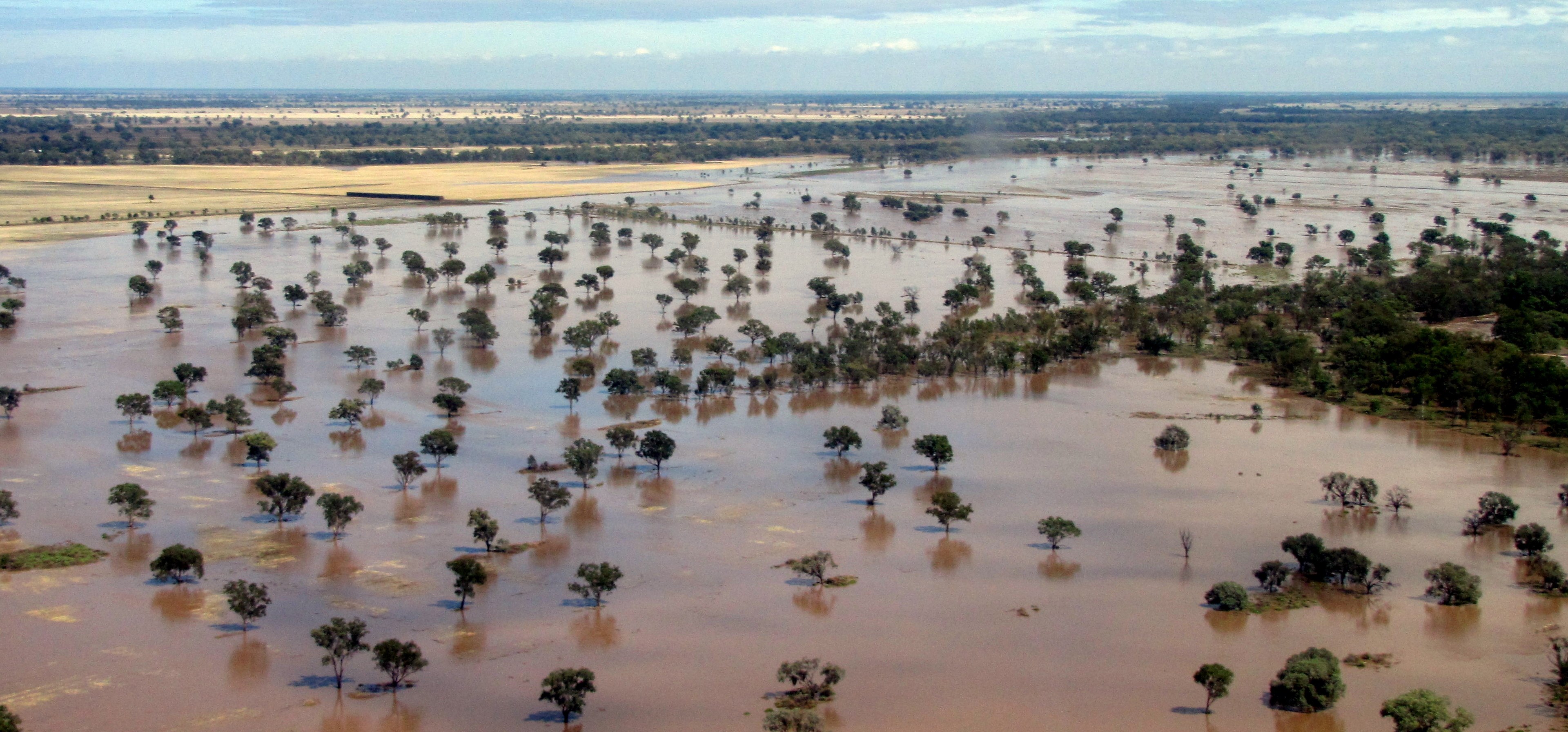
The Insurance Council of Australia has declared the flooding occurring in the sodden central-west NSW town of Forbes and surrounding areas a catastrophe, indicating the damage from the disaster is likely to cost local businesses owners and residents tens of millions of dollars. The news comes as locals brace themselves for another 40-50mm of rain later in the week, which could cause further damage. A major flood warning is still in place for the Lachlan River, which peaked overnight at 10.67m, slightly higher than the area’s last major flood event in August 1990. The river is expected to stay elevated for several days. Premier Mike Baird visited Forbes today with Minister for Emergency Services David Elliot and praised the “resilient” community. “They’ve seen floods before. They know it can be difficult but they are determined to help each other get through it,” he said. “ “In terms of the briefings we had, it’s clear there is more rain coming. That’s obviously bad news. It’s not clear whether there will significant additional rising but there certainly is a risk of more rising water. That is something we need to be prepared for on the ground here,” he said. He said the event would likely be classified a natural disaster which would unlock additional funding assistance for those affected. “We’ve announced Dave Owens as co-ordinator for the recovery and clearly we’ve still got a few days to get through yet. But clearly as recovery goes through we will ask him specifically to look at how insurers are operating and working with the local community,” said Mr Baird. The Insurance Council of Australia CEO Rob Whelan said the insurance industry has escalated its response to help policyholders in Forbes and the central-west. “Early reports indicate the region has suffered extensive crop losses, while about 100 businesses and homes may also have been affected by flooding,” Mr Whelan said. “It’s likely that insurance losses will be in the tens of millions of dollars. However, it will take several weeks for the full extent of the losses to be known. He said it is yet to be determined how many farmers had purchased policies which covered damage to crops, but advised that insurers will use independent hydrologists to determine if the losses “can be covered under other provisions of their policies” The SES continue to stress the floodwaters are behaving differently to those that have affected the town in the past, and have advised locals to keep their eye on the weather as conditions change. Forbes locals say the water normally flows through town, dividing it in two, but this event has seen floodwaters flow into areas previously thought safe. Condoblin and surrounding areas are set to be the next hit by floodwaters, with the river at the small town expected to peak around Friday at 7.3m, which is classified as major flooding. [caption id="" align="alignnone" width="650"] Jo Rugg and Matt Robb resort to their dinghy for transport along the Lachlan Valley Way in Forbes. Picture: Ryan Osland[/caption] Years to recover from floods Farmers and homeowners across central western NSW fear it will take them years to recover from devastating floods that have swept the region, with further rains expected within days and emergency services preparing to remain in place for weeks. Hundreds of people living in and around the towns of Forbes and Condobolin have already been forced from their homes by the rising water, and hundreds more residents could be evac­uated in the coming days. More than 100 properties in the towns have been damaged, and millions of dollars worth of crops may have been ruined. With NSW Premier Mike Baird due to visit Forbes today to assess the damage, the State Emergency Service yesterday said it had performed 96 rescues, and would need to continue its operations in the area until ­November. About 230 emergency services personnel have so far been ­deployed to Forbes, population 8000, with the SES organising resupply operations for those in ­isolated farms and other properties after floodwaters cut across several roads within the Lachlan River catchment. The army has also sent five high-clearance trucks and soldiers from the 5th Brigade to help those trapped. Locals Jo Rugg and Matt Robb got out the dinghy, cracked a couple of beers, and drifted down the street as they tried to put a positive spin on the situation. “There’s not much you can do about it so you just have to go with it,” Ms Rugg said. The couple said Defence Force members from Sydney had brought army trucks to their street and had helped their neighbours move possessions. While many farmers have been unable even to begin assessing the damage done to stocks and crops, local resident Gavin Montgomery said it would take years for those who live here to recover. “There are people who have lost entire crops. These people have lost so much, and they are farmers who have been here a long time,” he said. “They’ve invested money to get land ready for the summer crops. There is a window for planting things like cotton, it has to be planted by early October but now they won’t be able to get tractors and machinery on the land.” The rising waters, which in Forbes yesterday exceeded the 10.65m level reached in the 1990 floods when 132 properties were swamped, have also proved difficult to predict. “It depends on what happens with the rainfall and how it impacts on the river system,” SES spokeswoman Sue Pritchard said. “We are rostering our people across for next month or so, the state is so saturated, and dams are all full.” Brie Roylance, a mother of three whose family abandoned their shop in the town centre on Saturday night, said it would take months before they were back on their feet. “Many of our customers are from the farming community so while the town might be OK, lots of farmers can’t get on with their crops,’’ Ms Roylance, who runs a local mechanic workshop, said. “It’s a domino effect when you are in business especially. Local snake catcher Paul Newcombe spent yesterday responding to calls from the community. “(The snakes) have been pretty subdued, they are on the edge of floodwater, tied up in a fence, wrapped around a tree. I just pull them off a tree and find somewhere dry and let them go,” he said after pulling a red-bellied black snake from floodwaters. He hasn’t let people pay him for him services this week. “I’m just helping out. We all pull ­together here,” Mr Newcombe said. [caption id="" align="alignnone" width="650"] Forbes snake catcher Paul Newcombe is in demand. Picture: Dylan Robinson[/caption] The owners of more than 100 properties at Ungarie, about 140km southwest of Forbes, have also been ordered to leave. A further evacuation warning has been issued for 20 properties in Condobolin, about 100km west from Forbes along the Lachlan River. Source - http://www.theaustralian.com.au

26.09.2016

USA - Too much rain is slowing harvest of Wisconsin potatoes

“Up until two weeks ago, growing conditions were quite nice, but we are struggling through a very warm and wet September to get the remainder of the crop harvested and put in storage,” said Andy Diercks of Coloma Farms. “The normal weather in Wisconsin presents enough challenges for growers with warm nights and high humidity, which contribute to increased risk of pest and disease pressure, like late blight. There was some limited late blight in the state this year but it shouldn’t present any issues for most growers. However, the heavy rains most areas have received over the past three weeks certainly may contribute to some storage challenges.” “Right now, the grower returns are above our cost of production, but there is mounting pressure for prices to go down. The problem is how quickly the market responds to any news of a big crop, especially in Idaho. Both the yields and the tuber size of the crop in Idaho are larger than expected, so the nearly immediate reaction is to lower prices in hopes of moving more product into the market,” added Diercks. “In Wisconsin, we have a very manageable crop due to the good growing conditions so we’ll do the best we can to keep regional prices above cost of production.” Source - http://www.freshplaza.com

26.09.2016

Panama - Winds destroy banana crops

A significant portion of Panama’s banana cultivation has been damaged by winds that pummeled the country’s Atlantic coast near the Costa Rican border last week. Atlantic Banana Cooperative (Coobana) labor director Chito Quintero said the wind and rain hit the Bocas del Toro region on Sept. 21. “For every hectare planted there are 2,000 plants, of which the wind put down 150 plants per hectare,” Quintero said. Coobana itself has around 550 hectares of Fairtrade-certified banana production, and Quintero expects to record losses in the order of US$2.5 million. The main destinations for the cooperative are England, Switzerland, Italy and New Zealand. “The winds have calmed down and the days are normal now,” Quintero added. The representative said there were initiatives in place for growers to insure their farms, however due to the high premiums no member of Coobana had insurance. He said the main result would be a rise in banana prices and fewer shipments overseas. “We will end up exporting five containers per week. We were exporting 20 containers per week,” he said. Source - http://www.freshfruitportal.com

840
of 1225