NEWS
879
of 1225
News
23.03.2016

Colombia - Two outbreaks of HLB infected insects

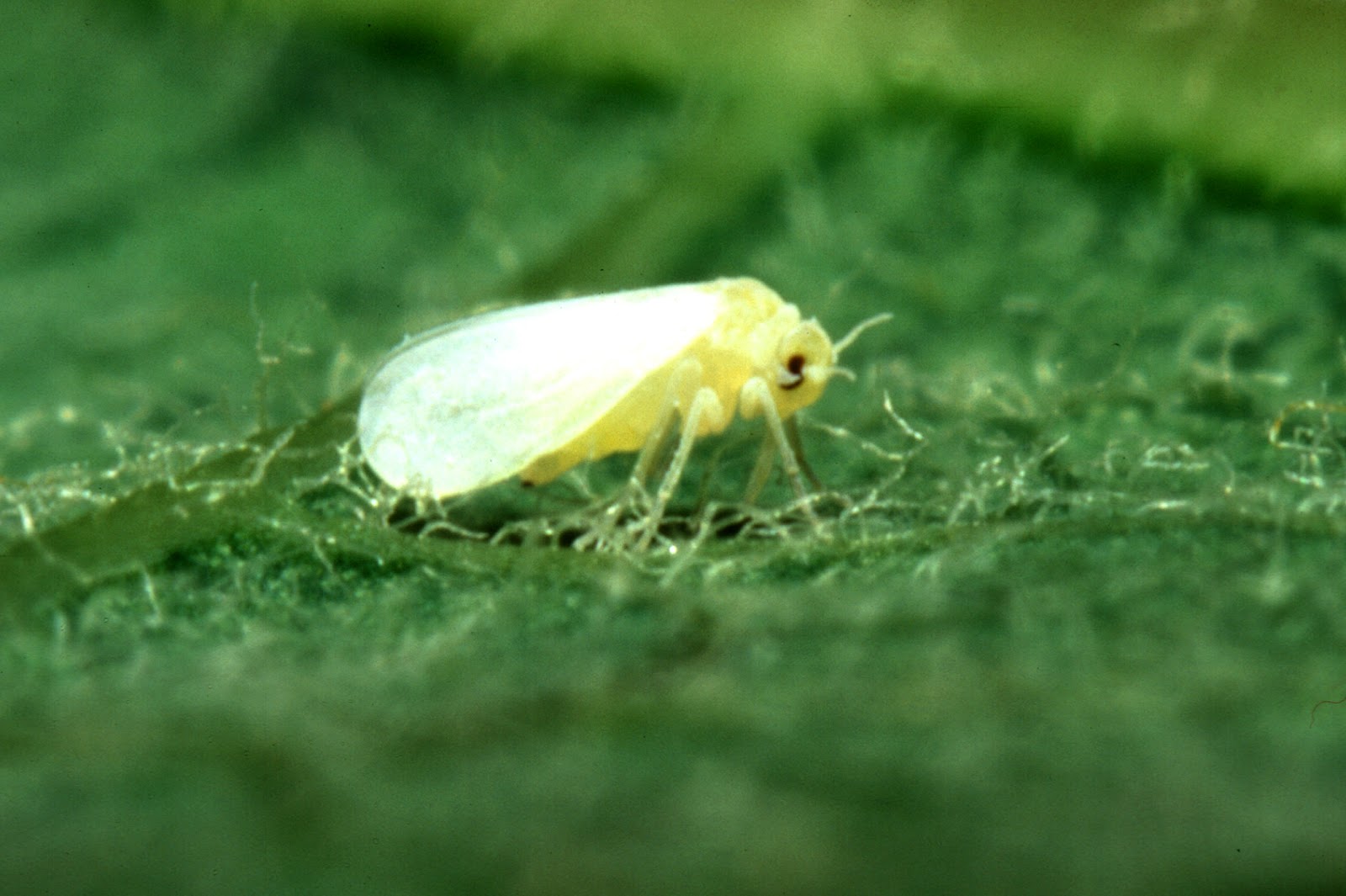
Since there were two outbreaks of HLB infected insects in different parts of the country, the Colombian Agricultural Institute (ICA), Caqueta section, made public the measures to control the disease affecting citrus crops. Even though Caqueta is currently free of HLB, the ICA held a training on Monday to socialize Resolution 2390 of 2015, regarding Colombia's current state of sanitary emergency because of the Diaphorina citri insect, which transmits the Huanglongbing in citrus crops. Pedro Antonio Luna Lopez, an agronomist responsible for the citrus and sugarcane projects in Caqueta, spoke about the aggressive disease and the importance of preventing it. Prevention Following the rapid widespread of the disease, the ICA has strengthened its actions. They will perform insecticide spraying and biological controls to control it once the vector enters the department. After that, farmers and nurserymen must commit to disinfect their citrus material with insecticides registered at the institute. "We will take measures regarding the entry of citric material, road police will demand phytosanitary licenses to people transporting citrus; in addition, we will continue surveillance and control in crops of cocoa, coffee, rubber, banana, sugarcane and other minor species," the ICA stated. To date, the HLB disease has no cure. To prevent it, producers should buy certified propagation material in nurseries and maintain control of the citrus products entering their farms. Source - freshplaza.com

23.03.2016

India - Walkout by Cong MLAs over crop insurance distribution

Opposition Congress legislators on Tuesday staged a walkout in Chhattisgarh Vidhan Sabha over distribution of compensation and crop insurance to drought-affected farmers. Raising the issue during Question Hour, Dhanendra Sahu (Congress) asked agriculture minister Brijmohan Agrawal as to how many farmers have been covered under the crop insurance scheme during Khariff 2016 and how many districts were covered under it. He also sought to know how much premium was deposited by farmers and how much was given by government. In his reply, Agrawal said that 2,176 hectare land had been insured and premium was charged at the rate of Rs 1,000 per acre. He said 75% premium was paid by farmers while 20% was paid by state government and 5% by Central government. The minister said payment of about Rs 500 crore is pending for disbursement against crop damage under crop insurance policy and it is likely to be distributed by insurance companies in next two months. Sahu asked how did government assess total crop damage as the actual survey report of crop loss is yet to be released. The minister replied that as per provisions, compensation is being provided for non-irrigated and irrigated land to farmers under drought-relief measures. Sahu alleged that without assessing the actual crop damage physically, how did Patwaris submit survey report in this connection. The minister said crop anaawari (estimate) report doesn't have any role to play as state government, under modified Rule 6-4 RBC, has taken farmer as a unit for crop loss assessment. Senior Congress legislator and party's state chief Bhupesh Baghel questioned that Centre had allocated Rs 1,200 crore for drought relief measures but only Rs 450 crore has been distributed. "The state government is deliberately not releasing the actual report," Baghel alleged. Opposition Congress then challenged state government to prove that actual survey of crop damage due to drought has been undertaken even in a single village. But minister maintained that state government is committed to the cause of farmers and every farmer in drought-affected area is being given compensation as per revised norms. Dissatisfied with the reply, Congress legislators raised slogans and staged a walkout. Source - timesofindia.indiatimes.com

23.03.2016

Mexico - Peach and lettuce damaged by cold

The Secretariat of Agriculture, Livestock, Rural Development, Fisheries and Food (SAGARPA) stated that the crops in Zacatecas, especially of lettuce and peach, had been affected by the cold weather conditions experienced in the state. According to the report, the cold weather affected 300 hectares devoted to peach in the municipality of Fresnillo. Fortunately, the crop was affected at a time when there was only a 5 percent bloom. Producers, however, believe it is still possible to rescue the crop with a new flowering. Based on data from previous years and the weather conditions this year, producers also expect fruit sizes will be bigger at the end of the season. The weather also affected 15 hectares of lettuce crops in the municipality of Villa Hidalgo; however, the damage only occurred in the leaves covering the vegetable, so the product can be fully recovered. According to Sagarpa, the rainfalls will favor the development of grass in some of the rangeland in the state. Additionally, the snow and hail will also reduce wildfires in a high percentage. Zacatecas is one of the states with the largest peach production nationally, just below Michoacan and the State of Mexico. The entity ranks third in lettuce cultivation, only surpassed by Aguascalientes and Guanajuato. Source - freshplaza.com

23.03.2016

Turkey - Frost worries hazelnut growers

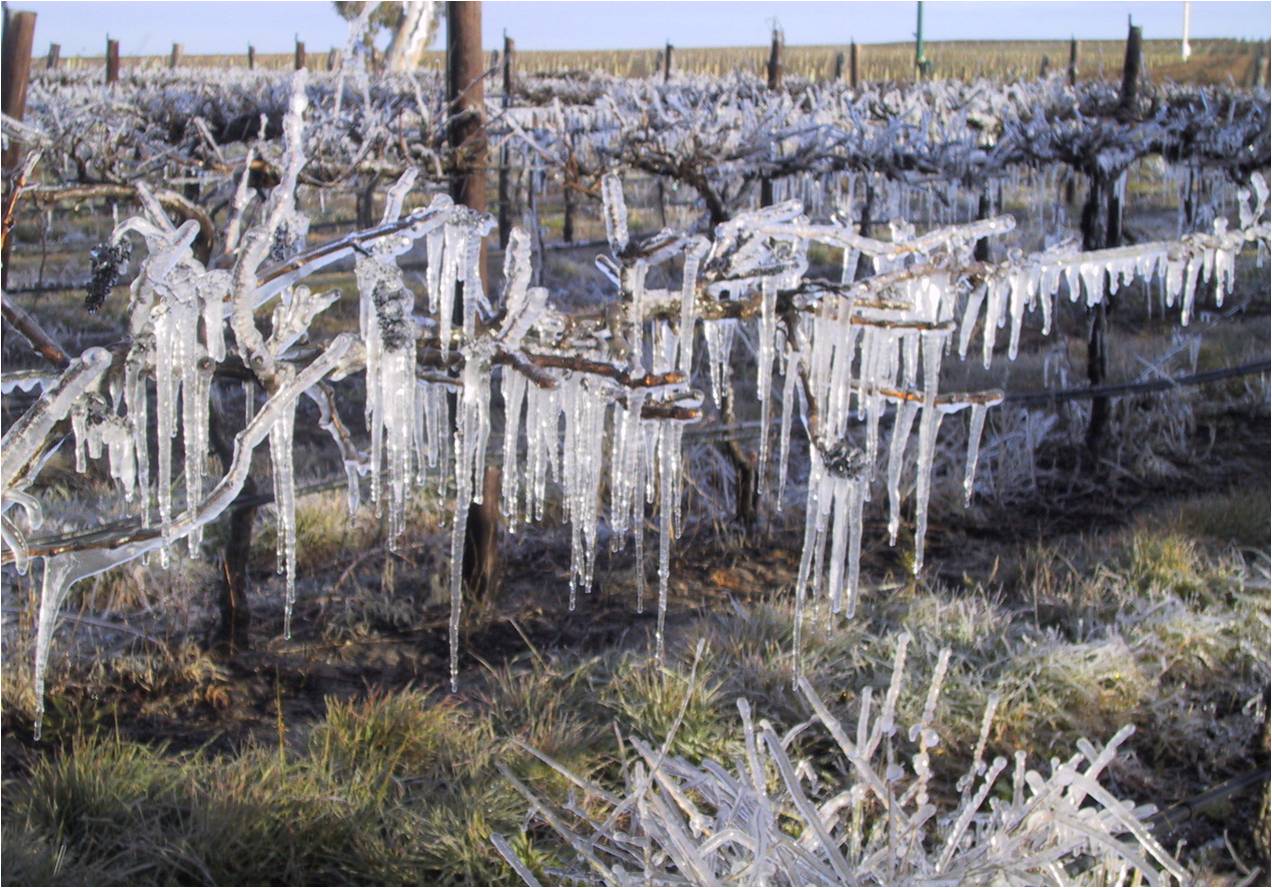
Recently, Ordu, on the Black Sea coast of Turkey, has been experiencing spring weather, but according to the latest meteorological report for the Samsun region, from the beginning of the week a warning concerning cold and rainy weather will come into place. According to the most recent assessments, from the evening of Monday 21 March, the whole of Turkey is expected to feel the effects of cold air coming from the Balkans. For the Black Sea region, rain and snow are predicted, with the larger part expected to fall in the form of snow. The mix of rain and snow is expected to affect the Ordu province in particular and temperatures in the inland areas are expected to decrease by between minus six and minus 12 degrees. According to the meteorological warning, the rainfall combined with cold night temperatures will cause ice to form and increases the risk of frost; meaning that those engaged in agriculture need to be cautious. This situation is particularly worrying for hazelnut growers who have been disappointed by prices this season and now fear for the hazelnut harvest in the upcoming season. To try to reduce the frost risk in their orchards, hazelnut grows are burning straw and tires. Two years ago, on 30 March 2014, Ordu suffered a huge loss of hazelnut yield due to frost; only 65,000 tons of hazelnuts were harvested. Source - freshplaza.com

23.03.2016

India - Crop insurance pilot project in three districts soon

An Asian Development Bank-funded weather-based index crop insurance is set to roll out in three districts vulnerable to crop losses during heavy rainfall or drought. Farmers of 20 upazilas of three districts -- Rajshahi, Sirajganj and Noakhali -- will be brought under it. "We're expecting to launch the pilot project from June next as we've already got required permission to install weather-related equipment on rooftops of the 20 upazila buildings owned by the local government division," said Wasi Ul Hoque, project director at the Weather Index-Based Crop Insurance, or WIBCI, at the Sadharan Bima Corporation (SBC). He said it will require at least two months more to install the equipment relating to measure the magnitudes of rainfall or drought. The farmers of the three districts will pay premiums to the SBC which will provide compensation on the basis of results of the weather stations. Farmers in the country are at the mercy of weather as they are helpless during natural disasters. The project has targeted small and marginal farmers who are most vulnerable and suffer seriously when weather turns hostile. More frequent droughts, more intense flooding, and more regular storms take a heavy toll on farmers. Cyclone Sidr, which hit Bangladesh in 2007, for example, destroyed about 95 per cent of crops in coastal districts. Farmers of the Sidr-affected areas were not able to protect themselves as traditional insurers could not find a suitable way of reaching the small and marginal farmers or evolving crop insurance suitable for them in remote areas. Most of the victims do not know how to protect themselves. They in most cases do not have any collateral to offer. However, the ADB thought, the project piloted in selected parts of Bangladesh, if turns out to be successful, could gradually be replicated countrywide. The project is set to end in June next but is expected to be extended by one year. Neighbouring India and all advanced countries including the USA have similar weather index-based crop insurance. The ADB and the SBC undertook the move to launch crop insurance in 2013. The Bank is funding major part, worth Tk 160 million, while the government will give nearly Tk 50 million. It is believed that about half of Bangladesh's workforce is engaged in agriculture but around 75 per cent of the total population and 80 per cent of the country's poor -- live in rural areas and depend on agriculture in one way or another. Source - thefinancialexpress-bd.com

22.03.2016

USA - A closer look at crop insurance premium subsidies

What do strawberries, fresh market tomatoes and onions all have in common? In terms of the average federal premium subsidy per crop insurance policy in 2015, these crops top the list, according to a recent analysis by Mississippi State Agricultural Economist Keith Coble. The average subsidy was $39,169 for crop insurance policies covering strawberries, $39,064 for fresh market tomatoes and $36,845 for onions. At the lowest end of the scale? The average premium subsidy for tobacco growers in Maryland was only $44. The data come from USDA’s Risk Management Agency’s Summary of Business report for 2015 and reflects the direct reduction of premiums provided to farmers. It does not include administrative and operating expenses paid to the insurance companies. Coble’s analysis sheds an interesting light on the debate over the appropriate level of premium subsidies at a time when critics continue to attack the crop insurance program. And USDA’s Risk Management Agency—driven largely by the 2014 farm bill—has been extending the crop insurance program to more growers of high-value fruits and vegetables, both conventionally grown and organic. Crop insurance policies covered only about 17 percent of the fruit and nut acreage in 1990, but that market share grew to 74 percent of the acres by 2014, pointed out RMA Administrator Brandon Willis during a recent presentation. During that same period, the number of vegetable acres that were covered more than doubled, but still represented only about 990,000 acres, or 36 percent of the total acres planted in 2014. For many vegetable crops, RMA has not yet developed policies because of inadequate data or because producers have expressed concerns that a risk management policy could encourage farmers to plant more acreage and conceivably drive down prices. However, that attitude has been changing and more grower groups are asking RMA to take another look, says the agency’s Deputy Administrator for Product Management Tim Witt. For example, he cited Western Growers’ recent interest in working with RMA to improve crop insurance policies for strawberry growers. Witt says there’s also been a lot of interest among vegetable growers in Whole Farm Revenue Protection, which covers multiple crops. On coverage options between 50 and 75 percent, the subsidy rate is 80 percent, compared to an average premium subsidy of about 62 percent for all crop insurance policies. “In many cases, the subsidy is high for large specialty-crop farms where the crop is also high value,” Coble explains. “If all other factors are equal, the subsidy will be greater if there are more acres, higher value, higher coverage level, enterprise units and higher rates.” Looking at premium subsidies by crop, the bulk of producer subsidies are still for corn, wheat, soybeans and cotton—accounting for about 80 percent of total federal investment in 2013, according to a Congressional Research Service report. Still, expansion into new crops and new regions—an effort that RMA started about 25 years ago—seems likely to continue. But the analysis by Mississippi State’s Coble could prompt even more discussion about capping subsidies per policy—a debate that’s surfaced several times in recent years. For example, Sens. Jeanne Shaheen, D-NH, and Pat Toomey, R-PA, introduced a bill in 2015 that would place a $50,000 a year cap on the premium subsidies a person or entity can receive. Ferd Hoefner, National Sustainable Agriculture Coalition’s policy director, agrees with RMA’s expansion of subsidized crop insurance, but supports premium subsidy caps. “It is true, of course, that higher value crops, even at the same subsidy percentage level, will have higher premiums and hence higher premium subsidy amounts, as well. In our view, that does not mean there shouldn’t be subsidy caps,” Hoefner said. “Like nearly every other federal entitlement program, there should be limits and eligibility rules. The days of open-ended entitlements are rapidly drawing to a close. That said, the tools used to target the subsidies in the next farm bill should be sensitive to considerations such as crop value per acre.” But Tara Smith, vice president of federal affairs for the Crop Insurance and Reinsurance Bureau, disagrees, pointing out that caps on premium subsidies could indirectly impact every single producer and drive more out of the program—raising costs for those who remain. “Some of the highest value crops are specialty crops or even organic crops, which means they will often be hardest hit by ill-advised premium assistance caps. This is in complete contradiction to 2014 farm bill efforts to provide meaningful risk management protection to specialty crops, organic producers, and other underserved segments of the agriculture community,” says Smith. Tom Zacharias, president of National Crop Insurance Services, emphasized that, in total, U.S. farmers pay approximately $4 billion out of their own pockets for crop insurance protection. “Premiums are discounted to ensure that crop insurance is available and affordable for specialty crop growers, and farmers in general. Legislation that would increase farmer-paid premiums would hurt farmers at a time when farm income has been falling and high-value specialty crop growers would be disproportionally affected.” Source - hpj.com

22.03.2016

India - 2,000 crore increase in allocation for farm sector

In an attempt to de-stress the distressed rural sector and enable it to meet the economic challenges, the Haryana budget has enhanced allocation for the agriculture and allied sectors by 13.71%. Finance minister Captain Abhimanyu has allotted Rs 13,494 crore for 2016-17 in the budget in comparison to Rs 11,444.41 crore for 2015-16. The announcement has come at a time when the farmers in Haryana are facing severe crisis following crop failures because of heavy rains coupled with hailstorms. The state had also witnessed suicides by several farmers after the crop failure in 2015. Presenting his budget proposals in the state assembly on Monday, Capt Abhimanyu said that the outlay for agriculture had been hiked to realize the vision of Prime Minister Narendra Modi, who aimed to double the farmers' income within five years. Haryana also increased its share by 54% for various central government schemes like Rashtriya Krishi Vikas Yojana, National Food Security Mission, National Mission on Agriculture Expansion and Technology, National Oil Seed and Oil Palm Mission. The allocation under the Centre's schemes of National Mission for Sustainable Agriculture and the Soil Health Card Scheme has also been increased from Rs 4.56 crore to Rs 15.02 crore. For different schemes to promote the horticulture sector, the allocation has been upped to Rs 378 crore from Rs 239.45 crore of 2015-16. Welcoming the launch of the new farm insurance scheme 'Pradhanmantri Fasal Bima Yojana', he said it would go a long way in providing financial support to the farmers in the event of failure of notified crops because of natural calamities, pests and diseases. A sum of Rs 300 crore has been proposed for the scheme. Capt Abhimanyu has proposed Rs 50 crore in the first instance for setting up a horticultural university in Karnal. The grant-in-aid for the Haryana Agricultural University has also been increased. "The Haryana government not only enhanced the compensation rate per acre but also widened the scope for coverage of the crops damaged due to floods, standing water, fire, electric sparking, heavy rains, hailstorm, dust storm and whilefly attack," said the minister. Source - timesofindia.indiatimes.com

22.03.2016

India - Buzz on crop insurance strong, but farmers want more details

With crops having affected by recent unseasonal rains and hailstorm in some parts of north India, the Centre's new crop insurance scheme has created a buzz among farmers attending the 'Krishi Unnati Mela' in the national capital but its details still elude them. Most farmers attending the three-day mela that ended today at Pusa campus wished to know more about the Pradhan Mantri Fasal Bima Yojana (PMFBY) so that they can think of taking insurance cover for kharif crops to be sown from June. The PMFBY will be rolled out from next month across the country. Under the scheme, farmers' premium would be up to 2 per cent of the sum insured and claims would be settled early. "We have heard through Modi's speeches that a new crop insurance scheme has been launched. We don't know the details about it. If such a scheme is there, I am ready to take the policy this time," said a 56-year old farmer Jagdish from Atail village in Rohtak, Haryana. Jagdish, who has grown wheat and onion this time on his five acres of land, said he is keen to go for the insurance cover for his crops as he has incurred losses because of hailstorm and unseasonal rains in last few days. He said it was his second visit to the mela and found nothing interesting this time though the annual event has expanded length and breadth as compared to the previous year. As Jagdish left mela purchasing some vegetable seeds for the next season, another sugarcane farmer Rajveer Singh from Meerut, Uttar Pradesh said: "We have no information about the new crop insurance scheme in our village. We want to know the details so that we can buy the policy." The cane farmer, however, was happy that his dues have been cleared by Daulana Sugars Mills till February even as he demanded increase in cane support price next year. Keen to know more about the crop insurance scheme, one UP-based farmer said he saw an hybrid papaya variety in the mela and wanted to know if vegetables are covered under the crop insurance. "If so, I will think of taking insurance cover this time," he added. He grows wheat, paddy and some vegetables on one hectare of farm land in Gautam Budh Nagar. Besides individuals, there were several groups of farmers and extension workers who visited the mela. For instance, a group of 'Krishi Sakhi' from Rajasthan's Alwar district was there gathering information at different stalls. The Krishi Sakhi, which is associated with an NGO Ibtada, visits farmers in villages to create awareness about agriculture. The group was visiting mela for the second straight year and said there were more stalls this time and better display. Interestingly, the annual mela continued to be a place for farmers to buy new varieties of seeds even as the government tried this time to hold workshops and seminars to create awareness about new programmes like soil health, irrigation and crop insurance scheme. More farmers had thronged stalls selling seeds and other farm inputs. They were seen taking note of new seed varieties to plan for sowing in the next season but hardly holding leaflet on crop insurance or other schemes. This proves that the government needs to create more awareness about the programme at the grass-root level. Source - business-standard.com

22.03.2016

India - Government may impose penalties for delay in settling crop insurance claim

The government may impose penalties for delaying claim settlements under its new crop insurance scheme in an effort to remedy shortcomings in earlier insurance programmes, top officials said on Tuesday. The government in January launched a new crop insurance plan beginning in the summer season in June that is expected to cover half of India's 263 million farmers in the next two to three years. The insurance plan is critical for Prime Minister Narendra Modi's plans to woo the 70 percent of India's 1.3 billion people living in the countryside during upcoming local elections later this year and in 2017. The government is looking at imposing penalties for delaying farmers' crop settlement claims, Financial Services Secretary Anjuly Chib Duggal said today at a conference, trying to address a key reason behind the failure of earlier crop insurance programmes. Agriculture accounts for about 14 percent of India's nearly $2 trillion economy but employs about two-thirds of its people. However, farmers have suffered under a combination of lower food inflation in India, a sharp fall in global commodity prices, reductions in government subsidies and unfavourable weather conditions Sensing rising anger in villages, Modi and his ministers worked out a new crop insurance plan which is aimed at faster settlements by adopting the use of technol .. The crop insurance plan is critical because of poor monsoon rains in last two years, Finance Minister Arun Jaitley said at the conference. In his Feb. 29 budget, Jaitley earmarked 55 billion rupees ($826.45 million) for implementing the crop insurance plan in the 2016/17 fiscal year. ($1 = 66.55 rupees)Anjuly Chib Duggal said on Tuesday. The government in January launched a crop damage insurance plan to give a shield to millions of farmers who suffer when their crops fail. Prime Minister Narendra Modi is banking on the insurance plan to woo rural India, a key to his ambition to win a number of state elections in the next two years. Source - economictimes.indiatimes.com

22.03.2016

Chile - Algae blooms destroying the salmon begins to recede

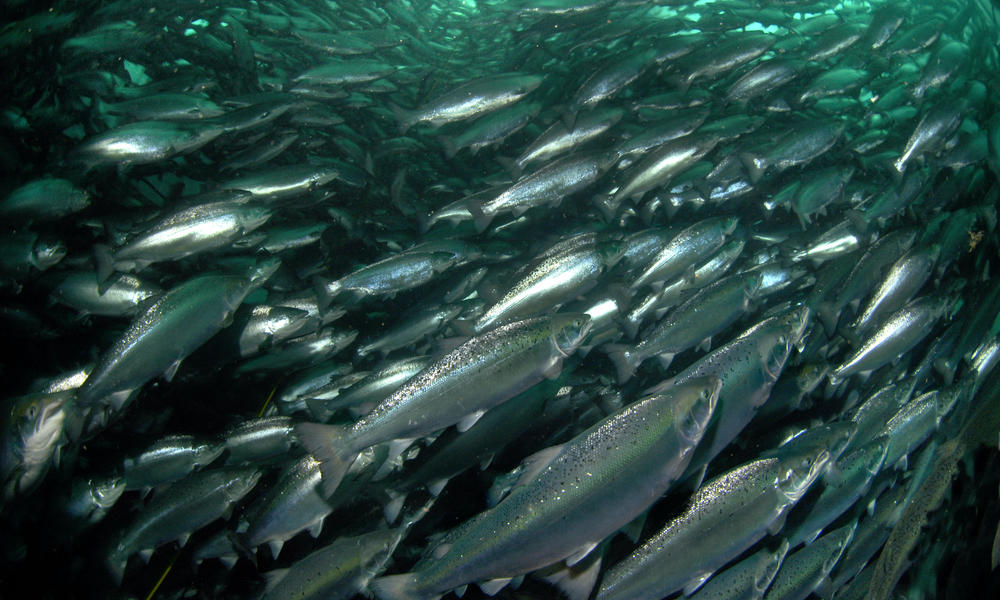
The company raises salmon, has suffered losses of about $800 000 million Algal blooms in Chile, which killed up to 20% of farmed salmon in the country and has led to increased world prices began to recede along with the deaths of fish, said the government of Chile at the end of last week. Scientists reported that the number of algae decreased, it was also found that the deaths of the fish has stopped, said the leadership of the government fisheries Department. Chile is the second largest producer of salmon and trout after Norway. The government reported that companies engaged in the breeding of salmon that suffered production losses at the level of approximately 100,000 tonnes worth about $800 000 million Abnormally warm weather and lack of rain due to the weather phenomenon El niño have been identified as factors contributing to algal blooms. In southern Chile has started raining, typical for the end of summer that cooled ocean temperatures and reduced reproduction of algae. The drop in the production of Chilean salmon made the prices rise by 25% to$ 5 per pound last week in Miami, the reference market for the industry. The shares of many producers of farmed salmon, operating in Chile has increased in tandem with prices in the last two weeks. Chilean company, aquachile stock, Blumar, Camanchaca, Australis Seafoods, Multiexport Foods, invermar stock and the local division of the Norwegian company Marine Harvest in Chile owned farms for the breeding of salmon. Source - agro2b.ru

22.03.2016

Canada - Alberta to launch malt barley insurance

Alberta is set to launch Canada’s first crop insurance product for malt barley this year. The province’s Agriculture Financial Services Corp. (AFSC) last week said it will now provide insurance coverage for a malting end-use for growers with malt barley contracts. The coverage is subject to a contract from a licensed buyer, with a minimum of 40 tonnes contracted, AFSC said. However, clients won’t be able to insure both malt barley and commercial barley for the same crop year. If both malt and feed barley varieties are grown on the same farm, coverage will be restricted to commercial on all barley acres a producer grows. Among other changes for 2016, organic producers will now be eligible for production insurance, through a new option that will work “similarly” to AFSC’s standard production insurance programs. AFSC’s annual insurance program has been changed to include winterkill as a designated peril for pedigreed alfalfa seed production loss insurance. Individual coverage will now be available through the bee overwintering insurance program. More changes will also be made to field pea insurance “as the crop shifts to an edible end-use,” AFSC said, and a new distinct category will be set up for yellow dry beans. AFSC clients will also see a 14 per cent increase in dollar coverage per acre in 2016, the province said, due to “a combination of increasing spring insurance prices and yields.” Source - canadiancattlemen.ca

21.03.2016

Ukraine - Crucial week for stonefruit orchards

The future of Ukrainian stonefruit orchards depends on the weather situation in the coming week, with growers nervous that they could again suffer losses, according to Fruit-Inform. Weather conditions are one of the main factors to shape the future of stonefruit orchards in spring. Abnormally high temperature were registered in several countries in February-March, which provoked early blossoming of stonefruit trees and an expected cold spell could be a major threat to those crops. Similar phenomenon was observed in the southern regions of Ukraine and Russia in the beginning of last year. Sharp drops in temperature in January 2015 and a cold spell in March and April resulted in significant losses of stonefruit crops in the southern regions of Ukraine. According to growers' estimations, some farms lost up to 90% of their crops. There have been no reports of early blossoming of stonefruit trees in Ukrainian orchards yet. However, growers say that it is too early to relax. ''Trees are still at rest. However, everything will depend on the situation in the coming week. If blossoming starts, and the temperature reaches critical three degrees below zero, then we will have to worry,'' says a grower from Kherson Oblast. Source - freshplaza.com

21.03.2016

Australia - Fruit fly numbers down

In the Sunraysia district fruit fly numbers are down this year, compared to same time last year, according to the Greater Sunraysia Pest Free Area Industry Development Committee. Michael Tempini, the stone fruit grower representative on the committee, said there had been a “fair few” fruit fly outbreaks but overall numbers were down. The Greater Sunraysia PFA lost its pest-free status in April 2014 when more than 30 fruit fly outbreaks were detected. “We have been doing a mass trapping program and numbers are particularly down in the townships,” Mr Tempini said. “We’ve seen an increase in the number of flies per trap per week so the traps are attracting the flies and we’re encouraging everyone to put them out.” Despite the numbers decreasing Mr Tempini said the fly distribution had spread and there were people seeing damage this year that hadn’t seen damage last year. The Department of Economic Development, Jobs, Transport and Resources said there had been about 30 fruit fly outbreaks in the Greater Sunraysia PFA this year. “Each new outbreak has been confirmed to be located in an area of the PFA that is currently affected by an existing fruit fly outbreak quarantine zone,” a department spokesman said. “The department is continuing to work with the Greater Sunraysia PFA Industry Development Committee to guide the role out of pest eradication activities across the PFA region.” Source - freshplaza.com

21.03.2016

India - Tarigami demands assessment of losses due to incessant rains

Expressing concern over loss of livestock and damage caused to the blossom of crops due to heavy rains, CPI(M) senior leader and MLA, Mohammad Yousuf Tarigami has urged the administration to make immediate assessment of the losses and to provide relief to the affectees of this natural calamity. In a statement issued today, Tarigami said that the heavy incessant rains have caused loss of livestock in some parts of the state, besides crops have also been affected due these rains.  Generally livestock rearers and farmers are vulnerable to natural calamities that tell upon their economies.  Livestock and crop insurance policies could have been the only means to provide succor to them, which unfortunately await formulation and implementation in the state. Referring to the devastation caused by incessant rains to the residential houses and damages to other properties including cultivatable land, Tarigami urged the present dispensation in the state to come out with a comprehensive strategy for immediate compensation to the affected families. The rains have also affected the means of communication especially the road transport across the state and blockade of Srinagar-Jammu National highway and Batote-Kishtwar road have halted large number of passengers without any facilities extended by the respective divisional administrations.  He appealed the administration to come to the rescue of the held up people by providing free necessary amenities to them at all halting points. Source - dailykashmirimages.com

21.03.2016

Australia declared war on the Dingo, destroying flocks of sheep

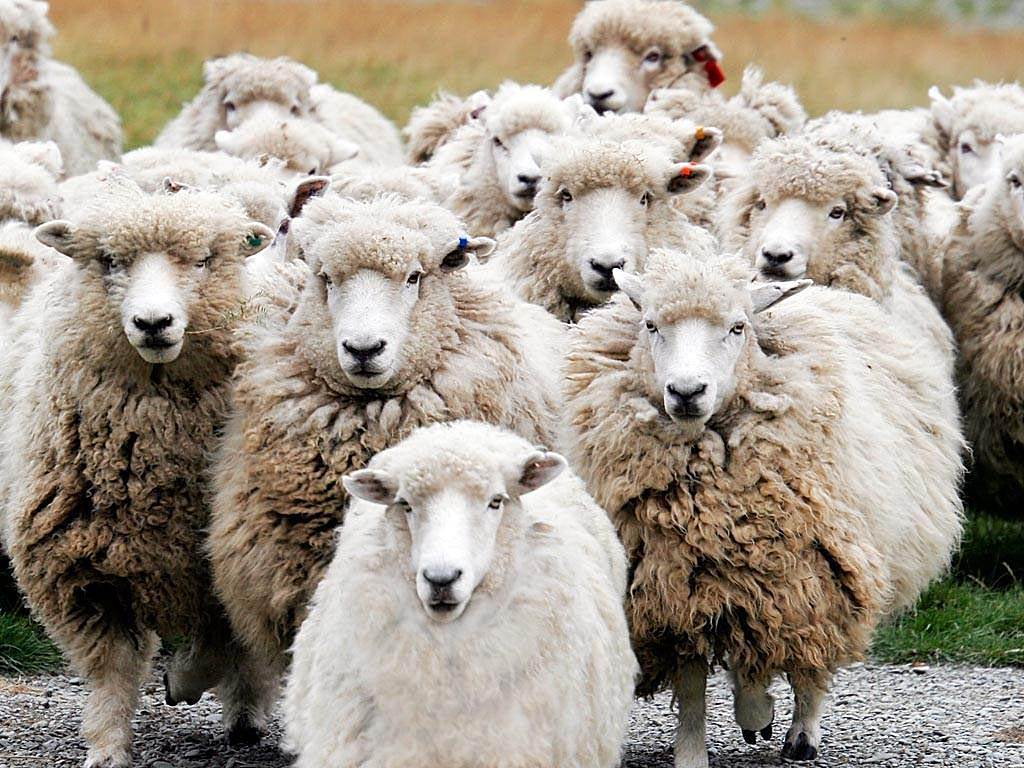
The Australian government has pledged A$5.2 million ($3,88 million) to help farmers to combat wild dogs attack which complicate the work of the industry, trying to recover from a severe drought that has reduced herds. Wild dogs are estimated to cost the agricultural sector of Australia in A$66 million each year, destroying livestock and passing of the disease, reported the Ministry of agriculture in a press statement. Australia is the third largest country for the production of sheep in the world, where the number of sheep is three times the number of residents. However, the sheep population has decreased in two times since the 1990s to 70 million animals due to dog attacks and the consolidation of the industry. Dogs are mainly crossed the pack of wild dogs and dingoes, Australian local dogs and the Dingo pack. Such groups are able to kill 40 sheep per night, and destroyed hundreds of thousands of sheep over the past few years. In some areas, wild dogs may be the biggest problem of the sheep industry, said the management of the industrial organization of Innovation in the field of wool. The Australian state of Queensland was the third largest state in production of sheep ten years ago, with 20 million animals, but was badly damaged by attack dogs, which in the state of only 5 million sheep currently, according to industry experts. One of the producers of wool in Queensland who have lost during the year 1 500 sheep, reported that he how to stop dogs, and devotes time to other business aspects. Queensland is now the most little state in production of sheep in New South Wales and Victoria are more than half the national herd, showed data of the consulting firm Neil Clark. Wild dogs are the motive for some farmers to stop farming business sheep, according to the representatives of the programme for the control of wild pests in Australia. The funds allocated for the fight against wild dogs are part of a national programme of pest control value of A$25.8 million The funds will help Finance the construction of fencing around farms that you do not miss the predators, the government has said. Other preventive measures include the spreading of poison baits, shooting and special protection of animals such as alpacas, llamas and donkeys. Exports of sheep meat and wool are projected to reach A$6.2 billion this season, said the Australian Bureau of economy and scientific research of agriculture and natural resources (ABARES), representing 10% of the national income from agriculture. Source - agro2b.ru

21.03.2016

USA - Torrential rain damages Louisiana's strawberries

Between four to more than 16 inches of rain fell on parts of southeast Louisiana over the past week. It could not have come at a worst time for farmers, who were gearing up for the first harvest. In Ponchatoula, considered the heart of the strawberry farms and home of the annual strawberry festival, farmers are assessing the damage and the outlook is not positive. “Well, we lost a lot,” said Mark Liuzza, of Jack Liuzza and Sons farm in Amite, who estimated less than a third of his 30 acres went under water, but the 20 remaining acres still needed work because plants were damaged by the rain. LSU’s 2015 Louisiana Ag Summary says there were 81 strawberry growers in the state who work 367 acres. The leading producer of strawberries is Tangipahoa Parish, where 285 of those acres lie. The parish experienced widespread flooding in the storms. Some farmers report their fields were turned into lakes, essentially ruining an entire field of strawberries, while others reported no flooding but heavy losses from the rains, which will delay and reduce their productivity this year. Heather Robertson, of Johndales Farm in Ponchatoula, has about 15 acres in strawberries that were just getting ready to be picked, but the flood put 8 to 10 of those acres under water. On the other fields, the plants looked good, but the riper strawberries were damaged by rain and have to be cleaned off to let the new berries grow. She and her husband have worked the family farm for the past 25 years and may have seen flooding come up to the edge of the field before, but nothing close to what they saw last week. Source - freshplaza.com

879
of 1225