NEWS
878
of 1225
News
28.03.2016

India - ICAR to deploy drones, sensors to study crop loss

The Indian Council of Agricultural Research (ICAR) is keen on deploying sensors and drones in farms, to start with, for assessing the quality of soil as well as crop losses after floods. Highlighting the role drones could play in estimating the damage, Director General of ICAR T. Mohapatra said the devices would help speed up the analysis. At present, unless large areas get affected farmers do not get compensation, he added. “We are developing drone-based technology, using new sensors to understand and assess crop losses,” he said, adding the Indian Agricultural Research Institute, a premier ICAR institution in Delhi, in association with a few other agencies, including ISRO and IIT-Delhi, is working in this area. Dr. Mohapatra, who is Secretary to the Department of Agricultural Research and Education, said this in an interaction with presspersons during a visit to the Indian Institute of Millets Research here on Saturday. Source - thehindu.com

28.03.2016

Africa - Mozambique banana fungal disease concern S. African farmers

The banana fungal disease, panama disease, has been present in northern Mozambique for the past few years. There are now concerns among banana farmers in South Africa that should this soil-borne fungus spread there, it could put the whole banana industry at risk. Professor of the Department of Plant pathology of the University of Stellenbosch, Altus Viljoen is actively involved in the study of these kinds of diseases in bananas. Viljoen says they have been monitoring the various TR4 strains over the past couple of years. "The new one, the TR 4, the Tropical Race 4, is one that was basically limited to Asia for about 20 years, and that is now spreading to other parts of the world, and that is the one that has been introduced in the northern part of Mozambique now, that is a very severe one, simply because this strain does not need any stress situation on the banana plant it can simply affect it under all different conditions." He says, "The disease was first seen in 2013 and then we did the identifications for them around June in 2013, and it spreads really rapidly. So we actually believe it was introduced maybe two or three years before the symptoms became so visible." Viljoen says the Mozambican government has already quarantined the movement of banana plant materials in northern Mozambique. Umbahah Estates is a large banana grower in the Hazyview and Komatipoort area. CEO of Umbhaba Estates, Roy Plath, says they are very concerned that this fungus might be transferred to South Africa. He says research is being done to try and find a way to manage this fungus and stop it from spreading. "One of the main ways that they're trying to overcome this disease now is to move to a different cultivar of bananas. So they're looking to breed banana plants that have a resistance naturally to the soil fungus. So at the moment our whole banana group of cultivars is from a Cavendish and so there are other groups that one could breed a different strain of bananas from, but the whole world relies on strains of the Cavendish group of bananas, which is now so susceptible to demise through this fungus in the soil." Source - freshplaza.com

28.03.2016

Australia - Multi-peril crop insurance can work

AN INSURANCE industry expert believes in spite of the challenges, a successful multi-peril crop insurance (MPCI) sector can develop in Australia. James Hooper, managing director with Rural Affinity, a company specialising in insurance products for the agriculture industry, said MPCI was a space his business was monitoring closely. “We don’t have a product out there at present, but we believe it is something that will continue to develop.” Speaking at last month’s Victorian Farmers Federation (VFF) grains group conference, Mr Hooper said the cost of MPCI products was a major concern of grain growers he had spoken to. He raised the possibility of running a product over a three year period to manage seasonal volatility which leads to the high premiums. “It is something we have looked at, but obviously you would have to address the fact if a drought happened in the first year farmers would want access to funds to finance the following year’s crop,” he said. Mr Hooper said this could potentially be addressed by farmers loaning against the policy. “We haven’t looked into that too closely, but there is merit to the idea.” He said he did not subscribe to the theory there was not sufficient critical mass in Australia’s cropping ranks to support a healthy MPCI sector. “Australia is a small market in relation to the global crop insurance market,” he said. “International insurers and reinsurers have the opportunity to offset their Australian risk with worldwide portfolios. “As such spread within Australia, while desirable, is not critical.” Mr Hooper said the insurance sector was looking for new products, driven by oversupply of capacity in the industry. “This (MPCI) is a space the industry is looking at.” For an MPCI product to be workable, Mr Hooper said it had to provide benefits to both parties. “The premiums cannot be so prohibitive as not to be worthwhile for growers, but equally the insurer also has to make money out of helping growers manage climate risk.” Mick Keogh, of the Australian Farm Institute (AFI), said volatility in the Australian cropping sector was a real risk. “It is certainly a much more risky enterprise than livestock for example.” He said farmers could look to manage that risk by diversifying, both on-farm and with off-farm assets. Source - farmweekly.com.au

25.03.2016

India - It'll rain sops in B'khand region

Chief minister Akhilesh Yadav has a strategy in place for providing succour to the poverty-stricken Bundelkhand region. By doing so, he would not only provide food and water to the starving population but also consolidate his Samajwadi Party in this region which has been its weakest wicket for long. Even when the SP swept the entire state in 2012 assembly elections, the BSP had halted its march in Bundelkhand by having an equal number - of seven seats - while in the previous 2007 assembly polls, the BSP had bagged 13 and the SP four seats. This time, the SP's 'cycle' does not want to face any danger from the BSP's 'elephant' but it has also to see that the BJP's 'lotus' does not bloom in Bundelkhand again. After Holi, Akhilesh would visit any of the seven districts in the suicides- and starvation-engulfed Bundelkhand to start free distribution of food, pure ghee and edible oil to the drought- affected nearly 2.85 lakh families, as he had announced in the state Assembly. His office is working out the details for free distribution of eatables. Two successive droughts and three crop failures have pushed the majority of Bundelkhand natives to starvation-like conditions with them struggling to eke out two square meals. The region is anyway riddled with an unproductive tortuous land, dried up water bodies causing an acute water scarcity every summer, almost nil economic activities and industrial growth. The situation has been aggravated by droughts and successive crop failures drawing the attention of the state government. As an immediate relief, the chief minister has asked for free distribution of foodgrains and other eatables, Samajwadi Pension of Rs 500 a month to more than three lakh women, compensation to farmers for crop failures, their insurance and financial assistance to the poor families for the marriage of their daughters. Bundelkhand's population is about one crore, spread over seven districts. The government, through its cash and kind schemes, wants to cover 75 per cent of the population. Bundelkhand is the region where most parties want to be seen sympathising with the starving population so that they are able to project their farmer-friendly image in the elections. It was first Congress vice-president Rahul Gandhi who toured the region two years ago. Then BJP leaders, led by Suresh Khanna, also visited and now it's the SP's turn. Even chief secretary Alok Ranjan has visited twice in the last three months and stayed in a Banda village.

25.03.2016

India - Cotton farmers in distress as output slumps

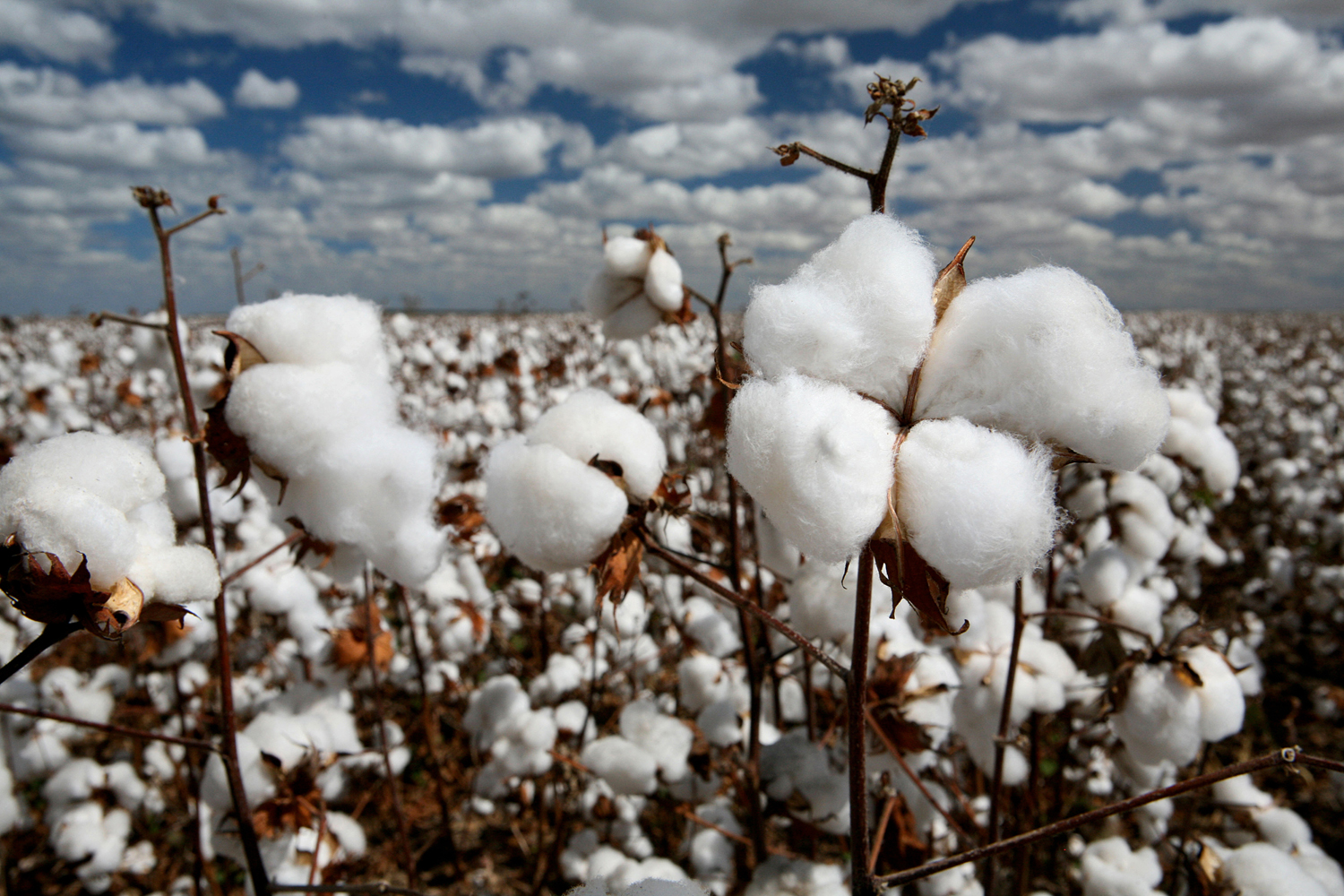
It is time for cotton farmers in the district as they have suffered heavy loss due to poor yield. The good rain that the district received in the northwest monsoon had raised hope among the cotton farmers that they would get good harvest. However, field reports had suggested that the cotton production had taken severe hit because of crop failure. As against the target of 13,600 hectares of land, hybrid cotton crop had been raised on 9,145 hectares of land, mostly in Ariyalur and Senthurai blocks, in the district. Farmers had started harvesting the crop. The harvest was expected to be over in the next one or two weeks as the crop had reached its maturity stage. According to the ground reports received by the Agricultural Department, the yield was down by 40 per cent this season. As against the average yield of 10 to 12 quintal per acre, the current season yield hovers between six and eight quintal. A senior official of the Agricultural Department told The Hindu that water stagnation on cotton fields during the northwest monsoon had a huge impact on the yield of cotton. The cotton crop would not withstand excess moisture and stress. Cotton fields had become stagnant with rainwater for more than a week at a stretch. Moreover, farmers could not take up effective plant protection measures because of continuous rain. Admitting that farmers had suffered heavy loss, an official said it was not possible for them to get back the investment on raising cotton crop. Farmers might have spent not less than Rs. 20,000 an acre for raising cotton crop. However, only a few farmers, who had harvested high quality cotton, could get back the investment. Most farmers could face losses. Source - thehindu.com

25.03.2016

Uganda - Cassava brown streak disease devastates Kasese farms

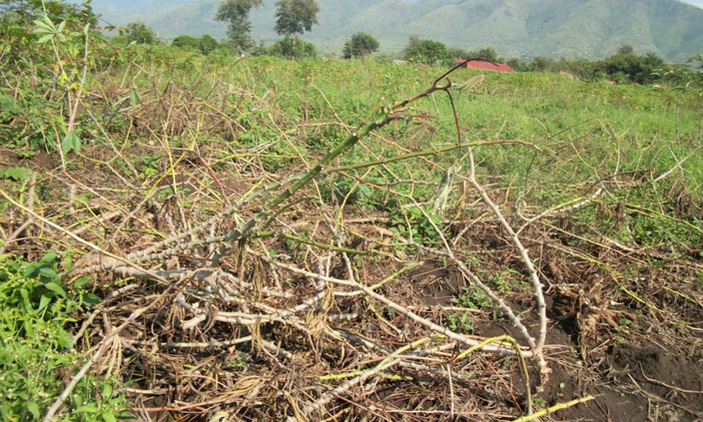
Cassava brown streak disease has hit several sub-counties in Kasese district destroying many acres of the crop. Some of the affected are farmers groups in Mubuku irrigation scheme, Karusandara, Muhokya, Mahango, Maliba, Bugoye, and Kisinga sub- counties. The signs of Cassava streak disease are rotting tubers, which are unfit for human consumption, according to agricultural experts. According to the UN Food and Agricultural Organisation, cassava mosaic disease and cassava streak disease are the greatest constraints to the production of the crop. Cassava streak disease is spread by whiteflies and propagation of infected cuttings. Often farmers only learn about cassava mosaic disease at harvest, when they reap corky tubers that also have yellow-brown necrotic rot. To stem the spread of the disease, the District Production Coordinator, Theresa Munyanzikwiye, has issued a directive that all infected plants be uprooted. She says the directive will be enforced strictly. The district production office is also encouraging farmers to plant the varieties resistant to Cassava Brown Streak disease and these can be identified by its serial number. Cassava Brown Streak Disease was first reported in Mubuku irrigation scheme and district leaders blame ignorance, which has led to spread to other parts of Kasese. Ezra Turyahabwe, the Karusandara LC3 chairperson, says a team was formed at the sub-county to sensitise farmers about the disease. “Most farmers are suffering loses silently, but we have engaged a team of agriculturalists to sensitise them about the disease outbreak so they can uproot infected crops and plant new tubers,” said Turyahabwa. The disease is going to cause shortage of cassava cuttings in the region as all the affected sub-counties have been reliable sources of cassava cuttings for farmers. Benson Bwambale, a resident of Maliba sub-county, whose garden has been affected, fears that there is a looming threat of famine in the district. "Cassava is the main food crop in our area. Most residents also depend on it to generate income and now that our crop has been destroyed, we anticipate hunger," said Bwambale. "I planted 17 acres of cassava and I was expecting to start harvesting in May, but my garden was destroyed by the disease," laments Innocent Masereka a cassava farmer in Kichwamba sub-county. Masereka said he was expecting at least sh20m, but the disease outbreak has dashed his hopes. "My entire plantation was destroyed. The disease has caused huge losses and that will affect our lives and our families because we depend on cassava our daily bread," said Masereka. George Mugisa, a farmer in Mubuku irrigation scheme, said it was the first time his crop was attacked by the disease. "But we have been advised that the only solution is to uproot all the tubers," said Mugisa. Beatrice Komuhendo, another farmer in Mubuku, said the majority of residents in Kasese depended on cassava from the scheme to support their families, educate their children and cater for their other needs. Komuhendo appealed to the government to send officers to rescue the farmers out of the situation. "I have uprooted all 13 acres of my crop. I was expecting a lot of money since I had invested heavily in the garden," said Komuhendo. Source - newvision.co.ug

25.03.2016

Canada - Crop insurance rates down in 2016

Agriculture Financial Services Corporation has made six enhancements to the AgriInsurance programs, including a first of its kind malt barley insurance product. The corporation, provincial and federal governments, and producer groups worked together to make the enhancements based on producer feedback. The malt barley insurance will have a premium price compared to feed barley, but will provide more coverage for growers with malt contracts. The other five program enhancements are: Amendments to the Annual Insurance Program to include winterkill as a designated peril for pedigreed alfalfa seed production loss insurance. Implementing individual coverage as part of the Bee Overwintering Insurance Program. Making organic producers eligible for production insurance. This new option will work similarly to AFSC’s standard production insurance programs. Continued changes to field pea insurance as the crop shifts to an edible end use. Creation of a distinct category for yellow dry beans. Additionally, AFSC clients will pay an average of six per cent less in multi-peril Annual Crop Insurance Program premium rates compared to 2015 levels. The reduction is based on the average of all crops in risk areas, and is related to the positive loss experience in recent years. In certain risk areas, the premium reductions will be higher or lower than the six per cent average. Clients will also see a 14 per cent increase in dollar coverage per acre in 2016. This increase is due to a combination of increasing spring insurance prices and yields. Source - albertafarmexpress.ca

25.03.2016

Mexico - Hurricane Patricia spares Mexico

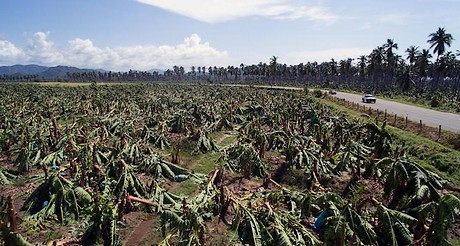
Hurricane Patricia reached the shores of Mexico this weekend. The hurricane entered as a category 5, but diminished in strength as it reached land. For many growers the predominant sentiment was relief.   Nevertheless, the storm did leave its mark. Jalapeños and cucumbers are reported to have some light damage, but other greenhouse vegetables don't. Respectively, the damage for both products amounts to a loss of around 8% and 11%, one grower and exporter says. These products will then be sold as B quality. The majority of greenhouses are in the middle of the country, and apart from a lot of rain, nothing else has happened to the crops, although the rain and wind did cause some material damage to the greenhouses. The infrastructure was also affected by the storm. This is disadvantageous to the transport of products, but also to getting produce off the land. This in turn affects the products' shelf life. Limes and avocados The limes grow more toward the Gulf of Mexico, and the hurricane was on the other side of the country. There was less wind than expected, but there was a lot of rain. Due to this, there is no harvest, so less volume. Prices are expected to rise for a while, but they will normalize within a week, says Juan Pablo Anaya from Paplo Produce Imports.   Maggie Bezart of Hall International reported being pleased with the rain after a period of drought. The actual damage is not yet known, but from what they see, it's not too bad. It will delay the harvest for a while though. Soft fruit For soft fruit, the extensive rain did cause some damage. How big the damage is is not clear, but according to Miquel Méndez of BQfruits, it's probably not that bad. "The consequence will be that the damaged fruit will now go to processing, but the expectation was much worse." Mariana Soto of Berrylovers also confirms this. "The only consequence is that we can't harvest for a while." Mango The mango season will not start until January. The heavy rainfall didn't cause damage, says Diana Campos of Emex AC. Texas In America, the state of Texas had a lot of rain. The damage there is limited to infrastructure for now, nothing else is known at the moment. Source - freshplaza.com

24.03.2016

South Africa - Grapefruit biggest casualty of hail and drought

Last week the Citrus Marketing Forum (CMF) of Southern Africa met in Johannesburg to consider the growers’ estimate for expected Southern African citrus exports in 2016 and concluded that, despite the adverse effects of the drought and hail experienced in key producing areas, the industry was well positioned to meet its market demands. It is expected that a total of 111.2 million cartons (15kg) of citrus will be packed and passed for export from citrus producers in South Africa, Zimbabwe and Swaziland in 2016. This is a decrease of six percent on the 2015 export crop. "General trends to be expected across most varieties for the season include excellent eating quality, smaller than average sizing and superior external appearance – all due to the warm and dry climatic conditions experienced during the past summer," said a spokesperson. Figures are millions of 15 kg equivalent cartons for comparison purposes and includes volumes from Swaziland and Zimbabwe Valencia Oranges Growers estimate the Valencia orange crop to be down by twelve percent from the record 52.7m cartons in 2015, to 46.4m in 2016. The areas of Letsitele, Senwes and Hoedspruit, which jointly produce almost fifty percent of all Valencia oranges from Southern Africa, have all highlighted the drought and hail damage as the major contributing factors to the reduction in volume. However, at the time of publishing, late rain has arrived in most of the Northern growing areas, which will have a positive effect on the crop, especially in regard to fruit size. Navel Oranges The Navel orange crop is estimated to be up by just over two percent to 25.1m cartons. Although Senwes was badly affected by the drought and hail and expected to be down by fourteen percent, the Eastern Cape growing regions of Sundays River Valley and Patensie will be up by seven- and nine percent respectively, with the Western Cape also expected to be up by as much as fourteen percent. Grapefruit Grapefruit exports are expected to reach 12.4m cartons (15kg), down by twenty-three percent from 2015’s record export. Drought in the Letsitele and Onderberg areas and severe hail damage in Hoedspruit are the major factors behind the drop in volume, exacerbated by the fact that 2016 was to be an “off” year anyway in terms of the production cycle. Although fruit size distribution will favour the smaller counts, Grapefruit growers have indicated that they will continue to support initiatives which aim to respect the demands of each of their markets in terms of timing, volume and specification. Lemons Lemon exports from Southern Africa are expected to continue its growth trend, with an increase of seven percent estimated for 2016, translating into a total volume of 16.1m cartons. Most of the growth can be ascribed to new plantings coming into production, particularly in the Sundays River Valley and Senwes areas. Soft Citrus With many new orchards coming into production in 2016 soft citrus growers are expecting their total exports to grow by twelve percent to 11.2m cartons. The season is predicted to offer good availability on the bigger sizes and excellent eating quality from all regions. "Whilst the drought that has gripped large parts of the country has had a significant impact on the citrus export crop, it is clear that farmers prioritised their high value varieties with the limited water they have had available," said the spokesperson. "Some uncertainty as to the onward impact of the drought on the 2017 crop still exists, but with the arrival of late rain in the Northern areas and further evidence that the El Niño cycle has been broken, the picture looks far more positive now than a few weeks ago." Against this backdrop, Southern African citrus growers are cautiously optimistic about the prospects for the 2016 season and their continued ability to supply citrus fruits of the highest quality to discerning markets around the globe. Source - freshplaza.com

24.03.2016

India - Crop insurance scheme to hit small farmers

The Akhil Bharatiya Kisan Sabha has pointed out gaps in the crop insurance scheme being promoted by the Haryana Government with pomp and show. “To get claim loss on your insurance, the crop damage in a village should be more than 51 per cent. Otherwise, the relief cannot be claimed from a company,” said Dayanand Poonia, sabha secretary of the state at a meeting here on Tuesday. He said the crop insurance scheme might not work well in Haryana, as farmers were not fully aware of it and they were already under debt. “Crop insurance premiums of Rs 200 to Rs 300 per acre may seem little, but the ground situation is that small farmers sometimes do not have this much amount. And if they do not pay premiums on time, they will be ineligible for insurance,” said Master Sher Singh, state president of the sabha. He further said farmers could claim insurance only if his produce would be less than the state’s average production. “Farmers will not be compensated for individual losses, as happens in general insurance. Compensation will depend on several other factors.” Attar Singh, in-charge of Bhiwani Krishi Vigyan Kendra, said the scheme was a good step, provided farmers understood it in the right perspective. On farmers’ doubts regarding the scheme, he said government agencies were yet to get documents related to the scheme and he could only comment after reading them. Source - tribuneindia.com

24.03.2016

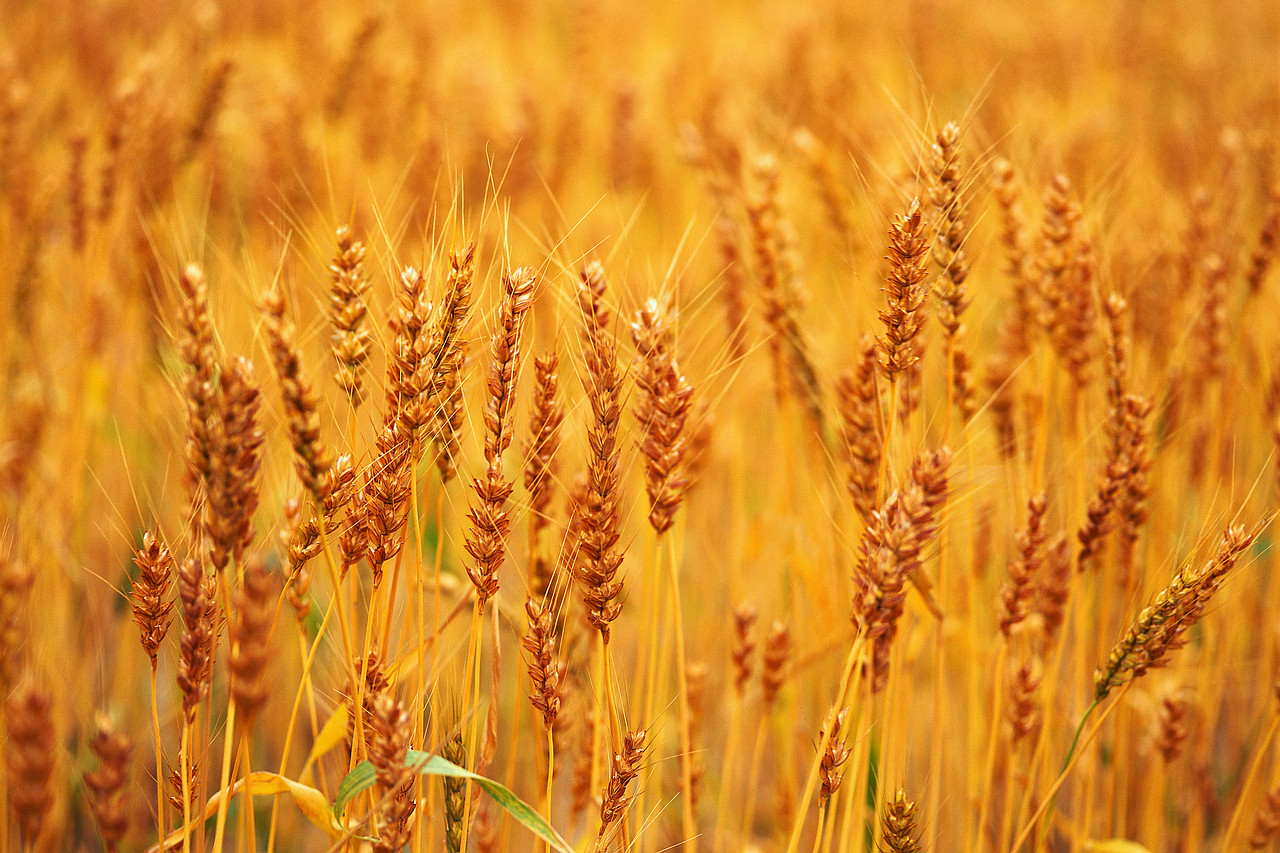
Nepal - The wheat crop is the lowest in the past seven years

The area sown under wheat crop of 2016 was reduced by 5% due to the lack of fertilizers and severe fuel shortages This year, the wheat crop in Nepal will fall to the lowest level in the last seven years under the influence of climatic and political factors. According to AGN. The Kathmandu Post. Gross harvest of wheat will decline to 1.57 million tons, up 21% compared with the previous year and 16% compared to credability indicator. The area sown under wheat crop of 2016 was reduced by 5% due to the lack of fertilizers and severe shortage of fuel required for irrigation and field work. The reason for the deficit was the blockade of the border with India ethnic Indians living in Nepal. They protested against the new Constitution, adopted in September 2015. Wheat yields will be lower than usual due to drought. From November 2015. by January 2016. precipitation was much below normal. The poor harvest will lead to increased imports of wheat. Nepal typically imports 150 thousand tons of wheat per year. Shipments of wheat are from India. Source - agro2b.ru

24.03.2016

India - Crops damaged in107 Bhiwani villages

According to a survey conducted by a team of the Agriculture Department, wheat, mustard and barley crops spread over 40,987 hectares in 107 villages of the district were damaged in the recent spell of rain and hailstorm. As per the survey report, wheat crop spread over 23,910 hectares suffered the maximum loss, of which, the damage in 22,490 hectares was up to 25 per cent, whereas, the loss in 1,420 hectares ranged between 26 to 30 per cent. Of the mustard crop standing in 15,870 hectares in the district, the loss in 11,680 hectares was up to 25 per cent, 26 to 50 per cent in 3,570 hectares and 51 to 75 per cent in 620 hectares. Similary, barley crop spread over 100 hectares suffered damage between 51 to 75 per cent. Atma Ram Godara, deputy director, agriculture, told The Tribune the estimated report of crop loss due to recent hailstorm had been sent to the state government. Source - tribuneindia.com

24.03.2016

India - Farmers hit as Odisha government failed to assess crop loss on time

The Odisha government’s failure to declare ‘Annewari’, scientific assessment of crop yields in affected areas, in time made the natural disasters-hit farmers’ loan repayment difficult, finds the Comptroller and Auditor General. According to CAG report on economic sector, which was tabled in the State Assembly recently, farmers were also deprived of timely compensation for crop loss as assessment of yield data was delayed by the government. “Due to cyclone and unseasonal heavy rain in December 2010, the State government declared details of 18,882 villages in 24 districts where kharif 2010 crops were damaged after one year in March 2012. Basing on the Annewari, short term crop (STC) loans amounting to Rs.1,000.42 crore disbursed to 6,08,274 farmers were eligible for conversion into medium term crop (MTC) loan,” the CAG report says. However, due to non-declaration of Annewari by the District Collectors, farmers had repaid their crop loans and the proposals of conversion of STC loan into MTC loan was not acted upon as a result of which farmers were deprived of relief. The government committed similar mistake in October 2013, when cyclonic storm Phailin and subsequent flood severely damaged crop in 18 districts. The announcement of converting STC loan to MTC could not be materialised due to non-declaration of Annewari. Farmers did not get the benefit of converting STC loan amounting to Rs.1,291 crore into MTC loan. National Agricultural Insurance Scheme guidelines provide for financial support to the farmers in the event of failure of any notified crop due to natural calamities, pest attack and diseases. CAG finds that insurance claims amounting Rs.1,170.29 crore were settled with delay ranging from 45 to 252 days for various reasons such as delays in receipt of yield data and delays in release of funds from the State government. Source - thehindu.com

24.03.2016

USA - Crop Insurance Indemnities At $4.4 Billion For 2015 Crops

Crop insurance indemnities total $4.4 billion for 2015 crops as of Dec. 28, up from $3.45 billion at the end of November, according to Risk Management Agency (RMA) data. The level of net acres insured for 2015 crops appears to have set a new record, reaching 297.151 million, ahead of the prior high-water mark of 296.079 million acres in 2013. The loss ratio for the program currently stands at .45, up slightly from a month ago when it was .37. Indemnities will continue to rise so that loss ratio will also climb. But the lowest loss ratios going back to 2003 are .54 for 2007, .56 for 2010 and .58 for 2009. Rice is the only program crop with a loss ratio greater than 1.0 for 2015 crops (indemnities paid out exceed the premiums paid in) with a mark of 2.48. Flue-cured tobacco carries a level of 1.14. The total payouts at $4.4 billion are down more than 50% from the 2014 crop total of $9.115 billion. Wheat remains the top payout on a by-crop basis, with indemnities of $1.155 billion compared to corn at $1.118 billion. The next closest crop is soybeans at $832 million. The downturn in payouts under the program reflects fewer crop issues facing producers and lower prices for most crops compared to 2014 levels. The indemnity levels are likely to continue rising as we move into calendar 2016. At this stage a year ago for 2014 crops, indemnities stood at $5.212 billion and eventually rose to $9.115 billion. The potential is there for 2015 crops to be one of the lowest payout levels in recent years and give the program one of its lowest loss ratios in years. Source - kticradio.com

23.03.2016

USA - Beware wheat rusts coming from Texas

Wheat farmers across the U.S. might be in for another challenging year. The wind is blowing spores from Texas north and farmers need to be prepared to scout and take action. “They (stripe and leaf rust) overwinter in Texas and Mexico,” says Clark Neely, Texas A&M statewide small grains and oilseed Extension specialist. “We had a milder winter which could be why we’re seeing it further north.” Stripe Rust In 2015 wheat stripe rust ran rampant across wheat growing acres. Texas lost a cumulative total of about 25% of their yield to the disease. So far, this year is following in suit and could bring similar losses if weather conditions allow. Right now farmers are seeing stripe rust, which favors cooler, wet conditions and attacks the lower canopy leaves first. While scouting for stripe rust identify it by bright orange to yellow pustules. The pustules form circle patterns in early stages and eventually become a stripe pattern on leaves as the fungus progresses. Stripe rust will be especially devastating in susceptible wheat varieties, Neely says. “Farmers can have up to 85% yield loss.” Over the next few weeks if your area has moist conditions, such as rain, heavy dews or fogs, and is between 50° and 59° Fahrenheit be sure to diligently scout as stripe rust favors those conditions. 2016 Stripe Rust Risk Darker states indicate stripe rust has already been discovered and places them at higher risk. Lighter states are at risk of spores spreading via wind and infecting plants. Leaf Rust Unlike stripe rust, which only appears when conditions are right, leaf rust tends to pop up every year in at least one location. The disease is less damaging than stripe rust but can still cause up to 50% yield loss in susceptible varieties, Neely says. Typically, wheat farmers probably don’t see leaf rust quite yet since it favors warmer temperatures of 60° Fahrenheit and higher—really flourishing at 70° Fahrenheit (ceasing at 80° Fahrenheit). Identify leaf rust by brown to dark red pustules in random patterns across lower canopy leaves. The fungus is temperature driven and can appear during any growth stage. You might see leaf rust this year. A mild winter might have allowed some spores to overwinter in Texas and Oklahoma. Consider scouting once weekly if temperature and moisture conditions favor the development of leaf rust. Be especially meticulous during flagleaf since the pathogen can steal the greatest amount of yield at this time. Leaf rust, sometimes called brown rust is identified by brown to dark red lesions in random patters on the lower leaves. Courtesy of Clark Neely What can you do to avoid rusts? “The No. 1 thing we encourage is find a resistant variety,” Neely says. “It’s not foolproof but it provides a big level of protection. It could take you from 85% to 25% yield loss.” Fungicides are another tool that can help you mitigate yield loss by slowing or stopping pustules from spreading and further damaging leaf tissue. Neely says if pressure is high early in the season you can apply a more inexpensive fungicide in early stages and then decide if the crop will yield enough to justify application in later stages with a more pricey fungicide. 2015 Yield Loss From Stripe Rust 2015 was a challenging year for wheat farmers. This map indicates yield loss attributed to stripe rust. Source - agprofessional.com

23.03.2016

Australia - Five tonnes of beurre bosc pears stolen from property near Victorian town of Portland

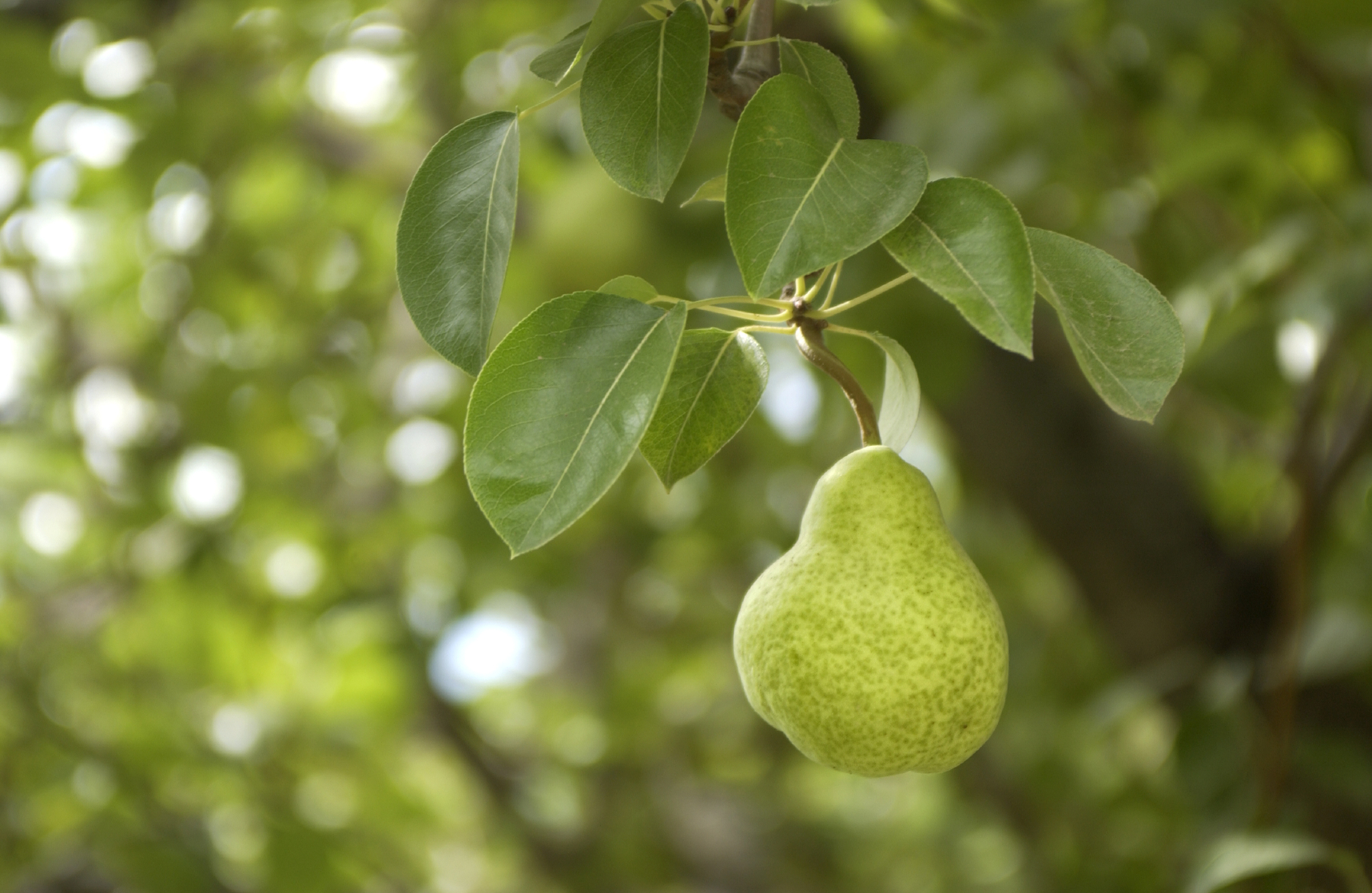
Victoria Police are on the hunt for a fruit-napper who stole five tonnes of beurre bosc pears from a property near Portland, in the state's south-west. The culprit allegedly tore down five rows of orchards, almost half-a-kilometre long, from the Gorae property between March 18 and 20. It is not yet known how the thief moved the fruits of their labour without detection, but they are understood to have accessed the property via a side gate. A police spokesperson said the thief's motives were unknown, but they were believed to be "pearfessionals". Despite the size of the load, the haul is only valued around $1,500. The incident is the latest in a series of high-profile thefts from farming properties across south-west Victoria. Last month, about 140 sheep, valued at more than $30,000, were taken from a property at Dunkeld, near Hamilton. Victoria Police believed the stock may have been stolen by someone within the farming community. Detective Sergeant Mark James said the thefts were an ongoing problem. "There's people in the industry and there's people in these rural areas who have suspicions about certain individuals that they probably hold, but people don't like to point the finger," he said. "With jobs like these, there's a lot of money involved, and it's harming the industry and it's harming the individual." Source - abc.net.au

878
of 1225