

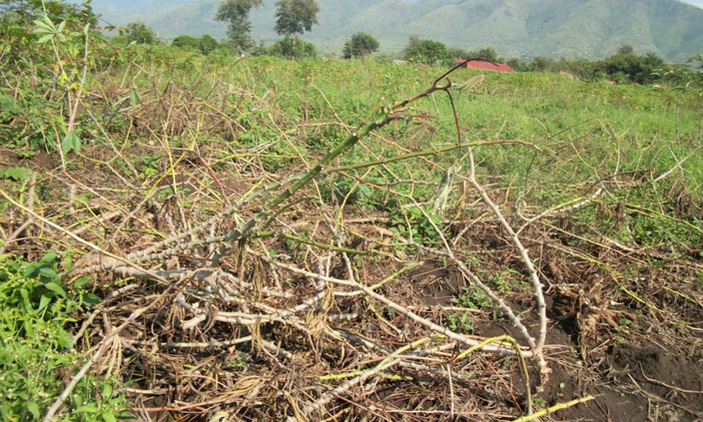
Uganda - Cassava brown streak disease devastates Kasese farms
25.03.2016 503 views
Cassava brown streak disease has hit several sub-counties in Kasese district destroying many acres of the crop.
Some of the affected are farmers groups in Mubuku irrigation scheme, Karusandara, Muhokya, Mahango, Maliba, Bugoye, and Kisinga sub- counties.
The signs of Cassava streak disease are rotting tubers, which are unfit for human consumption, according to agricultural experts.
According to the UN Food and Agricultural Organisation, cassava mosaic disease and cassava streak disease are the greatest constraints to the production of the crop.
Cassava streak disease is spread by whiteflies and propagation of infected cuttings.
Often farmers only learn about cassava mosaic disease at harvest, when they reap corky tubers that also have yellow-brown necrotic rot.
To stem the spread of the disease, the District Production Coordinator, Theresa Munyanzikwiye, has issued a directive that all infected plants be uprooted. She says the directive will be enforced strictly.
The district production office is also encouraging farmers to plant the varieties resistant to Cassava Brown Streak disease and these can be identified by its serial number.
Cassava Brown Streak Disease was first reported in Mubuku irrigation scheme and district leaders blame ignorance, which has led to spread to other parts of Kasese.
Ezra Turyahabwe, the Karusandara LC3 chairperson, says a team was formed at the sub-county to sensitise farmers about the disease.
“Most farmers are suffering loses silently, but we have engaged a team of agriculturalists to sensitise them about the disease outbreak so they can uproot infected crops and plant new tubers,” said Turyahabwa.
The disease is going to cause shortage of cassava cuttings in the region as all the affected sub-counties have been reliable sources of cassava cuttings for farmers.
Benson Bwambale, a resident of Maliba sub-county, whose garden has been affected, fears that there is a looming threat of famine in the district.
"Cassava is the main food crop in our area. Most residents also depend on it to generate income and now that our crop has been destroyed, we anticipate hunger," said Bwambale.
"I planted 17 acres of cassava and I was expecting to start harvesting in May, but my garden was destroyed by the disease," laments Innocent Masereka a cassava farmer in Kichwamba sub-county.
Masereka said he was expecting at least sh20m, but the disease outbreak has dashed his hopes.
"My entire plantation was destroyed. The disease has caused huge losses and that will affect our lives and our families because we depend on cassava our daily bread," said Masereka.
George Mugisa, a farmer in Mubuku irrigation scheme, said it was the first time his crop was attacked by the disease.
"But we have been advised that the only solution is to uproot all the tubers," said Mugisa.
Beatrice Komuhendo, another farmer in Mubuku, said the majority of residents in Kasese depended on cassava from the scheme to support their families, educate their children and cater for their other needs.
Komuhendo appealed to the government to send officers to rescue the farmers out of the situation.
"I have uprooted all 13 acres of my crop. I was expecting a lot of money since I had invested heavily in the garden," said Komuhendo.
Source - newvision.co.ug
EVENTS

ScaleAgData Stakeholder Engagement Event
22.10.2024The ScaleAgData project is pleased to invite you to our second stakeholder event. Building on the discussions and connections formed during our first webinar, this event will focus on fostering collaboration among stakeholders, providing updates on our project’s progress, and outlining future opportunities for engagement.
RISK EVENTS

Moldova - May frosts caused heavy damage to fruit orchards
10.05.2026The first frosty nights of May have significantly worsened estimates of damage to Moldova's fruit sector from spring frosts. According to initial assessments by fruit market operators, between a quarter and a third of the country's total orchard area was seriously affected.
04.06.2026

India - Delhi raises crop damage compensation after 10 years by over 50% to Rs 75,000 per hectare
In a major relief for farmers, the Delhi government has increased compensation for crop loss caused by rain and hailstorms from Rs 20,000 per acre to Rs 75,000 per hectare.
04.06.2026

Why Tech-Driven Agro-Insurance Has Stumbled in Ethiopia
For decades, Ethiopia’s agricultural sector has remained trapped in a dangerous paradox.
04.06.2026
UK - Rural crime cost Wales £2.2m last year despite fall in offences
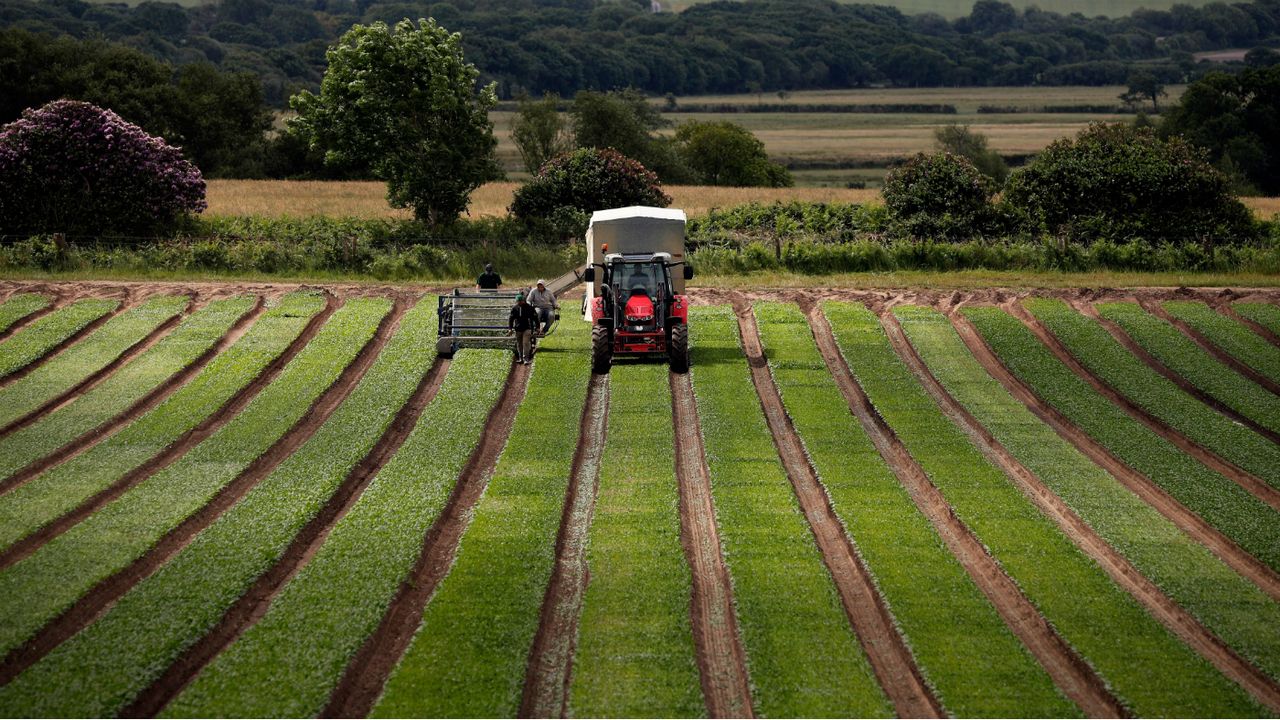
Rural crime cost Wales an estimated £2.2 million last year, with organised criminals continuing to target tractors, livestock and farming equipment despite an overall fall in offences, according to a new report.
04.06.2026

Kenyan Agro-Insurance Startup, Pula Raises US$ 20 Million in Series B Round
Pula, a Kenyan startup that offers insurance to small-scale farmers, aims to serve more than 100 million farmers in Africa after raising US$ 20 million in its Series B round.
04.06.2026
USA - USDA announces $52M to boost public access to private lands for hunting, fishing
The U.S. Department of Agriculture is announcing $52 million to help state and tribal governments encourage private landowners to allow public access to their land for hunting, fishing and other wildlife-dependent recreation through the Voluntary Public Access and Habitat Incentive Program (VPA-HIP).
04.06.2026

Hope Grows in Malawi’s Grain Stores as Farmers Battle Post-Harvest Losses
Some grain rots in poorly ventilated storage. Some is eaten by pests. Some is damaged during drying or transportation before it ever reaches the market.
03.06.2026
Canada - AFSC extends several northern Alberta seeding dates for 2026
Alberta’s Agriculture Financial Services Corp. (AFSC) is extending the recommended seeding dates in the province’s northeast, northwest and Peace regions for several crops for the 2026 growing season only.
03.06.2026

India - Elephants run amok in Konaje agricultural farm, cause massive crop damage
A herd of elephants, including calves, wreaked havoc on an agricultural farm belonging to Yashodhara Gowda at Pallattadka in Konaje village of Kadaba taluk.
