Manitoba's first case of late blight for the year was found in a western Manitoba field over the weekend.
Manitoba Agriculture plant pathologist Vikram Bisht says they can't speculate on the source of this disease, but notes that in this case, the lesions have already reached sporulation. Bisht says farmers need to be scouting carefully for late blight.
"Especially in low-lying areas of the fields, or in areas where (plants) are protected by the tree line because the air movement is very slow in that area, so they stay wet for a longer period, and the fungus has a chance to sporulate in those areas and cause infection," Bisht says.
Home gardeners should also be on the lookout for the disease, as late blight can affect tomato plants, too.
"If (home gardeners) are able to get some protectant fungicides for late blight, that will be the way to go," Bisht says, "but if they are unable to control (the disease), especially in the tomatoes, it is best to take those plants out, put them in a garbage bag, and keep in the sun so the plants in the garbage bag basically get cooked."
Bisht says it is important not to put infected plants onto the compost pile, as this will still give the disease a chance to develop.
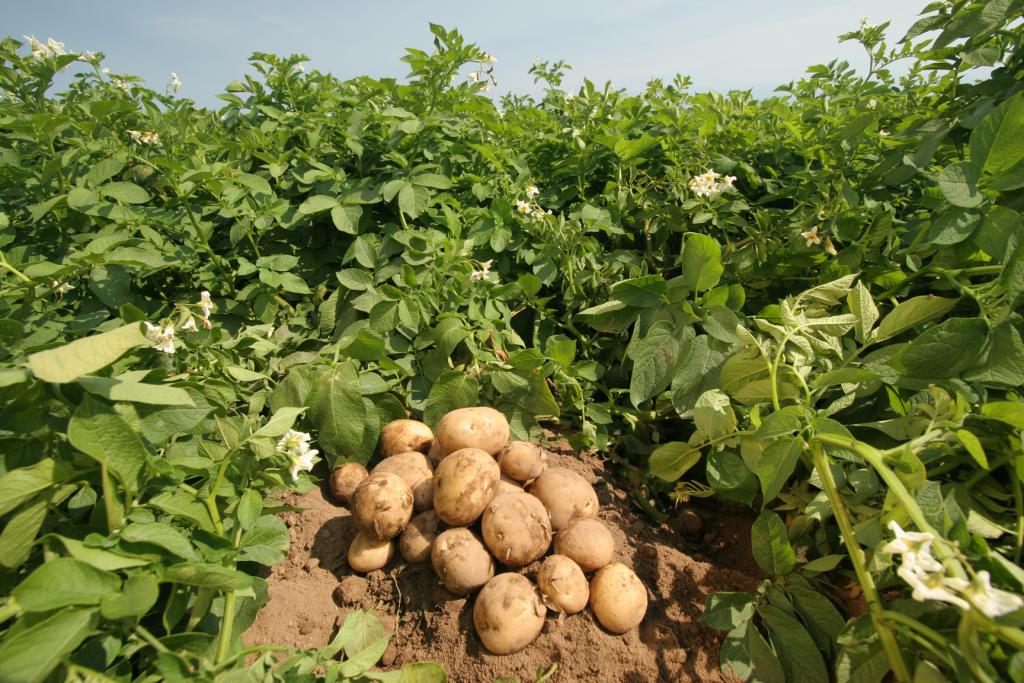
Thunderstorms forecast for Tuesday could also increase the chance to late blight to spread, as the wind and storms can transport spores. But aside from the increased disease risk, potato crops in Manitoba are growing well in the abundant precipitation, with most fields at the mid-stage of the crop.


"Compared to last year, we may be about a week ahead," Bisht says. "The tubers are forming very well, anywhere from, you can say, quarter-sized or slightly larger."
Bisht says hail damage has set some patches back three to five days in growth. He also says a big concern for potato growers right now is European corn borer, which infected quite a few fields last year, causing mortality and losses in patches.
"We are already starting to see lots of European corn borer moths. We have set up some pheromone traps, and we are catching lots of moths in them," he says. "We have started finding some eggs masses on the underside of leaves, and the emergence of larvae is the most critical stage for applying insecticide."
Bisht says there are a fair number of insecticides available for corn borer, adding the critical timing for spraying is two to three days after producers notice the eggs in their field.
Source - www.pembinavalleyonline.com