

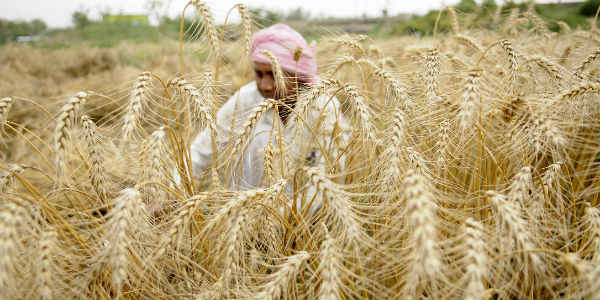
India - Rising temperatures due to climate change may be compounding the stress on crops
18.02.2020 545 views
Insect attacks are becoming stronger with rising temperatures and plants are not able to cope with the double whammy from pests and rising heat. These are the findings of a recent study published in the journal Proceedings of the National Academy of Sciences.
The study reinforces previous findings that persistent warm and dry conditions make pests ‘hungrier’, increase their populations and geographical range. Due to increased metabolic rates, insects eat more in hot conditions.
With rapidly rising temperatures due to mounting greenhouse gases in the atmosphere from human activities, crops are increasingly facing both threats — extreme heat and pest attacks — simultaneously.
The study found that the dual-threat might be more than the crops can handle.
We are already seeing major consequences arising from the complex relationships between climate change, weather, pest behavior and coping mechanisms of crops.
In 2017, farmers in India incurred heavy losses in crop yields in at least nine major agricultural states due to erratic monsoon and subsequent pest attacks.
The annual and currently ongoing locust infestation over Africa, West Asia, and South Asia is perhaps the most dangerous of all insect infestations. Experts believe that climate change may be affecting the distribution area and breeding cycles.
Increasing cyclonic activity in the Arabian Sea is causing sudden bursts of rainfall in some of the driest regions of the planet (for instance, the Rub’ al Khali desert in the Arabian Peninsula).
The hot and wet conditions make it a perfect breeding ground for locusts. This year, enormous breeding caused their early movement towards South Asia which caused havoc to the crops. Pakistan lost 40 percent of its total crops.
There are also rising instances of ‘alien’ plant and pest species invading India and damaging crops. In the past 15 years, India has had at least 10 major invasive pest and weed attacks. The fall armyworm invasion destroyed almost all of the country’s maize crops in 2018.
Crops have certain natural defense mechanisms against pests and rising temperatures. When an insect bites a chunk from a leaf, plants secrete a hormone called jasmonate, or JA. JA alerts the plant of the insect attack and to produce chemicals to defend against the attack.
And when plants experience high temperatures they protect themselves by lifting their leaves away from the hot land surface. They also ‘sweat’ through pores on the leaves (stomata) — similar to what we humans do through the skin — so that water evaporates and cools the leaves.
Individually, these defense mechanisms are quite effective. However, rapid climate change is compounding the threats and exaggerating the stress on crops.
To better understand how plants react under this dual-threat, scientists from Michigan State University in the United States performed temperature-controlled experiments on tomato plants under attack from caterpillars.
Experiments were performed at ambient temperatures (28 degrees Celsius day / 18°C night) and elevated temperatures (38°C day / 28°C night) resembling conditions during heat waves.
It was found that when plants are under attack in hot conditions, they produce a lot more of the JA hormone than in normal conditions, as a part of their defense mechanism. However, the experiments show that this does not deter caterpillars.
“I was shocked when I opened the doors to the growth chamber where the two sets of plants were growing at ‘normal’ and ‘high’ temperatures,” said Gregg Howe, distinguished professor at the MSU-DOE Plant Research Laboratory, in a press statement.
“The caterpillars in the warmer space were much bigger; they had almost wiped the plant out,” he added.
Instead, high levels of JA block the plant’s ability to cool itself. It cannot lift its leaves or sweat through the pores.
The authors note that it is unclear why plants choose not to or simply can’t open their pores to sweat when they are producing more JA. It may be that they don’t want to lose water from the wounded sites.
Or maybe the caterpillar uses some trickery to force the leaf pores to remain closed so the plant can’t cool itself since hotter leaves are better for the growth and development of the larva.
Whatever the reason might be, if plants lose the ability to cool themselves they suffer from something similar to a heat stroke.
“We see photosynthesis, which is how crops produce biomass, is strongly impaired in these plants,” said Nathan Havko, a postdoctoral researcher in the Howe research group and the lead author of the study, in the press statement. “The resources to produce biomass are there, but somehow they aren’t used properly and crop productivity decreases.”
While the study’s findings are based on experiments conducted specifically on tomato plants under attack from caterpillar, similar behavior is expected for other plant and pest species.
The study unequivocally shows that rising temperatures due to climate change may be compounding the stress on crops in multiple ways. More vicious insect attacks decreased the ability of plants to defend themselves against pests and rising heat could exaggerate crop losses in the years to come.
“I think we have yet to appreciate the unexpected tradeoffs between defense responses and plant productivity, especially when other types of environmental stress are present,” said Howe. “Turning on the defense response may do more harm than good if the plants face high temperatures or other stresses.”
Source - https://www.downtoearth.org.in
EVENTS

ScaleAgData Stakeholder Engagement Event
22.10.2024The ScaleAgData project is pleased to invite you to our second stakeholder event. Building on the discussions and connections formed during our first webinar, this event will focus on fostering collaboration among stakeholders, providing updates on our project’s progress, and outlining future opportunities for engagement.
RISK EVENTS

Moldova - May frosts caused heavy damage to fruit orchards
10.05.2026The first frosty nights of May have significantly worsened estimates of damage to Moldova's fruit sector from spring frosts. According to initial assessments by fruit market operators, between a quarter and a third of the country's total orchard area was seriously affected.
13.09.2026
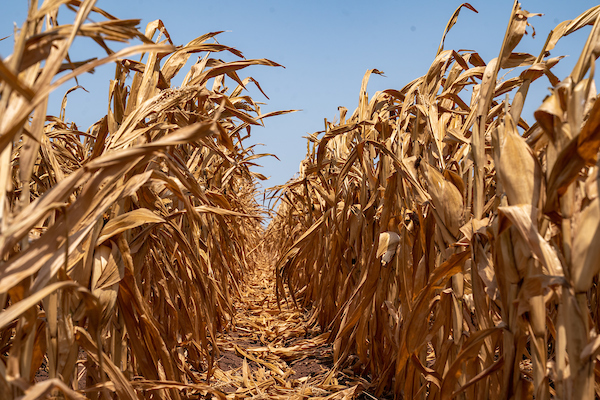
USA - Kansas Corn Crop Hit Hard as Extreme Heat and Drought Slash 2026 Yield Potential
Kansas corn faces major yield losses as extreme heat, drought and hot winds damage dryland fields, accelerate harvest and pressure farm margins.
13.09.2026
Generational renewal challenges Spain’s fruit and vegetable sector
John F. Kennedy once said: "Change is the law of life. And those who look only to the past or present are certain to miss the future." The quote is relevant to the challenge of generational renewal in Spain's fruit and vegetable sector.
13.09.2026

Sri Lanka - WNPS marks first livestock insurance payout against leopard predation
The Wildlife and Nature Protection Society (WNPS), together with UNDP Sri Lanka through the BIOFIN (Biodiversity Finance Initiative) and LOLC Holdings PLC, marked an important milestone in promoting human-leopard coexistence by presenting the first compensation payment under the Livestock Insurance Scheme and launching the construction of the first predator-proof community cattle pen in the Sigiriya landscape.
13.09.2026
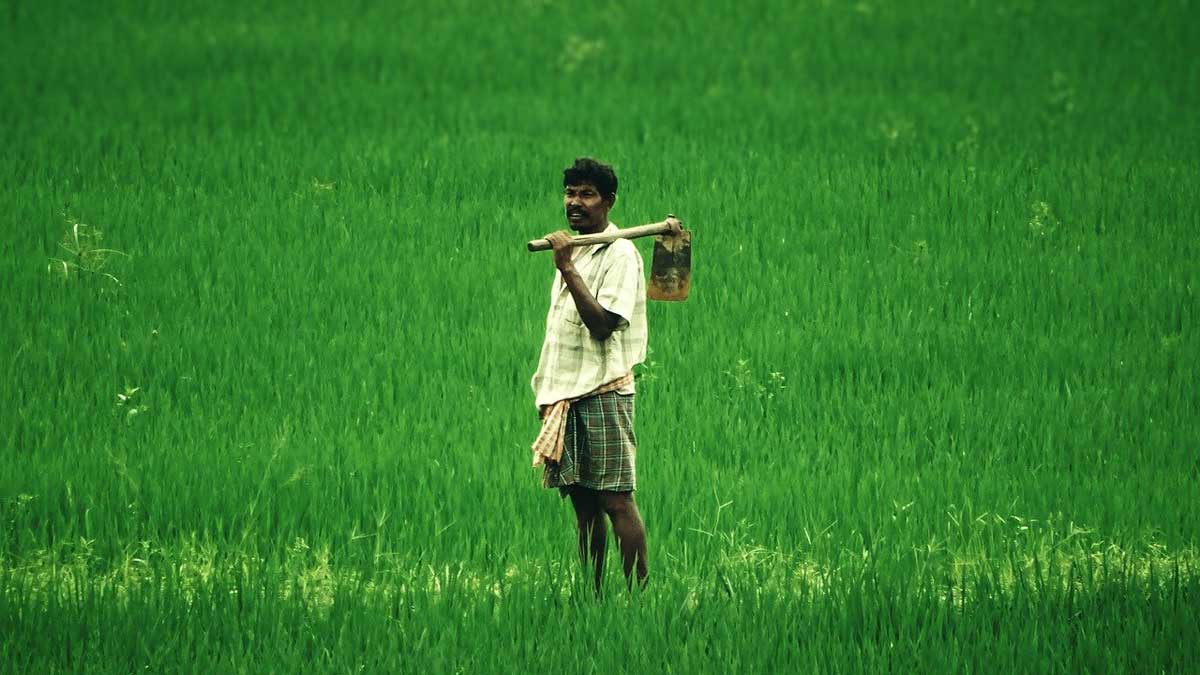
India - State govt disburses Rs 104 crore crop loss relief to over 1 lakh farmers
The state govt on Friday transferred Rs 104.46 crore directly into the bank accounts of 1,17,708 farmers under the Bihar State Crop Assistance Scheme to compensate them for crop losses suffered during the Kharif 2024 season.
13.09.2026
China unveils plan to expand agricultural insurance coverage
China on Friday released an implementation plan to strengthen agricultural insurance development that it says aims to help stabilise farmers' incomes and strengthen food security, reported Reuters.
13.09.2026
India - B R Patil seeks transparent crop-cutting surveys for insurance compensation
He says, officials should select fields for surveys in presence of farmers.
10.09.2026
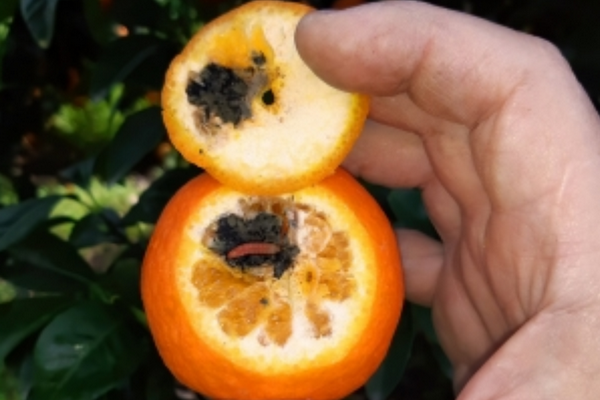
AVA-ASAJA urges the EU to enforce cold treatment standards on South Africa
The EU's TRACES platform has reported another detection of the false moth (Thaumatotibia leucotreta) in oranges from South Africa.
10.09.2026

India - Andaman Farmers Trained in Modern Goat Farming, Livestock Insurance and Institutional Credit
Farmers in New Bimblitan received practical training on modern goat farming, with the Department of Animal Husbandry and Veterinary Services focusing on scientific livestock management and access to government support schemes.
