Nepal - Yield-based insurance scheme available for spring paddy cultivators

08.02.2017 472 views
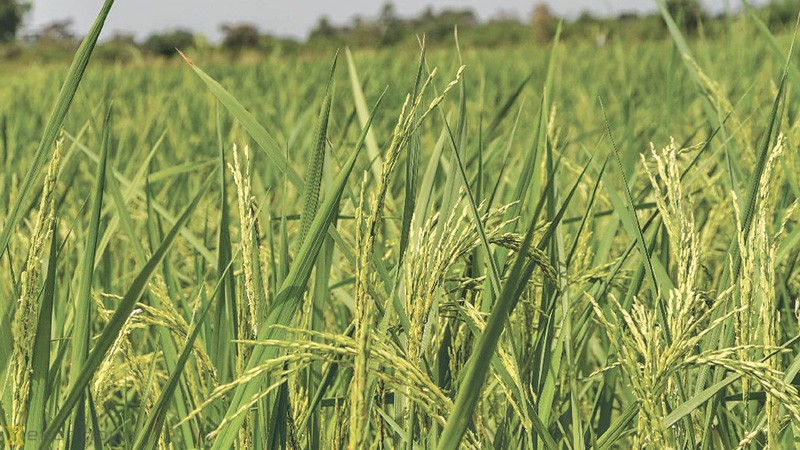
Cultivators of spring paddy (Chaite Dhaan) can now insure their products using a brand new policy introduced by the Insurance Board (IB) which allows policyholders to seek compensation based on projected yield. This is the second agriculture related insurance product, after seed crop scheme, that covers risks based on anticipated yield. This type of policy enables policyholders to demand for compensation if actual harvest fails to meet the yields projected at the time of purchasing the insurance scheme. “The new product was endorsed by the IB on Tuesday,” said IB Deputy Director Kundan Aryal. “We will forward a circular to all non-life insurance companies on Wednesday after which the policy will be available in the market.” Most of the crop related insurance products introduced by the IB, the insurance sector regulator, cover risks based on input cost.
The input cost, as per the IB, includes money spent on labour, transportation, irrigation, and farm management; and expenditure made while buying fertilisers, pesticides and seedlings. Also, amount paid as land and irrigation tax, depreciation cost of agricultural equipment, and cost that has gone into repair and maintenance of agricultural equipment are referred to as the input cost. Input cost based policies only cover losses incurred by cultivators till the time the crops are ready for harvest. “If the yield-based spring paddy scheme becomes successful, we will introduce more of similar products in the agricultural sector,” Aryal said. Spring paddy is planted in 35 districts in between mid-March and mid-April. Plantation of this crop, however, is not common because it requires better irrigation facilities. As a result, most of the cultivators prefer to grow paddy during summer when there is abundance rain. Currently, around 1.42 million hectares of land in the country are suitable for growing paddy. Spring paddy is planted on only 112,000 hectares. Despite low acreage, productivity of spring paddy is high, with harvest standing at 4 tonnes per hectare, as against 3.17 tonnes for regular summer paddy. This has prompted the government to promote plantation of this paddy and is extending a grant of Rs5,000 per hectare to those who plant this crop. “From now onwards, this grant will only be available to those who purchase the insurance scheme,” Aryal said, adding, “We have asked district agricultural development offices, which distribute the grants, to strictly monitory this.” This insurance scheme, however, cannot be purchased by individuals. “Insurance companies will issue this policy to a group of cultivators based on information made available by district agricultural development offices,” Aryal said. “Cultivators who have planted spring paddy in half a hectare of land are eligible for this scheme.” One can subscribe to this scheme by paying a premium equivalent to five per cent of the coverage amount. This means if cultivators wish to provide cover to Rs 100 worth of yield, they have to pay a premium of Rs 5 per year. The policy covers the deficit in the projected yield. It also covers losses triggered by fire, lightning, earthquakes, floods, drought, landslide, cyclonic storm, hailstorm, snow, sleet, other disasters, pests and diseases. Policyholders will be entitled to compensation of up to 90 per cent of the coverage amount. Source - http://kathmandupost.ekantipur.com

16.06.2026

India - Harish Rao accuses Congress govt of plotting to scrap crop bonus

BRS deputy floor leader T Harish Rao accused the Congress government of conspiring to phase out the crop bonus scheme by limiting it to just seven paddy varieties, despite promising Rs 500 bonus for all varieties in its manifesto.

16.06.2026

CBE and EIC Forge Historic Partnership to Advance Ethiopia’s Financial Sector

​The Commercial Bank of Ethiopia (CBE) and the Ethiopian Insurance Corporation (EIC) have signed a historic partnership agreement to elevate their long-standing cooperation. 

16.06.2026

Spain - The Government releases 510.7 million from the Contingency Fund for agricultural insurance and social purposes

The Council of Ministers has given the green light to the use of the Contingency Fund to support several credit modifications for a total amount of 510,706,252.23 euros, with the aim of meeting commitments in agricultural insurance and financing activities of general interest qualified as of social interest.

16.06.2026

Nepal - Poultry sector losses Rs. 500M due to bird flu

Farmers have suffered direct financial losses of more than Rs. 500 million in the past month due to a bird flu outbreak that has spread to three districts of Koshi Province—Jhapa, Morang, and Sunsari.

16.06.2026

USA - USDA declares emergency Disaster Declaration for Maryland farmers impacted by crop freeze

The United States Department of Agriculture is stepping in to assist Maryland farmers severely impacted by unexpected frosting in April.

16.06.2026

Cyprus - Foot-and-mouth disease cases rise to 121 livestock units after new Mammari detection

A total of 121 livestock units have been affected by foot-and-mouth disease following the confirmation of a new case announced on Wednesday. 

15.06.2026

India - Satellite Surveys to Bridge Gap Between Farmers’ Losses & Crop Insurance Compensation: Shivraj Singh Chouhan

Union Minister of Agriculture and Farmers Welfare Shivraj Singh Chouhan has stated that in order to bridge the gap between the losses faced by farmers and the compensation they receive through crop insurance, these losses will now be surveyed using satellites. 

15.06.2026

Philippines - DA eyes regional fisheries hub in Northern Samar

The Department of Agriculture (DA) plans to establish a regional fisheries hub in Mapanas, Northern Samar, positioning the area as a potential growth center for Eastern Visayas’ tuna industry.