

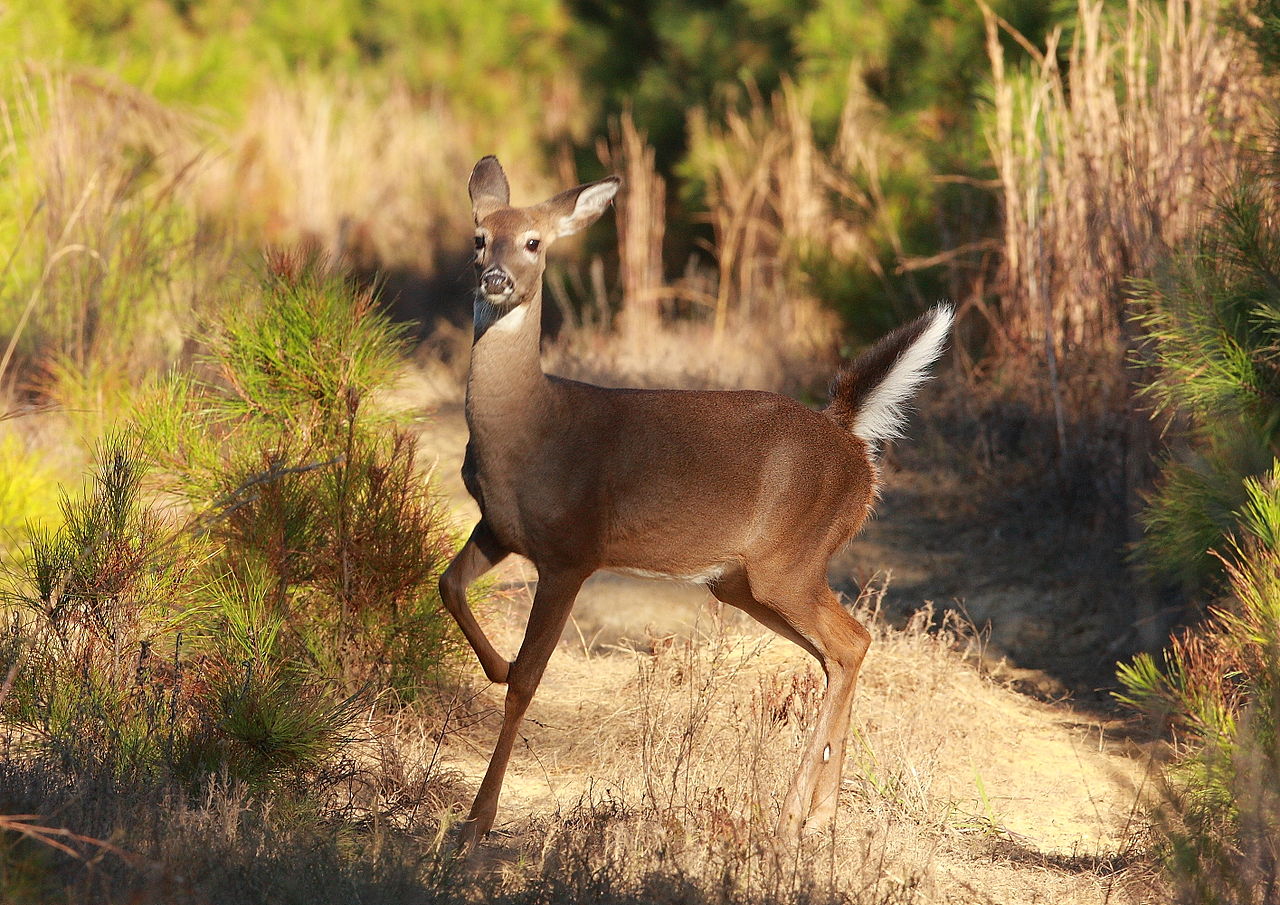
USA - Deer causing soybean losses across state
21.07.2016 279 views
Clemson University researchers are attempting to save South Carolina’s soybean growers millions of dollars each year by investigating alternative methods for reducing damage caused by white-tailed deer.
Extension specialists Jeremy Greene, David Gunter, Cory Heaton and Jonathan Croft are conducting trials in soybean fields at Clemson’s Edisto Research and Education Center and also at a privately owned farm.
“Deer damage in soybean crops varies from insignificant to complete crop failure. Producers in high deer-density areas of South Carolina frequently see 50% or greater yield losses as a result of deer feeding activities,” said Heaton, a Clemson Extension agriculture and natural resources agent. “Identifying effective repellents could greatly reduce the multimillion dollar losses South Carolina farmers are currently experiencing each year.”
Orangeburg County farmer Tommy Bozard has been struggling with deer damage in his soybean fields for years despite trying a variety of methods to ward off the large ruminants. In many instances, portions of his planted acreage have been completely destroyed.
“Farmers like Mr. Bozard are desperate to find a solution that will allow them to make a crop,” Heaton said. “Unless you have farmed, it’s hard to describe the disgust that comes from seeing someone’s livelihood destroyed during the night.”
In keeping with the organizational mission, Clemson Extension Service is working to help solve this major production issue. The ongoing trials will evaluate insecticides that are commonly used on soybeans throughout the state, some of which are believed to have some effectiveness at repelling deer. In addition to the insecticides, five commercially available deer repellents will be included in the trials, which will include three weekly sprays following emergence of soybean plantings. Deer damage to these plantings will be monitored throughout the spray regime and for two weeks after the third spray.
Data collected from the study will be analyzed in hopes of identifying successful deer repellent combinations to improve production abilities for soybean growers in high deer-density areas.
“We hope to identify effective deer-repellent strategies that are feasible for South Carolina growers and that can be easily incorporated into the crop management program,” Heaton said.
Trials were planted in mid-June following the wheat harvest. Soybeans received their initial repellent spray shortly after emergence. Beans will be sprayed with their corresponding treatment two more times. Deer damage to beans has been monitored weekly since their emergence and will continue to be monitored until the end of July. Producers can expect to see research results by the end of the growing season.
In South Carolina, damage caused by deer can range from barely noticeable to complete crop failure. Growers in areas with high deer densities have often abandoned soybean production because of the devastating impacts of deer feeding on yields. Farmers often apply for deer depredation permits from the S.C. Department of Natural Resources that allow farmers to apply lethal control techniques to reduce deer numbers in crop fields.
“Depredation permits are not solving deer damage issues for all farmers,” Heaton said. “Removal of deer through depredation permits requires significant night-time work on top of the daily duties of running a farming operation. Farmers can’t spend 24 hours a day monitoring each field. Our research aims to identify a passive technique that will provide around-the-clock protection without the presence of a farmer.”
Source - manninglive.com
EVENTS

ScaleAgData Stakeholder Engagement Event
22.10.2024The ScaleAgData project is pleased to invite you to our second stakeholder event. Building on the discussions and connections formed during our first webinar, this event will focus on fostering collaboration among stakeholders, providing updates on our project’s progress, and outlining future opportunities for engagement.
RISK EVENTS

Moldova - May frosts caused heavy damage to fruit orchards
10.05.2026The first frosty nights of May have significantly worsened estimates of damage to Moldova's fruit sector from spring frosts. According to initial assessments by fruit market operators, between a quarter and a third of the country's total orchard area was seriously affected.
04.06.2026

India - Delhi raises crop damage compensation after 10 years by over 50% to Rs 75,000 per hectare
In a major relief for farmers, the Delhi government has increased compensation for crop loss caused by rain and hailstorms from Rs 20,000 per acre to Rs 75,000 per hectare.
04.06.2026

Why Tech-Driven Agro-Insurance Has Stumbled in Ethiopia
For decades, Ethiopia’s agricultural sector has remained trapped in a dangerous paradox.
04.06.2026
UK - Rural crime cost Wales £2.2m last year despite fall in offences
Rural crime cost Wales an estimated £2.2 million last year, with organised criminals continuing to target tractors, livestock and farming equipment despite an overall fall in offences, according to a new report.
04.06.2026

Kenyan Agro-Insurance Startup, Pula Raises US$ 20 Million in Series B Round
Pula, a Kenyan startup that offers insurance to small-scale farmers, aims to serve more than 100 million farmers in Africa after raising US$ 20 million in its Series B round.
04.06.2026
USA - USDA announces $52M to boost public access to private lands for hunting, fishing
The U.S. Department of Agriculture is announcing $52 million to help state and tribal governments encourage private landowners to allow public access to their land for hunting, fishing and other wildlife-dependent recreation through the Voluntary Public Access and Habitat Incentive Program (VPA-HIP).
04.06.2026

Hope Grows in Malawi’s Grain Stores as Farmers Battle Post-Harvest Losses
Some grain rots in poorly ventilated storage. Some is eaten by pests. Some is damaged during drying or transportation before it ever reaches the market.
03.06.2026

Canada - AFSC extends several northern Alberta seeding dates for 2026
Alberta’s Agriculture Financial Services Corp. (AFSC) is extending the recommended seeding dates in the province’s northeast, northwest and Peace regions for several crops for the 2026 growing season only.
03.06.2026

India - Elephants run amok in Konaje agricultural farm, cause massive crop damage
A herd of elephants, including calves, wreaked havoc on an agricultural farm belonging to Yashodhara Gowda at Pallattadka in Konaje village of Kadaba taluk.
