USA - Federal assistance available to local farmers suffering drought losses

19.01.2017 422 views
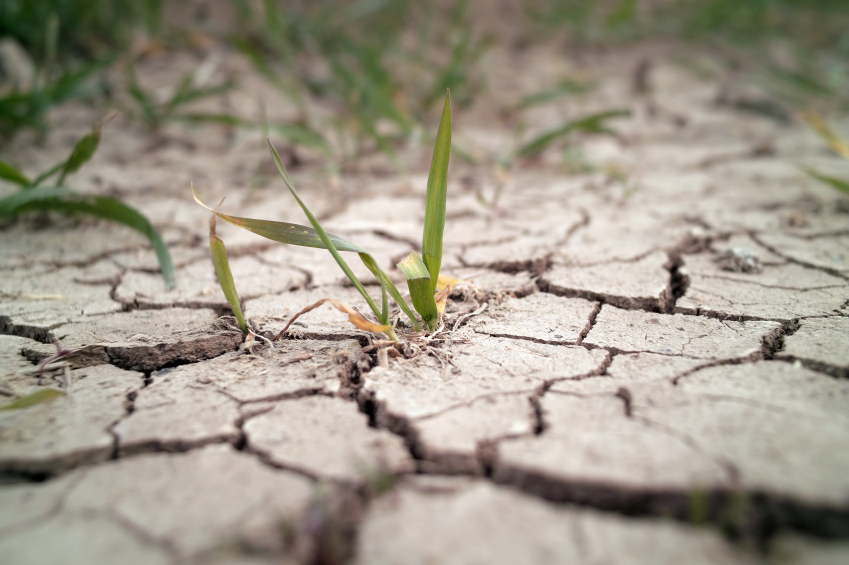
Beginning in the fall and lasting into the winter, acute drought conditions wreaked havoc on the local agricultural industry. Anthony Shelton, director of the Washington County Extension of the University of Tennessee Institute of Agriculture, said the drought had been the hot topic around most local agriculture circles. “As far as row crops, it’s just (been) poor pollination and a lack of rainfall to finish out the crop. And of course, we had an OK first cutting of hay, but didn’t really have a second cutting of hay, at all. So of course, we didn’t have any grass growing for about two or three months during (the drought),” Shelton said. “And we did have a little bit of a water shortage, whether it was ponds drying up or some other things. An excess of heat, just so many hot days, dried all the moisture up and didn’t help things.” In December, the federal government responded when Secretary Tom Vilsack with the U.S. Department of Agriculture designated 46 counties, including Greene County, as primary natural disaster areas and made each eligible for federal assistance.
Along with the primary natural disaster areas, farmers in 45 contiguous counties were granted eligibility for federal assistance, including Washington, Unicoi, Sullivan, Lee and Scott counties.
“Our hearts go out to those Tennessee farmers and ranchers affected by recent natural disasters,” Vilsack stated in a press release announcing the designation. “President Obama and I are committed to ensuring that agriculture remains a bright spot in our nation’s economy by sustaining the successes of America’s farmers, ranchers, and rural communities through these difficult times. We’re telling Tennessee producers that USDA stands with you and your communities when severe weather and natural disasters threaten to disrupt your livelihood.” On a local perspective, the Farm Service Agency’s office in Jonesborough is facilitating lending to cover losses any farmer or livestock owner experienced during the drought. Farm Loan Officer Matthew Christian, whoss office is at 1105 E. Jackson Blvd., said assistance is available in two forms: emergency loans and operating loans. “As far as actual producers that we’ve made emergency loans to, I honestly have not made an emergency loan in several years, but we’ve made a whole lot of just regular operating loans to folks who’ve suffered through this disaster or previous ones,” Christian said. The emergency loans, which have a little higher interest rate than the operating loans, do require producers to meet specific guidelines, such as provide proof of losses. “Producers do have to show a 30 percent loss for a single crop due to a specific disaster, such as a drought in this case,” Christian said. That is normally completed by showing historical records of production yields or through crop insurance. Depending on the loan amount, applicants also have to show proof of declination from local credit lenders in the area for emergency loans. Qualifying farmers can borrow up to 100 percent of their actual loss up to $500,000, while operating loans are capped at $300,000, Christian said. Rainfall conditions in Northeast Tennessee have improved in recent weeks, with the majority of the region being moderately dry as opposed to being classified as a severe or extreme drought, according to The National Drought Mitigation Center’s U.S. Drought Monitor. Christian said any agricultural producer needing assistance can call him to discuss each type of loan and decide which one would be most beneficial. Source - http://www.johnsoncitypress.com

04.06.2026

India - Delhi raises crop damage compensation after 10 years by over 50% to Rs 75,000 per hectare

In a major relief for farmers, the Delhi government has increased compensation for crop loss caused by rain and hailstorms from Rs 20,000 per acre to Rs 75,000 per hectare.

04.06.2026

Why Tech-Driven Agro-Insurance Has Stumbled in Ethiopia

For decades, Ethiopia’s agricultural sector has remained trapped in a dangerous paradox. 

04.06.2026

UK - Rural crime cost Wales £2.2m last year despite fall in offences

Rural crime cost Wales an estimated £2.2 million last year, with organised criminals continuing to target tractors, livestock and farming equipment despite an overall fall in offences, according to a new report.

04.06.2026

Kenyan Agro-Insurance Startup, Pula Raises US$ 20 Million in Series B Round

Pula, a Kenyan startup that offers insurance to small-scale farmers, aims to serve more than 100 million farmers in Africa after raising US$ 20 million in its Series B round. 

04.06.2026

USA - USDA announces $52M to boost public access to private lands for hunting, fishing

The U.S. Department of Agriculture is announcing $52 million to help state and tribal governments encourage private landowners to allow public access to their land for hunting, fishing and other wildlife-dependent recreation through the Voluntary Public Access and Habitat Incentive Program (VPA-HIP). 

04.06.2026

Hope Grows in Malawi’s Grain Stores as Farmers Battle Post-Harvest Losses

Some grain rots in poorly ventilated storage. Some is eaten by pests. Some is damaged during drying or transportation before it ever reaches the market.

03.06.2026

Canada - AFSC extends several northern Alberta seeding dates for 2026

Alberta’s Agriculture Financial Services Corp. (AFSC) is extending the recommended seeding dates in the province’s northeast, northwest and Peace regions for several crops for the 2026 growing season only.

03.06.2026

India - Elephants run amok in Konaje agricultural farm, cause massive crop damage

A herd of elephants, including calves, wreaked havoc on an agricultural farm belonging to Yashodhara Gowda at Pallattadka in Konaje village of Kadaba taluk.