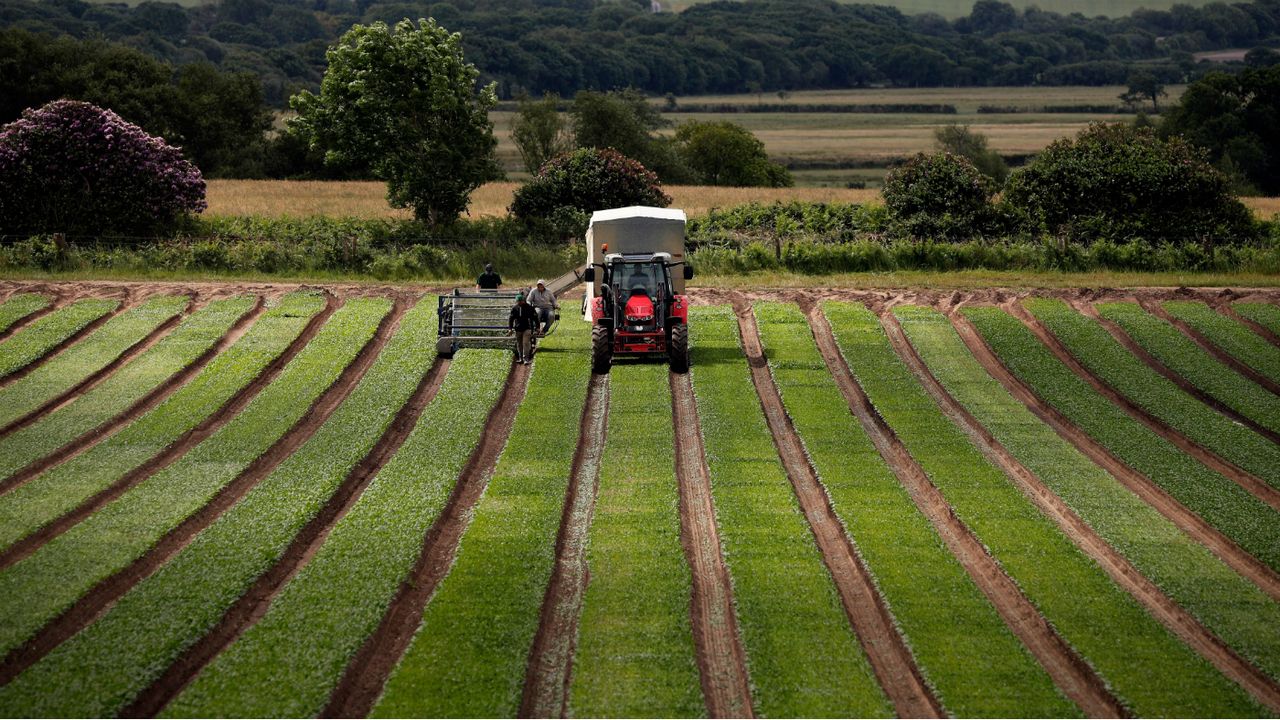
The growth of biotech crops in the United States appears to have hit a plateau, but farmers are accelerating plantings of genetically modified corn and rice in Asia, notably China, although it still remains a much smaller market, according to an industry report issued Thursday.
Farmers around the world grew a record 175.2 million hectares (433 million acres) of biotech crops in 2013, up 3 percent from 2012, with American and Brazilian farmers continuing to be the dominant users, according to the International Service for the Acquisition of Agri-biotech Applications (ISAAA), a pro-biotech industry organization.
Critics of GMO crops accuse the ISAAA of inflating figures in the European Union and developing countries to show growing support for biotech crops. Particularly in the European Union, opponents of biotech crops say they lead to increased pesticide use and environmental damage and have not been proven safe for human and animal consumption. Backers say the crops are no different to normal crops. "Biotech crops are demonstrating their global value as a tool for resource-poor farmers who face decreased water supplies and increased weed and pest pressures - and the effects of climate change will only continue to expand the need for this technology," said ISAAA Chairman Clive James in a statement.
Farmers in the United States planted an estimated 70.1 million hectares, or 173 million acres, last year with corn, soybeans, cotton, canola, alfalfa and other crops that have all been genetically altered, the report said. That was up less than 1 percent over 2012 plantings. In Brazil, farmers planted 40.3 million hectares, or 99.5 million acres to biotech soy, corn and cotton, up 10 percent over 2012, according to the International Service for the Acquisition of Agri-Biotech Applications (ISAAA), a pro-biotech industry organization that annually releases a survey of biotech crop plantings around the world.
GMO GROWTH IN CHINA, EU
While growth was hitting a plateau in the United States, where biotech crops were first introduced in 1996, plantings in China grew 5 percent in 2013 to 4.2 million hectares (10 million acres), the report said. Overall, ISAAA said the global value of biotech crops was estimated at $15.6 billion in 2013, up from $14.6 billion in 2012. Monsanto Co, DuPont, Syngenta and other global chemical and seed companies have over the last 18 years rolled out a variety of genetic traits for agricultural seeds. The most popular genetically modified (GM) traits alter crops such as corn, soybeans and cotton so that they can be sprayed with weed killer and still thrive, or resist damaging pests.
The European Union continued to be a difficult market for biotech crop. Five European Union countries planted a record 148,013 hectares, or 365,000 acres, of biotech corn last year, up 15 percent from 2012, the ISAAA report said. Farmers in Spain were the largest users of the biotech seed referred to as "Bt," planting 94 percent of the total biotech corn in the EU.
Not all countries where farmers have been trying biotech crops were expanding their use. Biotech crop plantings dropped 7 percent in Canada in 2013 compared to 2012; and plantings held steady or dropped in South Africa, Australia and Mexico.
CRITICS SAY NUMBERS DOUBTFUL
Some critics of biotech crops say the numbers are dubious and the report is more promotional than factual. "The numbers are incredibly doubtful... totally doctored," said Anuradha Mittal, executive director of the Oakland Institute, a California-based think tank and policy group that focuses on global agriculture. "It is an industry publication and they use fake numbers to show a groundswell of use of GMO crops," she said. "But the evidence is coming in around the world that shows the crops are failing and farmers are turning away."
Last year the Africa Centre for Biosafety accused ISAAA of inflating plantings in South Africa and said that ISAAA's numbers were at odds with a trend there away from GMO plantings. Also in 2009, critics accused ISAAA of inflating numbers for crop plantings in the European Union.
ISAAA spokesman John Dutcher said the group would not comment on the complaints.
Source - http://www.reuters.com/
USA - Growth of biotech crops