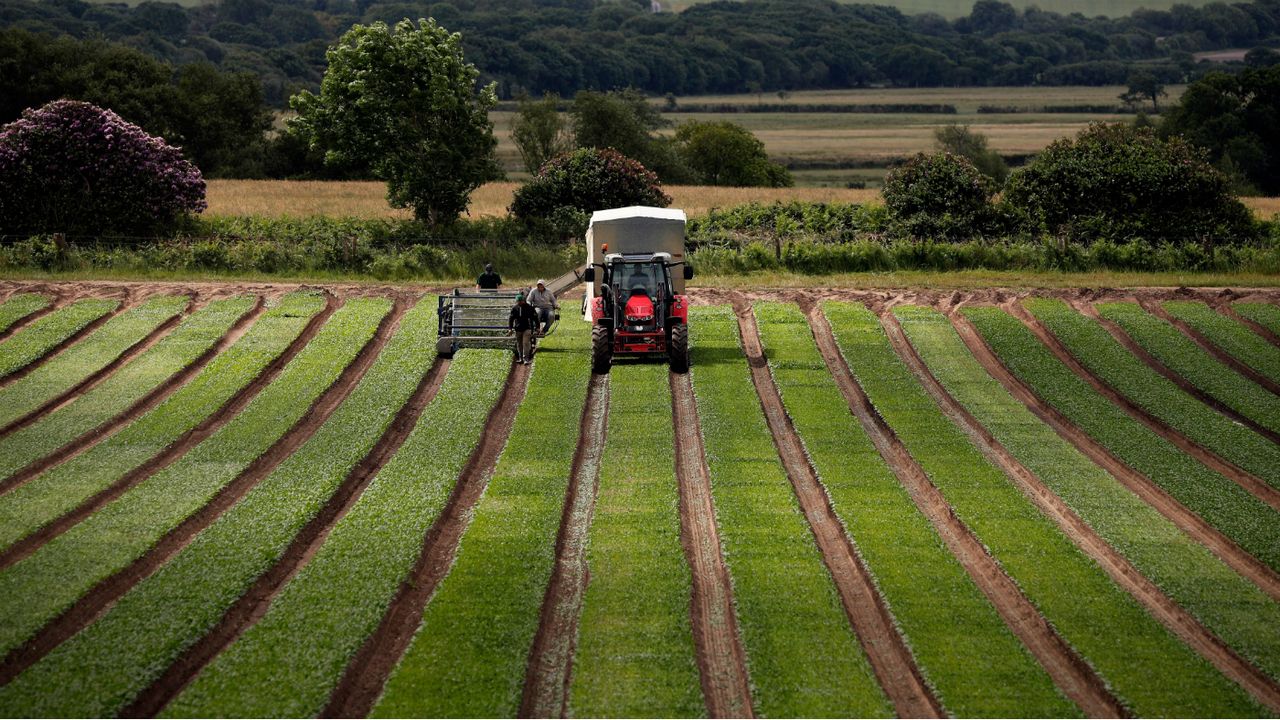
The state shall decide whether wheat shall be grown this year or paddy. The state shall decide how much area will be given for which crop. The state shall decide how much of the crop shall be allowed to come to the market and how much of that shall be destroyed to prevent distress sales.
The state shall also decide whether a particular agricultural area should be kept fallow or allowed to be cultivated. Sounds too Orwellian, as if the great ‘Big Brother ‘ is remote-controlling the agricultural choice of its farmers!
It would surprise many to know that even today countries like the USA and Europe decide the cropping pattern and the agricultural produce that goes to the market to a certain extent.
Every state in India is free to decide its own policies and priorities in agriculture as it is a state subject as per the constitutional scheme of our federal system. Although there is a huge agriculture ministry in the Union Government with a large financial outlay, the centre does not have any mandatory power in deciding any agricultural policy for the states. Since agriculture is directly linked to the food-chain process and has a direct impact on the environment as well as the economy, some analysts feel that there should be certain policies for deciding the broad parameters of agricultural growth in the country.
Should rain-deficient and groundwater deficient Rajasthan grow a water intensive crop like sugar cane and put tremendous stress on the scarce water resources of the state?
When the natural paddy bowl states in eastern India, blessed with abundant rainfall, can meet the entire rice requirement of the economy with much less cost and some timely and proper state support, should Punjab, traditionally a wheat-growing state, be allowed to grow rice, the basmati variety?
Thanks to free electricity for the farm sector in Punjab, we find excessive utilisation of ground water and salinity ingress that are fraught with grave environmental problems, which are often irreversible. Should areas in water-parched north Gujarat be allowed to grow three crops, just because electricity charges for energising the pumps are almost free? This has led to the groundwater depleting fast to dangerous levels of more than 1,000 feet.
In fact, the environmental implications along with the economic considerations need to be the focus of a national debate on reformulating a new framework for our national agriculture. A group of chief ministers had made certain recommendations to this effect. Based on the environment implications and economical considerations, the country should decide which area should grow what crop in a manner that the country’s requirements, both internal needs and exports are met.
Water harvesting and efficient irrigation practices should be made mandatory in order to get subsidised agricultural inputs, including electricity, so that it leads to zero wastage of water.
Once advance inputs are available about the area under cultivation for various crops and the condition of the likely output before the harvesting time, the state can make much better interventions to ensure a better realisation to the farmers as well as prevent runaway price rise as it happened in case of onions recently.
Since we have a federal system, how such centralised control over deciding key agricultural issues can be achieved, without ruffling the states, is a major challenge. The farming community’s interests also need to be kept in mind while deciding such principles. But such issues cannot be neglected for too long as environmental damage does not recognise federal and centre-state issues.
Source - http://www.dnaindia.com/