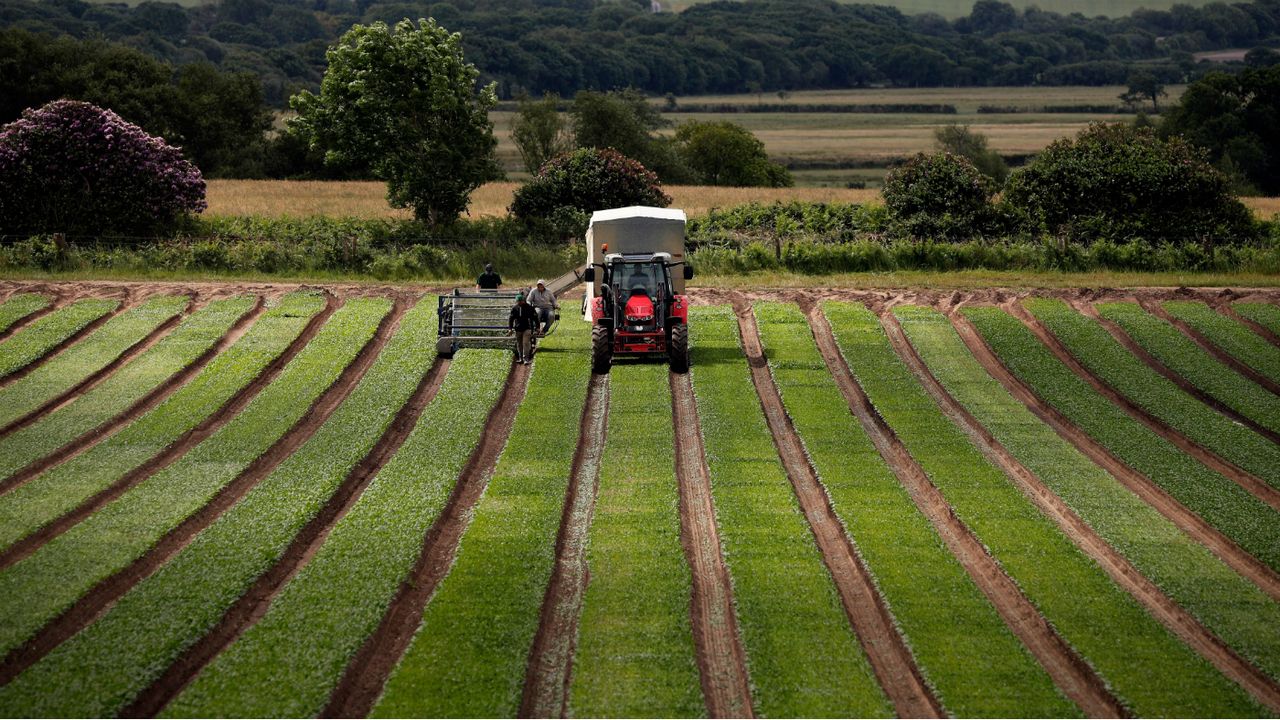
This winter's deep freeze pushed Northwest Indiana pork producers' overhead upward and almost guaranteed a delayed planting season for area grain farmers.
"The start to plant date is usually around April 15. Corn will not germinate until the soil is 50 degrees at the seed depth," Lake County Farm Bureau President Tom Keithley said. He predicted cold spring days ahead, too, when the wind is off Lake Michigan due to all the ice on the lakes this year.
"Having said all that, we can still have a very good season even if crops are planted a little late. It's a long growing season, and there are usually bumps to go through. We just don't like starting out in a pothole," Keithley said.
Grain farmers will benefit from the extreme temperatures experienced, Keithley said. "The freezing and thawing will help break up some (soil) compaction, which is a good thing," he said.
In Shelby, Jeff Clinton said his hog operation has benefited from recent mild winters since hogs require sustained, warmer temperatures. "We've been pretty fortunate the last few years with no consistent frigid temperatures," he said.
This winter has averaged 20 degrees daily, Clinton said. "I'm sure the heating cost has at least doubled, if not more. Our hogs are all indoors under climate control in 68-degree rooms," he said. The operation has natural gas heat.
Keith Kleine raises hogs for show in Cedar Lake. Like Clinton, his heating costs have more than doubled. "I have natural gas, so it's not as high," he said. Many hog farmers have been dramatically affected, he said, because they have had to deal not only with higher usage, but also with the huge price increases in LP gas.
Kleine said freezing temperatures have also aided in the spread of PED, Porcine Epidemic Diarrhea.
Sarah Ford, of Indiana Pork Producers, Indianapolis, said nationwide, 4 million piglets have died of the disease. Veterinarians she has consulted say most viruses spread in cold, damp conditions.
PED cases have been reported in Newton, Jasper and Starke counties in Northwest Indiana, Ford said.
In January, the deep freeze affected river transportation for grains when Midwest river conditions declined and slowed grain movement. Many grain elevators were unable to move stored grain product out of their facilities.
Locally, Keithley said most farmers took advantage of the fairly recent thaw. "I was able to get my corn out," he said.
River transportation will be further affected in the spring, Keithley said, when flooding could, again, slow down grain movement and affect grain prices.
Hebron farmer Bobby Hayden said yields can be adversely affected, too, if snow continues to push planting time later into spring. "You only have so many days. It can hurt the yield in the long run," he said.
Hayden said there will be benefits to the colder temperatures and greater snowfalls. "It'll kill off some of the insects, and the snow cover's been good for the wheat crop," he said.
Source - http://www.nwitimes.com/