Some years November can be an extension of fall and March the beginning of spring, but not in this, the season many Iowans will remember as the five-month winter.
The average statewide temperature from Nov. 1 through March 31 was 21.4 degrees – 6.4 degrees cooler than normal – making that five-month period the ninth coldest in the 142 years that Iowa has kept records, according to State Climatologist Harry Hillaker.
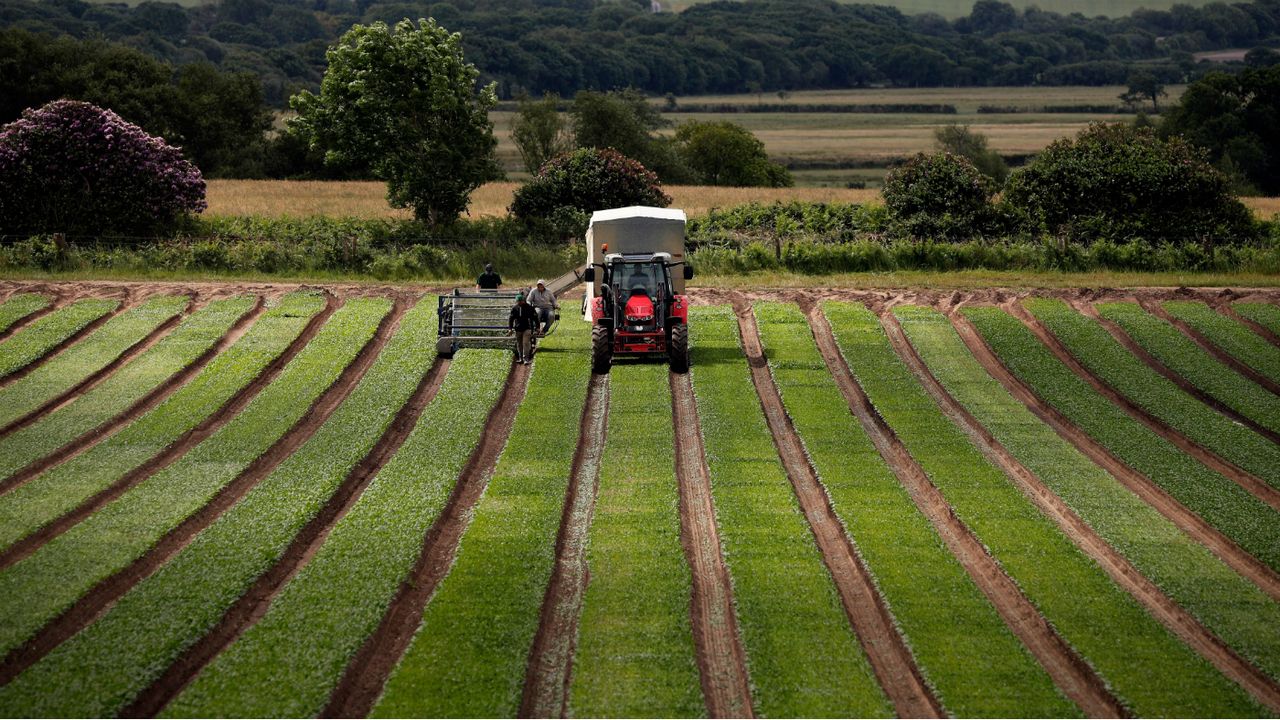
The tardy spring has farmers concerned that they may get a late start planting their corn crop for the second year in a row, said Mark Licht, an extension agronomist at Iowa State University.
“With the cards dealt to us so far, we have a long way to go,” Licht said.
Under ideal conditions, Iowa farmers would plant most of their corn the last week of April and the first week of May, with soil temperatures above 50 degrees and rising, said Virgil Schmitt, an ISU Extension agronomist for Eastern Iowa.
“With normal temperatures the next three weeks, we could still get there, but the outlook is for a cooler than normal April,” Schmitt said.
Cold damp conditions delayed planting last year, when just 8 percent of the state’s corn was planted by May 5, which compares with 56 percent on that date in a normal year.
As of Sunday, 4-inch soil temperatures ranged from 34 degrees in portions of southeast Iowa to 41 degrees in east-central Iowa.
The deeply frozen soil that broke pipes and disrupted water supplies in many Iowa towns and cities “is rapidly going away,” Hillaker said.
In most locations, the frost is out of the ground, which will enable rainfall to soak in for later use by crops, Schmitt said.
March, with an average temperature of 29.5 degrees, 6.4 degrees cooler than normal, was the state’s 22nd coldest March, according to Hillaker.
The state’s seventh-coldest February, whose average temperature of 12.6 degrees was 11.4 degrees colder than normal, was the winter’s coldest month, he said.
January, with an average temperature of 13.9 degrees, 5.5 degrees colder than normal, was Iowa’s 35th coldest January.
With an average temperature of 17.3 degrees, the state’s 17th coldest December was 5.6 degrees cooler than normal.
Of the five months, November, the 37th coldest on record, was the closest to normal. Its average temperature of 33.7 degrees was just 2.9 degrees below normal.
If there was a plus side to the cool March, it’s that winter snow accumulations melted gradually, allowing the water to run off with no serious flooding, Hillaker said.
An analysis of Iowa’s 25 coldest winters reveals that 14 of the following Aprils had colder than normal temperatures, according to Hillaker.
The entire springs were cooler than normal in 16 of those 25 years, and the subsequent summers were cooler than normal in 15 of those 25 years, he said.
Source - http://thegazette.com/