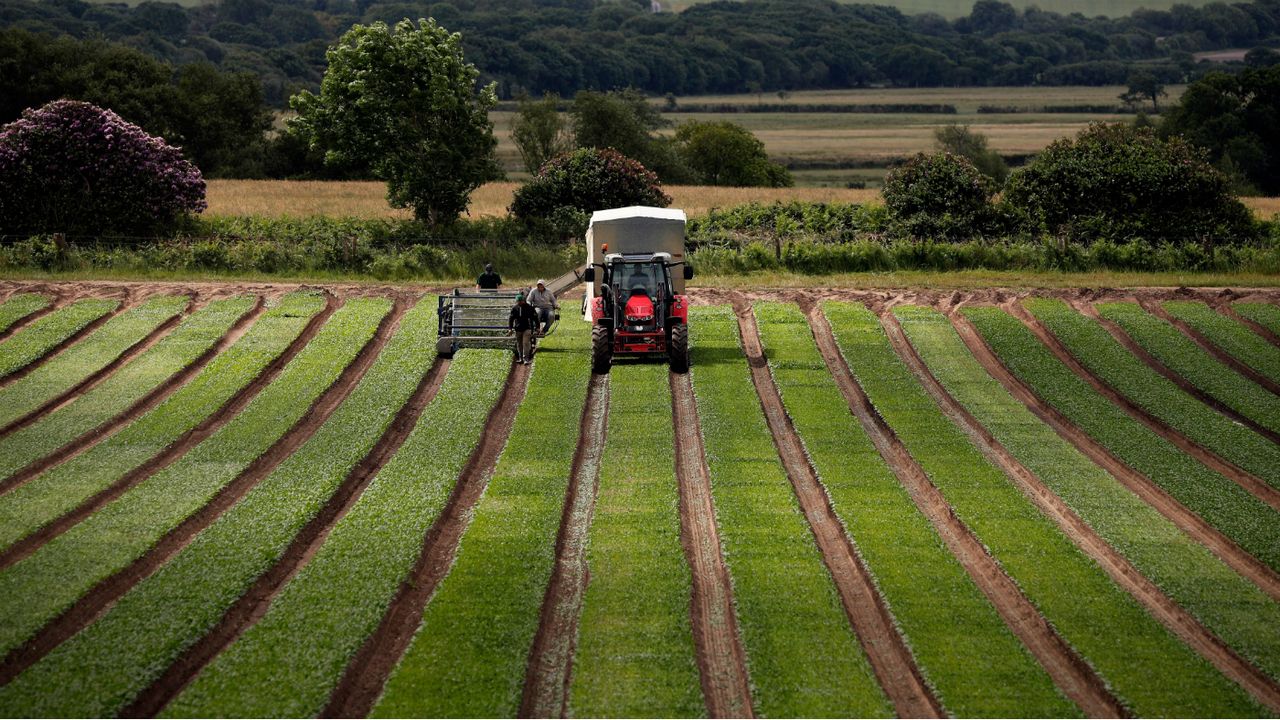
A study led by the University of Leeds has shown that global warming of only 2 C will be detrimental to crops in temperate and tropical regions, with reduced yields from the 2030s onwards.
Professor Andy Challinor, from the School of Earth and Environment at the University of Leeds and lead author of the study, said: “Our research shows that crop yields will be negatively affected by climate change much earlier than expected.
“Furthermore, the impact of climate change on crops will vary both from year to year and from place to place — with the variability becoming greater as the weather becomes increasingly erratic.”
The study, published today by the journal Nature Climate Change, feeds directly into the Working Group II report of the Intergovernmental Panel on Climate Change (IPCC) Fifth Assessment Report, which is due to be published at the end of March 2014.
In the study, the researchers created a new data set by combining and comparing results from 1,700 published assessments of the response that climate change will have on the yields of rice, maize and wheat.
Due to increased interest in climate change research, the new study was able to create the largest dataset to date on crop responses, with more than double the number of studies that were available for researchers to analyze for the IPCC Fourth Assessment Report in 2007.
Shift in consensus
In the Fourth Assessment Report, scientists had reported that regions of the world with temperate climates, such as Europe and most of North America, could withstand a couple of degrees of warming without a noticeable effect on harvests, or possibly even benefit from a bumper crop.
“As more data have become available, we’ve seen a shift in consensus, telling us that the impacts of climate change in temperate regions will happen sooner rather than later,” said Professor Challinor.
The researchers state that we will see, on average, an increasingly negative impact of climate change on crop yields from the 2030s onwards. The impact will be greatest in the second half of the century, when decreases of over 25 per cent will become increasingly common.
These statistics already account for minor adaptation techniques employed by farmers to mitigate the effects of climate change, such as small adjustments in the crop variety and planting date. Later in the century, greater agricultural transformations and innovations will be needed in order to safeguard crop yields for future generations.
“Climate change means a less predictable harvest, with different countries winning and losing in different years. The overall picture remains negative, and we are now starting to see how research can support adaptation by avoiding the worse impacts,” concludes Professor Challinor.
The study was financially supported by the NERC EQUIP program and the CGIAR Research Program on Climate Change, Agriculture and Food Security (CCAFS), with the financial assistance of the European Union, Canadian International Development Agency, World Bank, New Zealand Ministry of Foreign Affairs and Trade and Danida.
Source - http://www.manitobacooperator.ca/