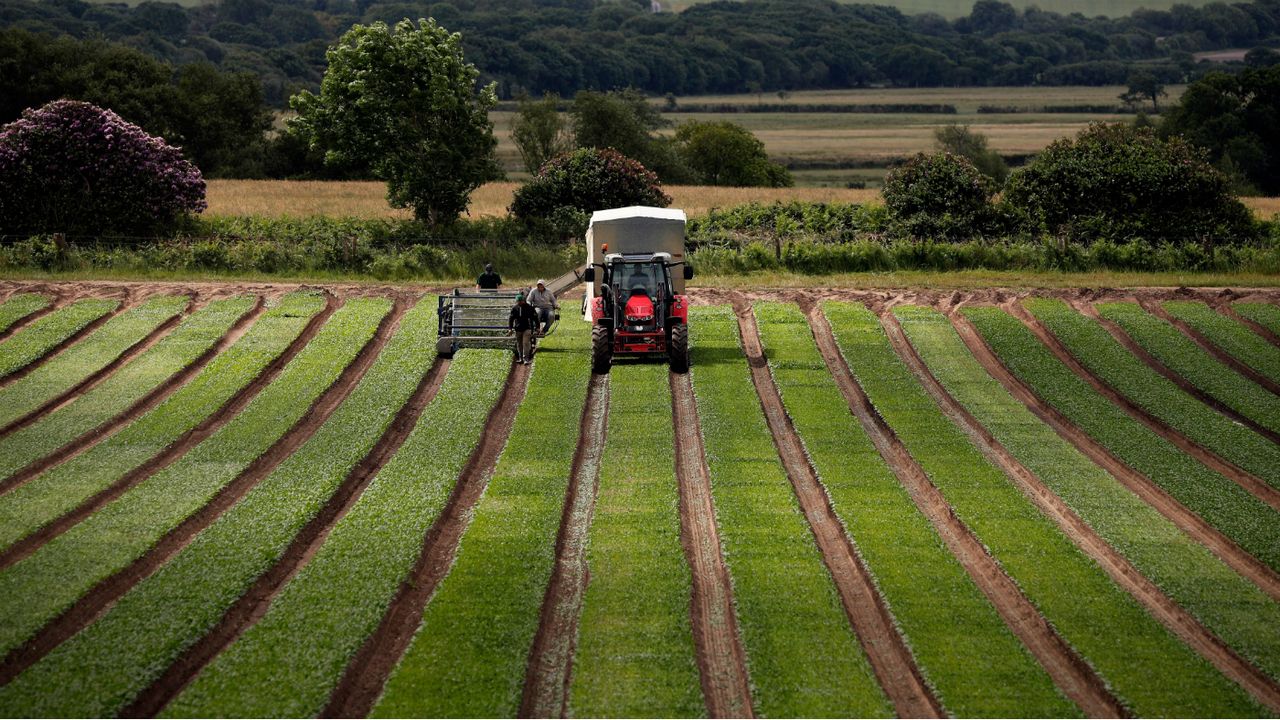
The Asian Development Bank (ADB) and the Government of Bangladesh today signed a grant agreement of $2 million to develop innovative new crop insurance products that will give small-holder farmers in Bangladesh income protection from increasingly severe storms and natural disasters. The Government of Japan is providing the grant through the Japan Fund for Poverty Reduction. ADB will administer the fund, and provide technical support for implementing the Weather Index-Based Crop Insurance Project. The Government of Bangladesh is providing in-kind support of $420,000.Saifuddin Ahmed, Joint Secretary, Economic Relations Division (ERD) signed the agreement on behalf of Bangladesh government while Oleg Tonkonojenkov, Officer-in-Charge and Deputy Country Director of ADB’s Bangladesh Resident Mission signed the agreement for ADB at a ceremony at ERD, Sher-e-Bangla Nagar, Dhaka. Takayuki Kawakami, First Secretary, Embassy of Japan in Dhaka, among others, also attended the ceremony. The project will design and pilot crop insurance products over a three year period in selected districts, with the goal of providing coverage to at least 12,000 farm households.“Small scale farmers with few resources are typically unable to insure their crops against extreme weather events and can lose their entire income every time a storm hits,” said Oleg Tonkonojenkov. “Extreme weather events are on the rise and the goal of the project is to develop and pilot a new affordable type of insurance product which will allow and encourage more farmers to protect their livelihoods.” Bangladesh is one of the most climate-vulnerable countries in the world due to its geography, and there are estimates that agricultural gross domestic product from 2005 to 2050 will be 3.1% lower each year as a result of climate change. Despite the increasing demand, no crop insurance has been available in Bangladesh recently due to huge financial losses incurred in the traditional agricultural insurance. Weather index-based crop insurance, which incorporates historical weather and crop production data, is considered to be more cost-effective and efficient than traditional agriculture insurance as it reduces farm-level monitoring and transaction costs. Several countries in Asia, including India, Indonesia, Mongolia, the Philippines, Sri Lanka, and Thailand, have begun piloting or providing these products but this is the first time they are being trialed in Bangladesh. High transaction costs and poor outreach networks can make it costly to distribute insurance in rural areas—up to 40% of premium costs in some cases. This makes traditional crop insurance less affordable. This project will collaborate with different partners such as agricultural banks, multilateral financial institutions, and farmer cooperatives to develop and pilot new models of distribution that reduce transaction costs and make the business sustainable. To improve the accuracy of weather data, the use of space technology through remote sensing will be explored in collaboration with the Japan Aerospace Agency. The project will also upgrade at least 20 weather stations, and provide training and education on weather-indexed insurance to at least 400 staff from government and meteorological agencies, insurance companies, agricultural institutions, and civil society groups. Along with reduced premiums and improved distribution, the planned insurance scheme will provide other benefits to farmers, such as income support during lean periods, access to credit, and a buffer against loan defaults. Insurance literacy and climate risk awareness seminars will be provided to at least 6,000 small and marginal farmers. The project will also support the development of a regulatory and legal framework to accommodate the new ‘untraditional’ insurance products. The pilot project has been linked to the ADB-assisted Second Crop Diversification Project with the new products to be bundled with microcredit supplied by microfinance institutions to farmers shifting into higher value-added crops. ADB, based in Manila, is dedicated to reducing poverty in Asia and the Pacific through inclusive economic growth, environmentally sustainable growth and regional integration. Established in 1966, it is owned by 67 members – 48 from the region.