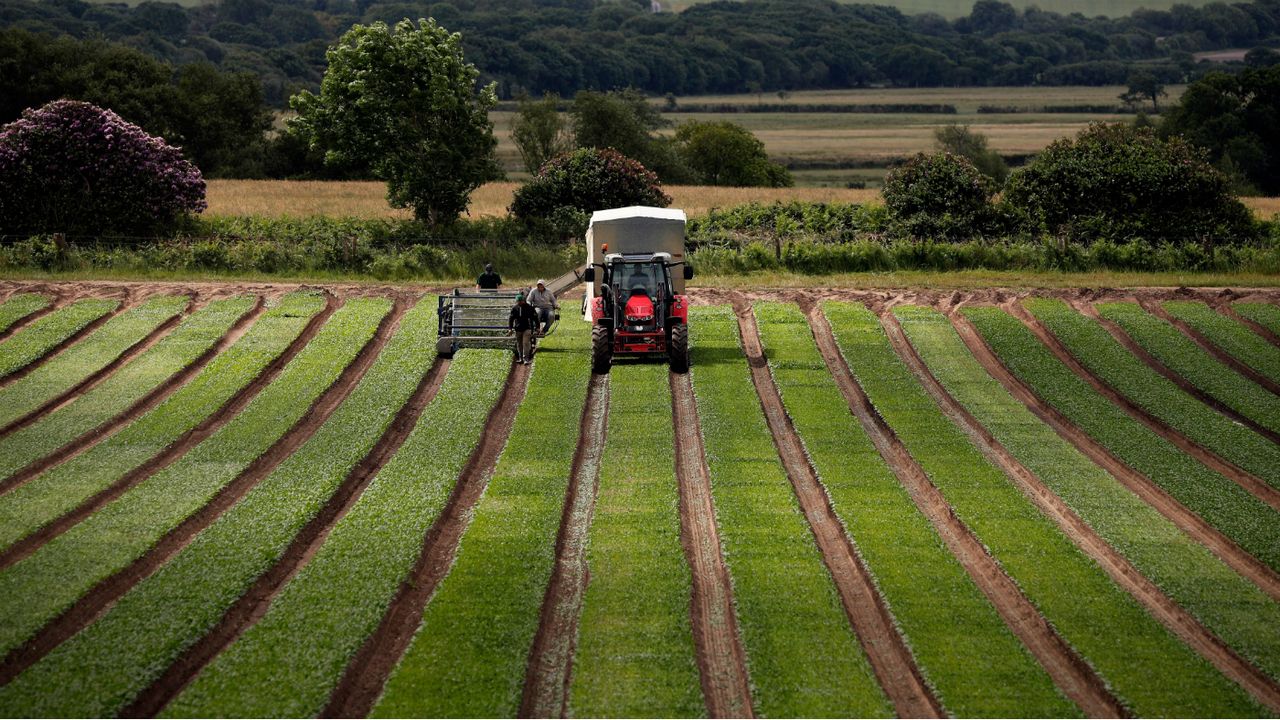
Local farmers are wistfully looking out their back window as stubbornly wet fields prevent them from hopping on the tractor to start planting their crops.
Planting the first set of crops -- cereal grains such as barley -- is already two weeks past the usual starting period of mid-April.
Farmers weren't too concerned with the amount of snow still left on the ground in early April, as a normal few weeks would still allow them to plant during the third week.
But cool days and intermittent rain has largely kept the heavy machinery in the yards.
"If the drying out lasts another seven days, it could have a bit of impact on yield," said Stephen Mellon, a South Mountain dairy farmer, who wants to plant 60 acres of barley.
Mellon said he might have to forego or limit barley planting if he hasn't started that crop by May 15.
But that will mean extra costs for feeding and taking care of his cow herd.
"I'd have to start looking to buy straw somewhere," he said.
Barley is not just used as a feed supplement, but the plant stalk is baled into straw, which dairy farmers use as bedding for cattle when they're inside the barn.
At about $50-$60 per bale, it would end up costing him about $9,000.
If conditions are right for corn by next week, he would rather put off barley in favour of corn.
Morrisburg area cash cropper Arden Schneckenburger is still not as concerned, as he doesn't plant cereal grain, only corn and soybeans.
"There has been a few fields 'scratched'," Schneckenburger said, of the very limited planting on fields that have the best drainage and soils.
Corn planting usually begins around May 5, but with the heavy rain on Wednesday and into Thursday, it's unlikely that date will be kept.
He said the spring thaw went faster than expected despite one of the coldest winters in decades.
He said the early snowfall insulated the ground and the snow pack was "more crystalized" or less condensed than normal.
"It evaporated very fast."
Agriculture ministry crop specialist Gilles Quesnel said the lateness in cereal grain planting is already affecting harvest yield.
He said farmers start losing yield for each day after April 25.
The loss increases for every day after May 1 to one bushel per acre per day. The price per bushel for top quality (human consumption wheat) is about $7. The average bushel per acre yield is about 50-55 bushels.
"So, it's costly," Quesnel said.
Livestock farmers are also getting behind in emptying their manure lagoons, which have filled up since last fall, by spreading it on fields.
Another potential crop victim is alfalfa seeding, which farmers undertake to replenish hayfields that may suffer damage over the winter.
Quesnel said it's important to seed alfalfa sooner than later in order for the new plants to get established or risk getting crowded out by weeds.
Despite the slow start to spring planting, normal to better growing conditions through spring and summer can overcome a late start.
The spring of 2011 was one of the soggiest ever, with some corn and soybeans planting finished off in early June.
But a warm summer sped along the growth and by fall harvest, most farmers were getting close to average yields.
Source - http://www.standard-freeholder.com/