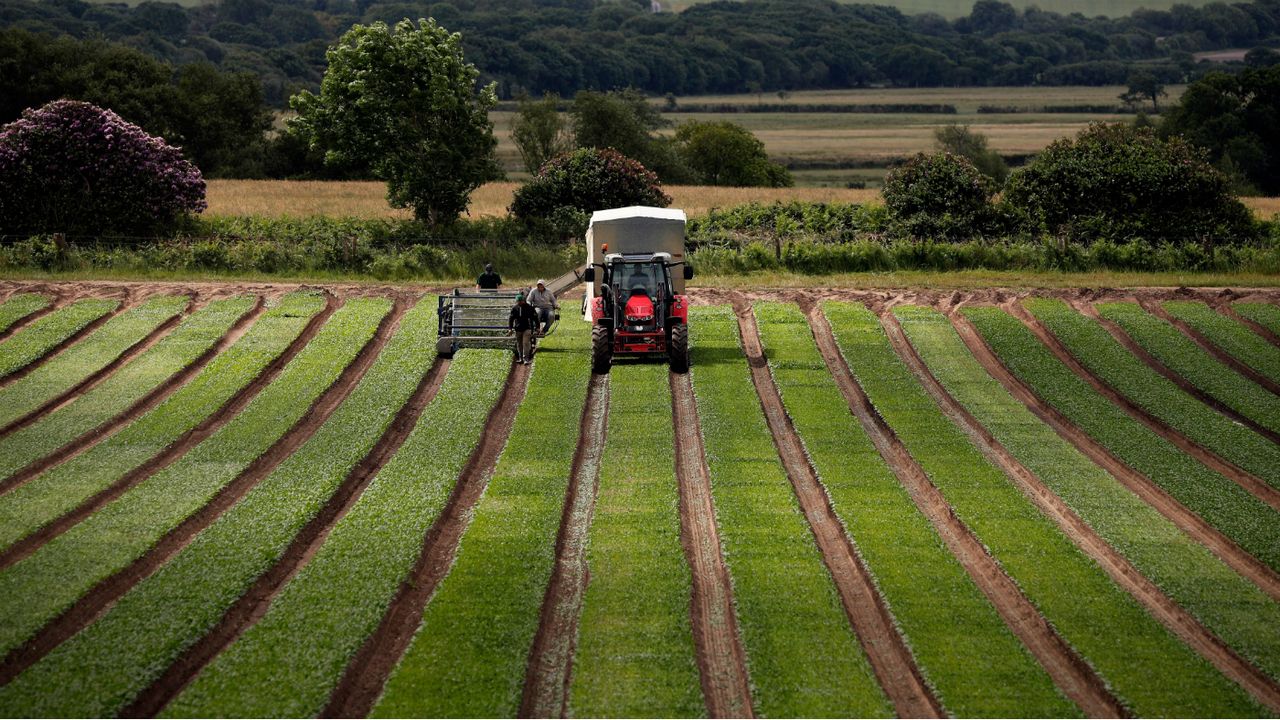
Rain and wind are washing away enough of Iowa’s fertile topsoil to potentially reduce crop yields by $1 billion, so researchers are working to develop a better way to measure erosion.
The Des Moines Register reported that researchers think parts of Iowa could be losing up to 12 times more soil than government reports suggest.
Iowa State University professor Rick Cruse is leading a team developing a new method to measure erosion’s impact that could paint a grim picture.
“We’re losing soil that’s highest in organic matter, highest in nutrients,” Cruse said. “We are losing the cream of the crop.”
Some of the most severe erosion happens in western and southeastern Iowa.
State Agriculture Secretary Bill Northey said erosion may be getting worse because conservation programs have been scaled back.
“Erosion is a decades-old problem,” Northey said. “We’re trying to figure out solutions that are right, individually as well as collectively.”
Having better data on erosion could strengthen arguments to expand federal conservation programs that pay farmers not to plant crops on highly erodible land or encourage taking steps like planting buffer strips of grass along streams.
Cruse’s new research will use a satellite system to track the type of soil on individual farms, crop rotation, conservation efforts and other factors. That data will be combined with precipitation information.
The Environmental Working Group released a 2011 report on erosion based on some of Cruse’s earlier work. Craig Cox, a senior vice president with that group, said there’s no reason to think conditions have improved since 2011.
“With the new model, we’re likely to have a more disturbing picture of how badly damaged some of the most vulnerable fields are,” Cox said.
Last year’s heavy spring rains — when nearly 18 inches of water fell in March, April and May — highlighted some of the problems of erosion. Northey said the rains kept nearly 730,000 acres from getting planted.
That prompted more farmers to try strategies such as planting a cover crop during the off-season to help keep soil in place.
“People are working hard to improve,” Northey said. “I think that needs to be appreciated. But we need to do more. ... Erosion control has to happen on 23 million acres.”
Source - http://www.kcrg.com/