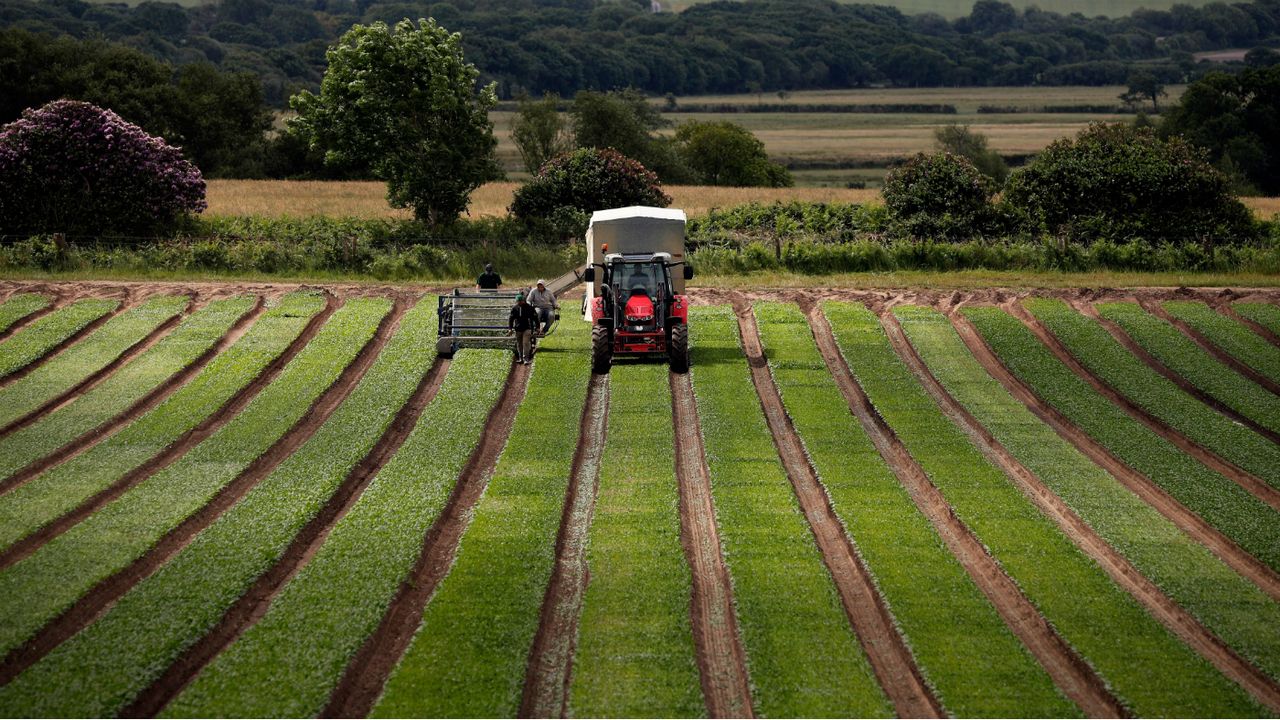
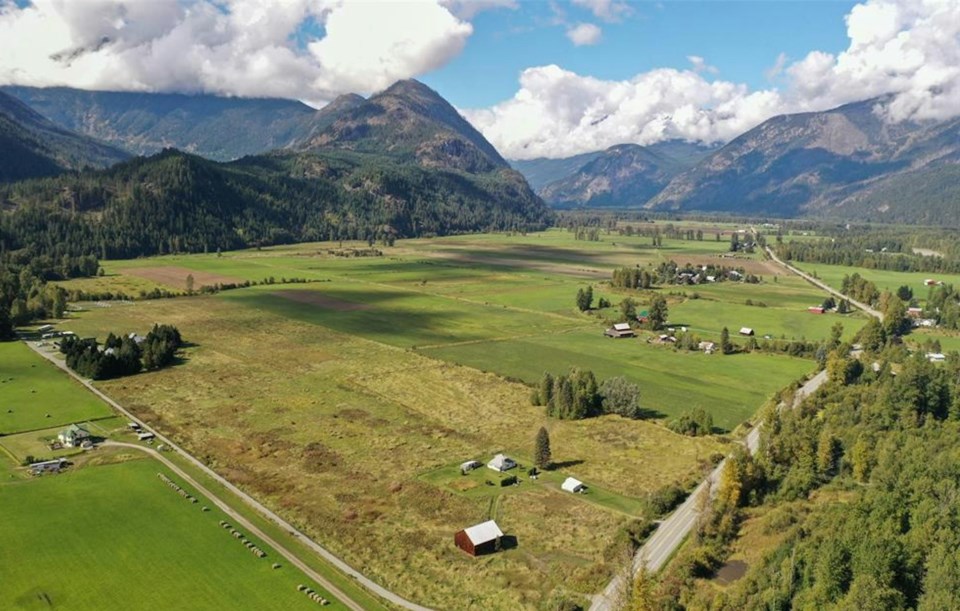
Some areas of Montana received heavy precipitation over the past two weeks and another round of damaging hail that impacted winter wheat, sugarbeets, and alfalfa, according to the USDA-National Agricultural Statistics Service Montana field office.
“We had damage from a previous hailstorm to sugarbeet fields, and they had to be replanted,” said Steve Lackman, Montana State University Yellowstone County Extension agent.
While the hail that damaged fields was three weeks ago, producers are still having rain events that are keeping them out of fields in the south central region of the state. Meanwhile, the city of Laurel in Yellowstone County received hail June 4.
“Yesterday in Billings, we received another half inch of rain, while the Laurel area had hail,” Lackman said, adding he hasn’t had time to check out the hail damage near Laurel yet. “We have had good moisture this year. The rain has been helpful to corn and grain crops that are already in the ground.”
The previous hailstorm damaged some alfalfa fields west of Billings.
“With hay as expensive as it is, that could be costly. However, the producer said the timely rains on his other fields will make up for the economic shortage on the alfalfa,” Lackman said.
The NASS reported there were 5.7 days suitable for field work compared to 2.2 days last year for this time period. Warm and mostly dry days allowed crop development to catch up with the five-year average of 3.5 days.
According to NASS, topsoil moisture was 69 percent adequate and 14 percent surplus compared with 59 percent adequate last year and the five-year average of 61 percent adequate and surplus.
Subsoil moisture was 75 percent adequate and 9 percent surplus compared to 60 percent adequate last year and surplus of 11 percent and the five-year average of 62 percent adequate.
Chet Hill, North Dakota State University Extension agronomist in Williston, N.D., said producers in the Yellowstone Valley had most of their crops planted, working around rain events.
Sidney received 1.29 inches of rain, while Scobey received .70 inches.
According to the NASS Montana field office, the highest rainfall was received at Plentywood in northeastern Montana with 4.64 inches of rain.
The highest temperature reading occurred at Broadus, in southeastern Montana, with 93 degrees and the low temperature occurred at Wisdom in southwestern Montana with 22 degrees.
Dry peas are slightly ahead of schedule with 97 planted compared with 93 percent last week and the five-year average of 92 percent planted. There are 81 percent of dry peas that have emerged, ahead of the five-year average of 70 percent.
Lentils are 97 percent planted, ahead of last year’s 94 percent and the five-year average of 94 percent. There are 51 percent of dry peas that have emerged, ahead of the five-year average of 70 percent.
Malting barley is 98 percent planted. That compares to the five-year average of 94 percent seeded. It is emerging with 88 percent emerged compared to 96 percent last year and the five-year average of 94 percent emerged. Barley is 2 percent in boot stage.
Canola is 92 percent planted, with the five-year average of 95 percent seeded. It is emerging with 65 percent emerged compared to 12 percent last year and the five-year average of 61 percent emerged.
Dry beans are 82 percent planted, with the five-year average of 63 percent seeded. It is emerging with 45 percent emerged compared to 27 percent last year and the five-year average of 26 percent emerged.
Spring wheat is 94 percent seeded, with the five-year average of 89 percent seeded. It is 82 percent emerged compared to the five-year average of 72 percent. Spring wheat is 1 percent in boot stage.
Durum is 86 percent seeded, with the five-year average of 82 percent seeded. It is 40 percent emerged compared to the five-year average of 52 percent.
Oats are 86 percent planted, with the five-year average of 87 percent. Oats are 61 percent emerged with the five-year average of 66 percent.
Potatoes are 55 percent planted, with the five-year average of 77 percent seeded.
Sugarbeets are 95 percent emerged with the five-year average of 82 percent emerged.
Corn is 88 percent planted, with the five-year average of 89 percent. Some 67 percent has emerged compared to the five-year average of 61 percent emerged.
Flax is 91 percent planted, with the five-year average of 54 percent. Flax is 50 percent emerged compared to 41 percent for the five-year average.
Winter wheat condition is rated 65 percent good to excellent, compared to 68 percent good to excellent from last year and the five-year average of 62 percent good to excellent. Only 6 percent is rated poor. Some 13 percent is in the boot stage compared to the five-year average of 27 percent.
According to the NASS, spring grazing conditions continue to slowly improve with 74 percent open, below last year’s 92 percent. The need to provide supplemental feed is steadily declining as pastures green up with 15 percent of cattle and 15 percent of sheep still being fed.
Range and pasture conditions remain well above last year and just below the five-year average with 53 percent good to excellent compared to 39 percent and 55 percent respectively. Livestock birthing is nearing completion with 96 percent calving completed and 92 percent lambing completed.
Source - http://www.theprairiestar.com/