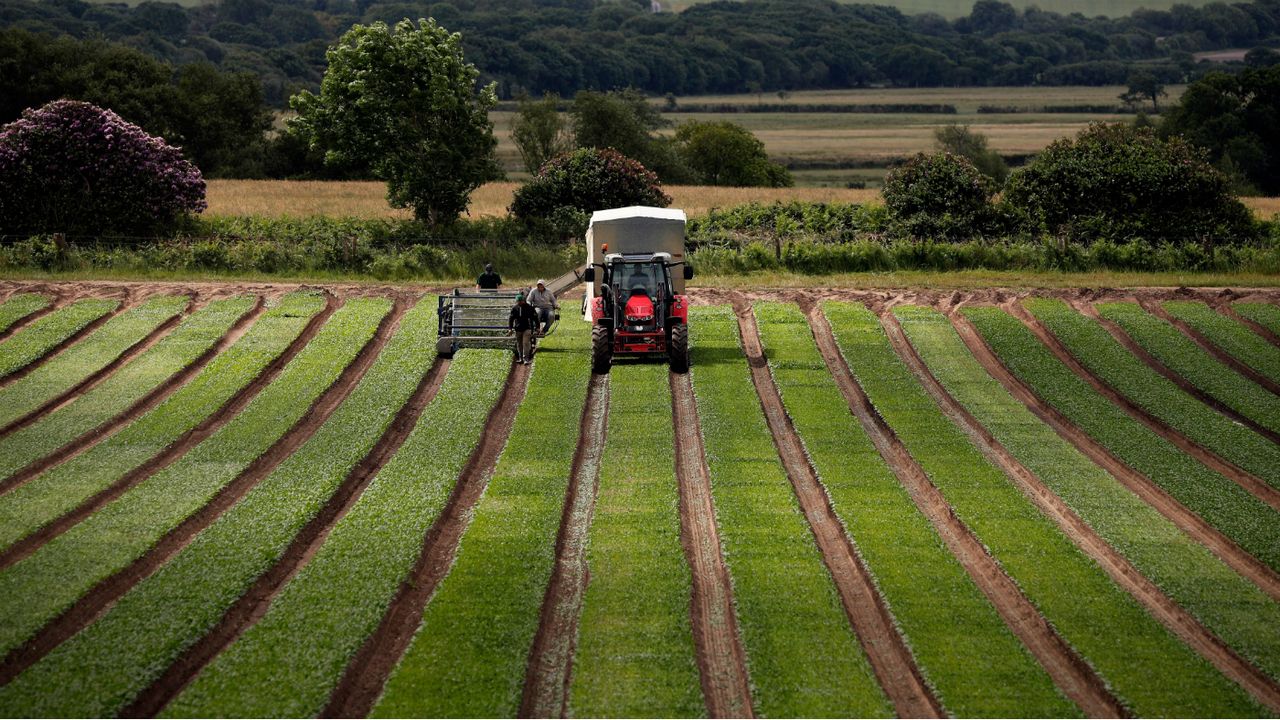
Up to 400,000 hectares of farmland could go unseeded in Manitoba this year because soggy conditions and relentless rain are making it impossible for farmers to get on their fields.
Dwayne Hodgins has been farming in the southwest near Melita for 30 years and hasn’t been able to seed more than three-quarters of his 2,480 hectares. Last year, about 800 hectares of his crop were lost when his land flooded after seeding.
His farm has received 300 millimetres of rain this spring, some of which fell on frozen ground because it took so long for the frost to melt. These days, he said, it’s hard to keep from losing hope.
“The ground’s wet enough without my tears on it,” Hodgins said. “You know you need to go to work because you haven’t got a paycheque coming, and then you can’t get out the door because there is a puddle in front of it. That’s exactly what it’s like. It’s frustrating.”
While seeding was off to a slow start on much of the Prairies after a frigid winter, it has picked up in Alberta and Saskatchewan, but not in huge swaths of Manitoba.
Crop insurance deadlines are looming, but Hodgins said it won’t cover his costs.
“It gets you by, but you still have to maintain your land and your fixed costs on the land. It doesn’t leave you a whole lot for your equipment and labour costs.”
Doug Chorney, head of Keystone Agricultural Producers, said this year has been a struggle for many farmers in Manitoba. While things have dried out in neighbouring Saskatchewan and that province reports some regions are up to 97 per cent seeded, there are some areas of Manitoba that have not been seeded at all, he said.
Contrast that with last year when a bumper crop caused a transportation bottleneck that is still being felt.
Producers have been trying various approaches to dry their land, but nothing is working. It’s estimated between 240,000 to 400,000 hectares will remain fallow this year, Chorney said.
“For these farmers to get on their fields, it’s been just brutal,” he said. “Rain’s been coming at them every three days.
“We really worry about how people will manage their way through this.”
Bob Walker is worried as well. The mayor of the town of Melita said when farmers struggle, so does the town’s economy. Businesses that depend on farming, such as machinery dealers, feel the pinch.
“Our local dealers have gone through a couple of lean years — they had a good one last year with some bumper crops — but they held on by their teeth to get to that point,” Walker said. “It’s going to be tough for the business community for sure.”
Even oil activity in the region has dried up because of wet weather, he added. It’s a big shift for a part of the province that has been traditionally dry.
“With the changing weather patterns, we’re pretty much being told we have to expect more of this,” Walker said. “We have to adjust our whole way of thinking to deal with it.”
Emergency Measures Minister Steve Ashton said seeding in the province as a whole is about 90 per cent complete. But the southwestern region has received 200 per cent more precipitation than normal.
“It certainly appears there are going to be significant agricultural impacts in the area,” Ashton said.
Farmers aren’t eligible for provincial compensation due to flooding unless their property has been damaged. They can apply for crop insurance or use personal excess moisture insurance, he said.
Some say the province should do more.
Blaine Pedersen, agriculture critic for the Opposition Tories, said the governing NDP hasn’t come up with an adequate water management strategy to ensure farmers don’t end up washed out of their fields year after year.
The NDP outlined a water management plan just over a week ago which proposed tougher wetlands protection, but also eased restrictions on farmers who want to drain a ditch on their property. That’s not enough, Pedersen said.
“It’s not like this came up overnight. This has been an ongoing problem for a number of years. Where are the actual plans?”
Hodgins isn’t sure increased planning or even drainage would have saved his fields this year.
“If it keeps raining like it does, it doesn’t matter how many drains you have. If you have a drain under a foot of water, what good is it?” he said.
“We’re dealing with Mother Nature. There has never been a guarantee with it.”
Source - http://globalnews.ca/