To enable financial inclusion for small farmers, the entire value chain needs to be understood and supported, and financial products have to be designed keeping in mind their unique needs. Bank of Khartoum believe that Islamic microfinance products can effectively reach small farmers in Sudan when customized to their needs.
It`sreaching small farmers through a series of capacity building projects and developing tools such as group financing, co-operative, production-risk guarantees, and crop-insurance products aimed at small-scale farmers.
One such effort is the Farmers2Markets project, called "Maringa & Jatropha", which has the following elements:
Understanding the varied microfinance market
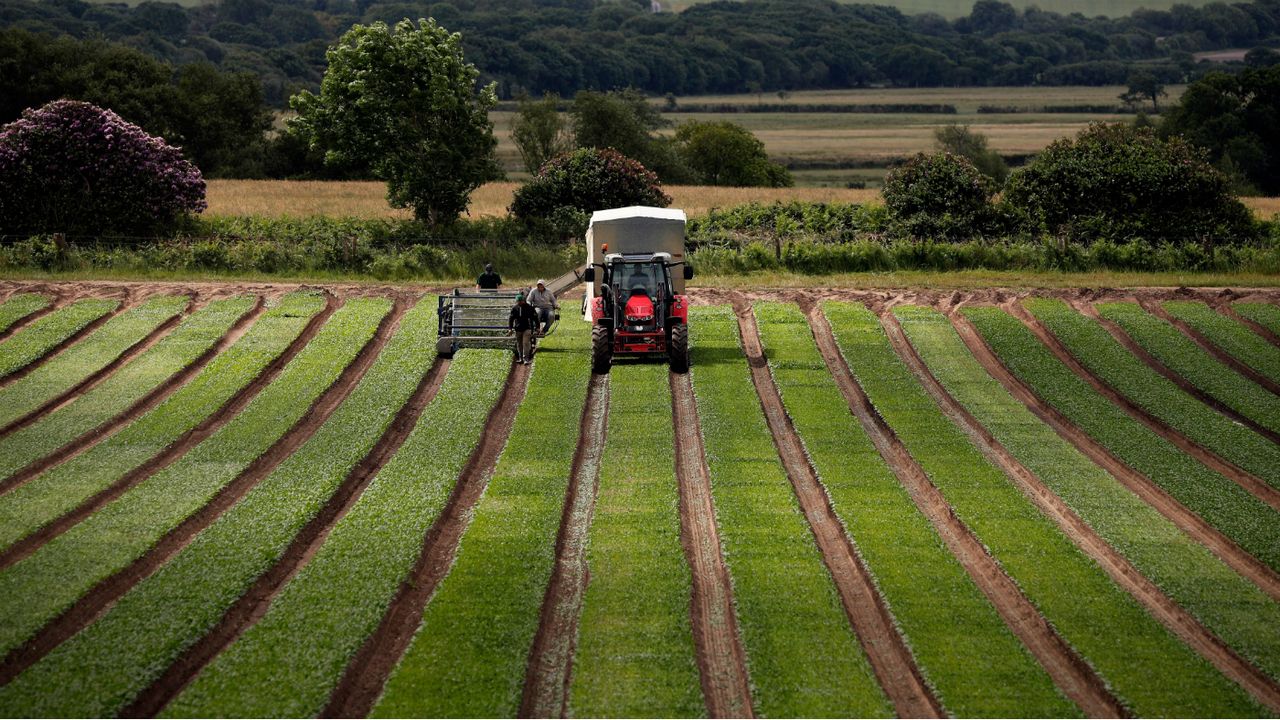
Farmers in many parts of rural Sudan have access to land but do not have access to finance and better opportunities to link their produce to the market. For example, a farmer with only two able-bodied members in the family, with no access to resources to invest in either land preparation or weeding cannot plant more than five acres. This leaves many families (especially single female headed households) in a very vulnerable state and keeps them in an endless cycle of poverty and food insecurity.
In comparison, poor urban farmers have no access to land or it is too expensive for them to own. For them, Bank of Khartoum has developed a micro leasing product (Ijara)* as well as Muzaraa*.
Role of microinsurance and financing risk guarantees
The idea is to cover part of the large-scale losses, if any, for a bank venturing into providing finance to small-scale farmers. This could significantly expand lending and over the long-term also get farmers to pay part of their initial financing amount for such financing-risk guarantees. Large-scale use of such a tool would also significantly reduce the cost of such a guarantee for all farmers involved.
We are working with insurance companies to offer insurance products specifically aimed at small-scale farmers. Our experience tells us that these products have to be accompanied with extensive program for educating farmers on the use of micro-insurance and have the premiums paid directly by the farmers, or make it part of the initial finance amount.
Investing in extension services
Currently extension services in Sudan are not a "market" in the strict sense of the word. When provided, it is a free service by the Ministry of Agriculture (MOA). In reality, such extension services are far and few due to significant funding constraints at government level. However, the MOA has built up a large group of eco-zone-specific and state-specific experts on agriculture. Some initial capital is required for these experts to work with farmers and identifying viable small-scale farms and businesses, through Small-Scale Farmers Associations (SSFA).
A key aspect of extension services in rural and rain-fed agriculture areas is to provide training to farmers on appropriate seed selection, fertilizer usage, crop growth parameters, rainfall and water harvesting techniques, pest control, proper harvesting techniques, cleaning/bagging of harvest, and connect to appropriate markets for sale of crops. The UN World Food Program contributed to our Farmers2Market project by implementing its Food for Training (FFT) program during the hungry season. Food also kept the farmers in the farm, rather than seek daily wage labor to secure food the next day. Public subsidy can be used effectively to build infrastructure such as electric grids.
Linking farmers to the market
We are working on ways to connect farmers directly to big buyers. Three sets of options are being explored alongside exploring the use of mobile phones and extension agents to makes prices more transparent.
With an increase in the flow of information to farmers about prices, we hope that local traders will provide them with better prices for their produce than before. The second way is working with the World Food Program and the Central Bank of Sudan to convince private Sudanese companies (such as DAL Groups and Hajjar), as well as international companies to source produce directly. The idea is to get companies to share part of the profit with farmers (from buying directly at farm-gate prices) by paying insurance premiums, providing better quality seeds, and paying for extension services.
Finally, we are working with the Strategic Reserve Corporation of the Government, to act as a buyer of last resort. This arrangement will allow farmers to have the security of a buyer of their crops. This would also put pressure on traders to offer "better prices" for small-scale farmers for their produce. The UN World Food Program, where price/quality of farmer produces is on par with international standards, will try and buy the surplus for its own programs such as school feeding and food for work.
In conclusion, our experience shows how investment from private sector, as well as smart public subsidy, can be leveraged to make financial services help solve some of the problems that small farmers face on a daily basis.
Source - http://allafrica.com/