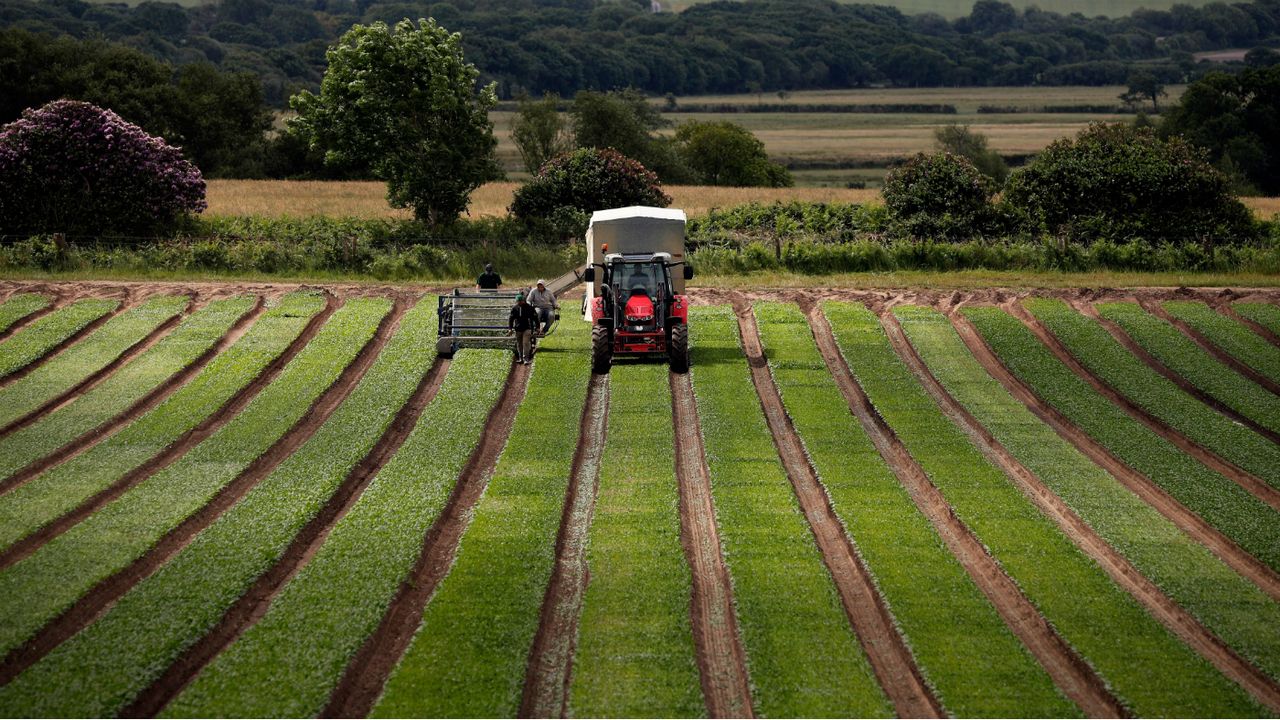
Drought conditions that continued through spring, followed by a late freeze in April and untimely rains in June have produced the poorest Oklahoma wheat crop in nearly a half century, Oklahoma agriculture officials said.
The official forecast is for 51 million bushels of Oklahoma's top cash crop, the lowest amount since 43 million bushels were harvested in 1957, according to Mike Schulte, executive director of the Oklahoma Wheat Commission.
The harvest, which began in early June, was officially considered by the U.S. Department of Agriculture to be 97 percent complete as of Monday, Schulte said.
"Right when it (harvest) was beginning to start we got untimely rains, and the farmers are grateful for the moisture, it just really came at a time when producers were trying to get out into the fields," Schulte said.
Mike Cassidy, co-owner of Cassidy Grain Co. in Frederick in southwestern Oklahoma where harvesting begins, said harvesting never really even began this year.
"It was wrapped up before it started," Cassidy said. "Most of the acres got abandoned, and what was cut was mostly seed wheat for next year."
Schulte said 105.4 million bushels were harvested last year, a number that was better than anticipated, but still below the average of about 118 million bushels per year during the previous five years.
Joe Kelly, who said he planted about 1,500 acres on his farm near Altus but harvested only about 700 acres, said he reaped an average of six bushels per acre, well below his normal yield of about 35 bushels.
"Worst crop I've ever had. It was pretty well a disaster all across the board," Kelly said.
Out of the approximately 4,200 bushels he harvested, Kelly said he has stored 1,700-1,800 bushels for use as seed for next year's crop.
Farmers are able to offset their losses through crop insurance and, in some instances, by using the crop in feed for livestock.
The price farmers were receiving for Oklahoma-grown wheat at mid-week, according figures provided by the Oklahoma Department of Agriculture, ranged from $6.09 to $6.29 per bushel.
Both Kelly and Schulte said it is difficult to pinpoint a price at which a farmer would break even because it depends on various factors that include the quality of the wheat, the number of bushels per acre and the world market.
"At six bushels an acre you could get $10 per bushel and not break even," according to Kelly, who said his crop cost him $80-$90 per acre.
Kelly said recent rains, including precipitation that began Wednesday across the state, is providing hope for summer crops such as cotton, and he said farmers are not giving up on their livelihood.
"In September we'll start the process again, try again," he said. "It's part of our DNA. When it gets time to plant, we plant."
Source - http://www.newsobserver.com/