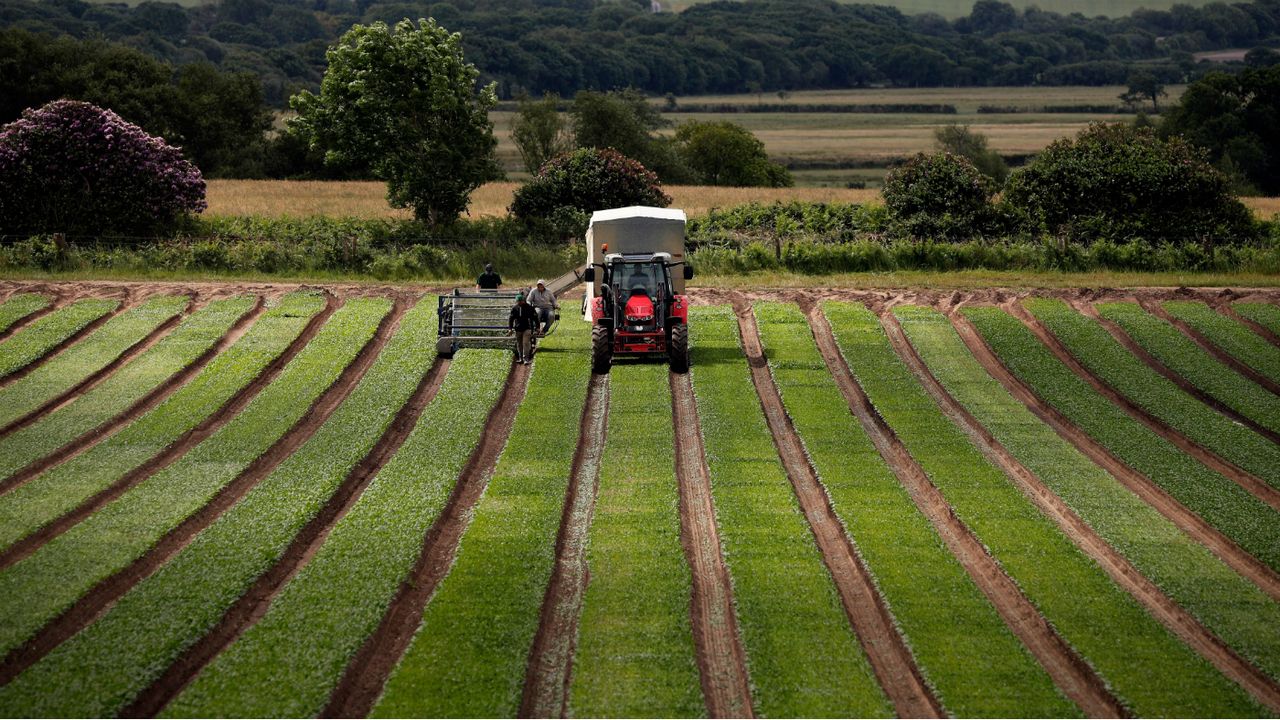
Indian farmer Asghar Bhura scrapes a living by growing sugarcane, but this year’s late monsoon has left his tiny plot parched and he will earn nothing from his harvest.
Bhura will have to go and work for a big grower to feed his family of six, making Rs250 rupees (Dh15.2) a day, as he did when India suffered its last severe drought in 2009.
“I have no option but to become a bonded labourer just to feed my family one meal a day,” said Bhura, 50, looking at his stunted crop on his third of a hectare of land.
Bhura’s borderline existence is shared by many farmers in the district of Shamli, in the sugarcane belt of India’s most populous state, Uttar Pradesh, three hours’ drive north of the capital New Delhi.
With this year’s monsoon rains several weeks late, the world’s second-largest sugar and rice producer is on the verge of widespread drought in the face of a developing Pacific Ocean weather event known as El Nino, which is often associated with drought in South Asia.
In good years, the four-fifths of local farmers who tend a hectare or less, can get by. In bad years, they slide into debt.
Some lose their land. Others are forced into servitude.
Hunger for land and water feeds social tensions. In nearby Muzaffarnagar, communal clashes last year killed about 65 people, most of them Muslims, and displaced thousands more.
India’s farm sector accounts for about 14 per cent of the economy but two thirds of its 1.2 billion people depend on farming to live. Most poor live on the land. Areas that lack irrigation are most vulnerable when the rains fail.
Although the national weather office said on Thursday that the monsoon had covered all of India, rainfall in the first six weeks of the wet season has been more than a third below normal.
A poor monsoon could raise imports of cooking oil to India, the leading buyer of vegetable oils. The country may also cede its position as top rice exporter to Thailand.
Cane and basmati rice fields in Shamli, a district carved out of Muzaffarnagar three years ago, showed gaping cracks on a recent visit.
“For me, my wife and two sons and two daughters, the journey to hell has already started. Our stomachs will be half empty soon,” said Bhura, whose gaunt face and unkempt beard betrayed anxiety and exhaustion.
Late rains
Even if the monsoon revives during the rest of the planting month of July, farmers here expect losses of at least a fifth in summer-sown crops like rice, corn, cane, soybean and cotton.
India harvested 348 million tonnes of cane last year, with an average sugar content of 11 per cent.
Productivity in Uttar Pradesh typically lags that of other growing regions like subtropical Maharashtra due to poorer soils and a less favourable climate. Another two weeks without rain could lower both tonnage and sugar content, possibly to 8 per cent, local farmers reckon.
Farmers worry the impact this year could be worse than five years ago, when India suffered its worst drought in four decades. Subsequent supply shortages from the country pushed New York sugar prices to 30-year highs.
“The rains improved in early July five years ago, but this year the dryness stretched beyond the second week of July,” said Yogendra Singh, who mainly grows cane on five hectares of land.
Cane fields here are irrigated with water from canals built during British colonial rule. But the sturdy crop, planted twice a year, only blooms when it rains regularly.
“Canal water can initiate sowing activities in cane but water from the sky is vital for the nourishment and growth of the crop,” said Singh, who retired from the Indian Air Force two decades ago to join his three brothers in farming.
Though production will fall this year, India will not have to trawl the global market for sugar because of surpluses piled up over the past four years.
Crop switch
Other farmers are turning away from cane to other crops that they hope will safeguard their incomes.
“I have switched to cultivation of banana as it promises much higher returns than cane or basmati rice,” said Nameet Panwar, 24, who is just starting out farming one hectare of his family’s land.
Panwar expects to earn a minimum of Rs1 million from growing bananas, he says, more than twice that of cane even if the sugar plant is harvested twice a year.
Responding to the late monsoon, local authorities have put contingency plans into action, including providing quick-growing seed varieties of pulses to growers and ensuring adequate supplies of pesticides and insecticides at farmers’ doorsteps.
“We too have in place a drought contingency plan to mitigate any situations arising due to rainfall that is 50 per cent below normal,” said district magistrate N.P. Singh. Marginal farmers would be given work digging wells.
Source - http://gulfnews.com/