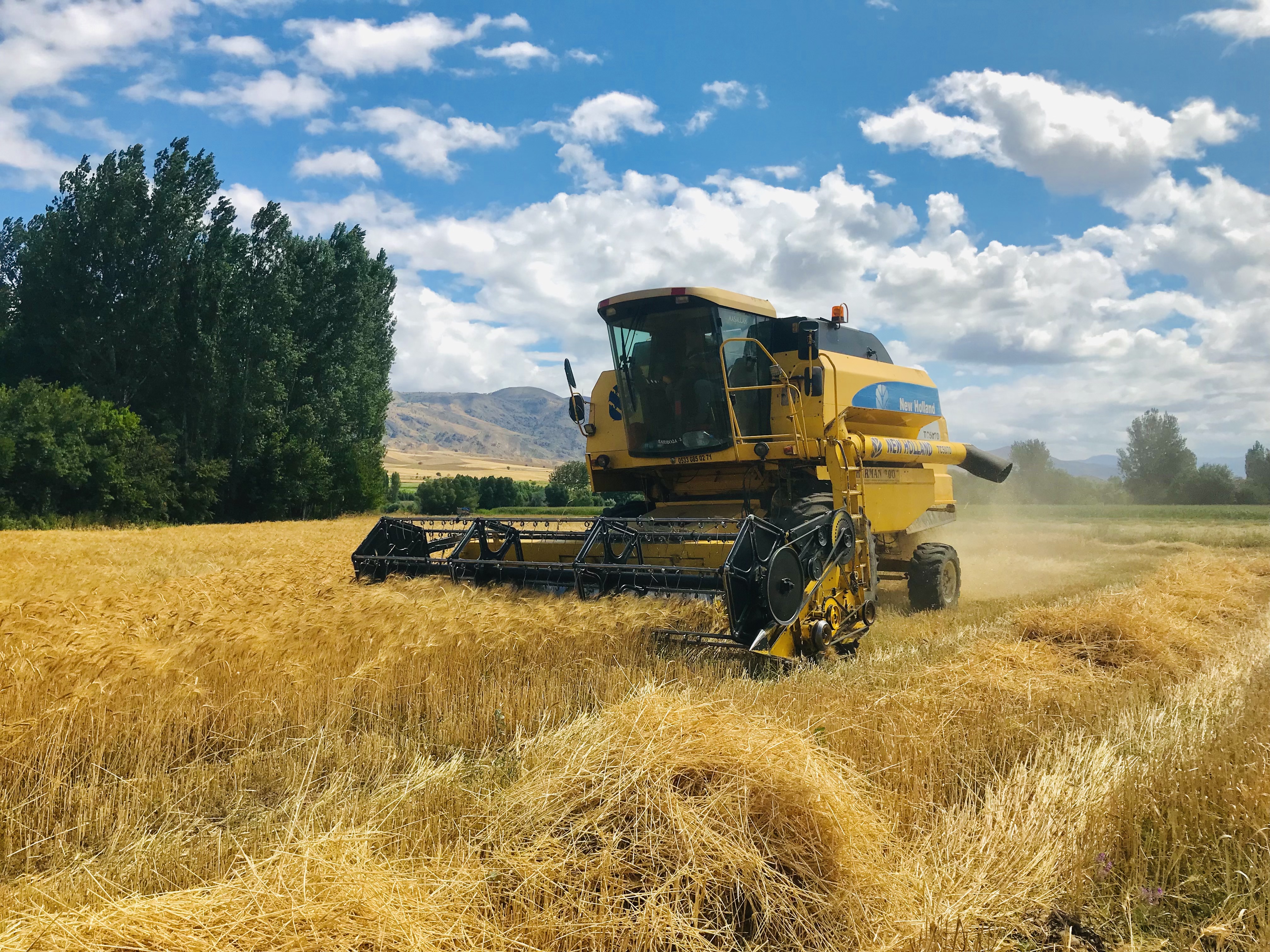
In one year, India’s ozone pollution damaged millions of tons of the country’s major crops, causing losses of more than a billion dollars and destroying enough food to feed tens of millions of people living below the poverty line, according to a paper recently published in the Geophysical Research Letters.
Rising emissions are causing severe ozone pollution in some of India’s most populated regions. Pollution in Delhi, the nation’s capital, has reached levels comparable to Beijing, one of the most polluted cities in the world, according to India’s Air Monitoring Center.
The main component of smog, ozone at ground level can cause leaf damage that stifles plant growth, injuring and killing vegetation. Ground-level ozone is formed when nitrogen oxides, carbon monoxide and volatile organic compounds react with sunlight after the chemicals’ release from vehicles, industry, or burning of wood or other plant or animal matter.
The researchers calculated the amount of total crop damage from ozone pollution by comparing emissions estimates from 2005 with data about how much ozone each of the four crops could withstand. Plants start to exhibit damage when they are exposed to ozone levels that reach 40 parts per billion or above, according to previous research.
A computer model used by researchers calculated ozone levels during crop growing seasons that were more than 40 to 50 parts per billion over most of the country. The team ran the model with different emissions estimates to come up with an average amount of each crop that was lost due to ozone pollution. They found that surface ozone pollution damaged six million metric tons (6.7 million U.S. tons) of India’s wheat, rice, soybean and cotton crops in 2005.
Wheat—one of the country’s major food sources—saw the largest loss by weight of the four crops studied in the new paper, with ozone pollution damaging 3.5 million metric tons (3.8 million U.S. tons) of the crop in 2005. Another major food source, rice, saw losses of 2.1 million metric tons (2.3 million U.S. tons), according to the new study.
India could feed 94 million people with the lost wheat and rice crops, about a third of the country’s poor, according to Dr. Sachin Ghude, an atmospheric scientist at the Indian Institute of Tropical Meteorology (IITM) in Pune, India and lead author of the new study.
Dr. Ghude said the new paper, which is the first to quantify how much damage India’s ozone pollution has caused the country’s major crops on a national level, could help policymakers craft new ozone pollution standards.
India’s economic loss from ozone’s harm to crops amounted to US$1.29 billion in in 2005, the study found. Declines in rice and wheat crops made up the majority of the loss, accounting for a combined US$1.16 billion in losses.
“The (amount of lost wheat and rice) are what surprised me,” said Veerabhadran Ramanathan, a professor of climate and atmospheric sciences at Scripps Institution of Oceanography, at the University of California San Diego and a co-author of the new study.
Prof. Ramanathan said that unlike most studies, which look at the effect emissions will have on agriculture decades in the future, the new study examined how ozone emissions are already affecting crops in India. He said the new study could help spur interest in the issue and help policymakers enact new air quality standards or mandate use of new technology to cut emissions.
Source - http://www.asianscientist.com/