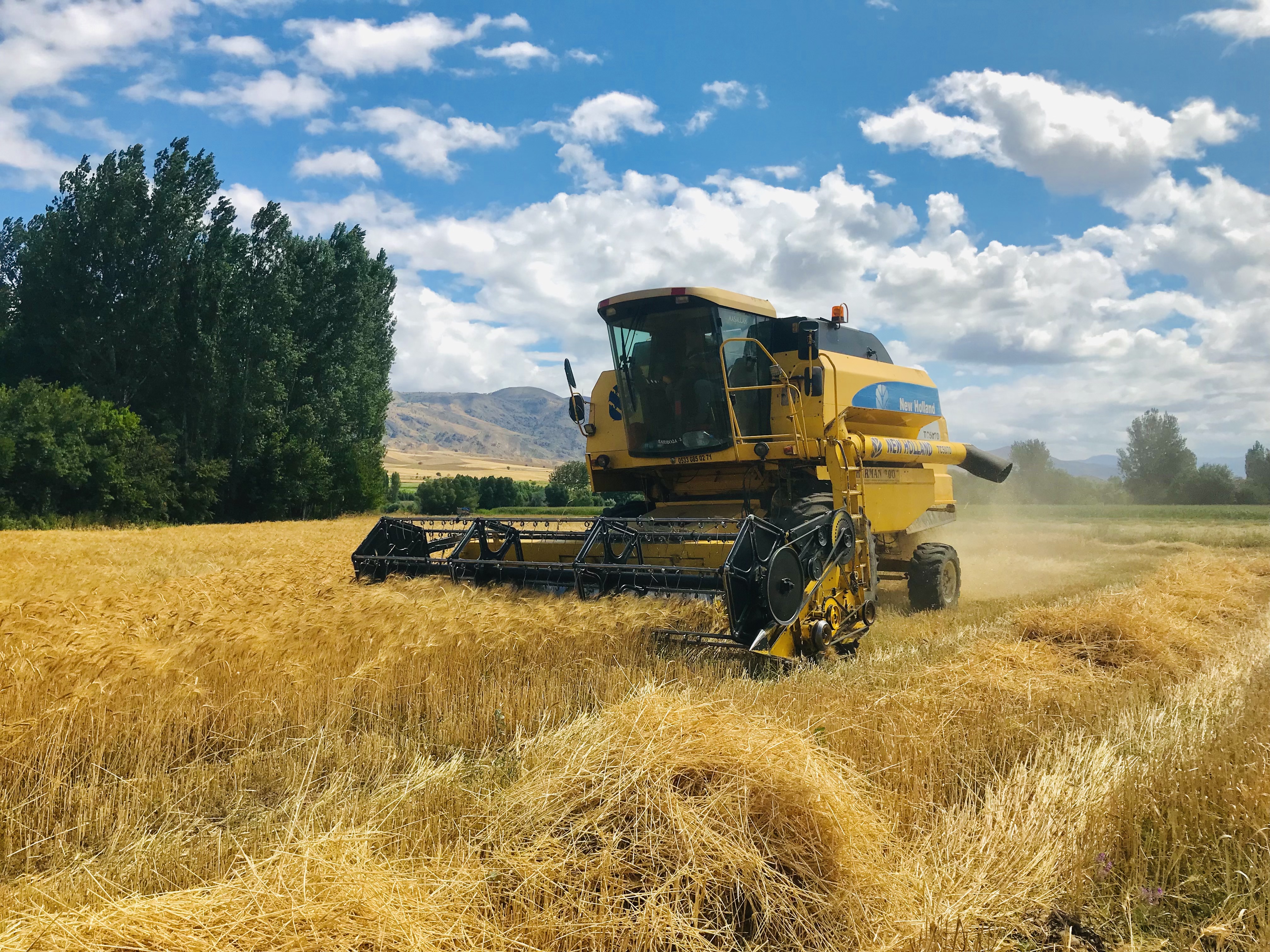
Between everything else they have to do this time of year, farmers need to be deciphering the new farm program choices.
The new Farm Bill gives producers a one-time chance to elect a crop program through the 2018 crop year. Though the Farm Service Agency (FSA) has not released sign-up dates, sign-up probably will start later this fall or winter and will not end until sometime next year.
A trio of Kansas State University economists, Robin Reid, Art Barnaby and Mykel Taylor, tackles some of the questions farmers are asking.
Farmers will need to pick between two programs: Agricultural Risk Coverage (ARC) and Price Loss Coverage (PLC).
If not enrolled in ARC, they also will have the chance to buy a Supplemental Coverage Option (SC) as additional coverage to Risk Protection (PC), Risk Protection-Harvest Price Excluded (RP-HPE) and Yield Protection (YP), all reinsured by the Risk Management Agency (RMA).
No longer available are: Direct and countercyclical payments and the Average Crop Revenue Election (ACRE).
Once farmers sign up for their programs (ARC or PLC), they cannot change their decisions. Farmers will be locked in for 5 years (i.e., until the next Farm Bill).
The option to buy SCO along with PLC is an annual decision. PLC and ARC already are in effect for this year’s crops. SCO will not be available until 2015 and then only on select crops and in select counties.
A farmer renting ground and his or her landlord need to agree on a program at sign-up. If tenants change during the 5 years of these programs, the land remains in the original program selected at sign-up.
If a farmer or farm landlord does not sign up, PLC is the default option, they say, noting that the farmer also will give up any 2014 payment.
The PLC guarantee is set in the Farm Bill. This strike or reference price is $3.70 for corn, $8.40 for soybeans, $5.50 for wheat and $3.95 for sorghum.
Payment is made if the Marketing Year Average (MYA) price falls below the reference price (multiplied by program yield and 85 percent of base acreage). PLC payments depend on national commodity prices and are not related to yield; planted acres that have no base are not eligible for PLC or ARC payments.
The ARC guarantee is set by multiplying the 5-year moving Olympic average MYA price by the 5-year moving Olympic average county yield and then by 86 percent in order to factor in the 14 percent deductible.
A producer also has the option of selecting a farm level guarantee instead of the county level, in which case, the average county yield would be replaced by an expected farm yield.
If the county level option is selected, the farmer gets a payment if actual county revenue is less than the guarantee.
Actual county revenue is determined by the current year’s MYA price multiplied by current year county yield and 85 percent of base acres.
If the farm level guarantee is selected, payment is made if farm revenue is below the guarantee. The payment equals the difference between the guarantee and the actual revenue, multiplied by 65 percent of base acres. ARC payments are dependent on price and yield (i.e. revenue).
Both ARC-county and ARC individual are subject to a 10 percent stop loss that will cap the payment. In other words, the maximum payment per acre a producer can receive from ARC is 10 percent of the ARC approved gross revenue that is determined before the 14 percent deductible is applied.
For instance, if a county’s ARC guarantee is $190, then the gross revenue is $223.53 (86 percent X $223.53 = $190), and the maximum payment is $22.35 (10 percent X $223.53) per acre.
One common question is: What is the difference between ARC at the county level versus the farm level?
These Kansas State University specialists explain that if a farmer enrolls in ARC at the county level, he or she will get a payment on 85 percent of his or her base acres, determined by the difference in county level revenue and the guarantee.
A farmer also can enroll some acreage in ARC and some in PLC. However, if the farmer chooses ARC at the farm level, he or she will only receive payment on 65 percent of base acres, determined by the difference between farm revenue and the guarantee.
To choose this option, all crops by FSA farm serial number must be enrolled. If a farmer has multiple farms with multiple FSA serial numbers, all production from all farm serial numbers, by county, enrolled in farm level ARC will count against the guarantee.
Benchmark revenue will be established on the farm, and the guarantee will be set at 86 percent multiplied by the benchmark revenue.
As noted, there is a Supplemental Coverage Option (SCO).
“Signing up for PLC and purchasing crop insurance gives you the option to sign up for SCO,” report these analysts, noting that SCO is not available with ARC. “SCO will help to cover some of the deductible in the crop insurance policy.”
SCO covers all planted acres, not just base acres. There is no payment limit, but a farm must be conservation compliant to be eligible. Farmers can talk to their crop insurance agents about buying SCO.
Producers might be wondering how Marketing Year Average (MYA) is calculated.
For corn, soybeans and sorghum, the Marketing Year starts Sept. 1 and ends Aug. 31 of the next year. For wheat, it starts June 1 and ends May 31 of the following year.
MYA is weighted by the percentage of the crop that is marketed each month. The national average price each month is multiplied by the percentage of the crop marketing that month; then these weighted prices are added up to become the MYA.
Farmers might be unfamiliar with the term, Olympic average. The five most recent years of MYA prices are used to set the guarantee in ARC using an Olympic average.
What this means is that out of the 5 years, the highest and lowest MYAs are dropped, and the remaining 3 years are averaged together.
If the MYA price falls below the reference price established in the Farm Bill, that low price year is replaced with the reference price when calculating the Olympic average.
A county’s benchmark yield also is determined by a 5-year Olympic average of county yields, which is used for the ARC program.
This new Farm Bill puts limits on maximum payments. Both ARC and PLC have a $125,000 per-year limit per individual actively involved in farming, including any marketing loan gains or loan deficiency payments, but a farmer can forfeit the grain under loan.
Spouses can collect an additional $125,000. Crop insurance payments and SCO are not subject to payment limits.
Further, anybody with a 3-year average Adjusted Gross Income (AGI) more than $900,000, farm and non-farm income combined, cannot receive farm program payments. However, such a farmer would still be eligible to buy federally backed crop insurance so long as the farmer meets conservation requirements.
Farmers have a one-time opportunity to reallocate their farm’s base acres, based on 2009-2012 plantings. However, they cannot build base, note these economists.
Farmers can, however, update a farm’s payment yields by using a 2008-2012 average yield with a 75 percent yield plug based on county yields. Ninety percent of this adjusted average will become the updated payment yield.
Some farmers may benefit from the payment yield update; others may not. Thus it’s important to run the numbers. A farmer may still want to update payment yields even if the PLC is not chosen.
These economists emphasize that ARC and PLC are not replacements for crop insurance. ARC insures only about 7 percent of revenue, since it only pays on 85 percent of base acres, has an 86 percent deductible and has a 10 percent stop loss.
Finally, the new Farm Bill has made some changes to crop insurance. Farmers must now meet conservation compliance requirements in order to have RMA pay a share of the premium cost (i.e. subsidy).
For beginning farmers with less than 5 years of experience, the government will pay an additional 10 percentage points of the premium.
Enterprise units may be separated by dry-land versus irrigated acreage of the same crop and different coverage levels selected.
If a county suffers a 50 percent yield loss, farmers in that county and contiguous counties are allowed to exclude that year’s low yield from their Actual Production History (APH).
If the county trigger is met more than once in the past 10 years, farmers may exclude those years from their APH. This is to help maintain APH during multiple years of catastrophic losses, according to the Kansas State University experts.
Source - http://www.minnesotafarmguide.com/