AfDB’s $2.2bn for Nigeria’s SAPZ Phase II seen boosting agriculture

11.12.2024 400 views

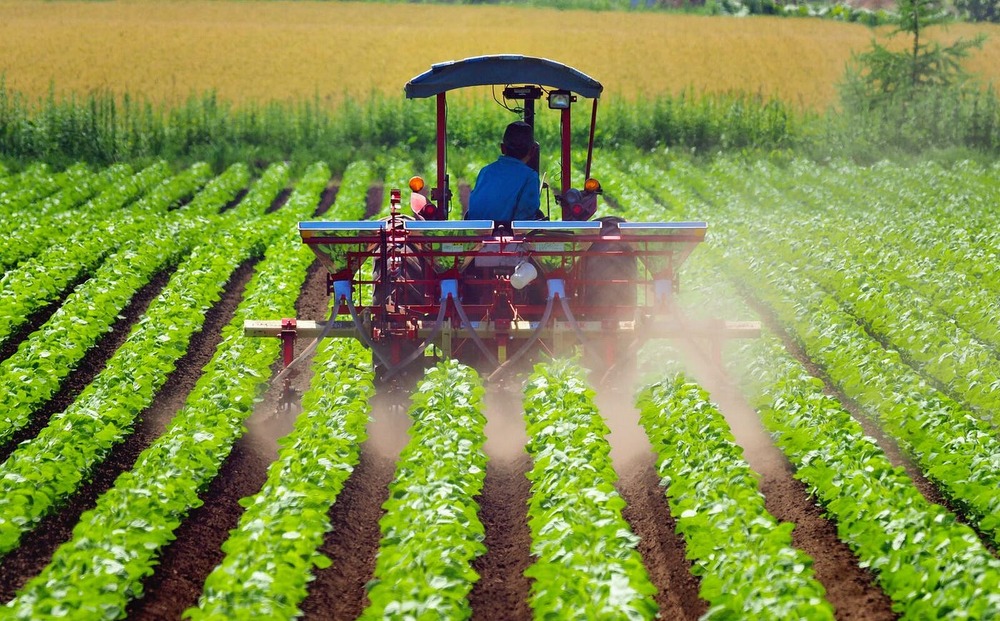
The African Development Bank has confirmed the mobilisation of $2.2 billion for its transformative Special Agro-Industrial Processing Zones (SAPZ) Nigeria Phase II project during the recent Africa Investment Forum, expected to boost agricultural output in the country.

According to the AfDB, the project will link Nigeria’s agriculture to agro-industrialisation to drive economic growth.

Leading investors include Arise IIP, Arab Bank for Economic Development in Africa, Africa Export-Import Bank, Sahara Farms, BPI France, Africa50, and the U.S. Development Finance Corporation.

At the boardroom meeting held on Wednesday, December 4, 2024, organisers announced a total deal value of $2.2 billion, marking a significant step towards realising the vision of SAPZ Nigeria phase II, according to a statement by AfDB on Wednesday.

It added that Cross River, Imo, Ogun, Oyo, Kaduna, Kwara and Kano states and the Federal Capital Territory (FCT), benefitted from Phase I, adding that SAPZ Nigeria Phase II will expand to an additional 24 states.

Zahrah Mustapha Audu, adviser to Nigeria’s president on foreign direct investment, represented Vice President Kashim Shettima, while the governors of Katsina, Kaduna, Lagos, Kwara and Plateau, as well as commissioners and other representatives from Kogi, Gombe, Kebbi, Imo, Anambra, and Niger, also participated in the boardroom meeting.

They reaffirmed their commitment to creating a conducive environment for the initiative, highlighting progress in land allocation, infrastructure readiness, and policy facilitation at the federal and state levels.

Akinwumi Adesina, president, of the AfDB Group, described the meeting as a defining moment for Nigeria’s agricultural transformation.

“The Nigeria SAPZ II project will create millions of jobs, empower smallholder farmers, and position Nigeria as a leader in agro-industrialisation. These investments exemplify the power of collaboration to achieve sustainable development in Africa,” Adesina said

Beth Dunford, vice president for agriculture, human and social development, who chaired the presidential boardroom, and Banji Oyelaran-Oyeyinka, his senior special adviser on industrialisation, highlighted the achievements of Phase I and presented the roadmap for Phase II.

Oyelaran-Oyeyinka assured the audience that Phase 1 construction would commence in a few months, with the flag-off ceremony planned for this December.

“This ambitious initiative is set to revolutionise Nigeria’s agricultural sector. Building on Phase I, it is intended to create agro-industrial hubs that drive productivity, enhance food security, raise living standards and create jobs.

“The SAPZ Nigeria Programme is a country-wide government-enabled and private sector-led investment programme that will provide infrastructure for the establishment of agro-industrial zones, strengthen institutional capacity and business environment for agro-industrial development and support agricultural productivity, skills, and private investment across value chains,” he said.


Source - https://businessday.ng

16.04.2026

USA - Forecast Performance of RMA Expected Yields: Comparison of Yield Projection Methods

Building upon the analyses discussed in the Farmdoc Daily articles of Jan. 27, 2026 and April 1, 2026, this study finds that the current method used by USDA’s Risk Management Agency (RMA) provided the least accurate projection of actual RMA county yields across the five crops and four projection methods examined in this study. 

16.04.2026

Philippines - DAR orients agrarian beneficiaries on crop insurance

The Department of Agrarian Reform (DAR) facilitated an orientation workshop for the agrarian reform beneficiary organizations (ARBOs) from the provinces of Surigao del Norte and Dinagat Islands to strengthen their access to crop insurance and equip them to become authorized underwriters of the Philippine Crop Insurance Corporation (PCIC). 

16.04.2026

Estonia - AgriFi Brings Agricultural Real-World Assets On-Chain with $AGF on Polygon

Agriculture remains one of the largest and most complex industries in the global economy, contributing over $3 trillion annually to global GDP and supporting the livelihoods of billions of people worldwide, according to data from the Food and Agriculture Organization and World Bank.

16.04.2026

USA - Aid Available for Nebraska Wildfire Victims

Just over one month ago, Nebraska experienced the worst series of wildfires in history, burning nearly 950,000 acres. Since then, assistance for farmers and ranchers affected has been rolling in.

16.04.2026

Thailand - Storm batters Si Sa Ket durian orchards, losses hit B39m

A summer storm caused extensive damage to durian plantations in Kantharalak district, toppling hundreds of trees and wiping out tonnes of Thailand’s economic crop just days before harvest, local officials said on Thursday.Following the storm, district chief Somkuan Singkham ordered an urgent survey in tambon Phu Ngern, where strong winds and thunderstorms hit five villages, damaging durian orchards belonging to 110 farmers.The affected fruit is a geographical indication (GI) product known as “Sisaket Volcanic Area Durian,” grown in Khun Han, Kantharalak and Si Rattana districts. Popular varieties include Monthong, Chanee and Kanyao, prized for their creamy texture, mild aroma and relatively dry flesh.

16.04.2026

Cropshader approved for organic farming in Europe

Cropshader, developed by Lumiforte, has been verified as suitable for use in organic farming under the control of Ecocert in Europe. The product complies with the requirements for inputs used in organic production in accordance with applicable European regulations.

15.04.2026

USA - Federal aid programs aim to help Southeast Texas farmers recover from losses

Southeast Texas farmers grappling with crop losses due to extreme weather are turning to federal aid.

15.04.2026

India - Landowners waive lease payments after crop damage

Farmers with large landholdings are doing their part to ease the burden on small and marginal farmers whose crops were damaged by the April 4 storm.