Argentina - Agricultural emergency decreed due to damage caused by late frosts to vineyards and fruit trees

08.11.2022 736 views

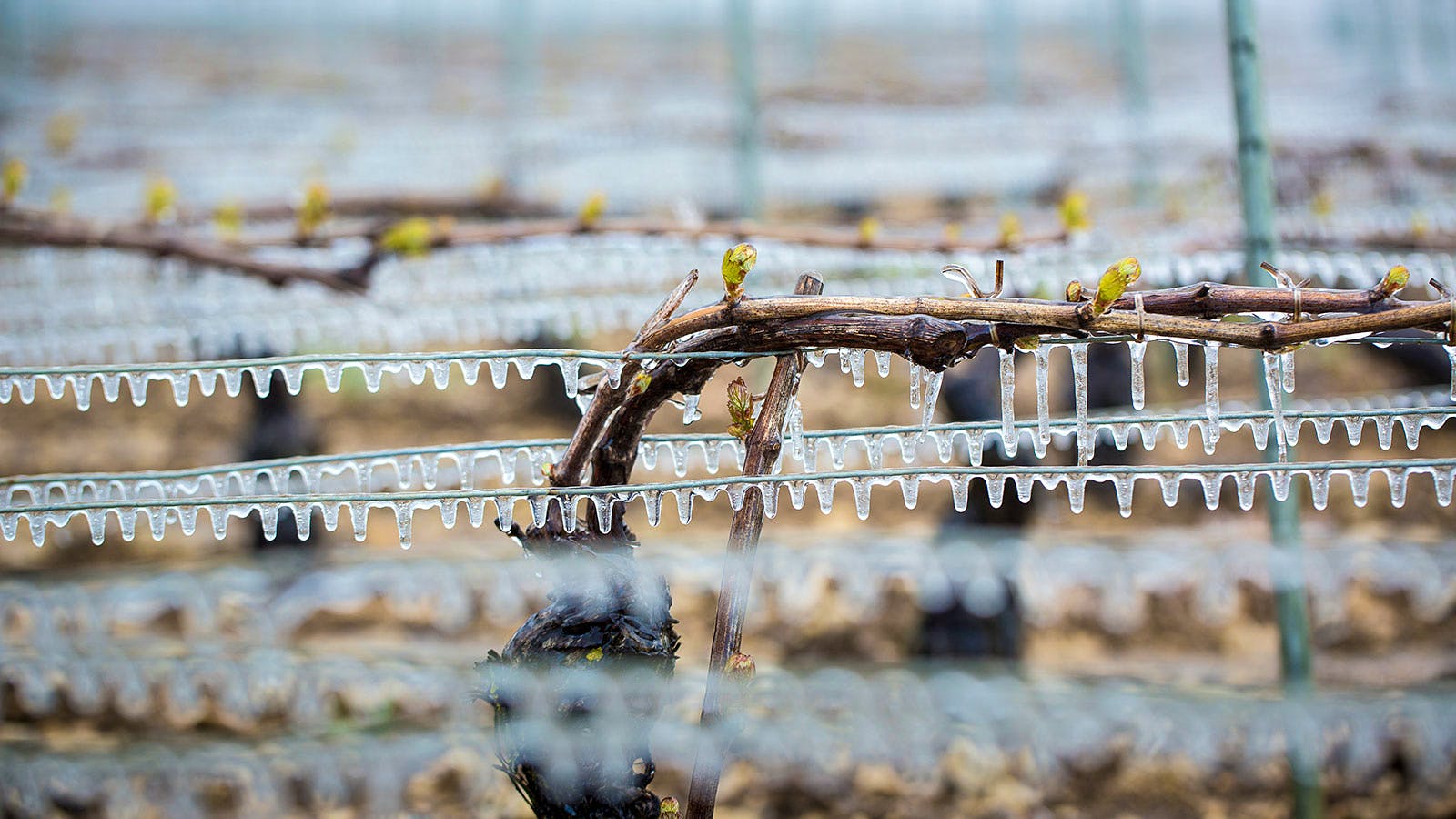
The Ministry of Economy and Energy of Mendoza, through the Undersecretary of Agriculture and Livestock, continues to assess the damage caused by the late frosts recorded in recent days in productive areas, after decreeing the state of emergency or agricultural disaster. The consequences cover not only the province of Mendoza, but also San Juan and Río Negro.

The Undersecretary of Agriculture and Livestock of Mendoza, Sergio Moralejo, told the press that the affected production would be “10,000 hectares of vineyards and 10,000 of fruit trees”.

“That is what we know for now, because the survey will end with the receipt of complaints and with the audits carried out by Climate Contingencies,” the official said.

“These are not minor damages, since the low temperatures generated irreparable consequences in many crops in the North, East, Center and South oases. It is not only the fruit that was damaged, but also the rest of the plant cells can suffer long-term sequelae,” Moralejo warned.

“We have witnessed a really late frost of unusual dimensions. This situation has not only affected the provincial territory but has been a phenomenon at the national level,” he added.

“When we have between 50 and 79% losses, it is called an agricultural emergency; and when they go from 80 to 100% we talk about a 'disaster'. Right now, in Mendoza, we have several disaster areas,” Moralejo concluded.

For his part, provincial senator Bartolomé Robles (FPV-PJ) presented a draft resolution in the upper house that “is intended to require the Ministry of Economy and Energy of the Province, as well as the National Government, to declare the emergency situation and/or agricultural disaster in areas that have suffered more than 50% damage to their production, due to partial late frosts“.

Bodegas de Argentina issued a statement in light of the recent frosts that hit different wine oases in which it expresses the concern of producers and wineries regarding the level of losses and requests the national state, provincial and municipal states the economic support that such an extreme situation deserves.”

In this sense, they explained that “losses in production that in some cases become total, must be covered by the crisis mechanisms provided for these situations, accessible credits, reduction or suspension of taxes, fees, contributions and contributions that are usually provided by those who produce grapes and wines, elimination of agreements and laws that were dictated with the sole objective of controlling a stock and a production that this time will be dominated by scarcity.”

Source - https://www.freshplaza.com

27.01.2026

New Zealand growers report limited crop damage but logistics disruption

Early reports indicate that most growers in New Zealand came through the recent heavy rain and flooding with limited impacts, according to Horticulture New Zealand chief executive Kate Scott. While the weather created operational challenges, there have been no widespread crop losses or major damage to orchard infrastructure reported so far.

27.01.2026

USA - Row crop farmers continue to face financial stress amid federal payments

As the U.S. Department of Agriculture prepares to give $11 billion to farmers across the U.S., row crop producers are continuing to see a yet another year of financial strain.

27.01.2026

FAO Boosts Food Security in Haiti and the Dominican Republic with Emergency Agriculture Support

A high-level mission from the Food and Agriculture Organization of the United Nations (FAO) to Haiti and the Dominican Republic highlighted the critical need for coordinated action to address food security across the Caribbean. 

27.01.2026

US$9,4m drive to climate-proof Zimbabwe agriculture launched

Zimbabwe is taking bold steps to safeguard its agriculture against climate shocks with the launch of the US$9,4 million Resilient Agriculture Cluster Project (RACP), a pioneering initiative supported by the African Development Bank (AfDB) and IFAD.

27.01.2026

Kenyan Small-Scale Farmers Gain Crop Insurance Amid Climate Shocks

In Kenya, crop production is gradually shifting from a struggle for survival to a pathway for economic opportunity. For many years, farmers have faced unpredictable weather, fragile soils, limited drying options, and uncertainty about where their harvest would be sold.

27.01.2026

USA - Winter storm takes a toll on agriculture in the South

Freezing temperatures and ice of the past weekend have impacted industries from timber to sugar cane, crawfish to cattle. 

26.01.2026

EU streamlines farm rules, promising €215m savings for agriculture

The European Commission has adopted nine new legal acts to cut administrative requirements under the EU’s Common Agricultural Policy (CAP), including changes it said could save farmers across the bloc up to €215 million a year.

26.01.2026

Uzbekistan, Canada Discuss Joint Agricultural Research

Uzbek Minister of Agriculture Ibrokhim Abdurakhmonov has held a working meeting with Ben Bradshaw, Assistant Vice-President for International Cooperation at the University of Guelph (Canada), to discuss prospects for joint scientific research.