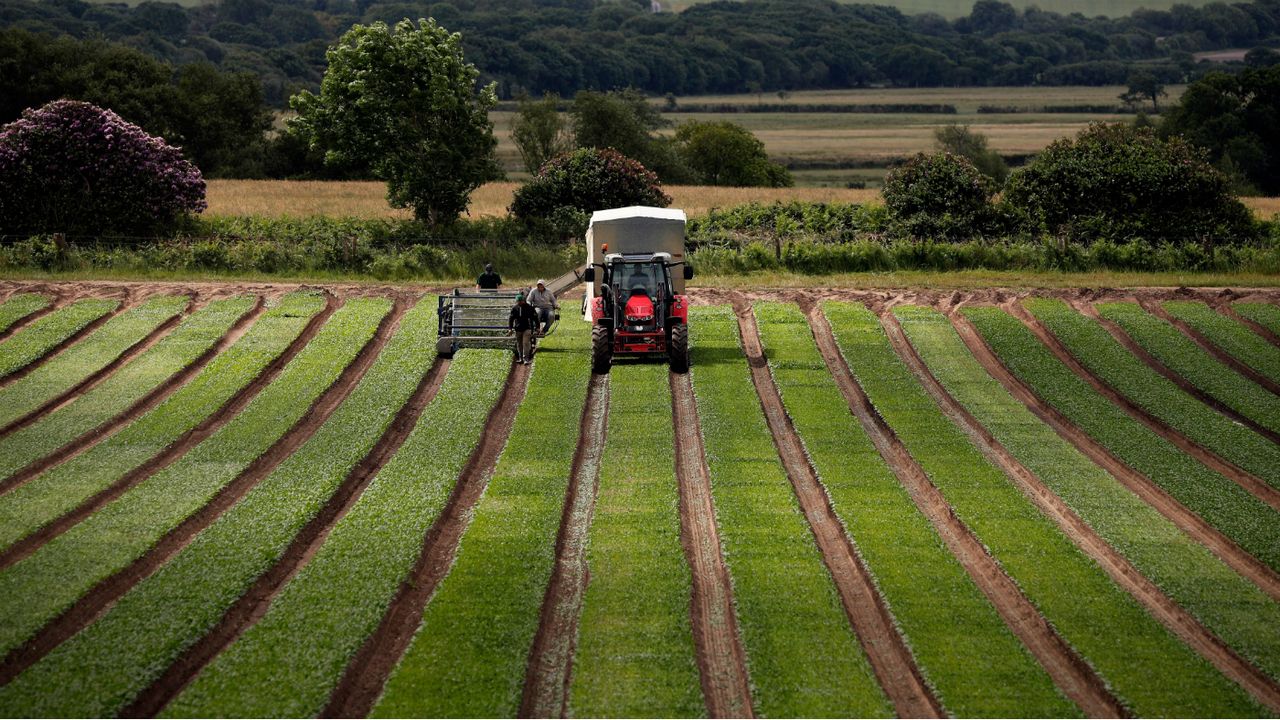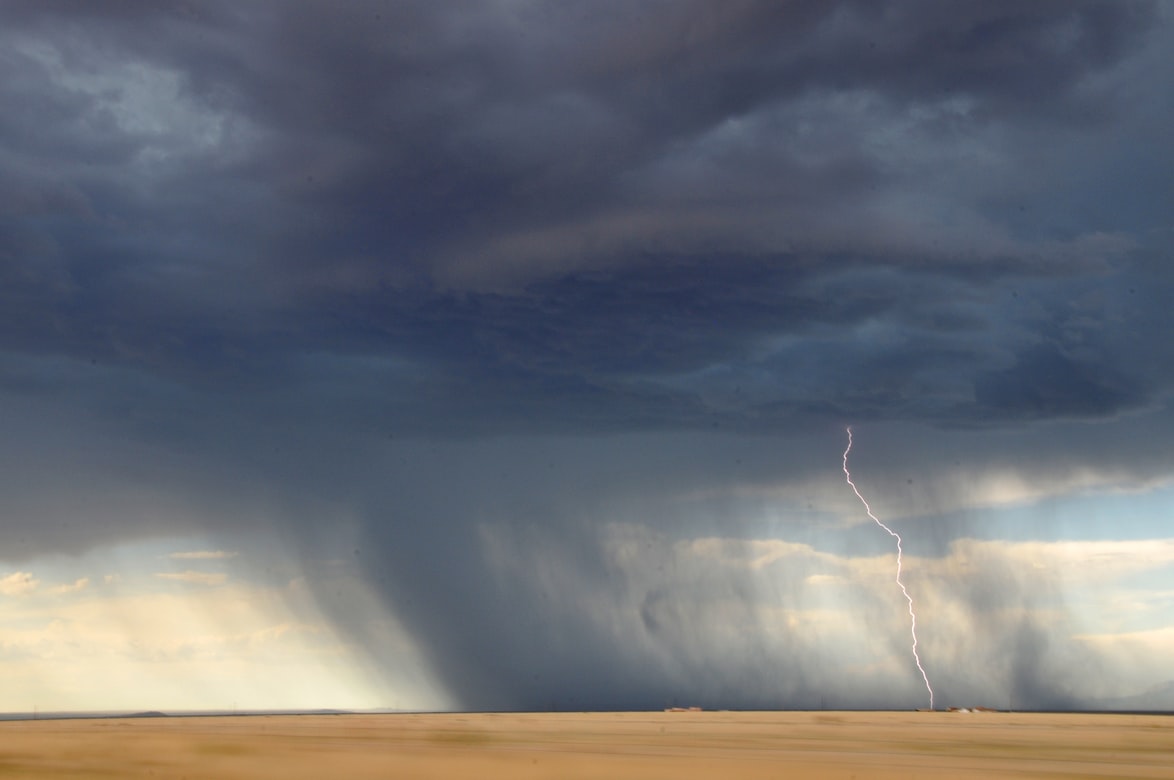
Rainfall over the past few days has improved the conditions of planted soybeans and corn, especially in plantations that were sowed later. The development makes for welcome good news considering that both crops represent more than US$30 billion in exports and that the oilseed by itself brings in about US$20 billion per year.
This is key in terms of the Argentine economy’s need for fresh dollars, after the strong year-on-year setback in last January’s liquidation, which came to just over US$928 million.
Soy sowing was finally completed this week, with some 16.2 million hectares planted, according to the Buenos Aires Grain Exchange’s latest survey. At the same time, water conditions also improved, with 47% of the planted area reportedly in adequate or optional conditions.
Still, it’s not all good news, as the institution isn’t ruling out another cut in its medium-term harvest estimates –currently at 41 million tons– since the oilseed planted in the first phase suffered the ravages of December and January, months with low humidity and scant rainfall.
So far, everything suggests that the Buenos Aires entity will make a cut to 36-38 million tons in the medium term, which would put it close to the Rosario Stock Exchange’s current figures.
On the other hand, the rains of the last few days have stopped the deterioration of second-batch soy fields in the core farming area. Some 56% of the second-batch soy area is currently reporting poor or regular crop conditions and the central-eastern area of Entre Ríos is the hardest-hit region.
“New rainfall will be necessary to prevent additional losses on top of those already expected, while large sectors will enter their critical period in the coming weeks,” said sources from the institution. So far, and according to the forecasts, a new round of moderate rainfall is expected this weekend, which may further relieve the crops, especially in the core region.
As for corn, after a week-on-week advance of 2.5 points, sowing has reached 96.5% of the area. In this case, new production projections for the 2022/23 campaign stands at 44.5 million tons as a result of the drought, according to the Grain Exchange. This represents 7.5 million tons less than the previous season, which reached 52 million tons. Much of this decrease is located in the provinces of Santa Fe, Entre Ríos and Buenos Aires.
Relief for producers
In this context, the Board of Directors of the Central Bank implemented measures to favor the financing of the productive sector affected by the drought, including more flexible terms for determination of arrears and the opportunity to obtain subsidized credit lines. These were announced by the Economy Minister on Tuesday, and began to take effect on Thursday.
With a view to offering relief to the sector, from now on agricultural producers affected by the Agricultural Emergency Law will have more flexible deadlines –until December 31 of this year– to count the arrears and assess their credit situation, according to the Debtor Classification regulation.
The new rule adds 45 days for the first three categories of debtors in order to relieve agricultural producers. The treatment provided within the framework of this provision will not include an improvement in the classification assigned to the client based on their individual situation, prior to the declaration of emergency, nor can its application extend beyond the established validity period. In addition, producers who have been declared in emergency and sold their soy stock will be able to access all credit lines offered in the financial system.
Source - https://buenosairesherald.com