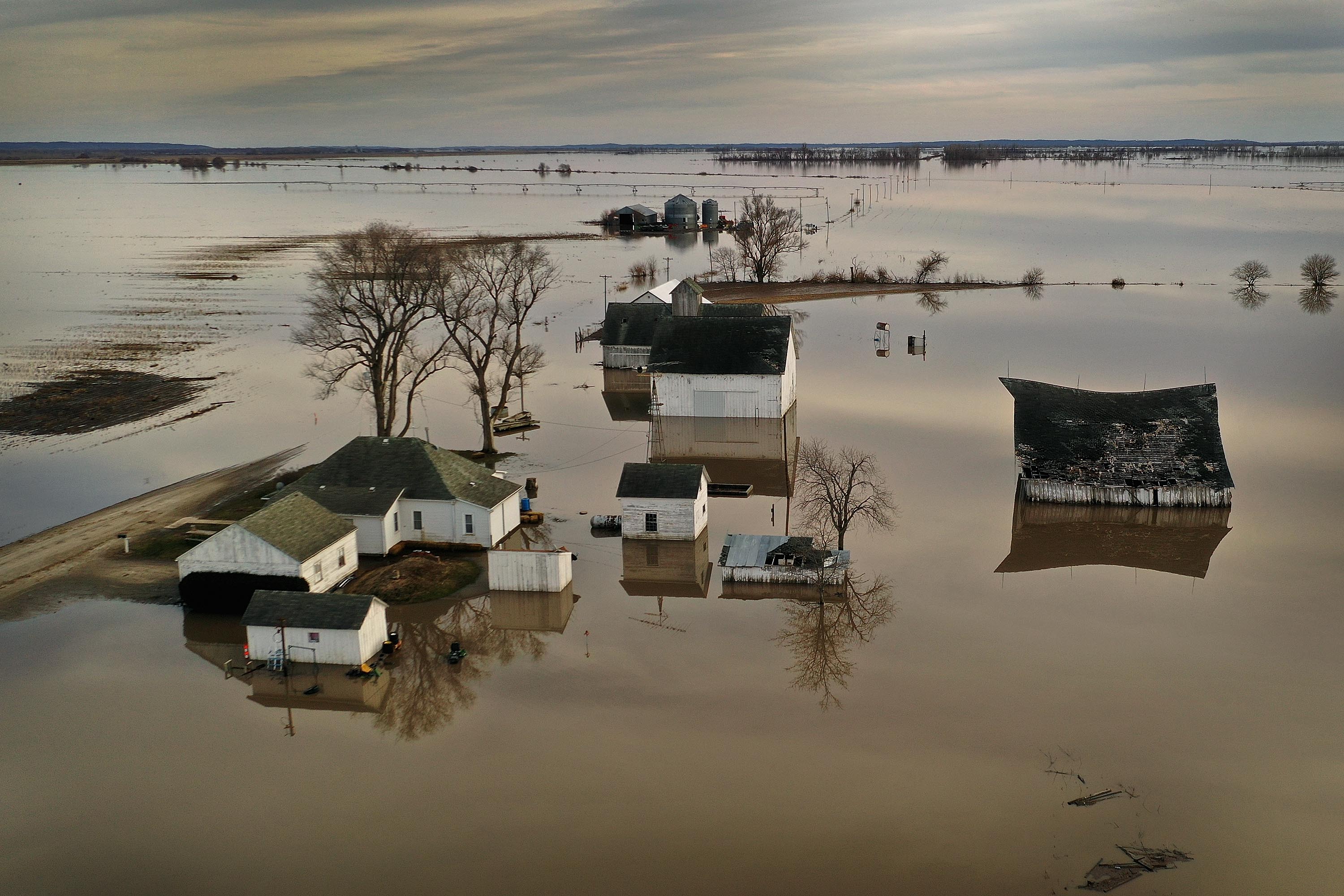
Unexpected heavy rain in southern Queensland just as sorghum and mung bean crops were due to be harvested in the past week has thrown yet another spanner in the works of what was shaping up to be the nation's best summer crop in a decade.
There were unwanted falls of up to 100mm over the weekend, especially through the southern Darling Downs taking many areas to close to 200mm for the past fortnight and causing major floods on the Balonne and Condamine Rivers.
While early sorghum crops harvested in the western Downs around Dalby prior to heavy autumn rain were bin-bursters, clocking in at as much as 10 tonnes a hectare, yield projections for unharvested crop will be scaled back, due to a combination of lower grain test weight and shelling, where seed is dropped onto the ground.
"Yield losses could be around that 10-15 per cent on what we were seeing prior to the rain, but it is all an unknown until we get back out in the paddock," said Pacific Seeds grain sorghum agronomist Trevor Philp.
He said while farmers were hopeful of avoiding significant yield loss grain quality was likely to take a hit.
"We're seeing quite a bit of shot and sprung sorghum, so farmers will receive a discount in price there which is disappointing, but on the plus side there is still a good market out there for feed grain so the discount for downgraded sorghum is only around $40 a tonne at present," Mr Philp said.
Top grade sorghum is making around $320/t, while sorghum 2 is trading at around $280/t.
Mr Philp said the other major concern for summer grain growers was paddock trafficability and impending colder and damper autumn weather hindering harvest.
"We're all a little worried about the harvest dragging on, it's early April now and many people wouldn't even contemplate getting on the paddocks for a fortnight, especially if there is more rain, which takes us through to late April, so it could get late and we run into those problems you get with harvesting crops late."
AgForce grains section president Brendan Taylor said there were concerns for the estimated 30-40pc of the sorghum crop that remains unharvested on the Darling Downs, but said it was not the only crop negatively impacted by the rain.
"I think mung beans will be the worst impacted, they are very susceptible to wet conditions both in terms of yield, due to pod shatter, and quality, with discolouration a major issue," Mr Taylor said.
"Like sorghum, it's really disappointing as a lot of the crops look really good.
"Hopefully farmers will find not too much of a yield penalty and that downgrading is kept to a minimum.
"Prices range from $1300 a tonne for top quality mung beans down to $1100-1200 for processing and manufacturing grade product, which is used for human consumption, but the big fall is if the grain is downgraded to stock feed, where it will only be worth around $500/t."
Mr Taylor also said cotton producers were nervous.
"Similar to grain producers they've had a fantastic season up until now, but with picking well and truly on the horizon there are concerns about what rain could do to ripe bolls.
"Given how heavy cotton pickers are, getting up to around 29 tonnes, there are big worries about getting onto the paddocks if they stay wet."
Mr Taylor said the rain may also present challenges for the winter crop.
"Some growers are saying just with normal autumn conditions, 20mm here and there, with the full profile of moisture we have got it will make it extremely difficult to get the winter crop in.
"We're currently having to put out repeated sprays to keep weeds under control, a lot of that is now being done aerially due to the wet so people are spending $40/ha just for a simple glyphosate mix, with costs much higher for specialised chemicals, so it is really creating a lot of cost.
"The moisture should set us up well for the winter crop eventually but there are certainly a lot of associated challenges."
Source - https://www.queenslandcountrylife.com.au